Loading...
Done
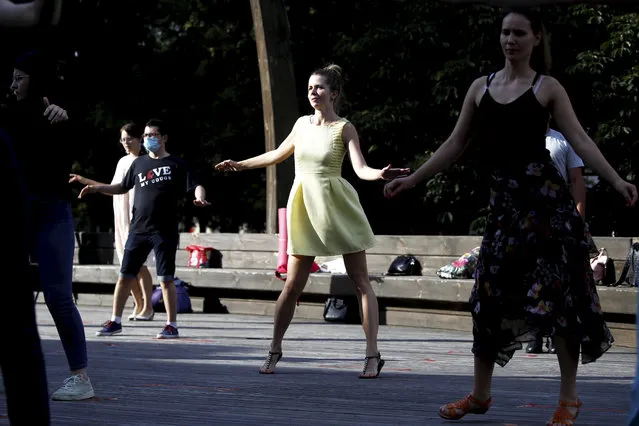
People attend a master class in Latin American dances on the deck outside No 84 Pavilion in VDNKh Exhibition Centre in Moscow, Russia on July 4, 2020. The event opens this year's season of outdoor dancing in VDNKh. (Photo by Artyom Geodakyan/TASS)

People attend a master class in Latin American dances on the deck outside No 84 Pavilion in VDNKh Exhibition Centre in Moscow, Russia on July 4, 2020. The event opens this year's season of outdoor dancing in VDNKh. (Photo by Artyom Geodakyan/TASS)
Details
24 Jul 2020 00:05:00
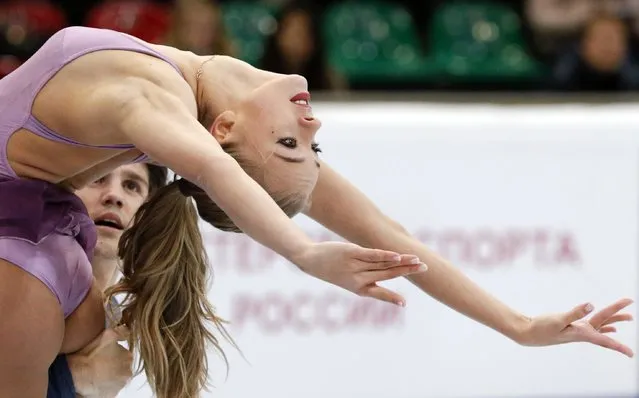
Russia's Alexandra Stepanova and Ivan Bukin perform during the ice dance free dance program at the Rostelecom Cup ISU Grand Prix of Figure Skating in Moscow November 15, 2014. (Photo by Grigory Dukor/Reuters)

Russia's Alexandra Stepanova and Ivan Bukin perform during the ice dance free dance program at the Rostelecom Cup ISU Grand Prix of Figure Skating in Moscow November 15, 2014. (Photo by Grigory Dukor/Reuters)
Details
16 Nov 2014 12:32:00
Madison Chock and Evan Bates of the United States skate during the Ice Dance, Free Dance program of the 2025 ISU World Figure Skating Championships at TD Garden in Boston, Massachusetts, on March 29, 2025. (Photo by Geoff Robins/AFP Photo)

Madison Chock and Evan Bates of the United States skate during the Ice Dance, Free Dance program of the 2025 ISU World Figure Skating Championships at TD Garden in Boston, Massachusetts, on March 29, 2025. (Photo by Geoff Robins/AFP Photo)
Details
11 Apr 2025 03:12:00
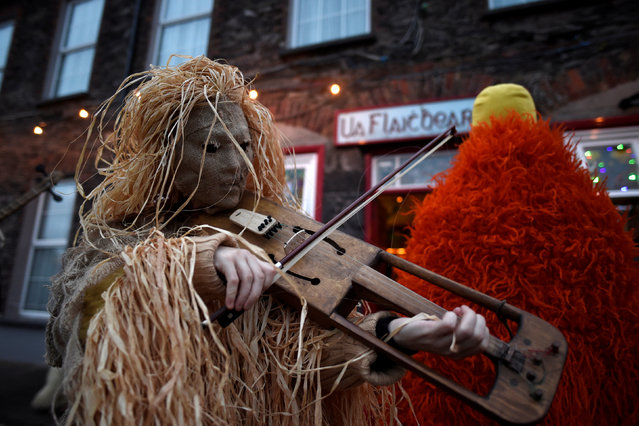
Costumed participants are seen during an Irish tradition of Hunting of the Wren festival held every St. Stephen's Day in Dingle, Ireland, December 26, 2016. (Photo by Clodagh Kilcoyne/Reuters)

Costumed participants are seen during an Irish tradition of Hunting of the Wren festival held every St. Stephen's Day in Dingle, Ireland, December 26, 2016. Wren Day, also known as Wren's Day, Day of the Wren, or Hunt the Wren Day is celebrated on 26 December, St. Stephen's Day. The tradition consists of “hunting” a fake wren and putting it on top a decorated pole. (Photo by Clodagh Kilcoyne/Reuters)
Details
28 Dec 2016 07:18:00
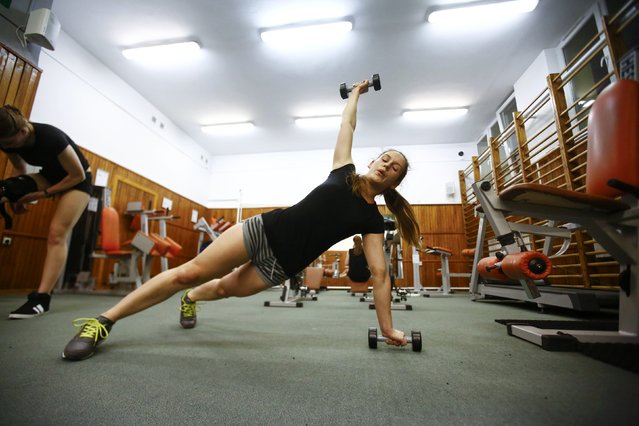
Urszula Sidoruk, 19, from the paramilitary group SJS Strzelec (Shooters Association), trains her workout at a gym in Siedlce, eastern Poland March 18, 2014. (Photo by Kacper Pempel/Reuters)

Urszula Sidoruk, 19, from the paramilitary group SJS Strzelec (Shooters Association), trains her workout at a gym in Siedlce, eastern Poland March 18, 2014. Inspired by the war in Ukraine, growing numbers of Poles are joining volunteer paramilitary groups, where they receive basic army training and prepare to defend their homeland. (Photo by Kacper Pempel/Reuters)
Details
22 Mar 2015 11:36:00
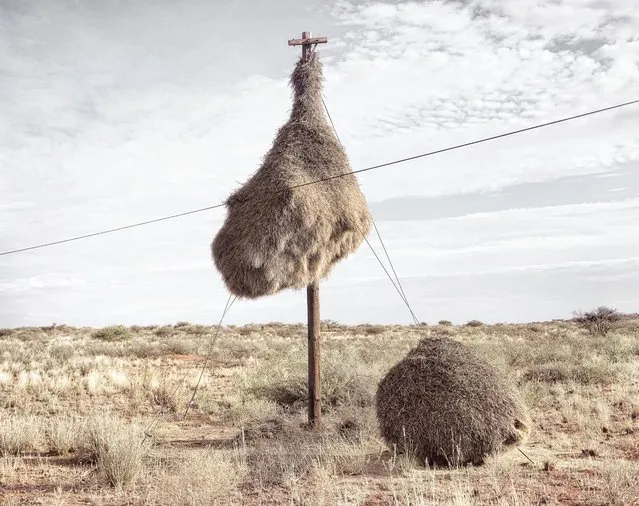
Assimilation By Dillon Marsh

Captured by South African photographer Dillon Marsh, these fantastic photographs depict the many designs employed by sociable weavers to build sturdy nests that are safe from intruders such as cobras and tree snakes. They are also nice cool during the day, and stay warm during cold desert nights. A University of Stellenbosch graduate, Marsh is currently interested in landscape photographer who seeks out anomalies that can be arranged in a photographic series. Assimilation depicts scores of intricate weaver’s nests atop utility poles in Southern Africa. Colonies of sociable weavers have been known to stay attached to one particular nest for up to 100 years, according to The San Diego Zoo.
Details
15 Feb 2014 14:47:00
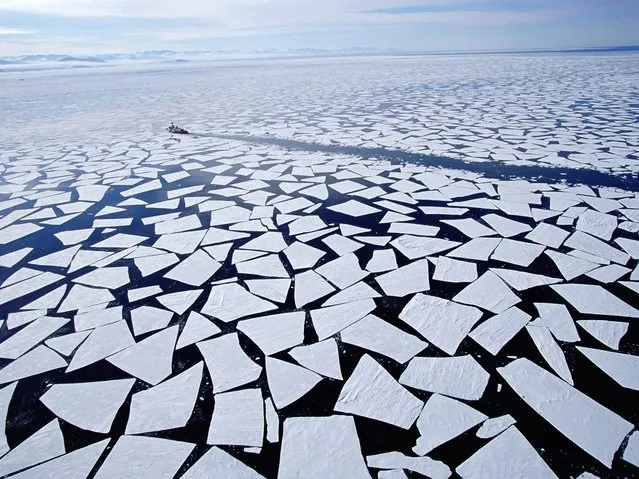
McMurdo Station Antarctic

McMurdo Station is a U.S. Antarctic research centre located on the southern tip of Ross Island, which is in the New Zealand-claimed Ross Dependency on the shore of McMurdo Sound in Antarctica. It is operated by the United States through the United States Antarctic Program, a branch of the National Science Foundation. The station is the largest community in Antarctica, capable of supporting up to 1,258 residents, and serves as the United States Antarctic science facility. All personnel and cargo going to or coming from Amundsen–Scott South Pole Station first pass through McMurdo.
Details
05 Sep 2013 10:18:00
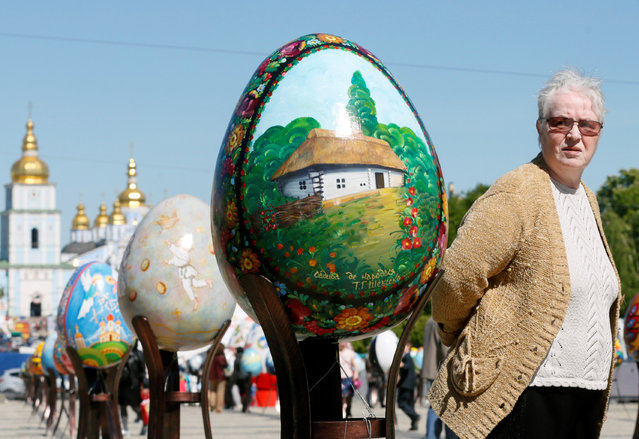
A woman looks at traditional Ukrainian Easter eggs “Pysanka”, installed as part of the upcoming celebrations of Easter, in central Kiev, Ukraine, April 29, 2016. A pysanka is a Ukrainian Easter egg, decorated with traditional Ukrainian folk designs using a wax-resist (batik) method. The word pysanka comes from the verb pysaty, “to write”, as the designs are not painted on, but written with beeswax. Many other eastern European ethnic groups decorate eggs using wax resist for Easter. These include the Belarusians, Bulgarians, Croats, Czechs, Hungarians, Lithuanians, Poles, Romanians, Serbs, Slovaks, Slovenes and Sorbs. (Photo by Valentyn Ogirenko/Reuters)

A woman looks at traditional Ukrainian Easter eggs “Pysanka”, installed as part of the upcoming celebrations of Easter, in central Kiev, Ukraine, April 29, 2016. A pysanka is a Ukrainian Easter egg, decorated with traditional Ukrainian folk designs using a wax-resist (batik) method. The word pysanka comes from the verb pysaty, “to write”, as the designs are not painted on, but written with beeswax. Many other eastern European ethnic groups decorate eggs using wax resist for Easter. These include the Belarusians, Bulgarians, Croats, Czechs, Hungarians, Lithuanians, Poles, Romanians, Serbs, Slovaks, Slovenes and Sorbs. (Photo by Valentyn Ogirenko/Reuters)
Details
30 Apr 2016 09:00:00