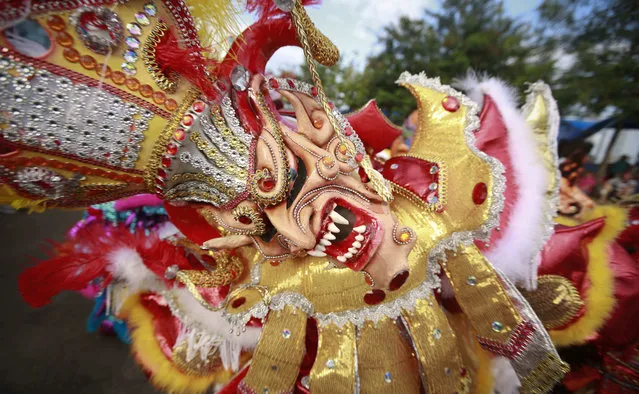
A man from the Dominican Republic wears a devil mask while dancing in the street during Carnival celebrations in Panama City, Monday, February 16, 2015. (Photo by Arnulfo Franco/AP Photo)
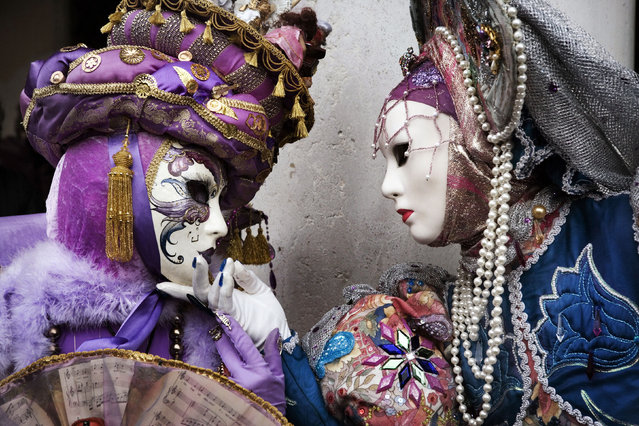
Masked participants stand in St.Mark's Square during the Carnival on February 10, 2007 in Venice, Italy. (Photo by Marco Di Lauro). P.S. All pictures are presented in high resolution.
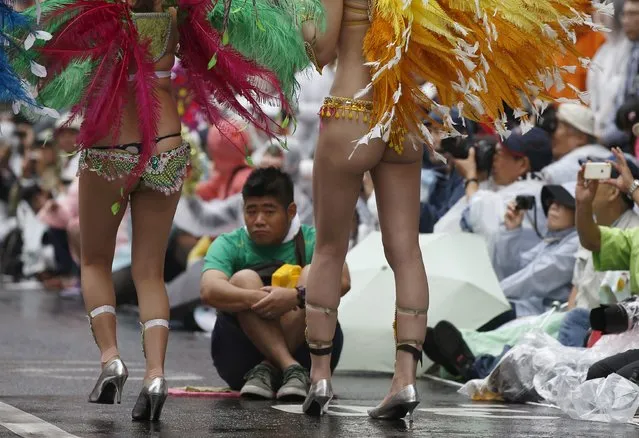
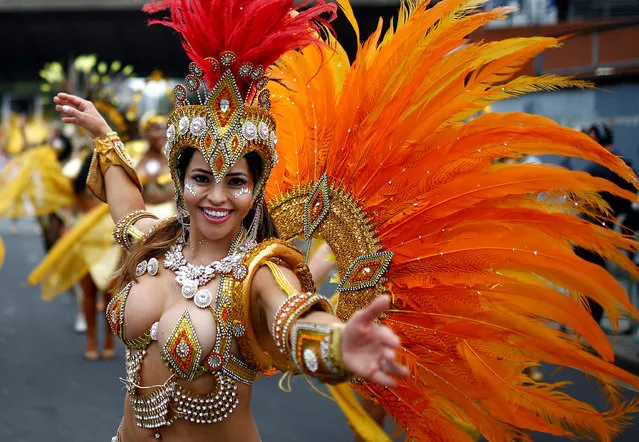
Samba dancers walk past a security staff member during the 34th annual Asakusa Samba Carnival in Tokyo August 29, 2015. About 5,000 people participated in the annual samba carnival on Saturday. (Photo by Toru Hanai/Reuters)
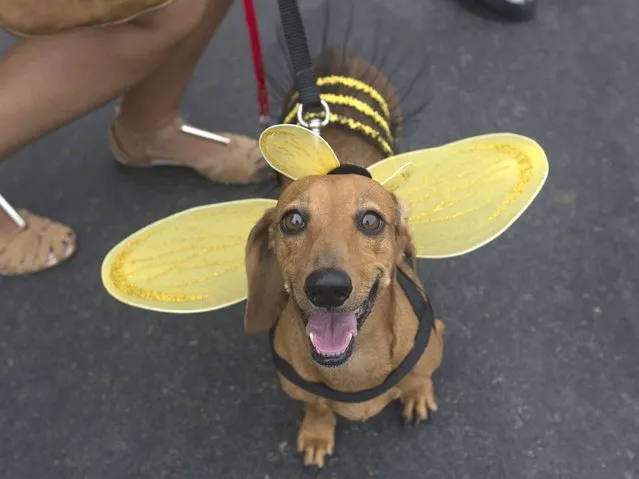
A dog dressed like of a bee is seen during the “Blocao” dog carnival in Rio de Janeiro, Brazil, Sunday, February 16, 2014. About 100 dogs have had their day at a pre-Carnival bash in Rio de Janeiro. A 10-man brass band and a singer belting out Rio's anthem song “Cidade Maravilhosa” (Marvelous City) kicked off the four-footed fest as dog owners gathered to party down with pooches on Copacabana beach Sunay. (Photo by Silvia Izquierdo/AP Photo)
Revellers take part in the Notting Hill Carnival in London, Britain on August 27, 2018. The carnival has been held every year since 1966 and one of the largest festival celebrations of its kind in Europe. (Photo by Henry Nicholls/Reuters)
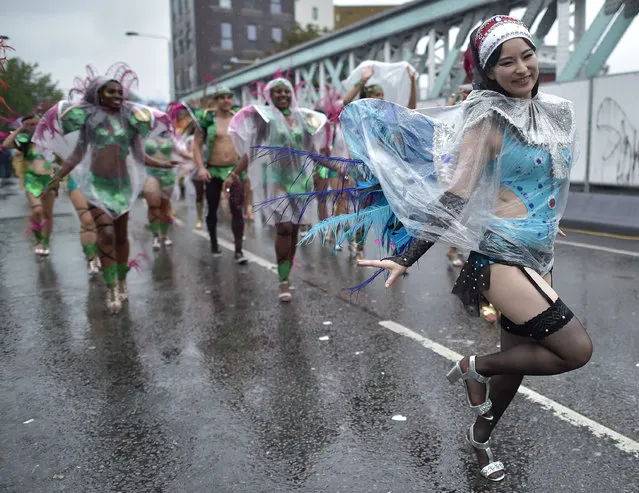
Performers in costume perform in the rain during the parade on the second day of the Notting Hill Carnival in west London on August 31, 2015. Nearly one million people are expected by the organizers Sunday and Monday in the streets of west London's Notting Hill to celebrate Caribbean culture at a carnival considered the largest street demonstration in Europe. The Notting Hill Carnival started in the 1960s, when the area had a large population of immigrants recently arrived from the Caribbean and was notorious for its slums – a far cry from today when it is one of London's most expensive places to live. (Photo by Leon Neal/AFP Photo)
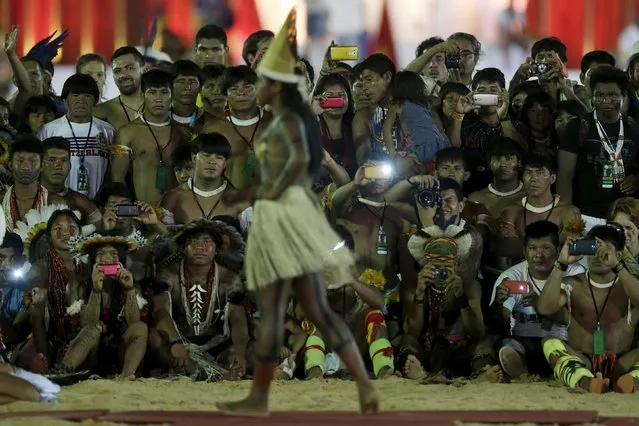
An indigenous woman participates in a parade called "International Indigenous Beauty" during the first World Games for Indigenous Peoples in Palmas, Brazil, October 24, 2015. Billed as the indigenous Olympics, the games are expected to attract nearly 2,000 athletes from dozens of Brazilian ethnicities, as well as from such far-flung nations as Ethiopia and New Zealand. (Photo by Ueslei Marcelino/Reuters)
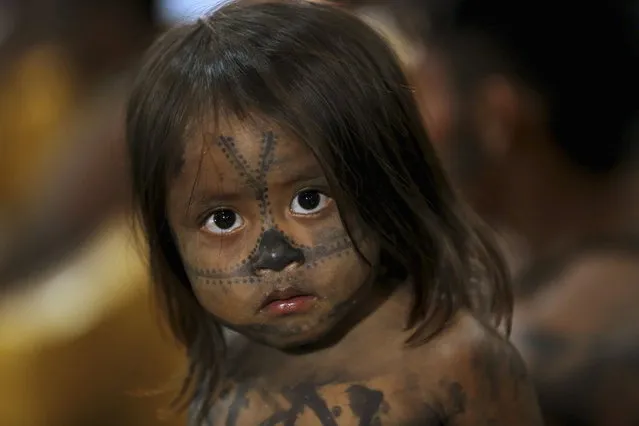
A Munduruku Indian child is pictured at the Planalto Palace, where a meeting with Minister of the General Secretariat of the Presidency of Brazil Gilberto Carvalho was being held with other Munduruku Indians, in Brasilia, June 4, 2013. President Dilma Rousseff's government sought on Tuesday to defuse mounting conflicts with indigenous groups over its decision to stop setting aside farm land for Indians and plans to build more hydroelectric dams in the Amazon. The government flew 144 Munduruku Indians to Brasilia for talks to end a week-long occupation of the controversial Belo Monte dam on the Xingu river, a huge project aimed at feeding Brazil's fast-growing demand for electricity. (Photo by Ueslei Marcelino/Reuters)