Loading...
Done
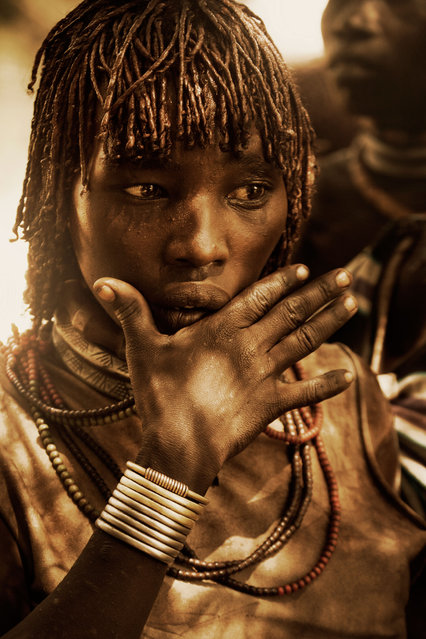
The Hamar people traditionally use red ocher clay to braid the hair of their women. (Photo by Diego Arroyo)

During his time in Ethiopia, New York-based art director and photographer Diego Arroyo spent time with the Hamar, Mursi, Dassanech, and Arbore Tribes. They, along with several others tribes, make up the 200,000 people situated in Africa’s Great Rift Valley. The people of the Omo Valley are still primarily herders and farmers, living an isolated and simple life. While they have yet to be truly touched by globalization, they could soon disappear. Their way of life is being threatened by a massive hydroelectric dam. (Photo by Diego Arroyo)
Details
13 Aug 2014 10:00:00
Funny Selfies By Helene Meldahl

The time of selfies with duck faces is long gone and ridiculed, though some persist in doing it. Helene Meldahl, however, didn’t want to give up the trend, but had to think of a creative way to keep doing it. So she decided to create comical pictures by drawing over the selfies that she has made. Some people just can’t stop taking pictures of themselves. It makes you wonder, what they would do in an era before the existence of cameras… Oh, poor souls, they would definitely suffer greatly without the possibility of sharing on instagram their “stunning looks” and the pictures of food that they eat every 2 seconds. (Photo by Helene Meldahl)
Details
07 Nov 2014 12:31:00
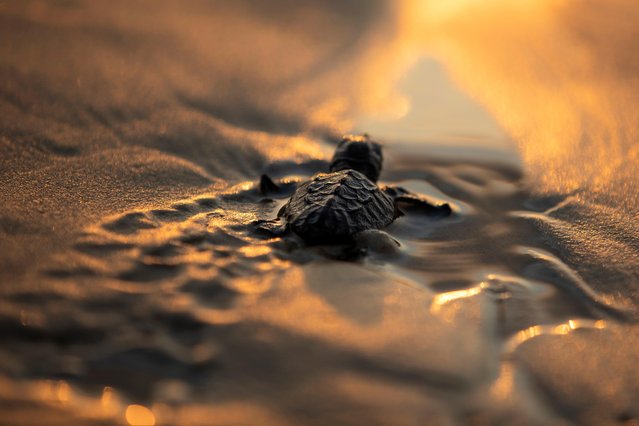
A newly-hatched baby sea turtle makes its way into the Mediterranean Sea for the first time, as part of the Israeli Sea Turtle Rescue Center's conservation program, at a beach near Mikhmoret north of Tel Aviv, Israel September 9, 2019. Green turtles are endangered worldwide, the World Wildlife Fund says. Among other hazards, they are threatened by hunting, human encroachment on the beaches where they nest, and pollution of their feeding grounds offshore. According to the Israeli rescue center, only about 20 female green turtles nest along the Israeli Mediterranean coast during a breeding season that usually lasts from May until August. (Photo by Amir Cohen/Reuters)

A newly-hatched baby sea turtle makes its way into the Mediterranean Sea for the first time, as part of the Israeli Sea Turtle Rescue Center's conservation program, at a beach near Mikhmoret north of Tel Aviv, Israel September 9, 2019. Green turtles are endangered worldwide, the World Wildlife Fund says. Among other hazards, they are threatened by hunting, human encroachment on the beaches where they nest, and pollution of their feeding grounds offshore. According to the Israeli rescue center, only about 20 female green turtles nest along the Israeli Mediterranean coast during a breeding season that usually lasts from May until August. (Photo by Amir Cohen/Reuters)
Details
27 Sep 2019 00:05:00
Robot suit "Hybrid Assistive Limb (HAL)" worn by a man developed by University of Tsukuba is seen lifting a 30kg weight during 2005 International Robot Exhibition on November 30, 2005 in Tokyo, Japan. By wearing the power suit, it makes it easier to move and lift heavy things. The Exhibition is on until December 3. (Photo by Koichi Kamoshida)

“A robot suit that can help the elderly or disabled get around was given its global safety certificate in Japan on February 27, 2013, paving the way for its worldwide roll-out”. Photo: Robot suit “Hybrid Assistive Limb (HAL)” worn by a man developed by University of Tsukuba is seen lifting a 30kg weight during 2005 International Robot Exhibition on November 30, 2005 in Tokyo, Japan. By wearing the power suit, it makes it easier to move and lift heavy things. (Photo by Koichi Kamoshida)
Details
11 Mar 2013 11:15:00
CGAP Photo Contest – South Asia Regional Winner: Bricks Worker, Bangladesh. A private enterprise worker is working at a brick field. These small businesses are creating new job opportunities for many poor people. (Photo by Moksumul Haque)

The shoemaker in Turkey, the potato seller in Vietnam, and the weaver in Bolivia are among the billions of low-income entrepreneurs who make the world go round. They are also the type of people who can benefit significantly from microfinance. Every year, the Consultative Group To Assist The Poor (or CGAP) hosts a photo contest asking entrants to submit photos based around the idea of microfinance.The purpose of the contest is to give amateur and professional photographers a chance to show the different ways that poor households manage their financial lives and make their lives better through financial inclusion. Photo: South Asia Regional Winner – “Bricks Worker”, Bangladesh. A private enterprise worker is working at a brick field. These small businesses are creating new job opportunities for many poor people. (Photo by Moksumul Haque)
Details
14 Aug 2014 10:58:00
British Waters Wide Angle category runner-up. Grass snake swimming along a garden pond by Jack Perks (UK)in Nottinghamshire, UK. “I’m always on the lookout for unusual freshwater subjects and grass snakes are a species I’ve been after for years. I was told about a pond where the odd grass snake hangs around the lilly pads for frogs. I put my drysuit on and got into the water and could see one slithering along the surface. Slowly making my way towards it with my head only just poking above I got the spilt shot”. (Photo by Jack Perks/Underwater Photographer of the Year 2019)

British Waters Wide Angle category runner-up. Grass snake swimming along a garden pond by Jack Perks (UK)in Nottinghamshire, UK. “I’m always on the lookout for unusual freshwater subjects and grass snakes are a species I’ve been after for years. I was told about a pond where the odd grass snake hangs around the lilly pads for frogs. I put my drysuit on and got into the water and could see one slithering along the surface. Slowly making my way towards it with my head only just poking above I got the spilt shot”. (Photo by Jack Perks/Underwater Photographer of the Year 2019)
Details
28 Feb 2019 00:03:00
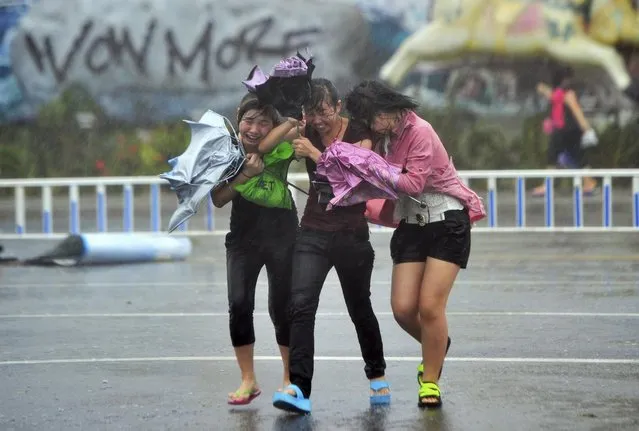
People cross a street against strong wind and heavy rainfall under the influence of Typhoon Haiyan, in Sanya, Hainan province November 10, 2013. One of the most powerful storms ever recorded killed at least 10,000 people in the central Philippines, a senior police official said on Sunday, with huge waves sweeping away entire coastal villages and devastating the region's main city. Despite weakening, the storm is likely to cause heavy rains, flooding, strong winds and mudslides as it makes its way north in the South China Sea. (Photo by Reuters/China Daily)

People cross a street against strong wind and heavy rainfall under the influence of Typhoon Haiyan, in Sanya, Hainan province November 10, 2013. One of the most powerful storms ever recorded killed at least 10,000 people in the central Philippines, a senior police official said on Sunday, with huge waves sweeping away entire coastal villages and devastating the region's main city. Despite weakening, the storm is likely to cause heavy rains, flooding, strong winds and mudslides as it makes its way north in the South China Sea. (Photo by Reuters/China Daily)
Details
16 Nov 2013 12:28:00
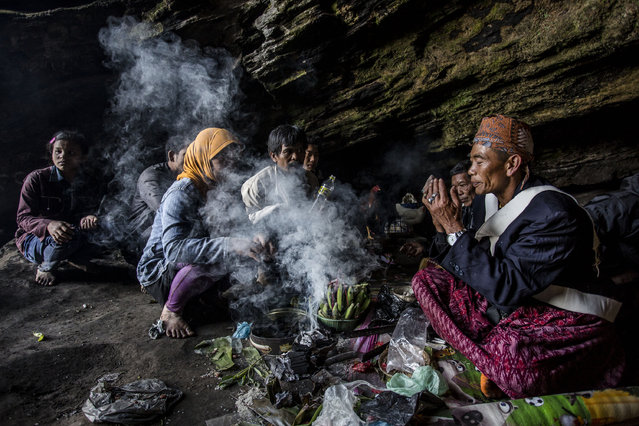
A Tenggerese shaman praying for worshippers at Widodaren cave during the Tenggerese Hindu Yadnya Kasada festival on July 31, 2015 in Probolinggo, East Java, Indonesia. The festival is the main festival of the Tenggerese people and lasts about a month. On the fourteenth day, the Tenggerese make the journey to Mount Bromo to make offerings of rice, fruits, vegetables, flowers and livestock to the mountain gods by throwing them into the volcano's caldera. (Photo by Ulet Ifansasti/Getty Images)

A Tenggerese shaman praying for worshippers at Widodaren cave during the Tenggerese Hindu Yadnya Kasada festival on July 31, 2015 in Probolinggo, East Java, Indonesia. The festival is the main festival of the Tenggerese people and lasts about a month. On the fourteenth day, the Tenggerese make the journey to Mount Bromo to make offerings of rice, fruits, vegetables, flowers and livestock to the mountain gods by throwing them into the volcano's caldera. The origin of the festival lies in the 15th century when a princess named Roro Anteng started the principality of Tengger with her husband Joko Seger, and the childless couple asked the mountain Gods for help in bearing children. The legend says the Gods granted them 24 children but on the provision that the 25th must be tossed into the volcano in sacrifice. The 25th child, Kesuma, was finally sacrificed in this way after initial refusal, and the tradition of throwing sacrifices into the caldera to appease the mountain Gods continues today. (Photo by Ulet Ifansasti/Getty Images)
Details
01 Aug 2015 12:07:00