Loading...
Done
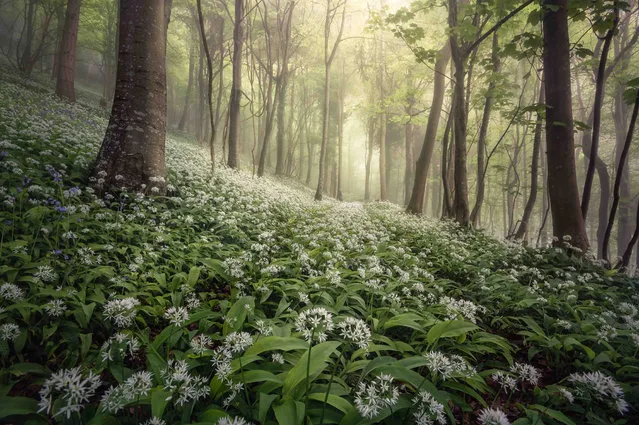
Woolland Woods, Dorset. Landscape photographer of the year 2020. “Taken in spring of 2018 in a wooded area close to Milborne St Andrew in Dorset, this was the third visit to the area in a matter of days. On the previous days, both devoid of morning mists, the light had been harsh and unappealing but the third day delivered stunning conditions with mist swirling through the trees. The low shooting position allowed more emphasis to be placed on the wild garlic and pathway”. (Photo by Chris Frost/UK Landscape Photographer of the Year 2020)

Woolland Woods, Dorset. Landscape photographer of the year 2020. “Taken in spring of 2018 in a wooded area close to Milborne St Andrew in Dorset, this was the third visit to the area in a matter of days. On the previous days, both devoid of morning mists, the light had been harsh and unappealing but the third day delivered stunning conditions with mist swirling through the trees. The low shooting position allowed more emphasis to be placed on the wild garlic and pathway”. (Photo by Chris Frost/UK Landscape Photographer of the Year 2020)
Details
22 Oct 2020 00:03:00
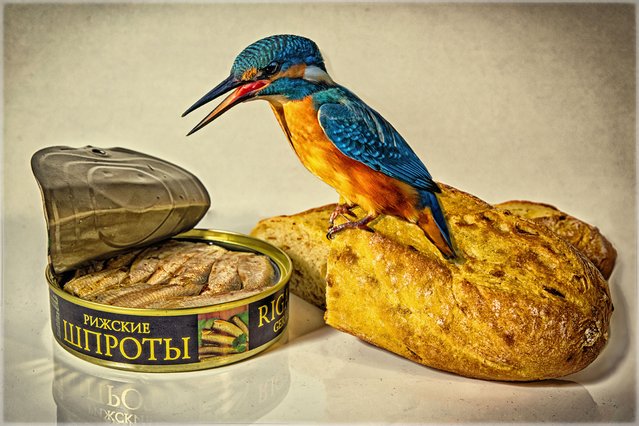
Creative imagery, gold winner: Sprats and Bread, Ruediger Schulz, Germany. (Photo by Ruediger Schulz/2021 Bird Photographer of the Year)

Creative imagery, gold winner: Sprats and Bread, Ruediger Schulz, Germany. (Photo by Ruediger Schulz/2021 Bird Photographer of the Year)
Details
26 Sep 2021 02:43:00
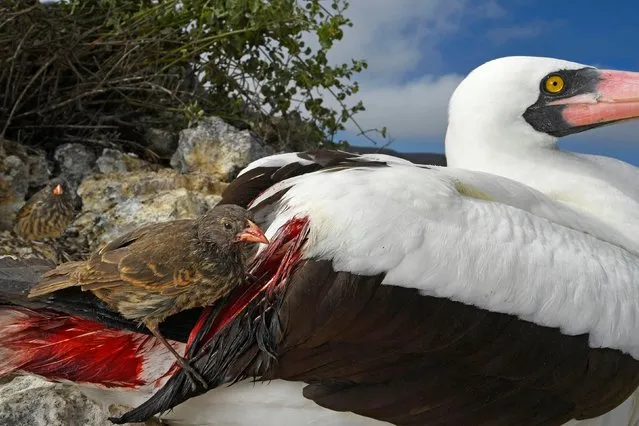
Bloodthirsty by Thomas P Peschak, Germany/South Africa — winner, Behaviour: birds. When rations run short on Wolf Island, in the remote northern Galápagos, the sharp-beaked ground finches become vampires. Their sitting targets are Nazca boobies and other large birds. The finches rely on a scant diet of seeds and insects, which regularly dries up, so they drink blood to survive. ‘I’ve seen more than half a dozen finches drinking from a single Nazca booby,’ says Tom. Rather than leave their nests the boobies tolerate the vampires, and the blood loss doesn’t seem to cause permanent harm. (Photo by Thomas P Peschak/2018 Wildlife Photographer of the Year)

Bloodthirsty by Thomas P. Peschak, Germany/South Africa — winner, Behaviour: birds. When rations run short on Wolf Island, in the remote northern Galápagos, the sharp-beaked ground finches become vampires. Their sitting targets are Nazca boobies and other large birds. The finches rely on a scant diet of seeds and insects, which regularly dries up, so they drink blood to survive. ‘I’ve seen more than half a dozen finches drinking from a single Nazca booby,’ says Tom. Rather than leave their nests the boobies tolerate the vampires, and the blood loss doesn’t seem to cause permanent harm. (Photo by Thomas P. Peschak/2018 Wildlife Photographer of the Year)
Details
19 Oct 2018 00:05:00
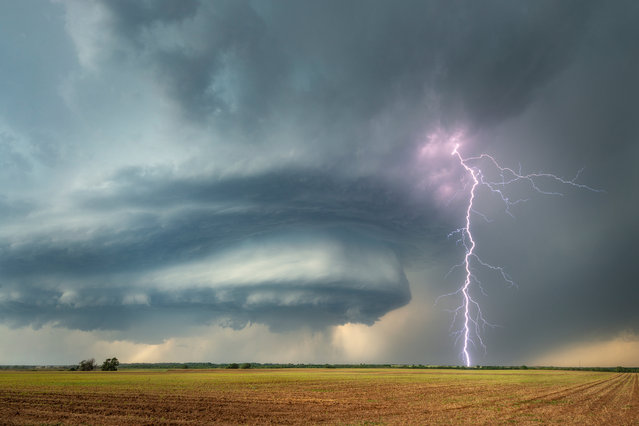
“The Supercell”. This shortlisted image by Dennis Oswald Huge farmland of was taken in south-west Oklahoma, US. (Photo by Dennis Oswald/2019 Weather Photographer of the Year/RMetS)

“The Supercell”. This shortlisted image by Dennis Oswald Huge farmland of was taken in south-west Oklahoma, US. (Photo by Dennis Oswald/2019 Weather Photographer of the Year/RMetS)
Details
30 Oct 2019 00:03:00
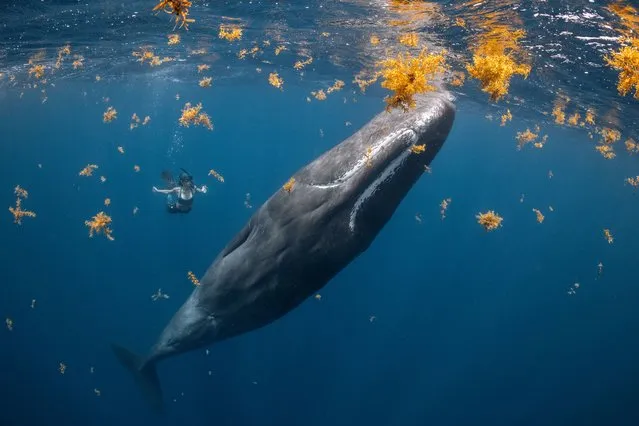
Human Connection Award: People and Planet Ocean – Winner – Steve Woods. A free diver interacts with a sperm whale among a cloud of sargassum weed, Dominica. (Photo by Steve Woods/Ocean Photographer of the Year 2022)

Human Connection Award: People and Planet Ocean – Winner – Steve Woods. A free diver interacts with a sperm whale among a cloud of sargassum weed, Dominica. (Photo by Steve Woods/Ocean Photographer of the Year 2022)
Details
09 Oct 2022 03:56:00
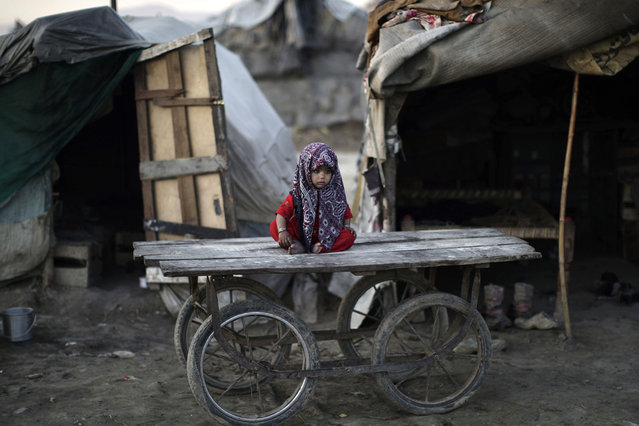
A Pakistani child, whose family was displaced by 2010 floods from a village in Pakistan's Sindh province, sits on a wooden cart outside her family's makeshift home, in a slum on the outskirts of Islamabad, on February 8, 2013. (Photo by Muhammed Muheisen/AP Photo)

A Pakistani child, whose family was displaced by 2010 floods from a village in Pakistan's Sindh province, sits on a wooden cart outside her family's makeshift home, in a slum on the outskirts of Islamabad, on February 8, 2013. (Photo by Muhammed Muheisen/AP Photo)
Details
29 Apr 2013 11:49:00
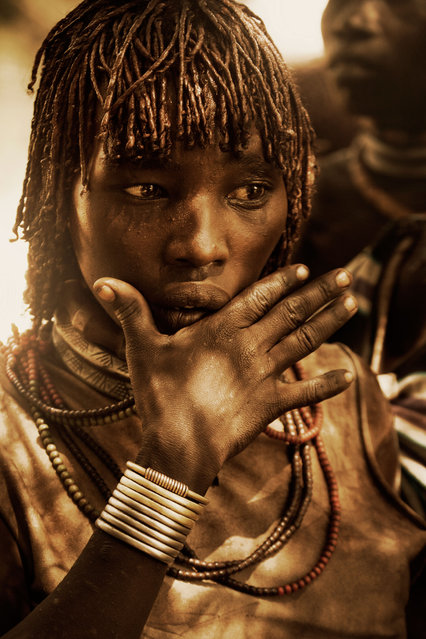
The Hamar people traditionally use red ocher clay to braid the hair of their women. (Photo by Diego Arroyo)

During his time in Ethiopia, New York-based art director and photographer Diego Arroyo spent time with the Hamar, Mursi, Dassanech, and Arbore Tribes. They, along with several others tribes, make up the 200,000 people situated in Africa’s Great Rift Valley. The people of the Omo Valley are still primarily herders and farmers, living an isolated and simple life. While they have yet to be truly touched by globalization, they could soon disappear. Their way of life is being threatened by a massive hydroelectric dam. (Photo by Diego Arroyo)
Details
13 Aug 2014 10:00:00
Danny Santos started photography as a hobby a few years ago, shooting strangers in the streets of Singapore every weekends. He still does that from time to time. Now he juggles between his day job as a graphic designer, and his part-time work as a freelance photographer. (Photo by Danny Santos)

Danny Santos started photography as a hobby a few years ago, shooting strangers in the streets of Singapore every weekends. He still does that from time to time. Now he juggles between his day job as a graphic designer, and his part-time work as a freelance photographer. (Photo by Danny Santos)
Details
17 Aug 2014 09:05:00