Loading...
Done
Centre of the Heart Nebula by Ivan Eder (Hungary). Situated 7500 light years away in the ‘W’-shaped constellation of Cassiopeia, the Heart Nebula is a vast region of glowing gas, energized by a cluster of young stars at its centre. The image depicts the central region, where dust clouds are being eroded and moulded into rugged shapes by the searing cosmic radiation. (Photo by Ivan Eder)

The competition, which is run by the Royal Observatory Greenwich in association with BBC Sky at Night Magazine, is now in its sixth year and has received over 2,500 entries. Photo: Centre of the Heart Nebula by Ivan Eder (Hungary). Situated 7500 light years away in the “W”-shaped constellation of Cassiopeia, the Heart Nebula is a vast region of glowing gas, energized by a cluster of young stars at its centre. The image depicts the central region, where dust clouds are being eroded and moulded into rugged shapes by the searing cosmic radiation. (Photo by Ivan Eder)
Details
03 Jul 2014 11:59:00
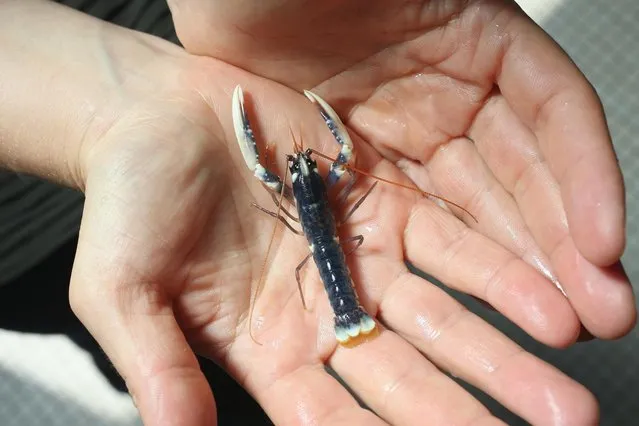
Isabel Schmalenbach, an environmental scientist with the Helgoland Biological Institute (Biologische Anstalt Helgoland), part of the Alfred Wegener Institute for Polar and Marine Research, holds a one-year old baby European lobster (Homarus gammarus) raised at the institute on August 3, 2013 on Helgoland Island, Germany. (Photo by Sean Gallup/Getty Images)

Isabel Schmalenbach, an environmental scientist with the Helgoland Biological Institute (Biologische Anstalt Helgoland), part of the Alfred Wegener Institute for Polar and Marine Research, holds a one-year old baby European lobster (Homarus gammarus) raised at the institute on August 3, 2013 on Helgoland Island, Germany. Later in the day Schmalenbach and her colleagues released a total of 415 one-year old lobsters into the North Sea as part of an effort to repopulate the lobster population around Helgoland (also called Heligoland). In the 19th century local fishermen caught up to 80,000 lobsters a year in the surrounding waters, combined with the heavy allied bombing of the island during and after World War II, as well as other environmental factors, decimated the lobster population. (Photo by Sean Gallup)
Details
05 Aug 2013 08:39:00


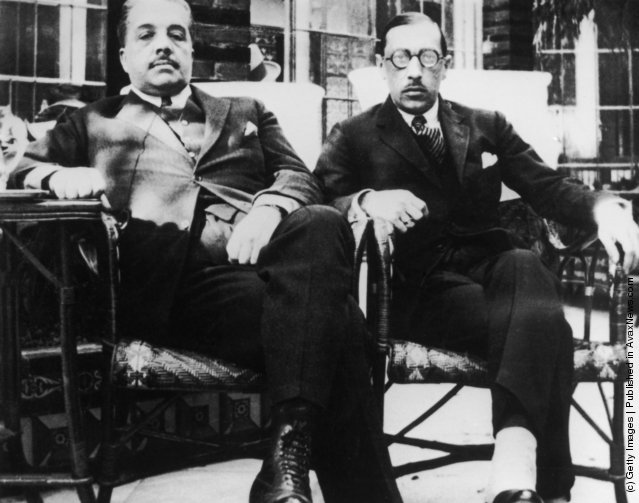
“Igor Fyodorovich Stravinsky (17 June [O.S. 5 June] 1882 – 6 April 1971) was a Russian-born, naturalized French, later naturalized American composer, pianist, and conductor. He is widely acknowledged as one of the most important and influential composers of 20th century music. He was a quintessentially cosmopolitan Russian who was named by Time magazine as one of the 100 most influential people of the century. He became a naturalized French citizen in 1934 and a naturalized US citizen in 1945. In addition to the recognition he received for his compositions, he also achieved fame as a pianist and a conductor, often at the premieres of his works”. – Wikipedia

Photo: Composer Igor Stravinsky (right) and impresario Sergei Diaghilev in Seville during their Ballets Russes collaboration. (Photo by Hulton Archive/Getty Images). 1921
Details
06 Apr 2011 07:59:00
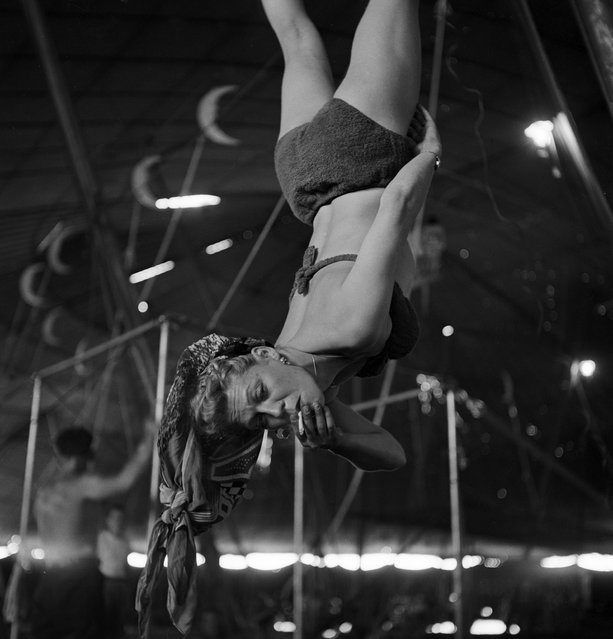
An aerialist smoking while rehearsing for the Ringling Bros. and Barnum & Bailey Circus in Sarasota, FL in 1949. (Photo By Nina Leen/Time Life Pictures/Getty Images)

In 1949, LIFE magazine sent famed photographer Nina Leen to document the daily life of a sassy troupe of young women who had run off and joined the famous Barnum & Bailey Circus in Sarasota, Fla. What developed was a portrait of a sisterhood formed over acrobatics that mixed high-flying wire acts with fashionable high-waisted shorts. Sarasota was once considered “the home of the American circus”. Here: an aerialist smoking while rehearsing for the Ringling Bros. and Barnum & Bailey Circus in Sarasota, FL in 1949. (Photo By Nina Leen/Time Life Pictures/Getty Images)
Details
06 Sep 2015 14:22:00
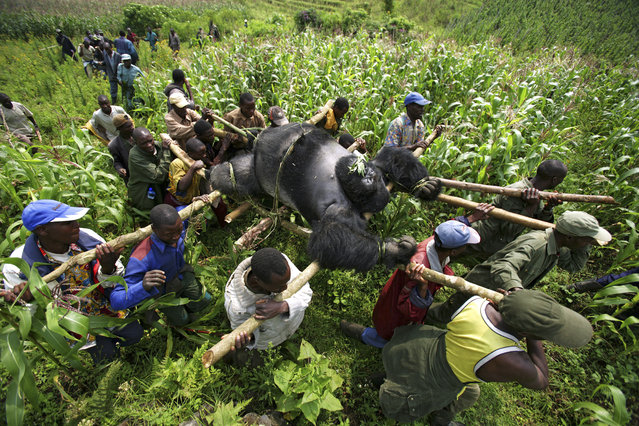
2008 Visa d'or Feature: Brent Stirton. Conservation Rangers from an Anti-Poaching unit work with locals to evacuate the bodies of four Mountain Gorrillas killed in mysterious circumstances in the park,  July 24, 2007, Virunga National Park, Eastern Congo. (Photo by Brent Stirton/Exclusive by Getty Images)

Jean-François Leroy launched Visa Pour l’Image, the international photojournalism festival, in Perpignan in 1989. Before heading up the festival, Leroy was shooting reportage for the agency Sipa Press and also working for Photo-Reporter, Le Photographe, Photo-Revue and Photo Magazine. He is the chairman of the company Images Evidence. Photo: 2008 Visa d'or Feature: Brent Stirton. Conservation Rangers from an Anti-Poaching unit work with locals to evacuate the bodies of four Mountain Gorrillas killed in mysterious circumstances in the park, July 24, 2007, Virunga National Park, Eastern Congo. (Photo by Brent Stirton/Exclusive by Getty Images)
Details
27 Aug 2013 10:42:00


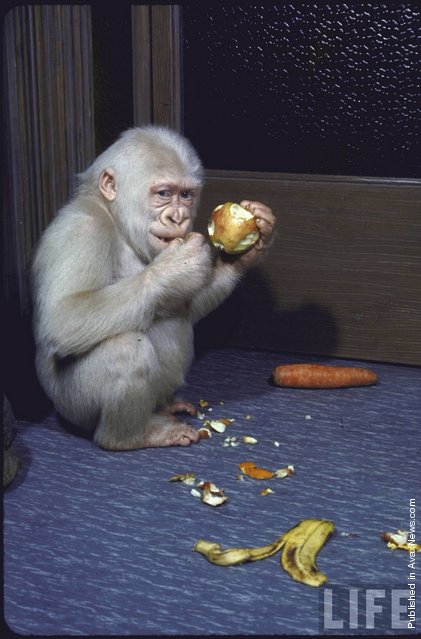
“Snowflake (c. 1964 – November 24, 2003) was an albino gorilla. He was the only known albino gorilla so far, and the most popular resident of the Barcelona Zoo in Catalonia, Spain. Originally named Nfumu Ngui in Fang language ("white gorilla") by his captor, he was then nicknamed Floquet de Neu (Catalan for little snowflake) by his keeper Jordi Sabater Pi. On his arrival to Barcelona where he was given an official reception by the then Mayor of Barcelona, Josep Maria de Porcioles, in November 1966, he was called Blancanieves (“Snow White”) in the newspaper Tele/Exprés. But he became famous with the name given to him by Sabater when National Geographic Magazine featured him on the main page in March 1967, with the English name Snowflake. This name spread among the press (Stern, Life, Paris-Match) and was later translated to Spanish as Copito de Nieve. Sabater himself called the gorilla Floquet or Copi, and in the later years Nfumu. The asteroid 95962 Copito, discovered by Catalan astronomer J. Manteca, is named in his honour”.
Details
07 Mar 2011 15:50:00
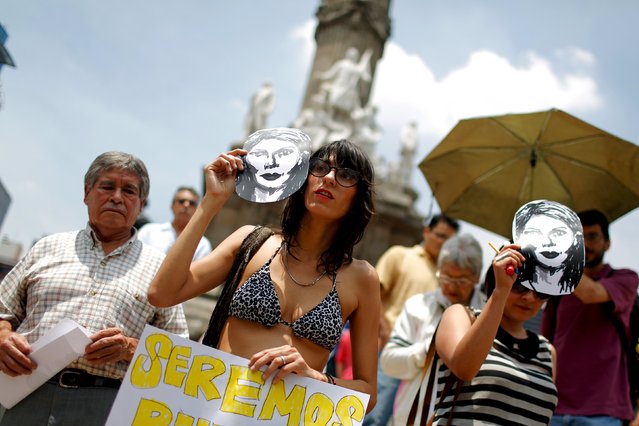
Demonstrators hold masks depicting Colombian citizen Mile Virginia, who was murdered along with photojournalist Ruben Espinosa and three other women, during a protest in Mexico City, August 16, 2015. Espinosa, a prominent Mexican news photographer was among five people found dead in a middle-class neighborhood of the capital on July 31, 2015. (Photo by Tomas Bravo/Reuters)

Demonstrators hold masks depicting Colombian citizen Mile Virginia, who was murdered along with photojournalist Ruben Espinosa and three other women, during a protest in Mexico City, August 16, 2015. Espinosa, a prominent Mexican news photographer was among five people found dead in a middle-class neighborhood of the capital on July 31, 2015. Espinosa, who worked for the weekly magazine Proceso and the photo agency Cuartoscuro, had sought shelter in Mexico City earlier this summer saying he had been followed and threatened in the eastern state of Veracruz. (Photo by Tomas Bravo/Reuters)
Details
17 Aug 2015 11:36:00
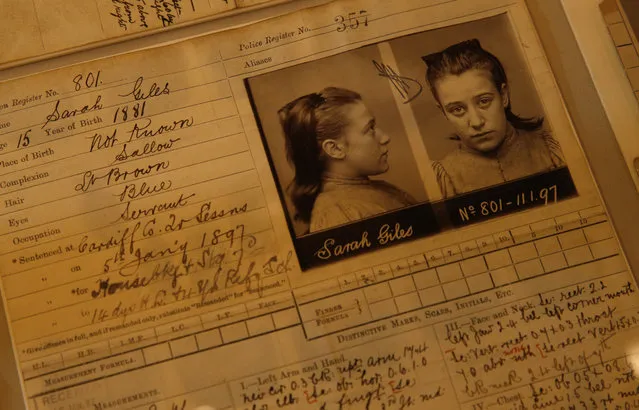
The anthropometric record card of Sarah Giles, a servant who was convicted of stealing in 1897, on display making up part of a mosaic of cards on a table top during a press preview for the Crime Museum Uncovered exhibition at the Museum of London in the City of London, Wednesday, October 7, 2015. (Photo by Alastair Grant/AP Photo)

The anthropometric record card of Sarah Giles, a servant who was convicted of stealing in 1897, on display making up part of a mosaic of cards on a table top during a press preview for the Crime Museum Uncovered exhibition at the Museum of London in the City of London, Wednesday, October 7, 2015. Drawn from Scotland Yard's private collection, the show charts more than a century of violence and suffering, from the murders of Jack the Ripper to IRA and al-Qaida bombings. But it also celebrates the brains, bravery and scientific advances that helped catch perpetrators and solve crimes. (Photo by Alastair Grant/AP Photo)
Details
11 Oct 2015 08:00:00