Loading...
Done
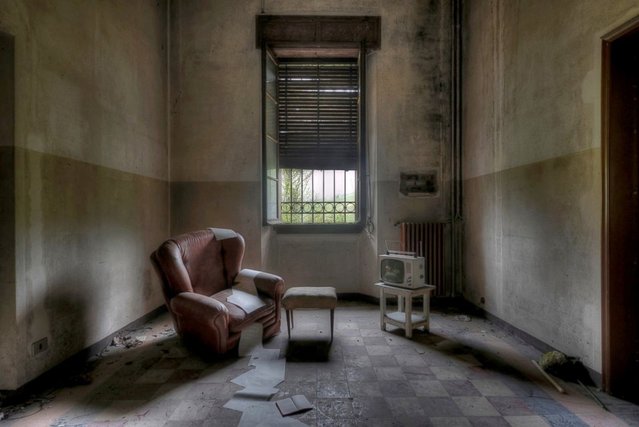
Paperflow – Room inside a former monastery. (Photo by Niki Feijen)

Photographer Niki Feijen for his new book, “Frozen”, photographed several abandoned buildings across Europe. Capturing their haunting beauty from years of decay. Here: Paperflow – Room inside a former monastery. (Photo by Niki Feijen)
Details
27 Jun 2014 10:37:00
Art By Pascal Campion

Pascal Campion is a French-American illustrator and animator. He studied narrative illustration at Arts Decoratifs de Strasbourg, in France. He revels in the company of his wife and daughter and finds it very hard to write about himself. He works in a studio with high ceilings in
San Francisco. Pascal has worked in a wide variety of media, from games, music videos, feature films to books.
Details
20 Sep 2013 10:28:00
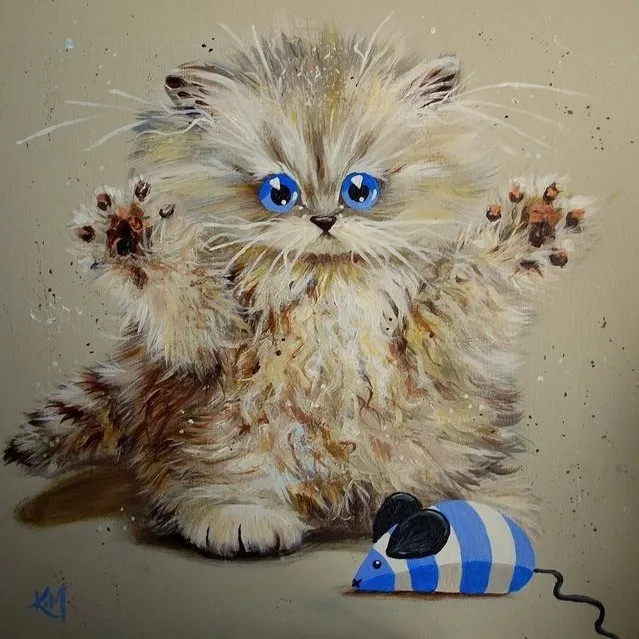
Cats By Kim Haskins

Kim Haskins was born in 1981 in Hitchin, Hertfordshire. Throughout school she was known as the class artist - the one who drew pictures in other peoples’ exercise books, made posters for school plays, designed t-shirts etc. Even growing up she pictures always fell into one of two categories: humorous or still life.
Details
06 Feb 2014 13:50:00
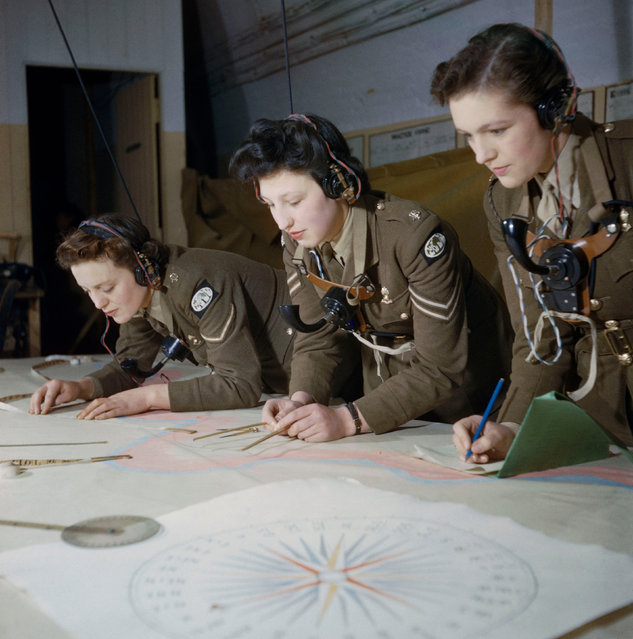
Auxiliary Territorial Service (ATS) plotters at work at Coastal Artillery Headquarters in Dover, December 1942. (Photo by Ted Dearberg/IWM/PA Wire)

Auxiliary Territorial Service (ATS) plotters at work at Coastal Artillery Headquarters in Dover, December 1942. The Auxiliary Territorial Service was the women's branch of the British Army during the Second World War. It was formed on 9 September 1938, initially as a women's voluntary service, and existed until 1 February 1949, when it was merged into the Women's Royal Army Corps. The ATS had its roots in the Women's Auxiliary Army Corps (WAAC), which was formed in 1917 as a voluntary service. During the First World War its members served in a number of jobs including clerks, cooks, telephonists and waitresses. The WAAC was disbanded after four years in 1921. (Photo by Ted Dearberg/IWM/PA Wire)
Details
13 Jul 2017 07:52:00
Tridacna Gigas, or Giant Clams

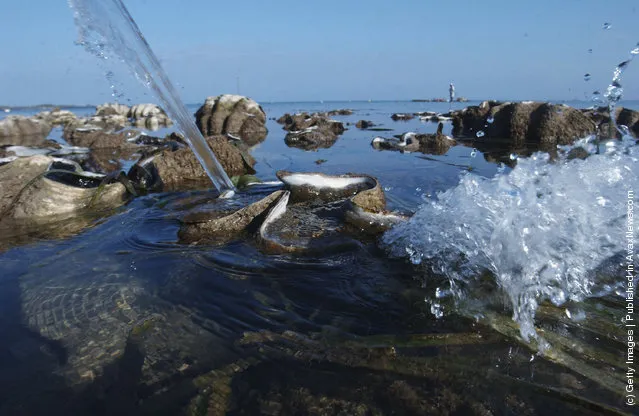
“The giant clam, Tridacna gigas (known as pā’ua in Cook Islands Māori), is the largest living bivalve mollusc. T. gigas is one of the most endangered clam species. It was mentioned as early as 1825 in scientific reports. One of a number of large clam species native to the shallow coral reefs of the South Pacific and Indian oceans, they can weigh more than 200 kilograms (440 lb) measure as much as 120 cm (47 in) across, and have an average lifespan in the wild of 100 years or more”. – Wikipedia

Photo: Tridacna Gigas, or Giant Clams spew water as a traditional fisherman passes by a small sanctuary on January 23, 2004 near Bolinao in the Northern Philippines. The clams, prime builders for coral reefs and providing shelter for spawning fish and other marine life, are exposed by low tides in the sanctuary. Overfishing and pollution throughout the country are not only threatening food security, but are also starting to choke one of the few working clam sanctuaries in the world. (Photo by David Greedy/Getty Images)

Details
01 Oct 2011 13:10:00
Afghans shout anti-U.S. slogans as they burn tires and block a highway during a protest in reaction to a small American church's plan to burn copies of the Quran, at Jalalabad, east of Kabul, Afghanistan, Friday, September 10, 2010. Religious and political leaders across the Muslim world welcomed a decision by the church to suspend its plans to torch copies of their holy book but some said Friday the damage has already been done. (Photo by Rahmat Gul/AP Photo)

Afghans shout anti-U.S. slogans as they burn tires and block a highway during a protest in reaction to a small American church's plan to burn copies of the Quran, at Jalalabad, east of Kabul, Afghanistan, Friday, September 10, 2010. Religious and political leaders across the Muslim world welcomed a decision by the church to suspend its plans to torch copies of their holy book but some said Friday the damage has already been done. (Photo by Rahmat Gul/AP Photo)
Details
07 Apr 2016 14:52:00
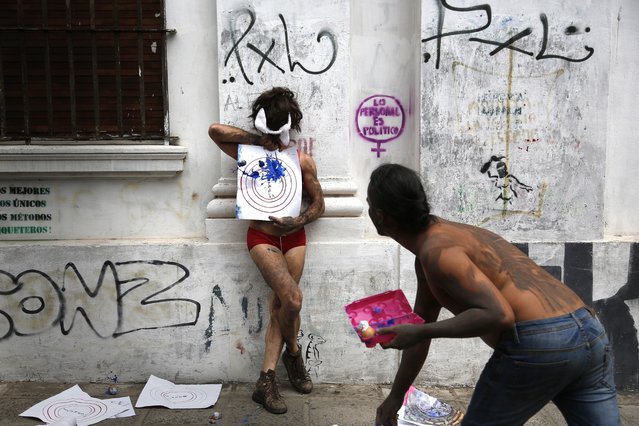
In this September 30, 2017 photo, people perform “transvestite target practice” to protest the killings of transvestite prostitutes during the annual LGBQT march in Asuncion, Paraguay. Advocacy groups fear the stigma and attacks against the LGBQT community could get worse now that the country's education minister has banned classes about sexual diversity in schools and even volunteered to help burn all books related to the subject. (Photo by Jorge Saenz/AP Photo)

In this September 30, 2017 photo, people perform “transvestite target practice” to protest the killings of transvestite prostitutes during the annual LGBQT march in Asuncion, Paraguay. Advocacy groups fear the stigma and attacks against the LGBQT community could get worse now that the country's education minister has banned classes about sexual diversity in schools and even volunteered to help burn all books related to the subject. (Photo by Jorge Saenz/AP Photo)
Details
15 Dec 2017 06:29:00
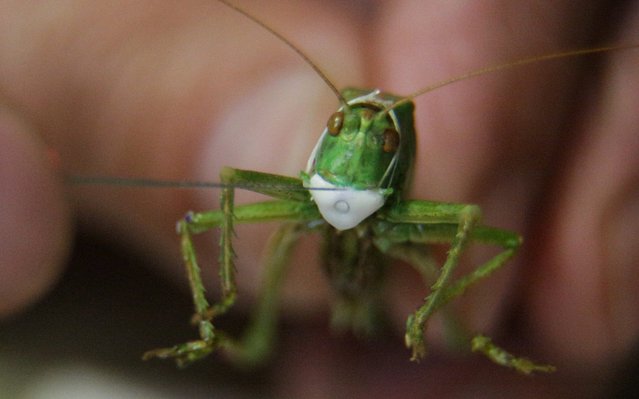
A grasshopper in a protective mask created by microminiaturist Anatoly Konenko in Omsk, Russia on May 21, 2020. Mini-masks about the size of a rice grain are made of a special high-density medical fabric with a built-in air filter. Anatoly Konenko is one of Russia's most famous microminiaturists; his works include a grasshopper playing a violin, a shod flea, a miniature bass guitar, a camel train in a needle's eye, and over 200 miniature books. (Photo by Yevgeny Sofiychuk/TASS)

A grasshopper in a protective mask created by microminiaturist Anatoly Konenko in Omsk, Russia on May 21, 2020. Mini-masks about the size of a rice grain are made of a special high-density medical fabric with a built-in air filter. Anatoly Konenko is one of Russia's most famous microminiaturists; his works include a grasshopper playing a violin, a shod flea, a miniature bass guitar, a camel train in a needle's eye, and over 200 miniature books. (Photo by Yevgeny Sofiychuk/TASS)
Details
23 May 2020 00:07:00