Loading...
Done
Book Art by Thomas Allen

American photographer Thomas Allen constructs witty and clever dioramas using figures cut from the covers of old pulp paperbacks. Using salacious pulp art drawing’s of the ’40s and ’50s that covered books such as ” I Married a Dead Man” and ” Marihuana Girl’, Allen constructs one set of pictures up close while obscuring another, and in the process creates a different context. Each piece is given a brand new storyline, though never quite strays from their cheeky origins.
Details
05 Dec 2012 13:01:00
Funny Cartoons By Lucas Levitan Part 1

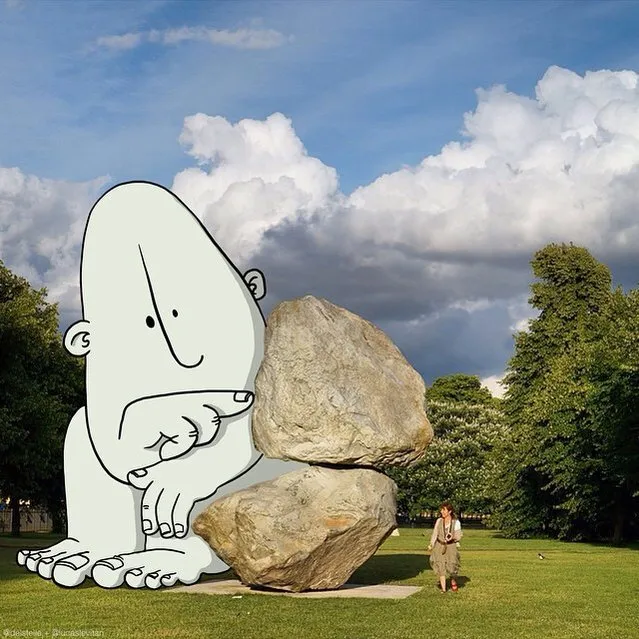
Adorable cartoonish characters created by a Brazilian illustrator Lucas Levian accentuate the most prominent details of the pictures that he has found on Instagram. The original photos were completely bland and uninteresting; however, Lucas Levitan manages to add a comical effect to them by skillfully adding a character that is doing something completely unexpected. Who would imagу placing a little guy with an iron onto the forehead of an old man? (Photo by Lucas Levitan)
Details
30 Dec 2014 11:33:00


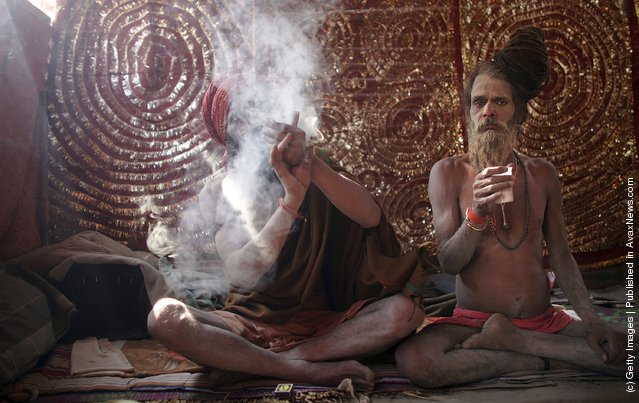
“Kumbh Mela is a mass Hindu pilgrimage in which Hindus gather at the Ganges river. The normal Kumbh Mela is celebrated every 3 years, the Ardh (half) Kumbh Mela is celebrated every six years at Haridwar and Prayag, the Purna (complete) Kumbh takes place every twelve years, at four places (Prayag (Allahabad), Haridwar, Ujjain, and Nashik). The Maha (great) Kumbh Mela which comes after 12 “Purna Kumbh Melas”, or 144 years, is held at Allahabad.

The last Ardh Kumbh Mela was held over a period of 45 days beginning in January 2007, more than 70 million Hindu pilgrims took part in the Ardh Kumbh Mela at Prayag, and on January 15, the most auspicious day of the festival of Makar Sankranti, more than 5 million participated. The previous Maha Kumbh Mela, held in 2001, was attended by around 60 million people, making it at the time the largest gathering anywhere in the world in recorded history”. – Wikipedia

Photo: Sadhus (holy men) smoke at their camp near the ritual site at Sangam, the confluence of the Ganges, Yamuna and mythical Saraswati rivers during the Ardh Kumbh Mela festival (Half Pitcher festival) January 18, 2007 in Allahabad, India. Millions of Hindu pilgrims have flocked to the largest religious gathering in the world which lasts for 45 days in northern India. The festival commemorates the mythical conflict between gods and demons over a pitcher filled with the “nectar of immortality”. Devotees believe that taking a holy dip in the Ganges at this time washes away their sins and paves the path to salvation. (Photo by Mario Tama/Getty Images)

Details
30 Jun 2011 10:27:00
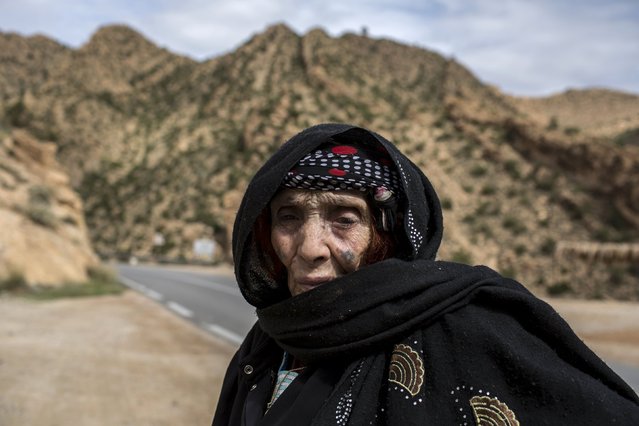
Mazouza Bouglada, 86, a berber woman from the Chaouia region, who has facial tattoos, poses for a photograph in Taghit in the Aures Mountain, Algeria October 8, 2015. Bouglada was tattooed aged 7 by a nomadic man from the Sahara region. She was advised by her mother to get tattooed. The more she got tattooed the more she showed off. Even if she still remembers the pain, she felt beautiful once it was done, Bouglada said. (Photo by Zohra Bensemra/Reuters)

Mazouza Bouglada, 86, a berber woman from the Chaouia region, who has facial tattoos, poses for a photograph in Taghit in the Aures Mountain, Algeria October 8, 2015. Bouglada was tattooed aged 7 by a nomadic man from the Sahara region. She was advised by her mother to get tattooed. The more she got tattooed the more she showed off. Even if she still remembers the pain, she felt beautiful once it was done, Bouglada said. She was very proud of her stars on her cheeks. Her eldest sister had been tattooed before her and she wanted to imitate her. Bouglada said she has now given away all her silver jewellery to atone for the sin that believers told her she had committed by being tattooed. (Photo by Zohra Bensemra/Reuters)
Details
01 Nov 2015 08:02:00
Eyes As Big As Plates – Norway And Finland

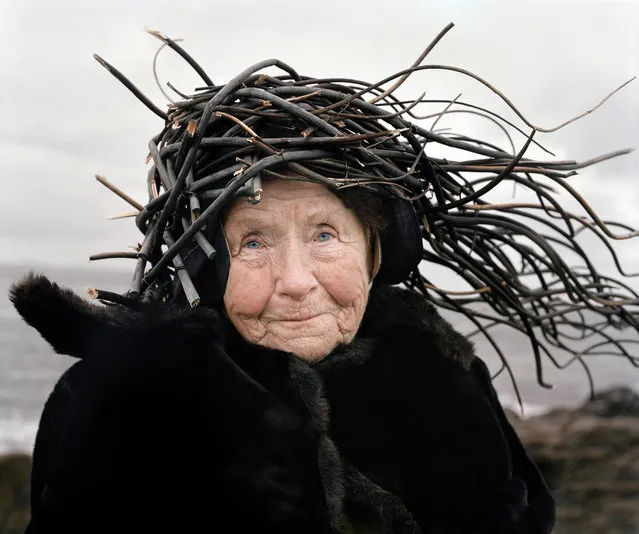
Eyes as Big as Plates is a whimsical series by Finnish photographer Riitta Ikonen and Norwegian photographer Karoline Hjorth that features senior citizens donning organic materials like twigs and grass. Ikonen says that the collaborative project originally began as "a play on characters and protagonists from Norwegian folklore" but has since evolved into a collection of images exploring "mental landscapes" that reflect a return of body to nature with the use of scavenged materials.
Details
08 Apr 2013 09:53:00
A baby wallaby

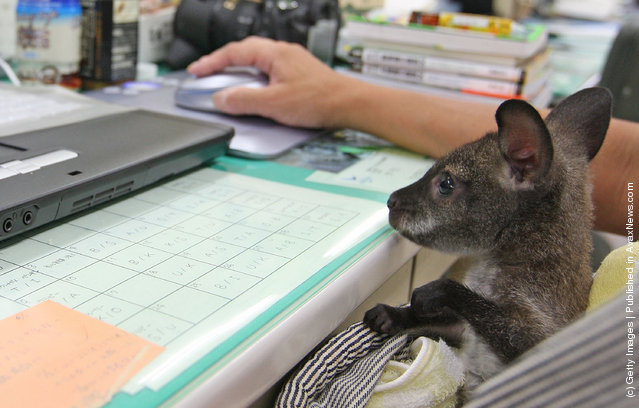
“Very small forest-dwelling wallabies are known as pademelons (genus Thylogale) and dorcopsises (genera Dorcopsis and Dorcopsulus). The name wallaby comes from the Eora Aboriginal tribe who were the original inhabitants of the Sydney area. Wallabies are herbivores whose diet consists of a wide range of grasses, vegetables, leaves, and other types of foliage”. – Wikipedia

Photo: A baby wallaby sits in a zoo attendant's lap at Edogawa Natural Zoo on August 4, 2009 in Tokyo, Japan. The staff of the zoo have raised the young wallaby after her mother neglected her. (Photo by Junko Kimura/Getty Images)
Details
07 Sep 2011 13:33:00
Some women doing yoga pose on the hammocks during the Anti-Gravity yoga class at Svarga e-Motion Sanctuary at Dharmawangsa Square, Jakarta, Saturday, April 18, 2015. (Photo by Jurnasyanto Sukarno/JG Photo)

Some women doing yoga pose on the hammocks during the Anti-Gravity yoga class at Svarga e-Motion Sanctuary at Dharmawangsa Square, Jakarta, Saturday, April 18, 2015. Anti-Gravity Yoga or “aerial yoga”, is a new type of yoga, originating in New York but now being practised in several countries, which combines the traditional yoga poses, pilates and dance with the use of a hammock. (Photo by Jurnasyanto Sukarno/JG Photo)
Details
21 Apr 2015 10:39:00
Beachgoers are hit by a wave in La Libertad May 3, 2015. (Photo by Jose Cabezas/Reuters)

Beachgoers are hit by a wave in La Libertad May 3, 2015. El Salvador emergency authorities declared a green alert along the pacific coats due to a large swell that affected the Salvadoran coast and originated from the extra-tropical storms that formed in New Zealand and the Southern hemisphere, according to El Salvador's ministry of environment and natural resources. (Photo by Jose Cabezas/Reuters)
Details
05 May 2015 10:32:00