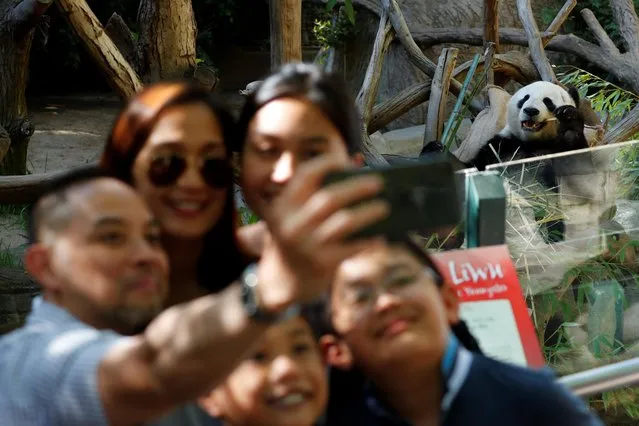
A family take a souvenir picture next to giant male panda Xiao Liwu, who was born at the San Diego Zoo and will be repatriated to China with his mother Bai Yun, bringing an end to a 23-year-long panda research program in San Diego, California, U.S., April 18, 2019. (Photo by Mike Blake/Reuters)
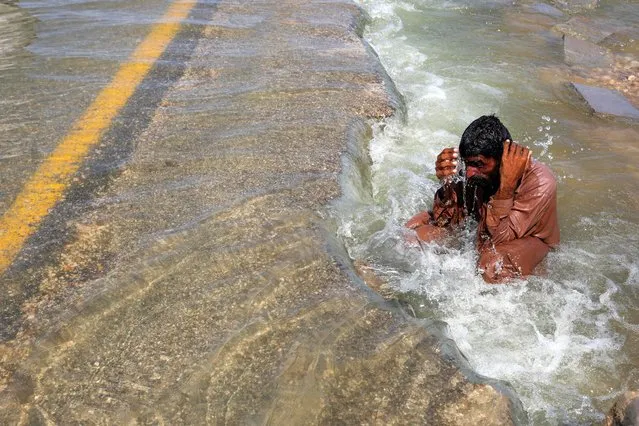
A displaced man cools off to avoid heat on flooded highway, following rains and floods during the monsoon season in Sehwan, Pakistan on September 16, 2022. (Photo by Akhtar Soomro/Reuters)
Fans of Argentina react while watching the live broadcast of the Qatar 2022 World Cup final football match between Argentina and France in Buenos Aires, on December 18, 2022. (Photo by Luis Robayo/AFP Photo)
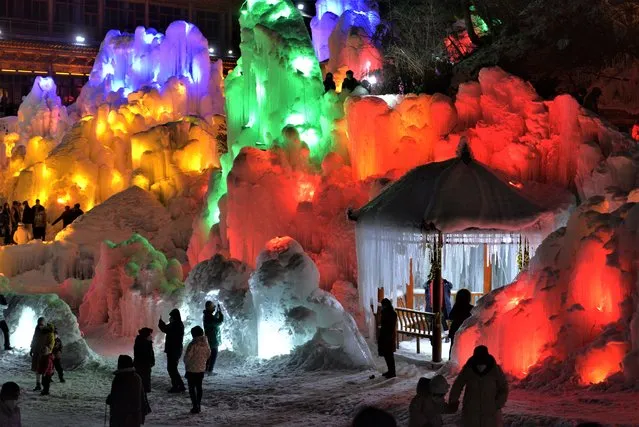
People visit a frozen waterfall illuminated by colorful lights at Dadunxia sceneic area on December 25, 2022 in Linxia Hui Autonomous Prefecture, Gansu Province of China. (Photo by Shi Youdong/VCG via Getty Images)
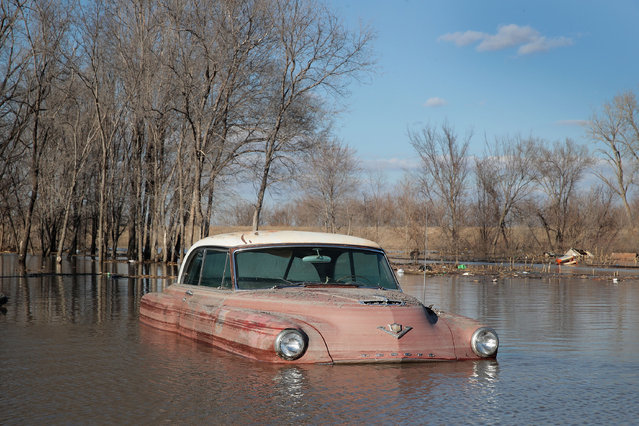
A vintage car sits in flood water on March 20, 2019 in Hamburg, Iowa. Although flood water in the town has started to recede many homes and businesses remain surrounded by water. Several Midwest states are battling some of the worst flooding they have experienced in decades as rain and snow melt from the recent “bomb cyclone” has inundated rivers and streams. At least three deaths have been linked to the flooding. (Photo by Scott Olson/Getty Images)
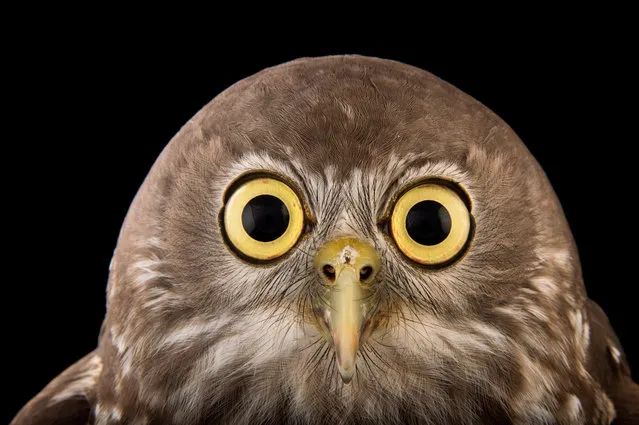
The National Geographic Photo Ark is a travelling exhibition of photographer Joel Sartore’s quest to create a photo archive of biodiversity around the world. So far, Sartore has captured studio portraits of more than 6,000 species – a number that he hopes to double. On 1 July, the ark will open at Melbourne zoo – the first time it has been exhibited in the southern hemisphere. More than 50 portraits will be on display, including many of Australian endangered animals being protected by programs at the zoo itself. These captions have been edited from text supplied by Melbourne zoo. Here: Barking owl. (Photo by Joel Sartore/National Geographic Photo Ark/The Guardian)