Loading...
Done
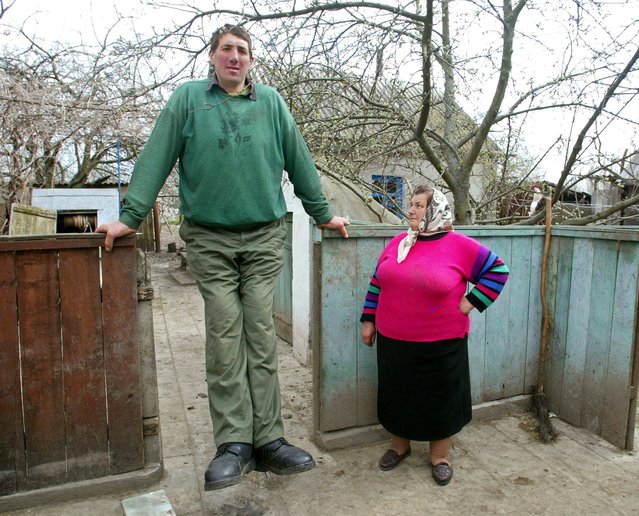
Ukraine's Leonid Stadnyk, who stands at a height of 2.53 metres (eight feet four inches) and may be considered the world's tallest living man, near his house in the village of Podolyantsi in Ukraine's Zhytomyr region, about 200 km (124 miles) from the capital Kiev, 2005. (Photo by Reuters/STR New)

Ukraine's Leonid Stadnyk, who stands at a height of 2.53 metres (eight feet four inches) and may be considered the world's tallest living man, near his house in the village of Podolyantsi in Ukraine's Zhytomyr region, about 200 km (124 miles) from the capital Kiev, 2005. (Photo by Reuters/Stringer)
Details
29 Aug 2014 11:56:00
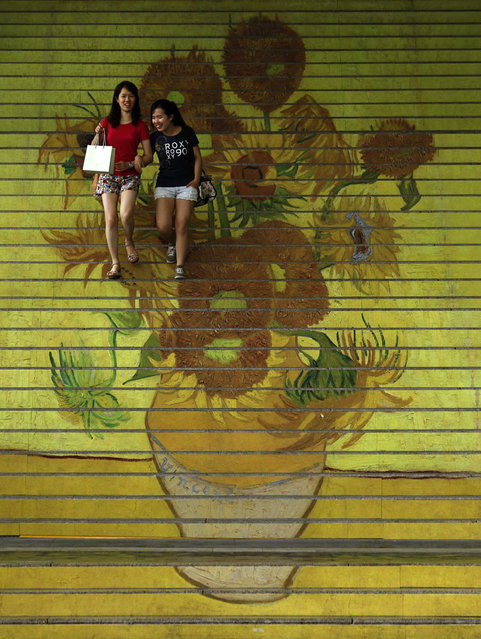
Shoppers walk down stairs featuring a five-metre-high reproduction of Vincent van Gogh's signature painting “Sunflowers”, at the entrance to Ocean Terminal in Hong Kong July 15, 2013. A premium three-dimensional reproduction of works of Van Gogh, the RELIEVO collection, approved by the curators of the Van Gogh Museum in Amsterdam, is on display at a gallery inside Harbour City shopping mall attached to the terminal. (Photo by Bobby Yip/Reuters)

Shoppers walk down stairs featuring a five-metre-high reproduction of Vincent van Gogh's signature painting “Sunflowers”, at the entrance to Ocean Terminal in Hong Kong July 15, 2013. A premium three-dimensional reproduction of works of Van Gogh, the RELIEVO collection, approved by the curators of the Van Gogh Museum in Amsterdam, is on display at a gallery inside Harbour City shopping mall attached to the terminal. (Photo by Bobby Yip/Reuters)
Details
20 Jul 2013 11:59:00
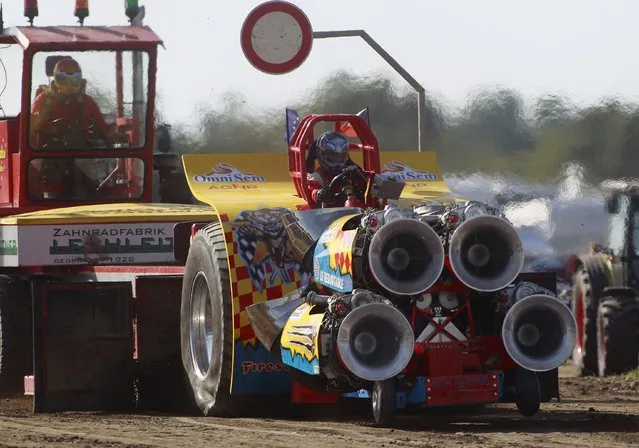
A driver competes in his tractor during the Tractor Pulling Euro Championships in the western German town of Fuechtorf September 9, 2012. Eighty teams from across Europe participated in the two-day competition where high-powered tractor prototypes must pull a trailer down a 100-metre (328 ft) track as far as possible. (Photo by Ina Fassbender/Reuters)

A driver competes in his tractor during the Tractor Pulling Euro Championships in the western German town of Fuechtorf September 9, 2012. Eighty teams from across Europe participated in the two-day competition where high-powered tractor prototypes must pull a trailer down a 100-metre (328 ft) track as far as possible. (Photo by Ina Fassbender/Reuters)
Details
22 Jul 2013 08:50:00
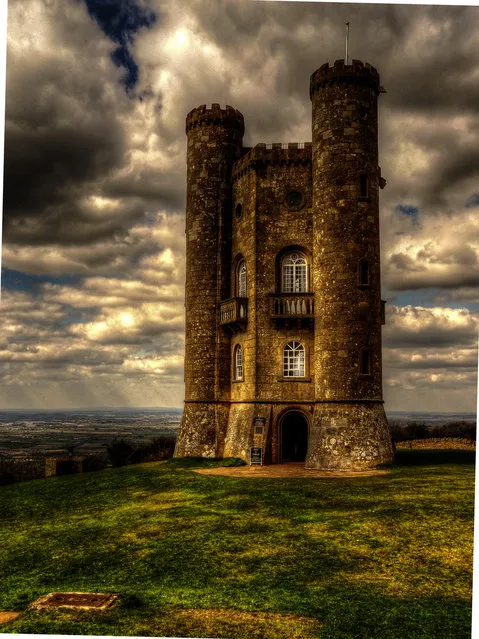
Broadway Tower In English

Broadway Tower is a folly located on Broadway Hill, near the village of Broadway, in the English county of Worcestershire, at the second highest point of the Cotswolds after Cleeve Hill. Broadway Tower's base is 1,024 feet (312 metres) above sea level. The tower itself stands 55 feet (17 metres) high. The “Saxon” tower was designed by James Wyatt in 1794 in the form of a castle, and built for Lady Coventry in 1799. The tower was built on a “beacon” hill, where beacons were lit on special occasions. Lady Coventry wondered if a beacon on this hill could be seen from her house in Worcester – approximately 22 miles (35 km) away – and sponsored the construction of the folly to find out. The beacon could be seen clearly.
Details
19 Dec 2013 10:06:00
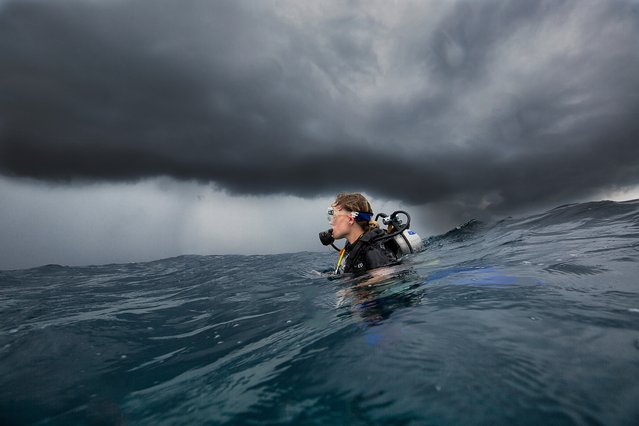
Winner. “This was taken in the South Ari Atolls, Maldives, as the south-west monsoon season was setting in. It features my partner – and dive buddy – Emma after surfacing at the end of the last dive of the day to find 1.5 metre swells and dark monsoon clouds. MICK RYAN, JUDGE: This beautiful portrait of a diver in an ocean swell below a menacing sky stands out this month for its emotional and elemental beauty. It is a reminder that while we may play among nature we are always dwarfed by its power and must be constantly on our guard”. (Photo by Simon Dunn/The Guardian)

Winner. “This was taken in the South Ari Atolls, Maldives, as the south-west monsoon season was setting in. It features my partner – and dive buddy – Emma after surfacing at the end of the last dive of the day to find 1.5 metre swells and dark monsoon clouds. MICK RYAN, JUDGE: This beautiful portrait of a diver in an ocean swell below a menacing sky stands out this month for its emotional and elemental beauty. It is a reminder that while we may play among nature we are always dwarfed by its power and must be constantly on our guard”. (Photo by Simon Dunn/The Guardian)
Details
04 Oct 2016 10:55:00
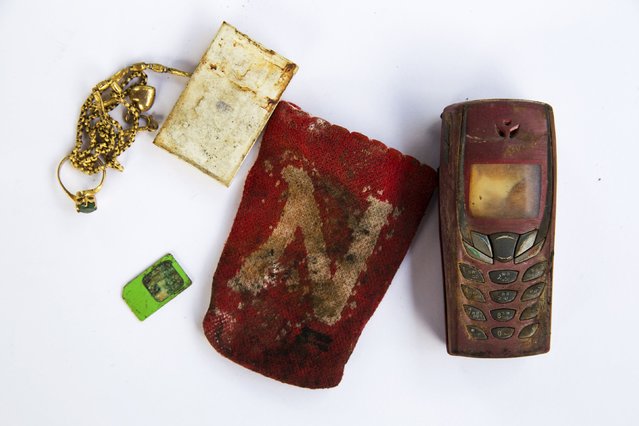
Personal possessions of 2004 tsunami victims are arranged to be photographed outside a police station in Takua Pa, in Phang Nga province December 19, 2014. (Photo by Damir Sagolj/Reuters)

Personal possessions of 2004 tsunami victims are arranged to be photographed outside a police station in Takua Pa, in Phang Nga province December 19, 2014. Thai police opened a shipping container filled with documents and possessions of victims of the 2004 Indian Ocean Tsunami after being asked by Reuters for permission to film its contents. The three metre by 12 metre container was handed over to Thai police in 2011 and contains hundreds of plastic police evidence bags – each one holding the precious items found on the body of a victim. (Photo by Damir Sagolj/Reuters)
Details
24 Dec 2014 13:44:00
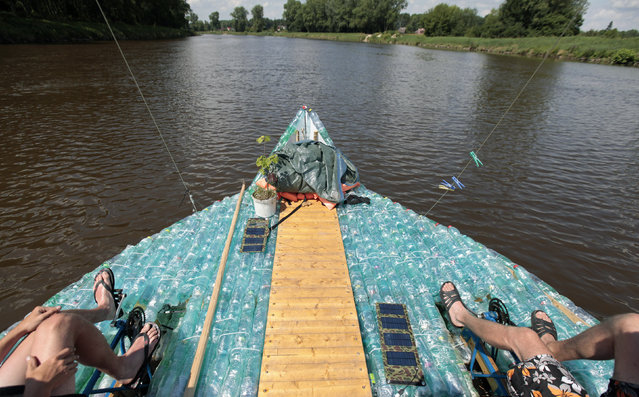
Jan Kara (R) and Jan Holan pedal their boat, made with plastic bottles, on the Elbe river near Kostelec nad Labem July 15, 2014. (Photo by David W. Cerny/Reuters)

Jan Kara (R) and Jan Holan pedal their boat, made with plastic bottles, on the Elbe river near Kostelec nad Labem July 15, 2014. Jan Kara, a 22-year-old student, and Jakub Bures, a 22-year-old car mechanic, built the 10-metre (32.8-feet) long boat from 5000 plastic bottles strapped to a wooden frame. (Photo by David W. Cerny/Reuters)
Details
22 Sep 2014 11:43:00
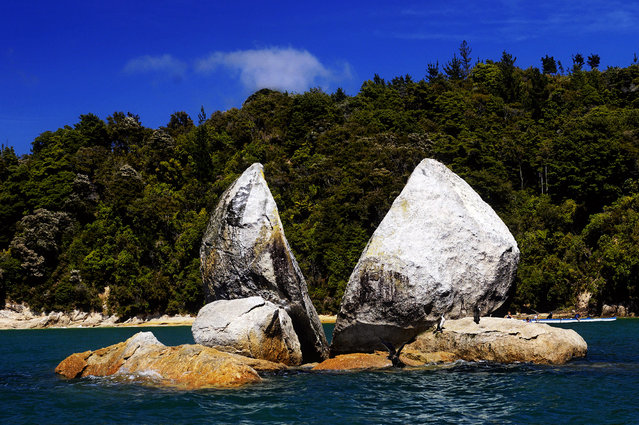
Split Apple Rock

Split Apple Rock is a geological rock formation in The Tasman Bay off the northern coast of the South Island of New Zealand. Made of granite, it is in the shape of an apple which has been cut in half. It is a popular tourist attraction in the waters of the Tasman Sea approximately 50 metres off the coast between Kaiteriteri and Marahau. The rock sits in shallow water at low tide and is accessible by wading. It is also a point of interest for the many tourist boats and pleasure craft which operate along the shores of the Abel Tasman National Park. The cleft to produce two sides of the 'apple' was a natural occurrence. It is unknown when this happened and therefore the cleaving of the rock has attracted mythological explanations.
Details
19 Oct 2013 10:58:00