Secondary school graduates play in a fountain as they celebrate the last day of school, traditionally called the “last bell” in central Kiev, Ukraine on May 31, 2019. (Photo by Valentyn Ogirenko/Reuters)
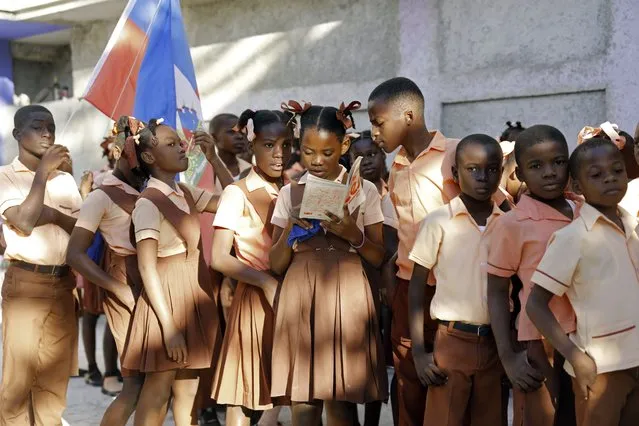
Students from the private school Gabriel stand in line as they prepare to start their school day in Port-au-Prince, Haiti, Tuesday, January 9, 2024. (Photo by Odelyn Joseph/AP Photo)
In Paris, doctors, orderlies and nurses demonstrated as well as all over France to remind the government of its promises on the hospital, in the middle of the “Segur de la sante” on June 16, 2020. The demonstration brought together several thousand people, with a few clashes on the esplanade des Invalides at the end of the day. (Photo by Jan Schmidt-Whitley/Le Pictorium Agency via ZUMA/Rex Features/Shutterstock)
A Chinese shopper sleeps on a bed in the showroom of the IKEA store on July 6, 2014 in Beijing, China. Of the world's ten biggest Ikea stores, 8 of them are in China to cater to the country's growing middle class. The stores are designed with extra room displays given the tendency for customers to make a visit an all-day affair. Store management does not discourage shoppers from sleeping on Ikea furniture, even marking them with signs inviting customers to try them out. (Photo by Kevin Frayer/Getty Images)
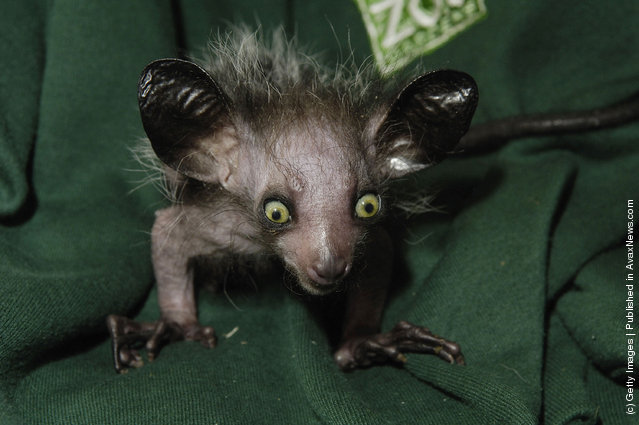
“The aye-aye (Daubentonia madagascariensis) is a lemur, a strepsirrhine primate native to Madagascar that combines rodent-like teeth and a special thin middle finger to fill the same ecological niche as a woodpecker. It is the world's largest nocturnal primate, and is characterized by its unusual method of finding food; it taps on trees to find grubs, then gnaws holes in the wood and inserts its narrow middle finger to pull the grubs out. The only other animal species known to find food in this way is the striped possum. From an ecological point of view the aye-aye fills the niche of a woodpecker as it is capable of penetrating wood to extract the invertebrates within”. – Wikipedia
Photo: In this handout image from Bristol Zoo is seen the first captive bred aye-aye in the UK named “Kintana” (meaning star in Malagasy) April 15, 2005 at Bristol Zoo Gardens, England. The zoo announced today only the second baby aye-aye to be hand-reared in the world (the first was in Jersey Zoo) and has now made his first public appearance since his birth on 11 February 2005. (Photo by Rob Cousins/Bristol Zoo via Getty Images)
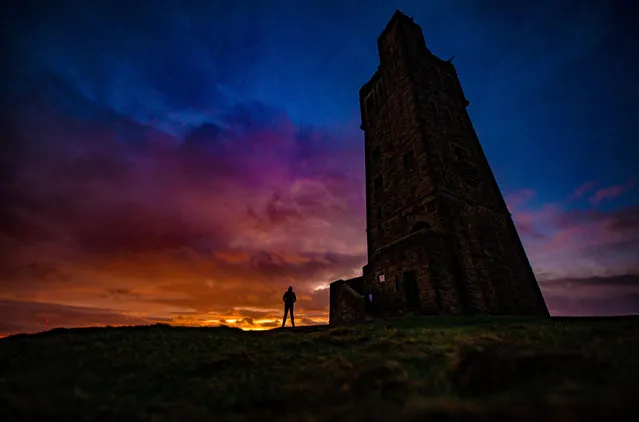
A colourful morning sunrise on Christmas Eve at Victoria Tower on Castle Hill, West Yorkshire, England on December 24, 2017. The history of human activity on the Castle Hill goes back over 4000 years. The site was developed as an iron age hill fort, surrounded by defensive ditches and ramparts. In the Middle Ages there was a castle on the hill, of which the well remains. The present tower was built to commemorate Queen Victoria's Diamond Jubilee of 1897. (Photo by Charlotte Graham/ZUMA Wire/Rex Features/Shutterstock)
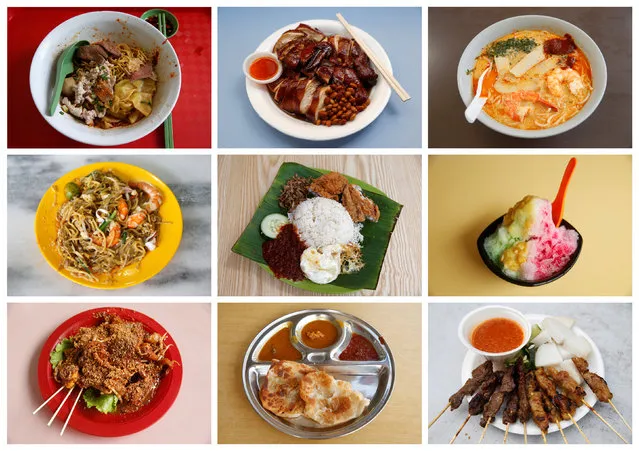
A combination photo shows various popular street foods under $6 from various hawker food stalls and eateries in Singapore, taken between July 28 to 31, 2016. Top row (L to R) bak chor mee, soya sauce chicken; Middle row (L to R) laksa, hokkien mee, nasi lemak, ice kachang; Bottom row (L to R) rojak, roti prata and satay. (Photo by Edgar Su/Reuters)
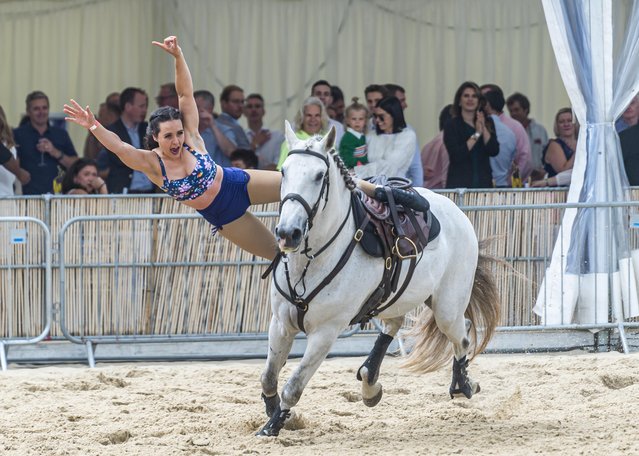
The Knights of Middle England equestrian stunt display team perform ahead of the first match on July 13, 2024. The British Beach Polo Championships, or “sand polo”, returns to the exclusive Sandbanks peninsula near Poole, Dorset. Spectators can appreciate the horsemanship, speed and gladiatorial nature of polo at the largest beach polo event in the world. (Photo by Max Willcock/Bournemouth News)