Loading...
Done
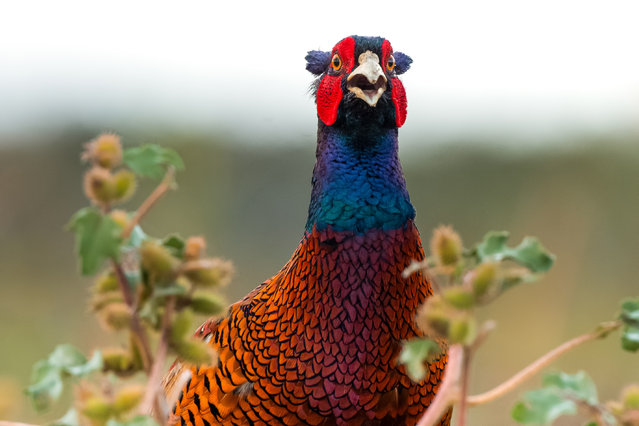
A pheasant is seen among grasses in Bursa, Turkiye on October 07, 2024. Pheasants mostly live in forested areas, thickets and wetlands. Unlike females, male pheasants have a much more remarkable structure with their long tails and feathers in bright and variable colors. Also, they feed on fruits, grains, seeds and invertebrates. (Photo by Alper Tuydes/Anadolu via Getty Images)

A pheasant is seen among grasses in Bursa, Turkiye on October 07, 2024. Pheasants mostly live in forested areas, thickets and wetlands. Unlike females, male pheasants have a much more remarkable structure with their long tails and feathers in bright and variable colors. Also, they feed on fruits, grains, seeds and invertebrates. (Photo by Alper Tuydes/Anadolu via Getty Images)
Details
27 Oct 2024 04:43:00
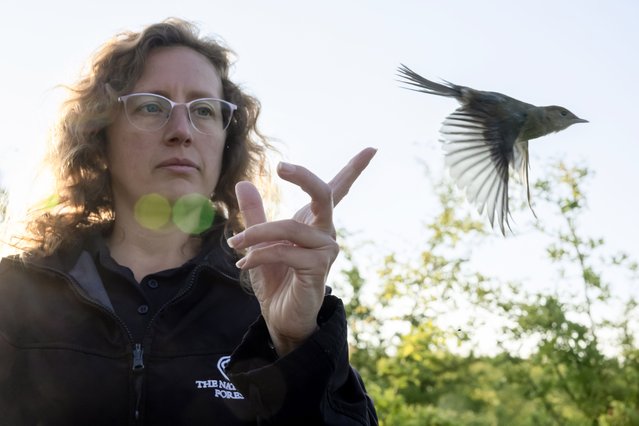
A juvenile blackcap is recorded in the soft light of morning at Minorca, UK, a former open-cast mine near Moira in the National Forest on June 18, 2025. Dr Heather Gilbert, research and evidence manager, checks mist nets among wildflowers and young trees as part of long-term monitoring that shows bird numbers have increased by 48 per cent over 30 years. (Photo by Rod Kirkpatrick/RKP Photography)

A juvenile blackcap is recorded in the soft light of morning at Minorca, UK, a former open-cast mine near Moira in the National Forest on June 18, 2025. Dr Heather Gilbert, research and evidence manager, checks mist nets among wildflowers and young trees as part of long-term monitoring that shows bird numbers have increased by 48 per cent over 30 years. (Photo by Rod Kirkpatrick/RKP Photography)
Details
29 Jun 2025 03:58:00
Firefighters work to put out flames during a wildfire in Sokcho, South Korea, April 5, 2019. (Photo by Yonhap via Reuters)

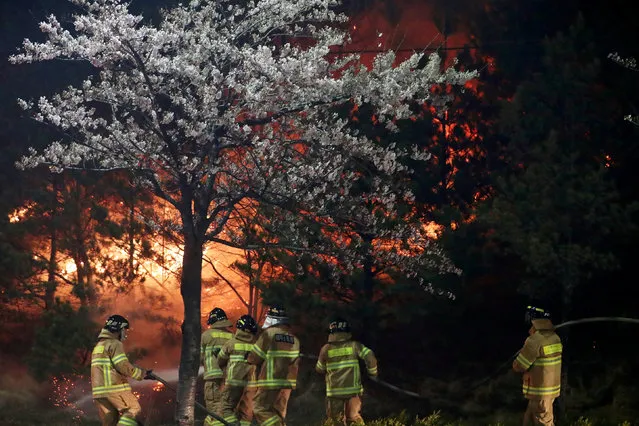
Firefighters work to put out flames during a wildfire in Sokcho, South Korea, April 5, 2019. South Korea grappled with the massive blaze that roared through forests and cities along the eastern coast, declaring a national emergency and mobilizing all available resources to bring the inferno under control. (Photo by Yonhap via Reuters)
Details
07 Apr 2019 00:07:00
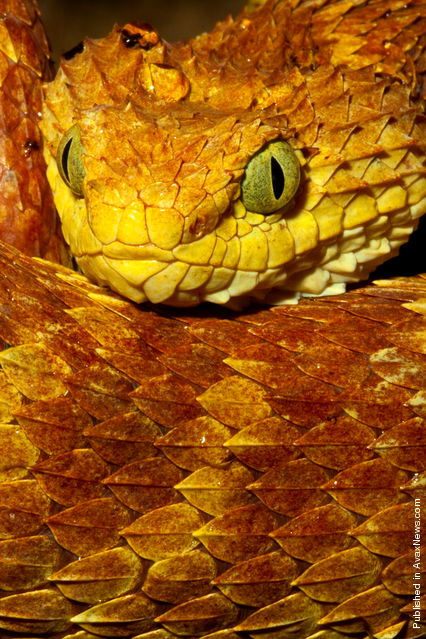
Atheris squamigera

“Atheris is a genus of venomous vipers found only in tropical subsaharan Africa, excluding southern Africa. Confined to rain forest areas, many members have isolated and fragmented distributions. In an interesting example of convergent evolution, they show many similarities to the arboreal pit vipers of Asia and South America”. – Wikipedia

Photo: Atheris squamigera. (Photo by David Williams)
Details
21 Apr 2012 13:14:00


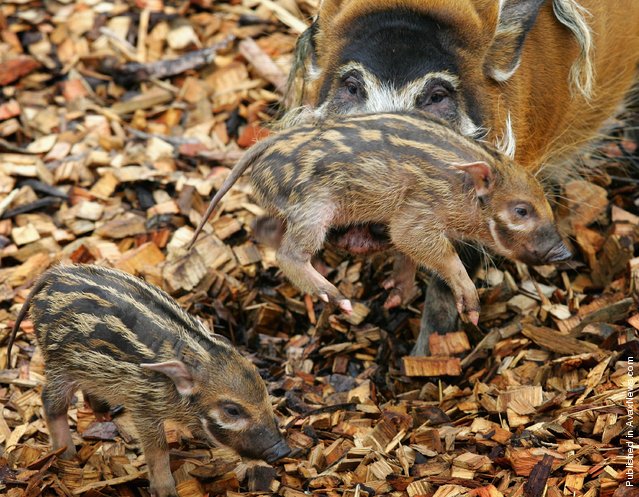
“The Red River Hog (Potamochoerus porcus), also known as the Bush Pig (but not to be confused with P. larvatus, common name “Bushpig”), is a wild member of the pig family living in Africa, with most of its distribution in the Guinean and Congolian forests. It is rarely seen away from rainforests, and generally prefers areas near rivers or swamps.

Red River Hogs eat grass, berries, roots, insects, molluscs, small vertebrates and carrion. They are capable of causing damage to plantations. Red River Hogs typically live in herds of 6-20 members led by a dominant boar. Sows rear 3-6 piglets at a time.”

Photo: Two 17 day old red river hoglet twins forage for food next to their mother Bahiti at London Zoo on August 23, 2007 in London, England. Red River hoglets inhabit the forests and swamps of West and Central Africa. The recent additions to the London Zoo pig pen have been eagerly awaited by zoo keepers. (Photo by Chris Jackson/Getty Images)

Details
18 Mar 2011 15:15:00
A BASE jumper is pictured against the skyline shrouded in a thick haze during the Kuala Lumpur Tower International Jump in Kuala Lumpur, Malaysia, 02 October 2015. More than 100 BASE jumpers take part in this extreme sport event, which enters its 15th year. The haze hovering over Malaysia is caused by the ongoing plantation and forest fires in the nearby Indonesian provinces of Sumatra and Kalimantan. (Photo by Fazry Ismail/EPA)

A BASE jumper is pictured against the skyline shrouded in a thick haze during the Kuala Lumpur Tower International Jump in Kuala Lumpur, Malaysia, 02 October 2015. More than 100 BASE jumpers take part in this extreme sport event, which enters its 15th year. The haze hovering over Malaysia is caused by the ongoing plantation and forest fires in the nearby Indonesian provinces of Sumatra and Kalimantan. (Photo by Fazry Ismail/EPA)
Details
04 Oct 2015 08:07:00
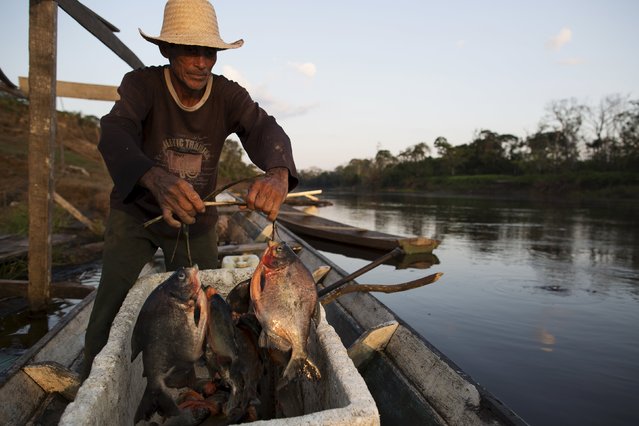
Francisco da Silva Vale, 61, cools off fish with ice produced on solar-powered ice machines at Vila Nova do Amana community in the Sustainable Development Reserve, in Amazonas state, Brazil, September 23, 2015. Three solar-powered machines, are producing about ninety kilos of ice per day, in a region with poor access to electric energy, which used to be produced only with diesel oil, in the Amazon rain forest. (Photo by Bruno Kelly/Reuters)

Francisco da Silva Vale, 61, cools off fish with ice produced on solar-powered ice machines at Vila Nova do Amana community in the Sustainable Development Reserve, in Amazonas state, Brazil, September 23, 2015. Three solar-powered machines, are producing about ninety kilos of ice per day, in a region with poor access to electric energy, which used to be produced only with diesel oil, in the Amazon rain forest. (Photo by Bruno Kelly/Reuters)
Details
10 Oct 2015 08:03:00
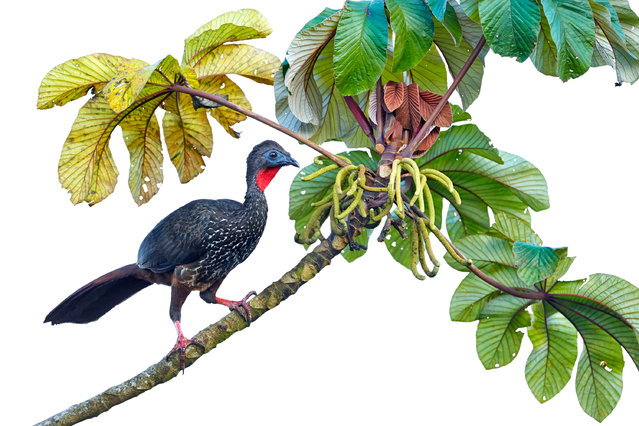
Highly commended birds : Crested guan by Tim Hunt (UK). ‘This photo shows a crested guan in the cloud forests of Costa Rica as it pauses while foraging on a lone branch. Due to the clouds that are so typical for this habitat, I could often only photograph the bird’s silhouette against a grey sky. (Photo by Tim Hunt/GDT European Wildlife Photographer of the Year 2015)

Highly commended birds : Crested guan by Tim Hunt (UK). ‘This photo shows a crested guan in the cloud forests of Costa Rica as it pauses while foraging on a lone branch. Due to the clouds that are so typical for this habitat, I could often only photograph the bird’s silhouette against a grey sky. But then, for a short moment only, the sun broke through the clouds, and I overexposed the image by over two stops in order to blow out the background and allow this beautifully marked bird to stand out’. (Photo by Tim Hunt/GDT European Wildlife Photographer of the Year 2015)
Details
24 Nov 2015 08:01:00