Loading...
Done
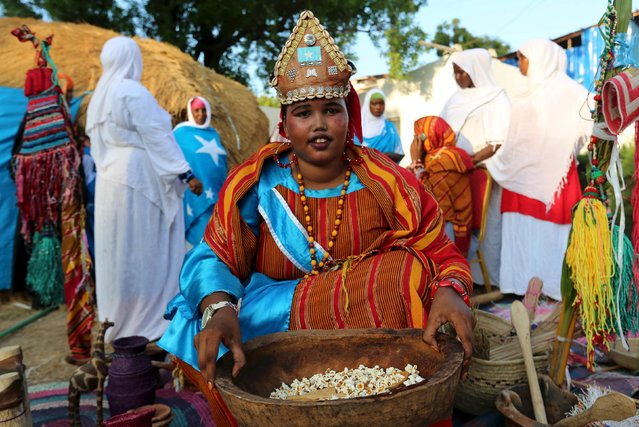
A Somali woman shows traditional items and food during an event to showcase traditional Somali culture in Hamarweyne district in the capital Mogadishu, December 3, 2015. (Photo by Feisal Omar/Reuters)

A Somali woman shows traditional items and food during an event to showcase traditional Somali culture in Hamarweyne district in the capital Mogadishu, December 3, 2015. (Photo by Feisal Omar/Reuters)
Details
05 Dec 2015 08:05:00
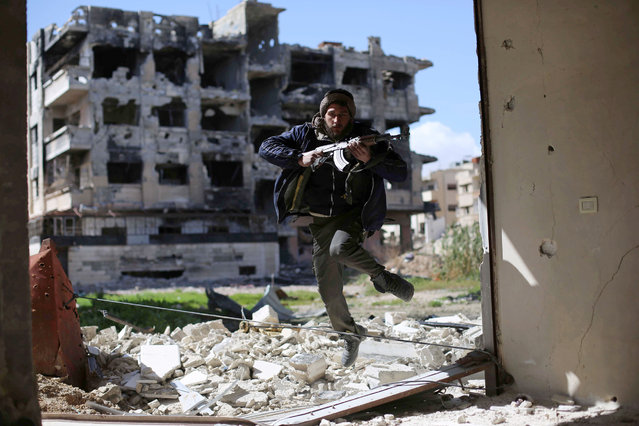
A fighter belonging to Jaish al-Islam (Islam Army) runs to take cover near the frontline on March 14, 2016 in the neighbourhood of Jobar, on the eastern outskirts of the capital Damascus. (Photo by Amer Almohibany/AFP Photo)

A fighter belonging to Jaish al-Islam (Islam Army) runs to take cover near the frontline on March 14, 2016 in the neighbourhood of Jobar, on the eastern outskirts of the capital Damascus. (Photo by Amer Almohibany/AFP Photo)
Details
25 Mar 2016 13:28:00
Models display a creation by K-Lynn Lingerie during a fashion show in the Lebanese capital Beirut on April 24, 2016. (Photo by Anwar Amro/AFP Photo)

Models display a creation by K-Lynn Lingerie during a fashion show in the Lebanese capital Beirut on April 24, 2016. (Photo by Anwar Amro/AFP Photo)
Details
27 Apr 2016 10:06:00
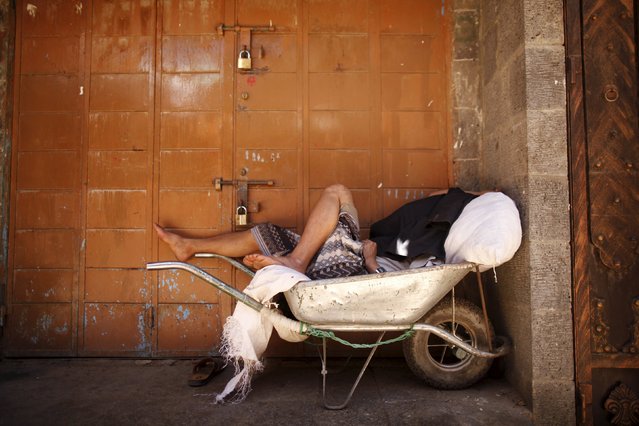
A man sleeps on a wheelbarrow outside a closed shop at a market during the first day of a ceasefire in Yemen's capital Sanaa April 11, 2016. (Photo by Khaled Abdullah/Reuters)

A man sleeps on a wheelbarrow outside a closed shop at a market during the first day of a ceasefire in Yemen's capital Sanaa April 11, 2016. (Photo by Khaled Abdullah/Reuters)
Details
13 May 2016 11:18:00
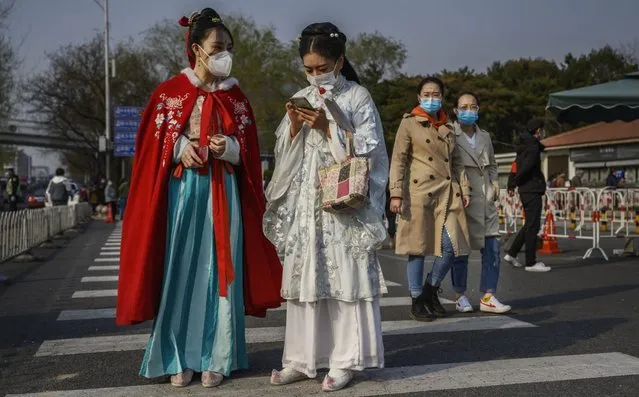
Chinese women wear protective masks as they are dressed in traditional clothing from the Qing Dynasty era outside a park on March 29, 2020 in Beijing, China. A limited section of the iconic tourist site was re-opened to the public this week allowing a smaller number of visitors to reserve tickets online in advance and to enter after passing health screening. With the pandemic hitting hard across the world, China recorded its first day with no new domestic cases of the coronavirus last week, since the government imposed sweeping measures to keep the disease from spreading. For two months, millions of people across China have been restricted in how they move from their homes, while other cities have been locked down in ways that appeared severe at the time but are now being replicated in other countries trying to contain the virus. Officials believe the worst appears to be over in China, though there are concerns of another wave of infections as the government attempts to reboot the worlds second largest economy. In Beijing, it is mandatory to wear masks outdoors, retail stores operate on reduced hours, restaurants employ social distancing among patrons, and tourist attractions at risk of drawing large crowds remain closed. Monitoring and enforcement of virus-related measures and the quarantine of anyone arriving to Beijing is carried out by neighborhood committees and a network of Communist Party volunteers who wear red arm bands. A primary concern for Chinese authorities remains the arrival of flights from Europe and elsewhere, given the exposure of passengers in regions now regarded as hotbeds for transmission. Since January, China has recorded more than 81,000 cases of COVID-19 and at least 3200 deaths, mostly in and around the city of Wuhan, in central Hubei province, where the outbreak first started. (Photo by Kevin Frayer/Getty Images)

Chinese women wear protective masks as they are dressed in traditional clothing from the Qing Dynasty era outside a park on March 29, 2020 in Beijing, China. A limited section of the iconic tourist site was re-opened to the public this week allowing a smaller number of visitors to reserve tickets online in advance and to enter after passing health screening. (Photo by Kevin Frayer/Getty Images)
Details
01 Apr 2020 00:05:00
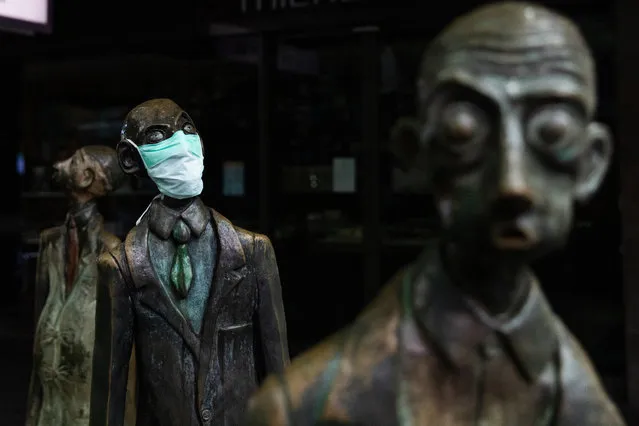
A face mask is placed on one of the 'Three business men who brought lunch' statues on Swanston street on March 29, 2020 in Melbourne, Australia. All international arrivals into Australia from midnight on Saturday will be placed into mandatory quarantine in hotels for 14 days as the Federal Government increases restrictions to stop the spread of COVID-19. All libraries, museums, galleries, beauty salons, tattoo parlours, shopping centre food courts, auctions, open houses, amusement parks, arcades, indoor and outdoor play centres, swimming pools are closed and indoor exercise activities are now banned. This is in addition to the closure of bars, pubs and nightclubs which came into effect on Monday. Restaurants and cafes are restricted to providing takeaway only. Weddings will now be restricted to five people including the couple while funerals are limited to 10 mourners. All Australians are now expected to stay at home except for essential outings such as work, grocery shopping and medical appointments. Exercising outdoors alone is still permitted. Australia now has more than 3,600 confirmed cases of COVID-19 while the death toll now stands at 16. (Photo by Asanka Ratnayake/Getty Images)

A face mask is placed on one of the 'Three business men who brought lunch' statues on Swanston street on March 29, 2020 in Melbourne, Australia. All international arrivals into Australia from midnight on Saturday will be placed into mandatory quarantine in hotels for 14 days as the Federal Government increases restrictions to stop the spread of COVID-19. (Photo by Asanka Ratnayake/Getty Images)
Details
31 Mar 2020 00:07:00
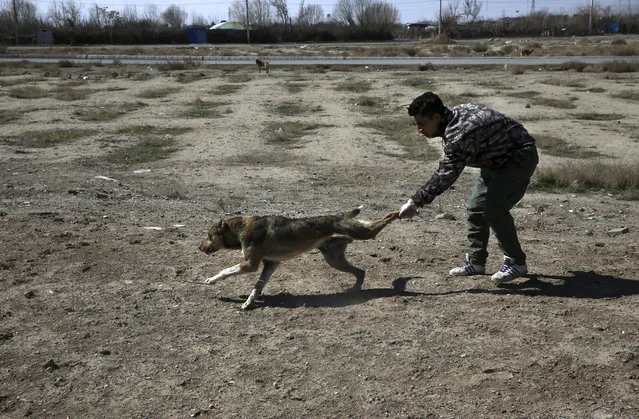
In this picture taken on Sunday, March 5, 2017, a Tehran's urban animal control worker catches a stray dog after being shot with his anesthetic dart on the outskirts of the capital Tehran, Iran. (Photo by Vahid Salemi/AP Photo)

In this picture taken on Sunday, March 5, 2017, a Tehran's urban animal control worker catches a stray dog after being shot with his anesthetic dart on the outskirts of the capital Tehran, Iran. The shelter has been hired by the Tehran city government to take a new, more humane approach to deal with the burgeoning problem of stray dogs in the capital. It’s a sign of changing attitudes among officials in a country where Islamic authorities long saw dogs as “un-Islamic” and would at times confiscate them from people who kept them as pets. (Photo by Vahid Salemi/AP Photo)
Details
17 Mar 2017 00:03:00
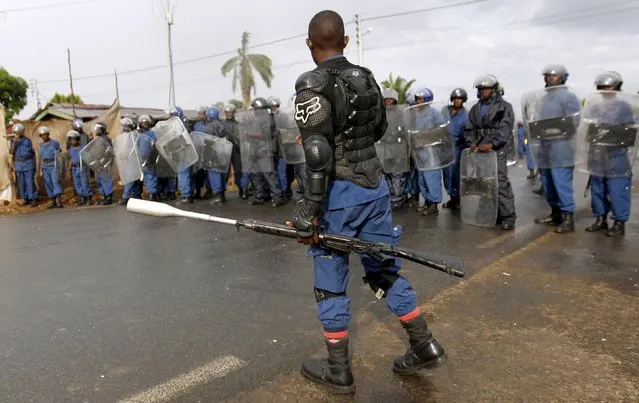
Riot policemen stand in formation during street protests against the decision made by Burundi's ruling National Council for the Defence of Democracy-Forces for the Defence of Democracy (CNDD-FDD) party to allow President Pierre Nkurunziza to run for a third five-year term in office, in the capital Bujumbura, April 26, 2015. (Photo by Thomas Mukoya/Reuters)

Riot policemen stand in formation during street protests against the decision made by Burundi's ruling National Council for the Defence of Democracy-Forces for the Defence of Democracy (CNDD-FDD) party to allow President Pierre Nkurunziza to run for a third five-year term in office, in the capital Bujumbura, April 26, 2015. Police in the Burundian capital used water cannon and tear gas on Sunday to disperse protesters demonstrating against Nkurunziza seeking a third term, witnesses said, after the government banned protests for or against the move. (Photo by Thomas Mukoya/Reuters)
Details
27 Apr 2015 10:26:00