Loading...
Done
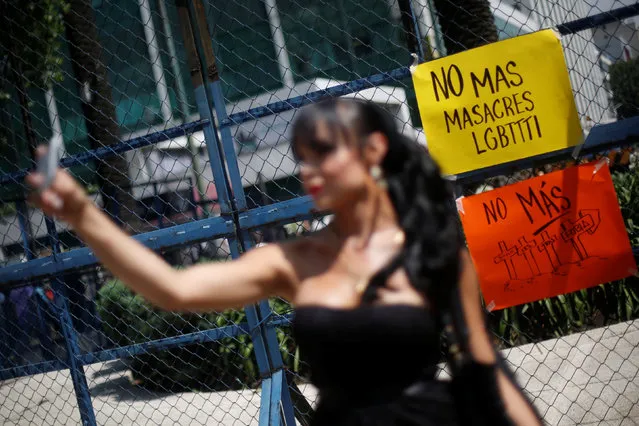
A sign that reads “No more massacres LGBT” is seen to remember the victims of the Pulse nightclub mass shooting in Orlando, near the U.S. Embassy in Mexico City, Mexico, June 14, 2016. (Photo by Edgard Garrido/Reuters)

A sign that reads “No more massacres LGBT” is seen to remember the victims of the Pulse nightclub mass shooting in Orlando, near the U.S. Embassy in Mexico City, Mexico, June 14, 2016. (Photo by Edgard Garrido/Reuters)
Details
16 Jun 2016 08:25:00
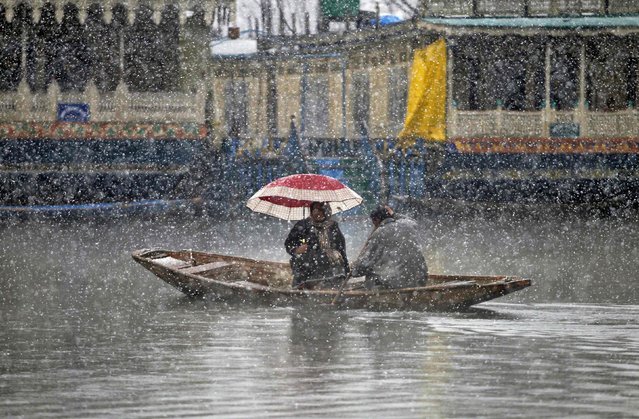
A man rows a boat on the Dal Lake as a woman holds an umbrella during snowfall in Srinagar February 19, 2015. (Photo by Danish Ismail/Reuters)

A man rows a boat on the Dal Lake as a woman holds an umbrella during snowfall in Srinagar February 19, 2015. (Photo by Danish Ismail/Reuters)
Details
12 Apr 2015 08:53:00
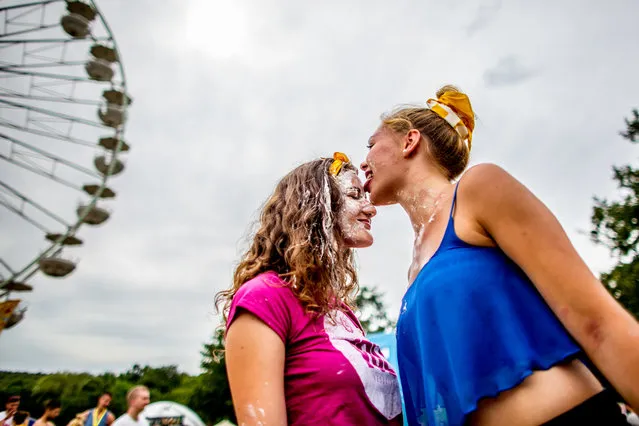
A general view of atmosphere at the annual VOLT Festival in Sopron, 208 kms west of Budapest, Hungary on June 30, 2017. (Photo by Sandor Csudai/Rockstar Photographers)

A general view of atmosphere at the annual VOLT Festival in Sopron, 208 kms west of Budapest, Hungary on June 30, 2017. (Photo by Sandor Csudai/Rockstar Photographers)
Details
03 Jul 2017 09:00:00
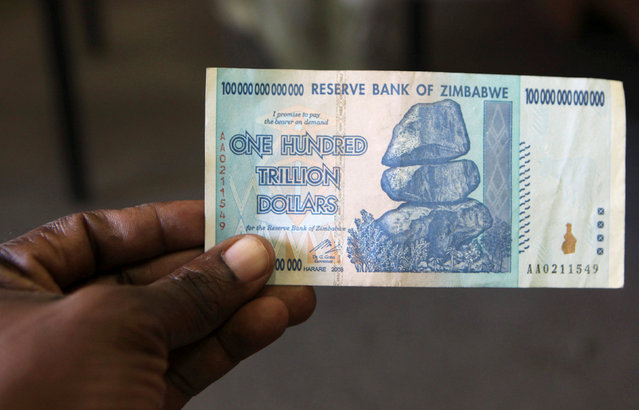
A man holds up for a picture a one hundred trillion Zimbabwean dollars note inside a shop in Harare, Zimbawe, June 12, 2015. (Photo by Philimon Bulawayo/Reuters)

A man holds up for a picture a one hundred trillion Zimbabwean dollars note inside a shop in Harare, Zimbawe, June 12, 2015. Hyperinflation in Zimbabwe was a period of currency instability that began in the late 1990s shortly after the confiscation of private farms from landowners, towards the end of Zimbabwean involvement in the Second Congo War. During the height of inflation from 2008 to 2009, it was difficult to measure Zimbabwe's hyperinflation because the government of Zimbabwe stopped filing official inflation statistics. However, Zimbabwe's peak month of inflation is estimated at 79.6 billion percent in mid-November 2008. (Photo by Philimon Bulawayo/Reuters)

Details
25 Oct 2016 10:08:00
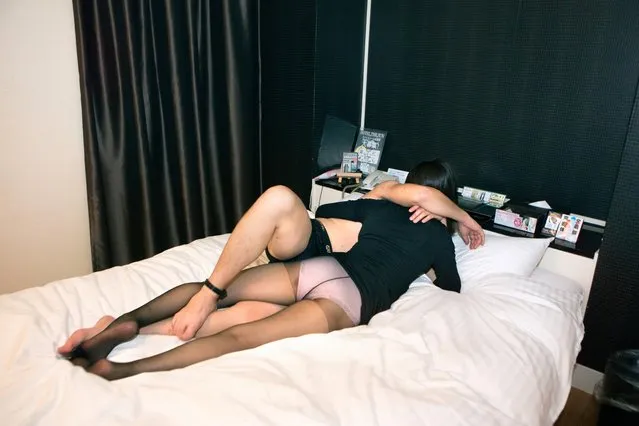
For her series “Japanese Whispers”, Belgian photographer Zaza Bertrand headed inside the intimate world of rabuhos – Japanese love hotels. Love hotels became popular in Japan from the 1960s onwards, due to a lack of privacy in many family homes. There are now around 37,000 of these hotels in Japan, allowing short daytime “rests” or overnight stays. (Photo by Zaza Bertrand/The Guardian)

For her series “Japanese Whispers”, Belgian photographer Zaza Bertrand headed inside the intimate world of rabuhos – Japanese love hotels. Love hotels became popular in Japan from the 1960s onwards, due to a lack of privacy in many family homes. There are now around 37,000 of these hotels in Japan, allowing short daytime “rests” or overnight stays. (Photo by Zaza Bertrand/The Guardian)
Details
02 Dec 2016 11:30:00
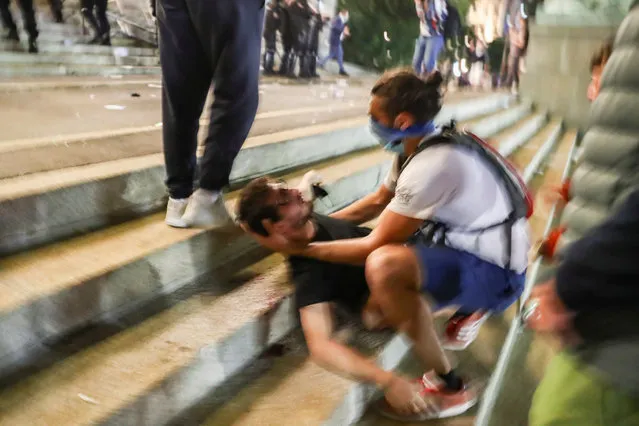
An injured demonstrator receives aid during a protest against a lockdown planned for the capital this weekend to halt the spread of the coronavirus disease (COVID-19) in Belgrade, Serbia on July 7, 2020. (Photo by Marko Djurica/Reuters)

An injured demonstrator receives aid during a protest against a lockdown planned for the capital this weekend to halt the spread of the coronavirus disease (COVID-19) in Belgrade, Serbia on July 7, 2020. (Photo by Marko Djurica/Reuters)
Details
28 Jan 2021 10:36:00
A group of riders splash down a water slide in Bromont, Que on Monday, June 29, 2020 as water parks reopen in the province of Quebec, Canada. (Photo by Canadian Press/Rex Features/Shutterstock)

A group of riders splash down a water slide in Bromont, Que on Monday, June 29, 2020 as water parks reopen in the province of Quebec, Canada. (Photo by Canadian Press/Rex Features/Shutterstock)
Details
01 Jul 2020 00:07:00
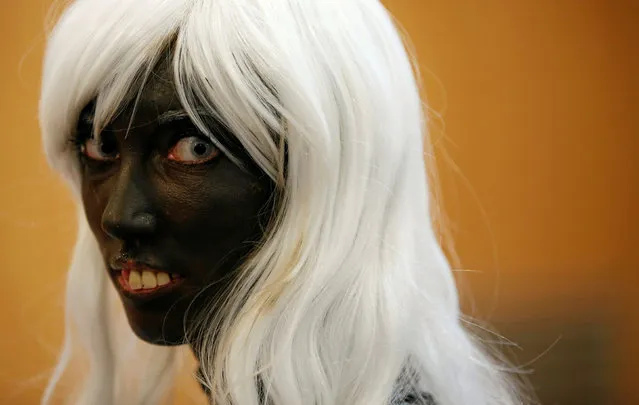
A participant wearing a cosplay costume attends the Japan Expo in Marseille, France, February 22, 2019. (Photo by Jean-Paul Pelissier/Reuters)

A participant wearing a cosplay costume attends the Japan Expo in Marseille, France, February 22, 2019. (Photo by Jean-Paul Pelissier/Reuters)
Details
25 Feb 2019 00:07:00