Loading...
Done
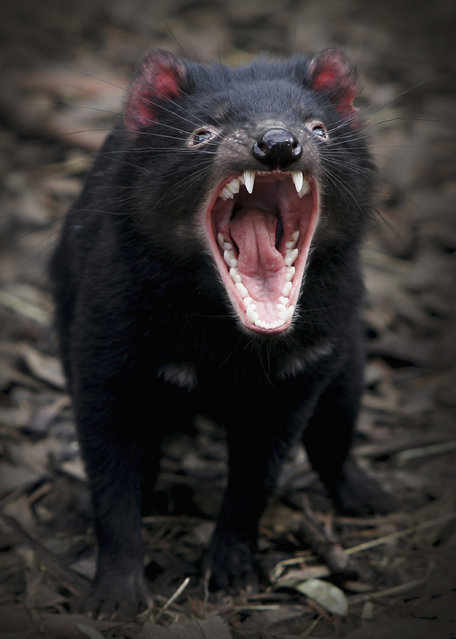
A Tasmanian Devil bears it's teeth at a quarantine facility August 31, 2005 in Hobart, Australia. The Devil, a native marsupial unique to Tasmania, is under threat from Devil Facial Tumor Disease (DFTD) which is decimating numbers throughout Tasmania. (Photo by Ian Waldie/Getty Images)

“The Tasmanian devil (Sarcophilus harrisii) is a carnivorous marsupial of the family Dasyuridae now found in the wild only in the Australian island state of Tasmania. The size of a small dog, it became the largest carnivorous marsupial in the world following the extinction of the thylacine in 1936. It is characterised by its stocky and muscular build, black fur, pungent odour, extremely loud and disturbing screech, keen sense of smell, and ferocity when feeding”. – Wikipedia. Photo: A Tasmanian Devil bears it's teeth at a quarantine facility August 31, 2005 in Hobart, Australia. (Photo by Ian Waldie/Getty Images)
Details
27 Jan 2014 09:45:00
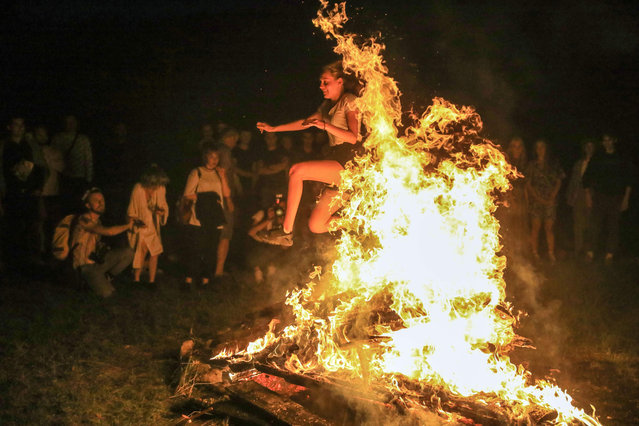
People take part in a traditional mid-summer solstice night celebration (Rasos Festival) at the Open-Air Museum of Lithuania in Rumsiskes, east of Kaunas, Lithuania, on late June 23, 2020. (Photo by Petras Malukas/AFP Photo)

People take part in a traditional mid-summer solstice night celebration (Rasos Festival) at the Open-Air Museum of Lithuania in Rumsiskes, east of Kaunas, Lithuania, on late June 23, 2020. (Photo by Petras Malukas/AFP Photo)
Details
30 Jul 2020 00:05:00
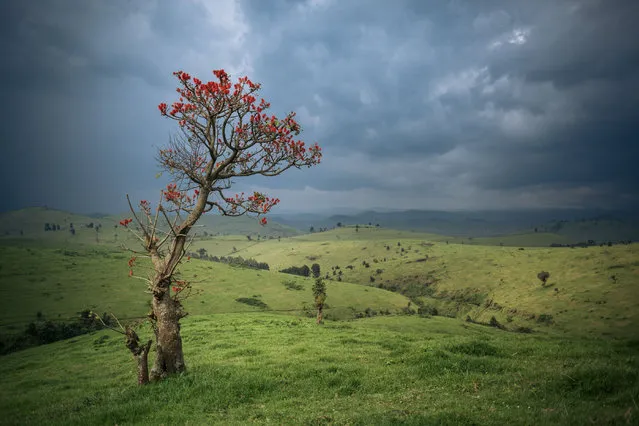
This photograph, taken on September 28, 2019, shows an Erythrina Abyssinica planted in a pasture on Ferme Espoir, owned by former President Joseph Kabila, in Masisi territory, northeast of the Democratic Republic of Congo. (Photo by Alexis Huguet/AFP Photo)

This photograph, taken on September 28, 2019, shows an Erythrina Abyssinica planted in a pasture on Ferme Espoir, owned by former President Joseph Kabila, in Masisi territory, northeast of the Democratic Republic of Congo. (Photo by Alexis Huguet/AFP Photo)
Details
17 Sep 2020 00:01:00
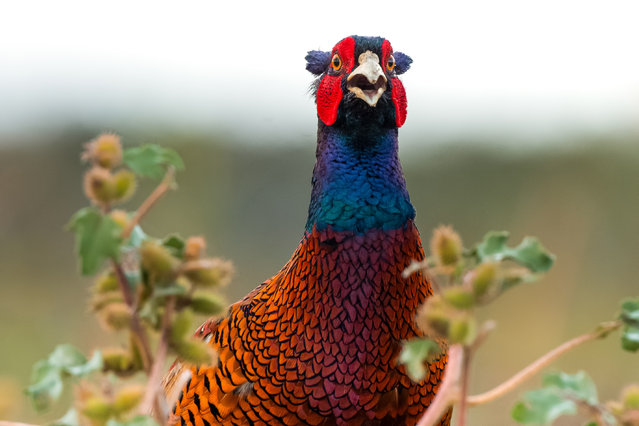
A pheasant is seen among grasses in Bursa, Turkiye on October 07, 2024. Pheasants mostly live in forested areas, thickets and wetlands. Unlike females, male pheasants have a much more remarkable structure with their long tails and feathers in bright and variable colors. Also, they feed on fruits, grains, seeds and invertebrates. (Photo by Alper Tuydes/Anadolu via Getty Images)

A pheasant is seen among grasses in Bursa, Turkiye on October 07, 2024. Pheasants mostly live in forested areas, thickets and wetlands. Unlike females, male pheasants have a much more remarkable structure with their long tails and feathers in bright and variable colors. Also, they feed on fruits, grains, seeds and invertebrates. (Photo by Alper Tuydes/Anadolu via Getty Images)
Details
27 Oct 2024 04:43:00
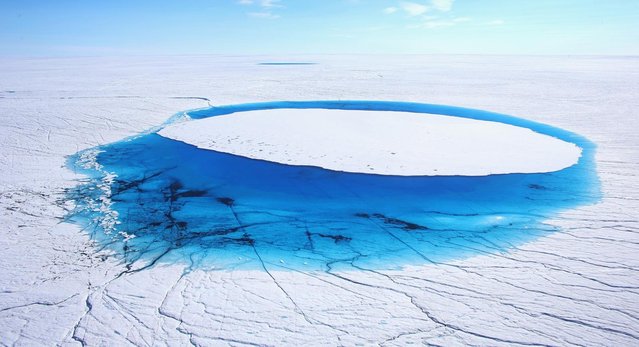
Water is seen on part of the glacial ice sheet that covers about 80 percent of the country is seen on July 17, 2013 on the Glacial Ice Sheet, Greenland. (Photo by Joe Raedle/Getty Images via The Atlantic)

Water is seen on part of the glacial ice sheet that covers about 80 percent of the country is seen on July 17, 2013 on the Glacial Ice Sheet, Greenland. As the sea levels around the globe rise, researchers affilitated with the National Science Foundation and other organizations are studying the phenomena of the melting glaciers and its long-term ramifications. The warmer temperatures that have had an effect on the glaciers in Greenland also have altered the ways in which the local populace farm, fish, hunt and even travel across land. In recent years, sea level rise in places such as Miami Beach has led to increased street flooding and prompted leaders such as New York City Mayor Michael Bloomberg to propose a $19.5 billion plan to boost the citys capacity to withstand future extreme weather events by, among other things, devising mechanisms to withstand flooding. (Photo by Joe Raedle)
Details
02 Aug 2013 10:51:00
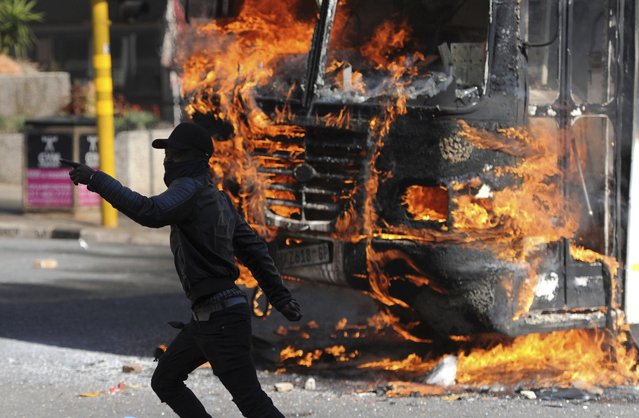
A protesting student runs past a burning bus off campus outside the University of the Witwatersrand in Johannesburg, South Africa on Monday, October 10, 2016. Tear gas and water cannon were fired as hundreds of students protested at the university amid a bitter national dispute with university managers and the government over demonstrators' demands for free education, forcing student into the neighbouring city streets. (Photo by AP Photo)

A protesting student runs past a burning bus off campus outside the University of the Witwatersrand in Johannesburg, South Africa on Monday, October 10, 2016. Tear gas and water cannon were fired as hundreds of students protested at the university amid a bitter national dispute with university managers and the government over demonstrators' demands for free education, forcing student into the neighbouring city streets. (Photo by AP Photo)
Details
12 Oct 2016 10:40:00
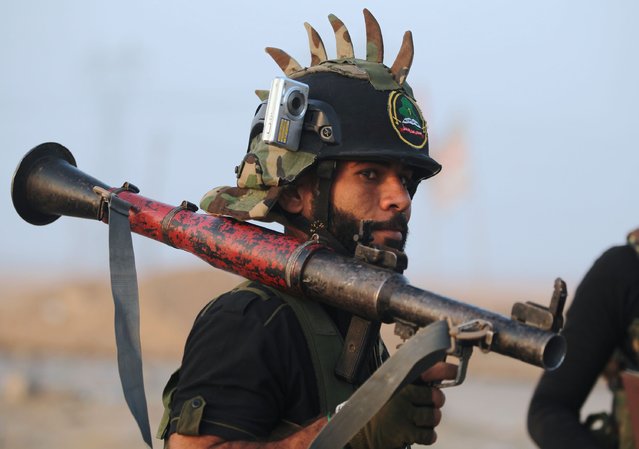
A Shiite fighter from the Hashed al-Shaabi (Popular Mobilisation) patrols in the village of Ayn Nasir, south of Mosul, on October 29, 2016, after recapturing it from Islamic State group jihadists in an ongoing operation to retake the city of Mosul. Iraqi paramilitary forces launched an operation to cut the Islamic State group's supply lines between its Mosul bastion and neighbouring Syria, opening a new front in the nearly two-week-old offensive. (Photo by Ahmad Al-Rubaye/AFP Photo)

A Shiite fighter from the Hashed al-Shaabi (Popular Mobilisation) patrols in the village of Ayn Nasir, south of Mosul, on October 29, 2016, after recapturing it from Islamic State group jihadists in an ongoing operation to retake the city of Mosul. Iraqi paramilitary forces launched an operation to cut the Islamic State group's supply lines between its Mosul bastion and neighbouring Syria, opening a new front in the nearly two-week-old offensive. (Photo by Ahmad Al-Rubaye/AFP Photo)
Details
31 Oct 2016 11:20:00
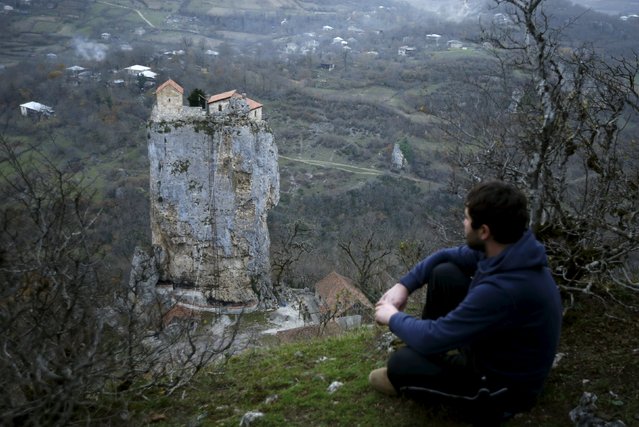
A local man looks at a church on top of the Katskhi Pillar, rock mass about 40 meters high, in the village of Katskhi, Georgia, November 27, 2015. The church, built in the ninth century, was later abandoned and it collapsed but was rebuilt in 2003, according to local media. (Photo by David Mdzinarishvili/Reuters)

A local man looks at a church on top of the Katskhi Pillar, rock mass about 40 meters high, in the village of Katskhi, Georgia, November 27, 2015. The church, built in the ninth century, was later abandoned and it collapsed but was rebuilt in 2003, according to local media. (Photo by David Mdzinarishvili/Reuters)
Details
29 Nov 2015 08:00:00