Loading...
Done
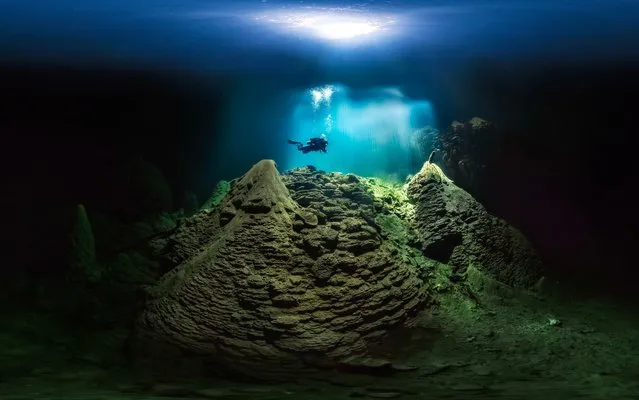
Cave Diver, Anhumas Abyss, Bonito, Brazil: The Anhumas Abyss is an underground cavern with a crystal-clear lake below, more than 260 feet (79 m) deep. A visitor must enter through a narrow opening at the top of the chamber and rappel into the cave. Snorkeling and scuba diving in the lake reveal amazing scenery. Distinctive, conical limestone stalagmites and stalactites occupy the lake and the surrounding area, some reaching 65 feet (20 m) high. “One must rappel about 235 feet (72 m) to get down into this deep lake. The photo was taken at a depth of 50 feet (15 m). It was a challenge to create the image because of the high contrast, plus the diver could not see into the darkness, making communication impossible”. (Photo by Marcio Cabral/Nature’s Best Photography Awards 2017)

Cave Diver, Anhumas Abyss, Bonito, Brazil: The Anhumas Abyss is an underground cavern with a crystal-clear lake below, more than 260 feet (79 m) deep. A visitor must enter through a narrow opening at the top of the chamber and rappel into the cave. Snorkeling and scuba diving in the lake reveal amazing scenery. Distinctive, conical limestone stalagmites and stalactites occupy the lake and the surrounding area, some reaching 65 feet (20 m) high. (Photo by Marcio Cabral/Nature’s Best Photography Awards 2017)
Details
26 Oct 2017 08:10:00
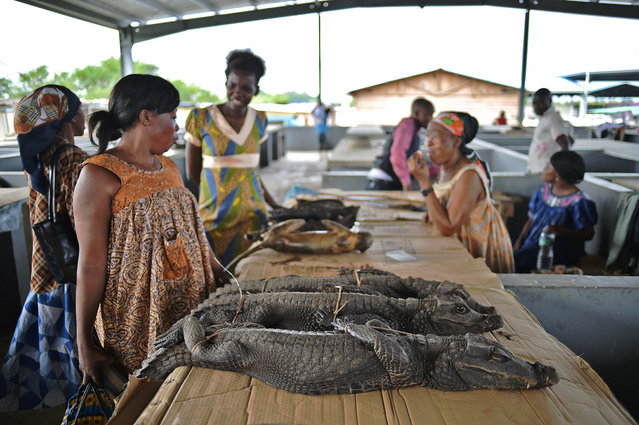
Shoppers walk past crocodiles for sale at a market in Bata on February 3, 2015. Markets in Equatorial Guinea sell a variety of animals including pangolins, monkeys and crocodiles as food. (Photo by Carl de Souza/AFP Photo)

Shoppers walk past crocodiles for sale at a market in Bata on February 3, 2015. Markets in Equatorial Guinea sell a variety of animals including pangolins, monkeys and crocodiles as food. (Photo by Carl de Souza/AFP Photo)
Details
30 Nov 2017 08:33:00
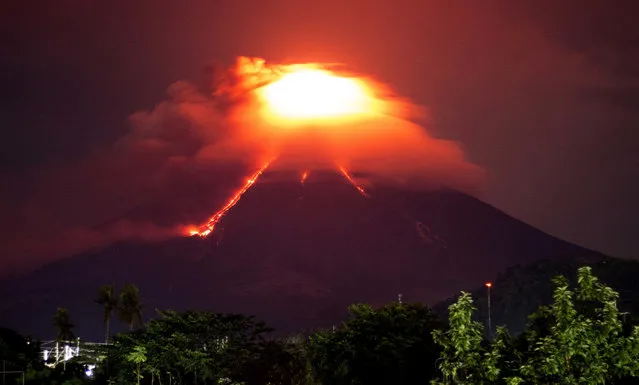
Lava cascades down the slopes of Mayon volcano as seen from Legazpi city, Albay province, around 340 kilometers (210 miles) southeast of Manila, Philippines, Monday, January 15, 2018. More than 9,000 people have evacuated the area around the Philippines' most active volcano as lava flowed down its crater Monday in a gentle eruption that scientists warned could turn explosive. (Photo by Earl Recamunda/AP Photo)

Lava cascades down the slopes of Mayon volcano as seen from Legazpi city, Albay province, around 340 kilometers (210 miles) southeast of Manila, Philippines, Monday, January 15, 2018. More than 9,000 people have evacuated the area around the Philippines' most active volcano as lava flowed down its crater Monday in a gentle eruption that scientists warned could turn explosive. (Photo by Earl Recamunda/AP Photo)
Details
16 Jan 2018 06:36:00
Visitors make snowmen beside a pool at a hot spring in Hangzhou, in China's eastern Zhejiang province on January 26, 2018. China's central and eastern regions have been hit by heavy snowfalls in recent days, causing disruptions to flight and train schedules. (Photo by AFP Photo/China Stringer Network)

Visitors make snowmen beside a pool at a hot spring in Hangzhou, in China's eastern Zhejiang province on January 26, 2018. China's central and eastern regions have been hit by heavy snowfalls in recent days, causing disruptions to flight and train schedules. (Photo by AFP Photo/China Stringer Network)
Details
28 Jan 2018 08:56:00
A tourist clad in Japanese kimono takes a picture in front of s portrait shop in Tokyo's Asakusa district, Thursday, February 15, 2018. Asakusa is a popular district four tourists in the capital. (Photo by Shizuo Kambayashi/AP Photo)

A tourist clad in Japanese kimono takes a picture in front of s portrait shop in Tokyo's Asakusa district, Thursday, February 15, 2018. Asakusa is a popular district four tourists in the capital. (Photo by Shizuo Kambayashi/AP Photo)
Details
16 Feb 2018 07:39:00
Racegoers during Ladies Day of the 2018 Cheltenham Festival in Cheltenham, England on March 14, 2018. (Photo by Graham Stone/Rex Features/Shutterstock)

Racegoers during Ladies Day of the 2018 Cheltenham Festival in Cheltenham, England on March 14, 2018. (Photo by Graham Stone/Rex Features/Shutterstock)
Details
15 Mar 2018 09:14:00
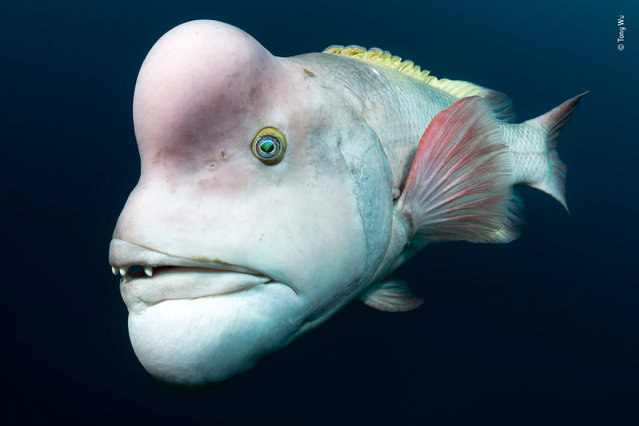
Looking for love by Tony Wu, USA. Highly commended, Animal Portraits. “Accentuating his mature appearance with pastel colours, protruding lips and an outstanding pink forehead, this Asian sheepshead wrasse sets out to impress females and see off rivals, which he will head-butt and bite, near Japan’s remote Sado Island. Individuals start out as females, and when they reach a certain age and size – up to a metre (more than 3 feet) long – can transform into males. Long-lived and slow-growing, the species is intrinsically vulnerable to overfishing”. (Photo by Tony Wu/2018 Wildlife Photographer of the Year)

Looking for love by Tony Wu, USA. Highly commended, Animal Portraits. “Accentuating his mature appearance with pastel colours, protruding lips and an outstanding pink forehead, this Asian sheepshead wrasse sets out to impress females and see off rivals, which he will head-butt and bite, near Japan’s remote Sado Island. Individuals start out as females, and when they reach a certain age and size – up to a metre (more than 3 feet) long – can transform into males. Long-lived and slow-growing, the species is intrinsically vulnerable to overfishing”. (Photo by Tony Wu/2018 Wildlife Photographer of the Year)
Details
03 Sep 2018 08:17:00
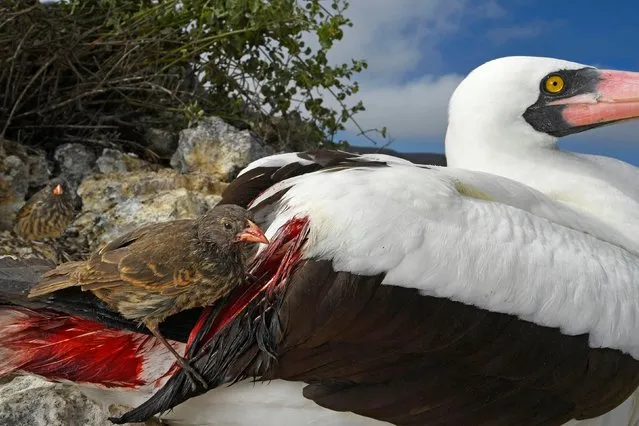
Bloodthirsty by Thomas P Peschak, Germany/South Africa — winner, Behaviour: birds. When rations run short on Wolf Island, in the remote northern Galápagos, the sharp-beaked ground finches become vampires. Their sitting targets are Nazca boobies and other large birds. The finches rely on a scant diet of seeds and insects, which regularly dries up, so they drink blood to survive. ‘I’ve seen more than half a dozen finches drinking from a single Nazca booby,’ says Tom. Rather than leave their nests the boobies tolerate the vampires, and the blood loss doesn’t seem to cause permanent harm. (Photo by Thomas P Peschak/2018 Wildlife Photographer of the Year)

Bloodthirsty by Thomas P. Peschak, Germany/South Africa — winner, Behaviour: birds. When rations run short on Wolf Island, in the remote northern Galápagos, the sharp-beaked ground finches become vampires. Their sitting targets are Nazca boobies and other large birds. The finches rely on a scant diet of seeds and insects, which regularly dries up, so they drink blood to survive. ‘I’ve seen more than half a dozen finches drinking from a single Nazca booby,’ says Tom. Rather than leave their nests the boobies tolerate the vampires, and the blood loss doesn’t seem to cause permanent harm. (Photo by Thomas P. Peschak/2018 Wildlife Photographer of the Year)
Details
19 Oct 2018 00:05:00