Loading...
Done
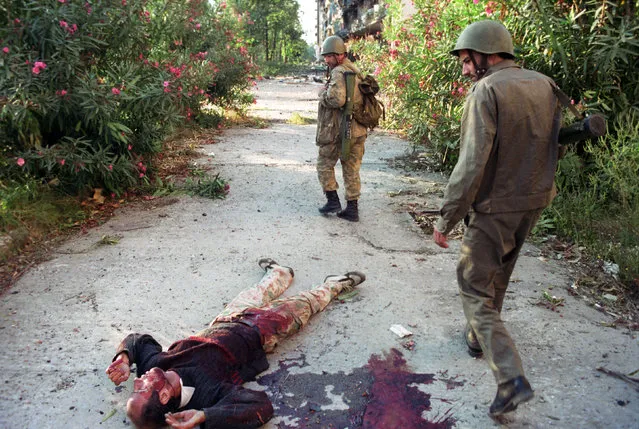
Abkhazia. Sukhumi, 1993. A house-to-house combat. (Photo by Andrei Solovyov/ITAR-TASS)

The War in Abkhazia from 1992 to 1993 was fought between Georgian government forces for the most part, and Abkhaz separatist forces, Russian armed forces and North Caucasian militants. Ethnic Georgians who lived in Abkhazia fought largely on the side of Georgian government forces. Ethnic Armenians and Russians within Abkhazia's population largely supported the Abkhazians, and many fought on their side. The separatists received support from thousands of North Caucasus and Cossack militants and from the Russian Federation forces stationed in and near Abkhazia. Here: Abkhazia. Sukhumi, 1993. A house-to-house combat. (Photo by Andrei Solovyov/ITAR-TASS)
Details
29 Sep 2017 07:31:00
Project Mermaids model. (Photo by Angelina Venturella/Chiara Salomoni/Caters News Agency)

Project Mermaids model. Project Mermaids lets ocean-lovers don tails and live out their siren fantasies. Clients can pay for a shoot that is either on land or underwater, with the images looking to raise awareness about preservation of beaches, seas and oceans. The project – which is shot by photographers Angelina Venturella and Chiara Salomoni – started purely to raise awareness, with celebrities dressing up as sirens as part of the cause. (Photo by Angelina Venturella/Chiara Salomoni/Caters News Agency)
Details
25 Aug 2016 10:03:00
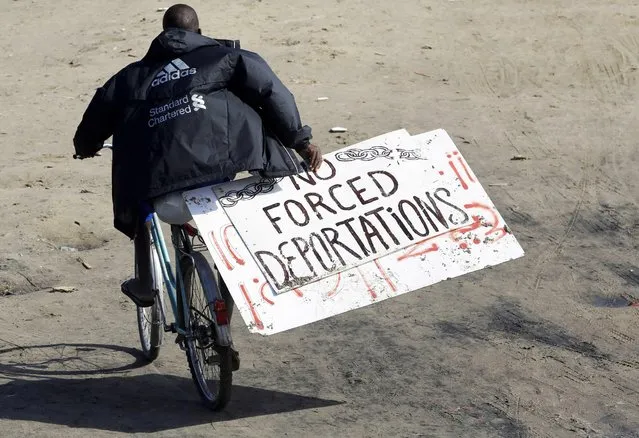
A migrant holds a placard which reads “No Forced Deportations” as he rides his bicycle at the makeshift camp called “The New Jungle” in Calais, France, September 18, 2015. (Photo by Regis Duvignau/Reuters)

A migrant holds a placard which reads “No Forced Deportations” as he rides his bicycle at the makeshift camp called “The New Jungle” in Calais, France, September 18, 2015. Around 3,500 migrants and refugees are camped in Calais, fleeing war and poverty in the Middle East, Africa and Asia and now living in the jungle. Most of them are hoping to make the crossing to England. (Photo by Regis Duvignau/Reuters)
Details
25 Sep 2015 08:00:00
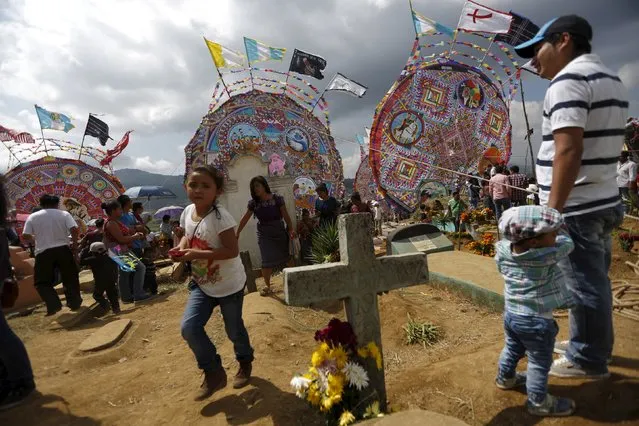
People stand in the middle of the graves and in front of giant kites in the cemetery of Santiago Sacatepequez, Guatemala, November 1, 2015. (Photo by Jorge Dan Lopez/Reuters)

People stand in the middle of the graves and in front of giant kites in the cemetery of Santiago Sacatepequez, Guatemala, November 1, 2015. Dating back 116 years, the tradition of flying kites in the cemetery of of Santiago Sacatepequez, integrates the Catholic feast of All Saints with ancient Mayan practices of honouring the dead. It is believed that the kites connect the living and the dead during the all saints day celebration. (Photo by Jorge Dan Lopez/Reuters)
Details
04 Nov 2015 11:00:00
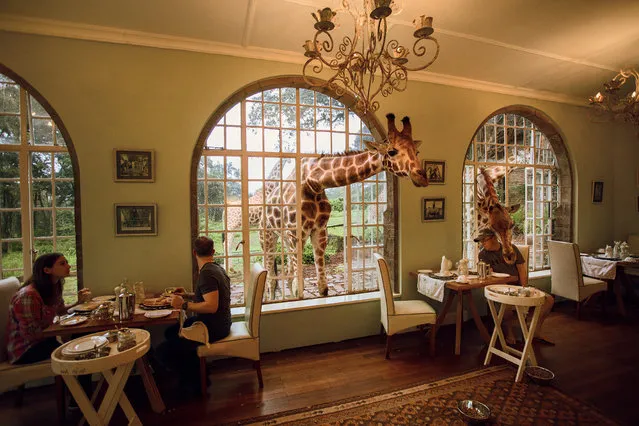
The giraffes visit twice a day searching for food, before returning to the forest. Although still wild animals, they have become accustomed to receiving treats from residents and guests. (Photo by Klaus Thymann)

Situated 10km outside Nairobi city centre, this private giraffe sanctuary is centred around a colonial manor house named Giraffe Manor. Living within the grounds is a herd of rare Rothschild giraffe. The giraffes visit twice a day searching for food, before returning to the forest. Although still wild animals, they have become accustomed to receiving treats from residents and guests. (Photo by Klaus Thymann)
Details
28 Jan 2016 12:36:00
Joe Deedon, president of TAC ONE Consulting, demonstrates searching for a shooter in a middle school during an Active Shooter Response course offered by TAC ONE in Denver April 2, 2016. (Photo by Rick Wilking/Reuters)

Joe Deedon, president of TAC ONE Consulting, demonstrates searching for a shooter in a middle school during an Active Shooter Response course offered by TAC ONE in Denver April 2, 2016. According to TAC ONE, the course, which is offered for the first time to concealed weapons permit carrying civilians, is designed at preparing people to effectively save lives prior to the arrival of law enforcement at an active shooter incident. (Photo by Rick Wilking/Reuters)
Details
07 Apr 2016 14:47:00
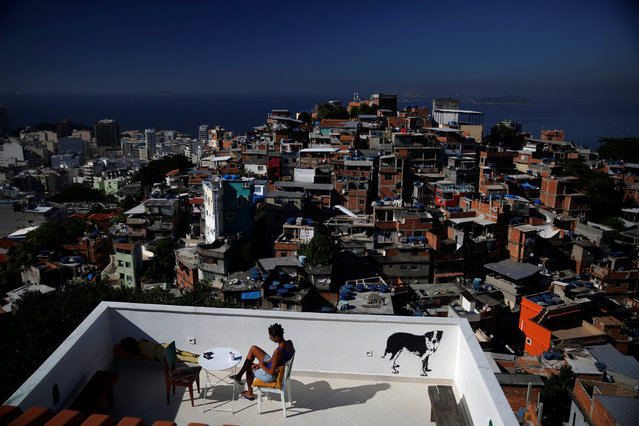
A woman sits on a terrace at Tiki hostel in Cantagalo favela, in Rio de Janeiro, Brazil, April 16, 2016. (Photo by Pilar Olivares/Reuters)

A woman sits on a terrace at Tiki hostel in Cantagalo favela, in Rio de Janeiro, Brazil, April 16, 2016. Hostels in a few of Rio's more than 1,000 slums serve not only as a cheap housing alternative for the more adventurous among the estimated 500,000 foreign tourists expected to arrive for the Olympics in August. The establishments also open up the rich culture of the city's shantytowns for travellers, giving them a glimpse into once “no-go” areas where about one-fifth of Rio's population lives. (Photo by Pilar Olivares/Reuters)
Details
04 May 2016 12:18:00
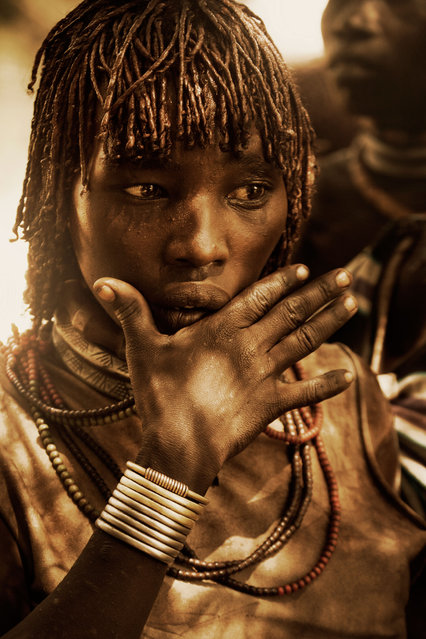
The Hamar people traditionally use red ocher clay to braid the hair of their women. (Photo by Diego Arroyo)

During his time in Ethiopia, New York-based art director and photographer Diego Arroyo spent time with the Hamar, Mursi, Dassanech, and Arbore Tribes. They, along with several others tribes, make up the 200,000 people situated in Africa’s Great Rift Valley. The people of the Omo Valley are still primarily herders and farmers, living an isolated and simple life. While they have yet to be truly touched by globalization, they could soon disappear. Their way of life is being threatened by a massive hydroelectric dam. (Photo by Diego Arroyo)
Details
13 Aug 2014 10:00:00