Loading...
Done
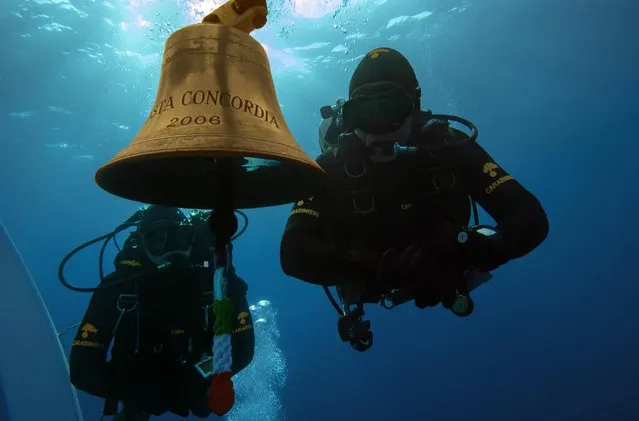
A picture released by the Italian Carabinieri on 03 July 2014 shows Carabinieri divers inspecting the inside of the Costa Concordia cruise ship, at Giglio Island, Italy, in 2012. The Costa Concordia hit a reef and partly capsized on 13 January 2012, after being steered dangerously close to Giglio, in an alleged stunt by captain Francesco Schettino. Thirty-two of the 4,229 people onboard were killed. (Photo by EPA/Carabinieri Press Office)

A picture released by the Italian Carabinieri on 03 July 2014 shows Carabinieri divers inspecting the inside of the Costa Concordia cruise ship, at Giglio Island, Italy, in 2012. The Costa Concordia hit a reef and partly capsized on 13 January 2012, after being steered dangerously close to Giglio, in an alleged stunt by captain Francesco Schettino. Thirty-two of the 4,229 people onboard were killed. (Photo by EPA/Carabinieri Press Office)
Details
22 Jul 2014 11:54:00
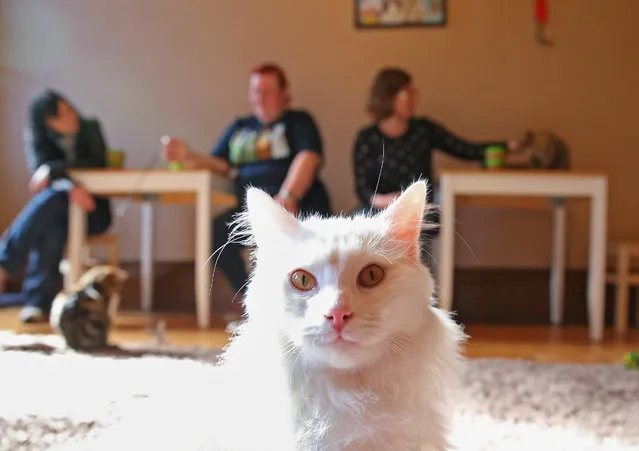
Customers drink a coffee as several cats roam at Cat Cafe Melbourne on July 25, 2014 in Melbourne, Australia. Cat Cafe Melbourne is Australias first cat cafe. The cafe has several cats from rescue shelters which live at the premises. Patrons can watch and play with the cats while enjoying a coffee. Cat Cafes are becoming known world wide, the first opening in Taiwan in 1998. (Photo by Scott Barbour/Getty Images)

Customers drink a coffee as several cats roam at Cat Cafe Melbourne on July 25, 2014 in Melbourne, Australia. Cat Cafe Melbourne is Australias first cat cafe. The cafe has several cats from rescue shelters which live at the premises. Patrons can watch and play with the cats while enjoying a coffee. Cat Cafes are becoming known world wide, the first opening in Taiwan in 1998. (Photo by Scott Barbour/Getty Images)
Details
27 Jul 2014 11:24:00
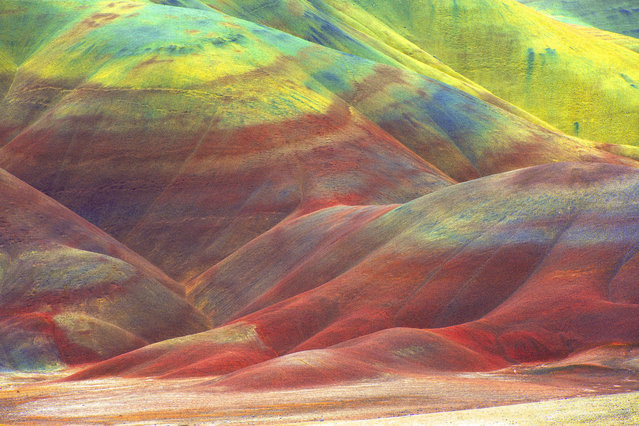
Layers of breathtaking colour streak the rolling hills of this vast desert, making the landscape appear as though it has been tie-dyed. The natural phenomenon, nicknamed the “Painted Desert”, was formed when the area was once a river floodplain. (Photo by Mark Brodkin/Solent News/SIPA Press)

Layers of breathtaking colour streak the rolling hills of this vast desert, making the landscape appear as though it has been tie-dyed. The natural phenomenon, nicknamed the “Painted Desert”, was formed when the area was once a river floodplain. Each colour corresponds to a different underground geological feature – rocks which have seemingly dyed the layers of earth above. Formed from volcanic activity, the hills at the John Day Fossil Beds National Monument in East Central Oregon, USA, are almost bursting with colour. Pictured: The colourful hills at the John Day Fossil Beds National Monument in East Central Oregon, USA. (Photo by Mark Brodkin/Solent News/SIPA Press)
Details
30 Jul 2014 11:00:00
A woman cries as she cannot find her 4-year-old daughter and husband on the top of the ruins of a destroyed school in earthquake-hit Beichuan county, Sichuan province, May 17, 2008

“The 2008 Sichuan earthquake or the Great Sichuan Earthquake was a deadly earthquake that measured at 8.0 Ms and 7.9 Mw occurred at 14:28:01 CST (06:28 UTC) on Monday, May 12, 2008 in Sichuan province of China, killing an estimated 68,000 people”. – Wikipedia

Photo: A woman cries as she cannot find her 4-year-old daughter and husband on the top of the ruins of a destroyed school in earthquake-hit Beichuan county, Sichuan province, May 17, 2008. (Photo by Jason Lee/Reuters)
Details
18 Apr 2012 12:32:00
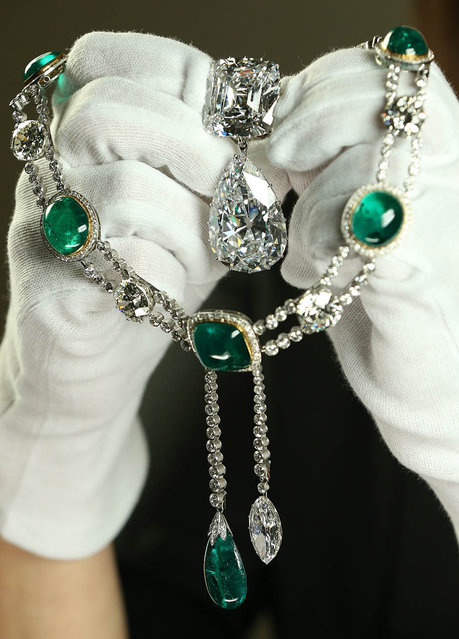
Caroline de Guitaut, Curator of Royal Collections, holds the Cullinan III and IV Broach and the Cullinan VII Delhi Durbar Necklace and Cullinan Pendant at The Queen's Gallery, Buckingham Palace

“A dazzling exhibition featuring jewelry made with the world’s largest diamond will be part of the celebrations marking the 60th anniversary of Queen Elizabeth II’s reign. The jewelry was made with a 3,106-carat diamond discovered in 1905 at the Cullinan Diamond Mine near Pretoria, the capital of South Africa. The diamond was so large that miners initially thought it was a worthless crystal and almost threw it away”... – Vidya Kauri via News.nationalpost.com

Photo: Caroline de Guitaut, Curator of Royal Collections, holds the Cullinan III and IV Broach and the Cullinan VII Delhi Durbar Necklace and Cullinan Pendant at The Queen's Gallery, Buckingham Palace on May 15, 2012 in London, England. (Photo by Peter Macdiarmid)
Details
17 May 2012 10:59:00
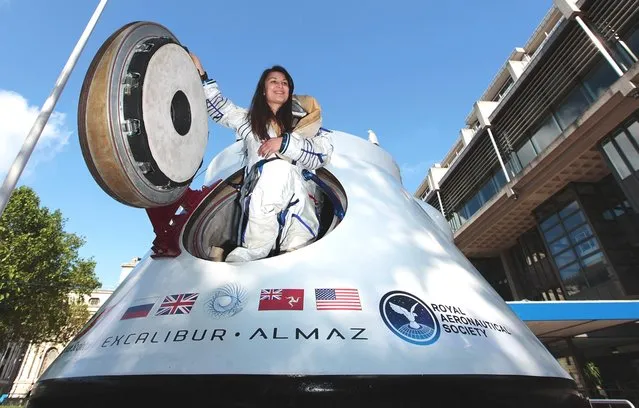
Jenn Sander from Red Robin PR, wearing a spacesuit once worn by US Astronaut Peggy Whitson, sits inside a re-entry capsule owned by Excalibur Almaz

A British space-exploration company has revealed its aim to fly the public to the moon from 2015 – providing they have £100m for a ticket.

Photo: Jenn Sander from Red Robin PR, wearing a spacesuit once worn by US Astronaut Peggy Whitson, sits inside a re-entry capsule owned by Excalibur Almaz outside the Queen Elizabeth II Centre on June 19, 2012 in London, England. The company today announced their plan to fly people to the moon on what is the 40th anniversary year of the Apollo 17 moon landing. (Photo by Rosie Hallam)
Details
20 Jun 2012 10:07:00
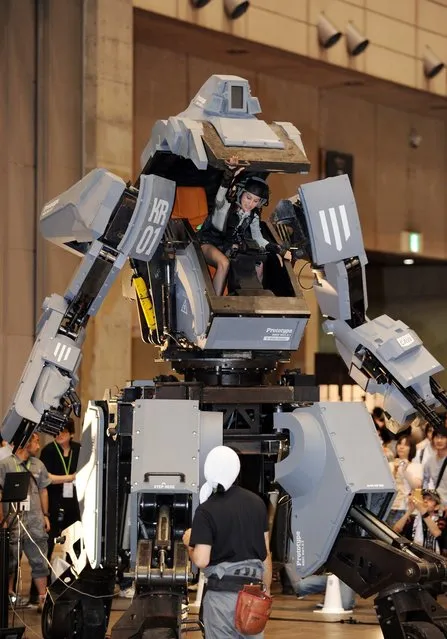
Female “pilot” Anna (C) climbs out the cockpit of Japanese electronics company Suidobashi Heavy Industry's newly unveiled robot “Kuratas” at the Wonder Festival in Chiba, suburban Tokyo on July 29, 2012. The Kuratas robot, which will go on sale with a price tag of one million USD, measures four meters in height, weighs four tons and has four wheeled legs that can either be controlled remotely through the 3G network or by a human seated within the cockpit.

Female pilot Anna climbs out the cockpit of Japanese electronics company Suidobashi Heavy Industry's newly unveiled robot “Kuratas” at the Wonder Festival in Chiba, suburban Tokyo on July 29, 2012. The “Kuratas” robot, which will go on sale with a price tag of one million USD, measures four meters in height, weighs four tons and has four wheeled legs that can either be controlled remotely through the 3G network or by a human seated within the cockpit. (Photo by Yoshikazu Tsuno/AFP Photo)
Details
30 Jul 2012 09:26:00
On August 31, 2012, a long filament of solar material that had been hovering in the sun's atmosphere, the corona, erupted out into space at 4:36 p.m. EDT. The coronal mass ejection, or CME, traveled at over 900 miles per second. The CME did not travel directly toward Earth, but did connect with Earth's magnetic environment, or magnetosphere, causing aurora to appear on the night of Monday, September 3. (Photo by NASA/GSFC/SDO)

On August 31, 2012, a long filament of solar material that had been hovering in the sun's atmosphere, the corona, erupted out into space at 4:36 p.m. EDT. The coronal mass ejection, or CME, traveled at over 900 miles per second. The CME did not travel directly toward Earth, but did connect with Earth's magnetic environment, or magnetosphere, causing aurora to appear on the night of Monday, September 3. (Photo by NASA/GSFC/SDO via The Atlantic)
Details
14 Sep 2012 09:01:00