Loading...
Done
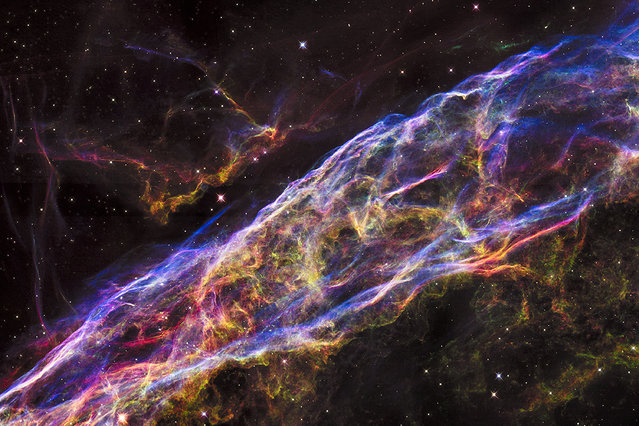
A small section of the expanding remains of the Veil Nebula, a massive star that exploded about 8,000 years ago. The entire nebula is 110 light-years across, covering six full moons on the sky as seen from Earth, and resides about 2,100 light-years away in the constellation Cygnus, the Swan. Image taken by NASA's Hubble Space Telescope. Released September 24, 2015. (Photo by Reuters/NASA/ESA/Hubble Heritage Team)

A small section of the expanding remains of the Veil Nebula, a massive star that exploded about 8,000 years ago. The entire nebula is 110 light-years across, covering six full moons on the sky as seen from Earth, and resides about 2,100 light-years away in the constellation Cygnus, the Swan. Image taken by NASA's Hubble Space Telescope. Released September 24, 2015. (Photo by Reuters/NASA/ESA/Hubble Heritage Team)
Details
10 Dec 2015 08:01:00
People enjoying the races on a wet day at Chester Racecourse on May 12, 2017 in Chester, England. (Photo by Alan Crowhurst/Getty Images)

People enjoying the races on a wet day at Chester Racecourse on May 12, 2017 in Chester, England. (Photo by Alan Crowhurst/Getty Images)
Details
13 May 2017 09:34:00
An Indian nomadic Gujjar girl hangs on to a horse cart after collecting bricks from debris on the outskirts of Jammu, India, Tuesday, March 7, 2017. The Gujjar tribal communities are considered by some to be economically and socially backward and the lack of care by the state government has led to resentment amongst the community. The tribe moves to the plains from the hills to escape the cold winters. (Photo by Channi Anand/AP Photo)

An Indian nomadic Gujjar girl hangs on to a horse cart after collecting bricks from debris on the outskirts of Jammu, India, Tuesday, March 7, 2017. The Gujjar tribal communities are considered by some to be economically and socially backward and the lack of care by the state government has led to resentment amongst the community. The tribe moves to the plains from the hills to escape the cold winters. (Photo by Channi Anand/AP Photo)
Details
09 Jun 2017 06:36:00
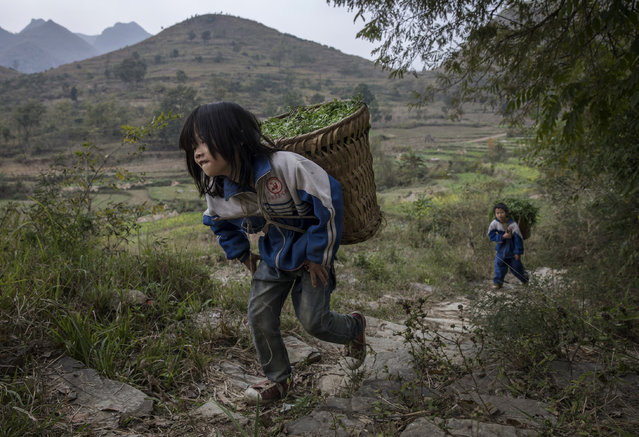
“Left behind” children Luo Hongni, 11 (L) and brother  Luo Gan,10, carry flowers to be used as feed while doing chores in the fields on December 18, 2016 in Anshun, China. (Photo by Kevin Frayer/Getty Images)

“Left behind” children Luo Hongni, 11 (L) and brother Luo Gan,10, carry flowers to be used as feed while doing chores in the fields on December 18, 2016 in Anshun, China. Like millions of Chinese children, the four Luo siblings are being raised by their grandparents in rural China as their parents left to find work in urban areas. (Photo by Kevin Frayer/Getty Images)
Details
18 Feb 2017 00:03:00
Rebels of the Revolutionary Armed Forces of Colombia (FARC) visit as they wait to have lunch in El Diamante, Colombia, Friday, September 16, 2016. FARC rebels are gathering for a congress were delegates will debate and vote on the accord reached last month with the Colombian government to end five decades of war. (Photo by Ricardo Mazalan/AP Photo)

Rebels of the Revolutionary Armed Forces of Colombia (FARC) visit as they wait to have lunch in El Diamante, Colombia, Friday, September 16, 2016. FARC rebels are gathering for a congress were delegates will debate and vote on the accord reached last month with the Colombian government to end five decades of war. (Photo by Ricardo Mazalan/AP Photo)
Details
18 Sep 2016 07:47:00
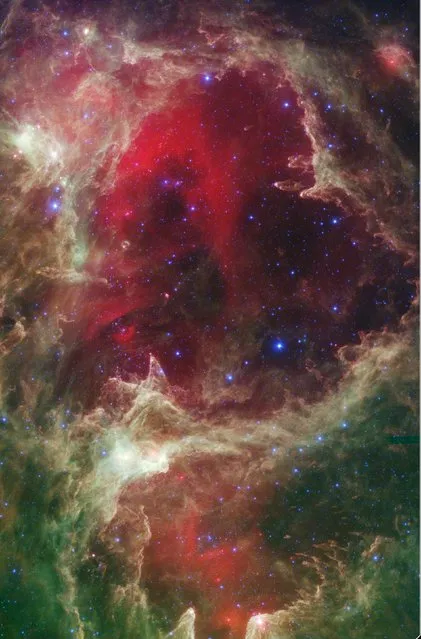
An infrared portrait from NASA's Spitzer Space Telescope which shows generations of stars is seen in this undated NASA handout image released February 14, 2013. In this wispy star-forming region, called W5, the oldest stars can be seen as blue dots in the centers of the two hollow cavities (other blue dots are background and foreground stars not associated with the region). Red shows heated dust that pervades the region's cavities, while green highlights dense clouds. (Photo by NASA/Reuters/JPL-Caltech/Harvard-Smithsonian/Handout)

An infrared portrait from NASA's Spitzer Space Telescope which shows generations of stars is seen in this undated NASA handout image released February 14, 2013. In this wispy star-forming region, called W5, the oldest stars can be seen as blue dots in the centers of the two hollow cavities (other blue dots are background and foreground stars not associated with the region). Red shows heated dust that pervades the region's cavities, while green highlights dense clouds. (Photo by NASA/Reuters/JPL-Caltech/Harvard-Smithsonian/Handout)
Details
03 Mar 2013 08:44:00
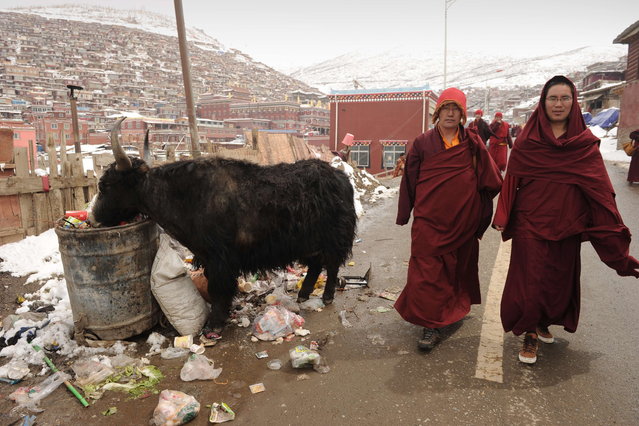
This photo taken on April 5, 2013 shows Buddhist monks passing a yak in Seda Monastery, the largest Tibetan Buddhist school in the world, with up to 40,000 monks and nuns in residence for some parts of the year. (Photo by Peter Parks/AFP Photo)

This photo taken on April 5, 2013 shows Buddhist monks passing a yak in Seda Monastery, the largest Tibetan Buddhist school in the world, with up to 40,000 monks and nuns in residence for some parts of the year. Seda, known to Tibetans as Serthar is located in Ganzi prefecture in the west of China's Sichuan province and has become a hotbed of protests and violence since the Tibetan uprisings of March 2008. (Photo by Peter Parks/AFP Photo)
Details
30 Apr 2013 08:56:00
This photo released by the Cleveland Animal Protective League shows Lurleen, the nursing mother and Noland the puppy  snuggling up Wednesday, June 19, 2013, in Cleveland. Lurleen already is caring for four newborn kittens and now is nursing the orphaned week-old pit bull puppy in Cleveland. (Photo by AP Photo/Cleveland Animal Protective League)

This photo released by the Cleveland Animal Protective League shows Lurleen, the nursing mother and Noland the puppy snuggling up Wednesday, June 19, 2013, in Cleveland. Lurleen already is caring for four newborn kittens and now is nursing the orphaned week-old pit bull puppy in Cleveland. (Photo by AP Photo/Cleveland Animal Protective League)
Details
22 Jun 2013 13:49:00