Loading...
Done
A woman with a sign that reads in Portuguese “Being woman without Temer”, stands next to a police barricade during a protest against the gang rape of a 16-year-old girl in Sao Paulo, Brazil, Wednesday, June 1, 2016. In response to the assault, Brazil's interim President Michel Temer said that the country will set up a specialized group to fight violence against women. (Photo by Andre Penner/AP Photo)

A woman with a sign that reads in Portuguese “Being woman without Temer”, stands next to a police barricade during a protest against the gang rape of a 16-year-old girl in Sao Paulo, Brazil, Wednesday, June 1, 2016. In response to the assault, Brazil's interim President Michel Temer said that the country will set up a specialized group to fight violence against women. (Photo by Andre Penner/AP Photo)
Details
03 Jun 2016 13:05:00
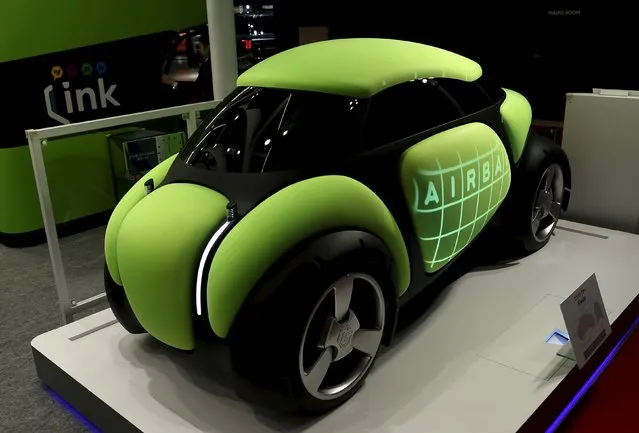
Toyoda Gosei Co Ltd's personal mobility concept airbag car "Flesby" is displayed at the 44th Tokyo Motor Show in Tokyo, Japan, October 28, 2015. (Photo by Yuya Shino/Reuters)

Toyoda Gosei Co Ltd's personal mobility concept airbag car "Flesby" is displayed at the 44th Tokyo Motor Show in Tokyo, Japan, October 28, 2015. (Photo by Yuya Shino/Reuters)
Details
31 Oct 2015 08:02:00
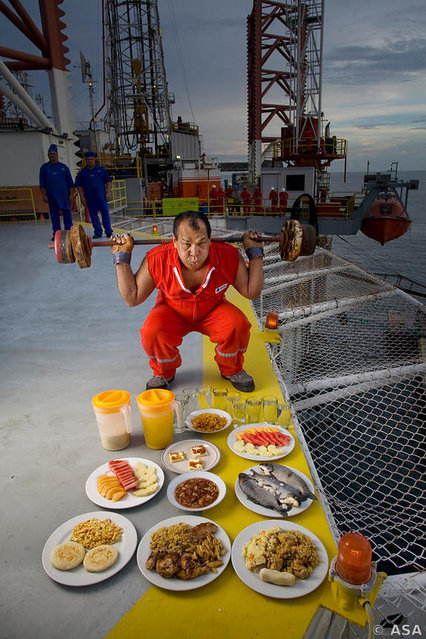
What the World Eats By Peter Menzel And Faith D'Aluisio Part 1

A stunning photographic collection featuring portraits of people from 30 countries and the food they eat in one day. In this fascinating study of people and their diets, 80 profiles are organized by the total number of calories each person puts away in a day. Featuring a Japanese sumo wrestler, a Massai herdswoman, world-renowned Spanish chef Ferran Adria, an American competitive eater, and more, these compulsively readable personal stories also include demographic particulars, including age, activity level, height, and weight. Essays from Harvard primatologist Richard Wrangham, journalist Michael Pollan, and others discuss the implications of our modern diets for our health and for the planet. This compelling blend of photography and investigative reportage expands our understanding of the complex relationships among individuals, culture, and food.
Details
23 Apr 2014 14:34:00
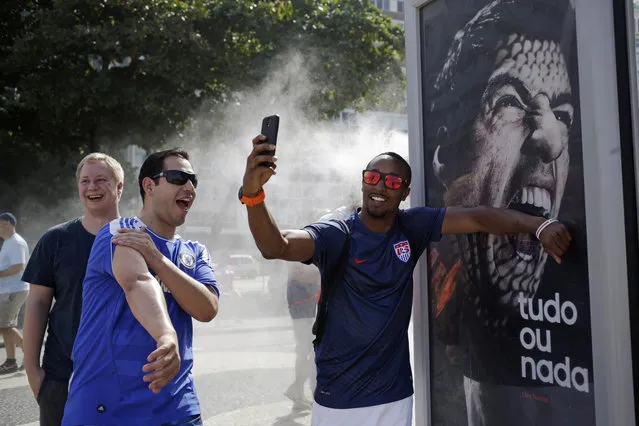
A U.S. soccer fan pretends that Uruguay's soccer striker Luis Suarez is biting him as he takes a selfie next to an Adidas advertisement featuring Suarez near Copacabana beach in Rio de Janeiro, Brazil, Thursday, June 26, 2014. FIFA banned Suarez from all football activities for four months on Thursday for biting an opponent at the World Cup, a punishment that rules him out of the rest of the tournament. (Photo by Matt Dunham/AP Photo)

A U.S. soccer fan pretends that Uruguay's soccer striker Luis Suarez is biting him as he takes a selfie next to an Adidas advertisement featuring Suarez near Copacabana beach in Rio de Janeiro, Brazil, Thursday, June 26, 2014. FIFA banned Suarez from all football activities for four months on Thursday for biting an opponent at the World Cup, a punishment that rules him out of the rest of the tournament. (Photo by Matt Dunham/AP Photo)
Details
28 Jun 2014 13:52:00
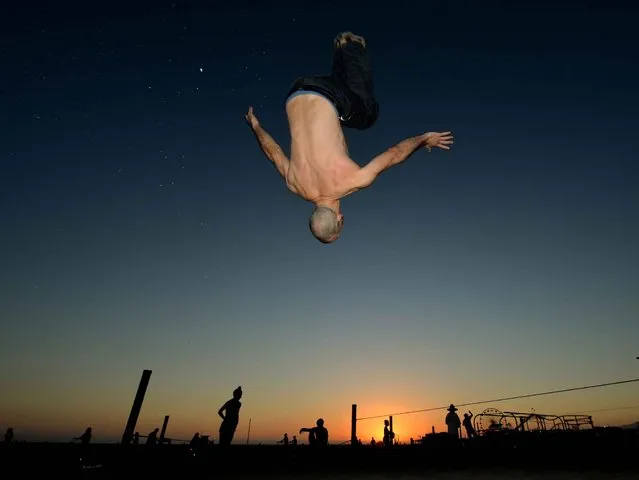
Dhruva Aliman does a back somersault as he dismounts from a slackline on the beach at Santa Monica, California on October 19, 2014. Slackline is a balance sport where a line of webbing is adjusted at different levels of tension between two anchor points and participants (called slackers) perform tricks and stunts including somersaults. (Photo by Mark Ralston/AFP Photo)

Dhruva Aliman does a back somersault as he dismounts from a slackline on the beach at Santa Monica, California on October 19, 2014. Slackline is a balance sport where a line of webbing is adjusted at different levels of tension between two anchor points and participants (called slackers) perform tricks and stunts including somersaults. (Photo by Mark Ralston/AFP Photo)
Details
25 Oct 2014 13:49:00
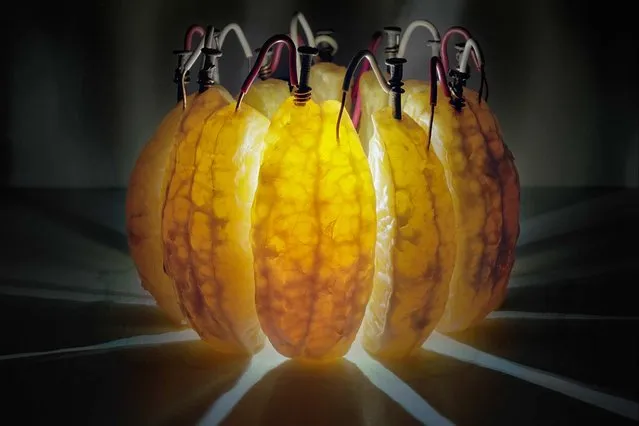
Wedges of an orange generate enough current and electrical juice – 3.5 volts – to power an LED. The fruit’s citric acid helps electrons flow from galvanized nails to copper wire in this 14-hour exposure. This image was published in September’s Visions of Earth, a trio of photos that appear in each issue of National Geographic. (Photo by Caleb Charland/National Geographic)

Wedges of an orange generate enough current and electrical juice – 3.5 volts – to power an LED. The fruit’s citric acid helps electrons flow from galvanized nails to copper wire in this 14-hour exposure. This image was published in September’s Visions of Earth, a trio of photos that appear in each issue of National Geographic. (Photo by Caleb Charland/National Geographic)
Details
06 Jan 2014 12:09:00
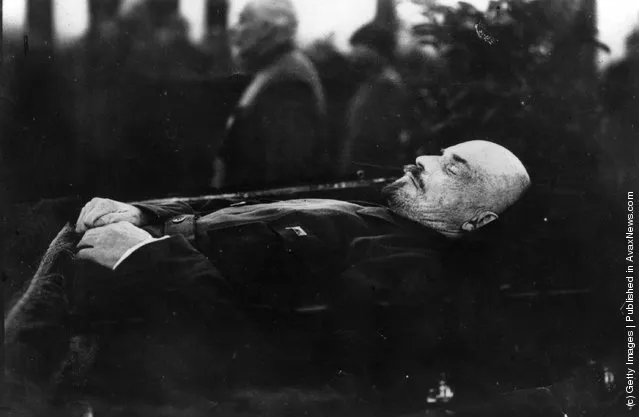
1924:  Vladimir Ilyich Lenin lying in state in the Kremlin

Photo: Vladimir Ilyich Lenin (1870 – 1924) lying in state in the Kremlin. (Photo by Hulton Archive/Getty Images). 1924

Important! For the same article in Russian language click here.

Something quite intriguing is happening within Russian-speaking internet during the last few – should you type a fully academic inquiry (at least, according to Russian academic requirements) in national search engines for "Lenin's mausoleum" – the first thing you get (even in top 10 searches) is website pages talking about black magic and occult. Website authors view this construction differently, but unconditionally agree on one thing: the mausoleum of the "leader of the world proletariat” – the essence of a magical artifact, a sort of “energy vampire”. It was built with a certain purpose: to drain the energy out of miserable Soviet citizens on one hand; and to poison the anthroposphere of one-sixth part of the earth with its vibes (the exact territory that was occupied by the former Soviet Union), depriving the Russian people of will to resist on the other hand. Complete nonsense? No doubt. Nevertheless, an intriguing one. Well, probably because some oddities do exist in mausoleum's history. These oddities are the thing we are going to discuss this time. First, let me refresh you memory on the subject.
Details
16 Oct 2011 11:27:00
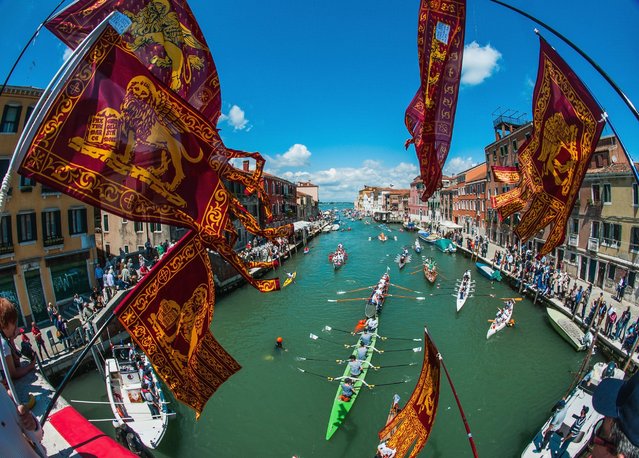
Rowers enter in Canaregio river during the 42nd Venice Vogalonga on May 15, 2016 in Venice, Italy. 42 years ago a group of Venetians, both amateur and professional rowers, came up with an idea of non-competitive race in which any kind of rowing boat can take part. The first Vogalonga began with the message to protest against the growing use of powerboats in Venice and the swell damage they do to the historic city. (Photo by Awakening/Getty Images)

Rowers enter in Canaregio river during the 42nd Venice Vogalonga on May 15, 2016 in Venice, Italy. 42 years ago a group of Venetians, both amateur and professional rowers, came up with an idea of non-competitive race in which any kind of rowing boat can take part. The first Vogalonga began with the message to protest against the growing use of powerboats in Venice and the swell damage they do to the historic city. (Photo by Awakening/Getty Images)
Details
18 May 2016 14:41:00