Loading...
Done
The interior of a house is damaged after an earthquake in Imphal, capital of the northeastern Indian state of Manipur, Monday, January 4, 2016. (Photo by Bullu Raj/AP Photo)

The interior of a house is damaged after an earthquake in Imphal, capital of the northeastern Indian state of Manipur, Monday, January 4, 2016. Five deaths have been reported from in and around Imphal due to falling debris. Imphal has a population of 270,000, and people were jolted from their sleep and ran out of their homes in panic. (Photo by Bullu Raj/AP Photo)
Details
06 Jan 2016 08:00:00
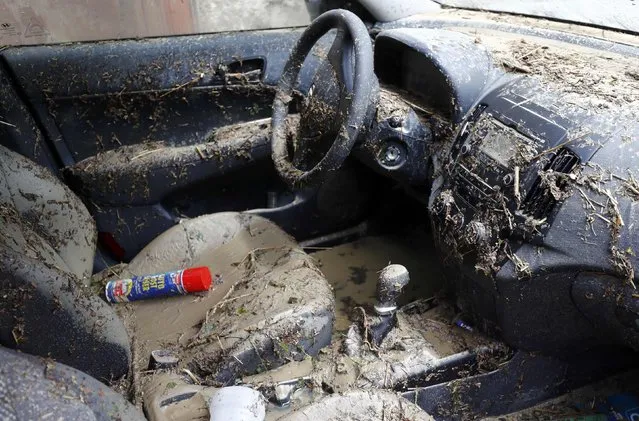
An interior of a car damaged by the floods is pictured in the town of Braunsbach, Germany, May 30, 2016. (Photo by Kai Pfaffenbach/Reuters)

An interior of a car damaged by the floods is pictured in the town of Braunsbach, Germany, May 30, 2016. The flood tore through Braunsbach, crushing cars, ripping corners of houses and flooding homes during a storm that hit southwestern Germany. Miraculously no one in Braunsbach was killed, though three people died as a result of the storm in other parts of the country. (Photo by Kai Pfaffenbach/Reuters)
Details
31 May 2016 11:35:00
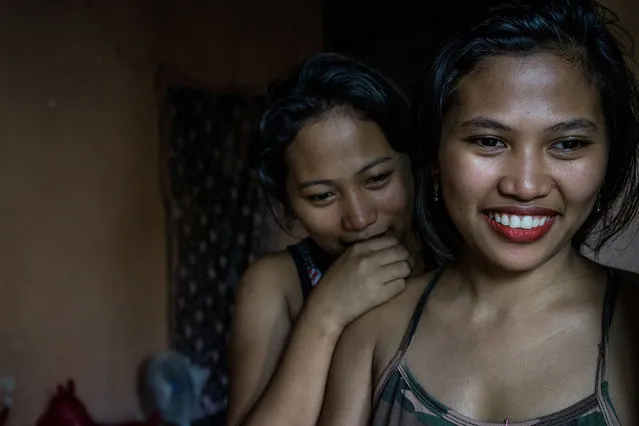
Gemma, right, and Joanne in their home in Angeles City. (Photo by Hannah Reyes Morales/The Washington Post)

Typhoon Yolanda – also known as Haiyan – struck the central part of the country November 8, 2013, leaving at least 6,300 people dead and over four million displaced. A month after Typhoon Haiyan, the United Nations Population Fund estimates that 5,000 women were subjected to sеxual violence. A study by the Health and Human Rights online publication shows the majority of young girls and women in Manila’s sеx industry come from poverty-stricken areas – such as Leyte, Samar, Cebu and southern Mindanao – and enter trafficking through force, deception, economic desperation and psychological manipulation. (Photo by Hannah Reyes Morales/The Washington Post)
Details
01 May 2017 09:59:00
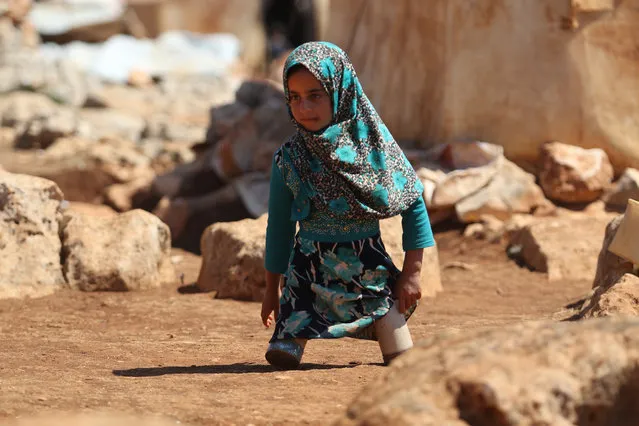
Eight year-old Maya Mohammad Ali Merhi walks using prosthetic legs made by her father from tin cans in a camp for displaced people, in the northern Syrian province of Idlib on June 20, 2018. Maya and her father were both born without lower limbs. Unable to afford real prosthetic limbs, her father made her a pair out of tin cans filled with cotton and scrap pieces of cloth. Maya's family had to leave their home in the Aleppo province to flee battles. (Photo by Aaref Watad/AFP Photo)

Eight year-old Maya Mohammad Ali Merhi walks using prosthetic legs made by her father from tin cans in a camp for displaced people, in the northern Syrian province of Idlib on June 20, 2018. Maya and her father were both born without lower limbs. Unable to afford real prosthetic limbs, her father made her a pair out of tin cans filled with cotton and scrap pieces of cloth. Maya's family had to leave their home in the Aleppo province to flee battles. (Photo by Aaref Watad/AFP Photo)
Details
09 Aug 2018 00:01:00
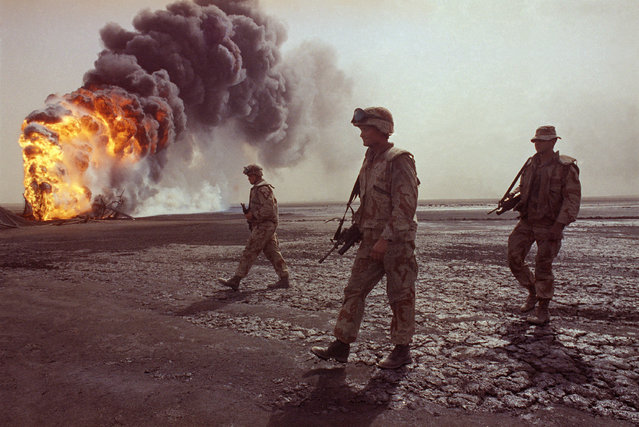
In this March 7, 1991 file photo, a U.S. Marine patrol walks across the charred oil landscape near a burning well during perimeter security patrol near Kuwait City. Twenty five years after the first U.S. Marines swept across the border into Kuwait in the 1991 Gulf War, American forces find themselves battling the extremist Islamic State group, born out of al-Qaida, in the splintered territories of Iraq and Syria. The Arab allies that joined the 1991 coalition are fighting their own conflicts both at home and abroad, as Iran vies for greater regional power following a nuclear deal with world powers. (Photo by John Gaps III/AP Photo)

In this March 7, 1991 file photo, a U.S. Marine patrol walks across the charred oil landscape near a burning well during perimeter security patrol near Kuwait City. Twenty five years after the first U.S. Marines swept across the border into Kuwait in the 1991 Gulf War, American forces find themselves battling the extremist Islamic State group, born out of al-Qaida, in the splintered territories of Iraq and Syria. The Arab allies that joined the 1991 coalition are fighting their own conflicts both at home and abroad, as Iran vies for greater regional power following a nuclear deal with world powers. (Photo by John Gaps III/AP Photo)
Details
23 Feb 2016 11:43:00
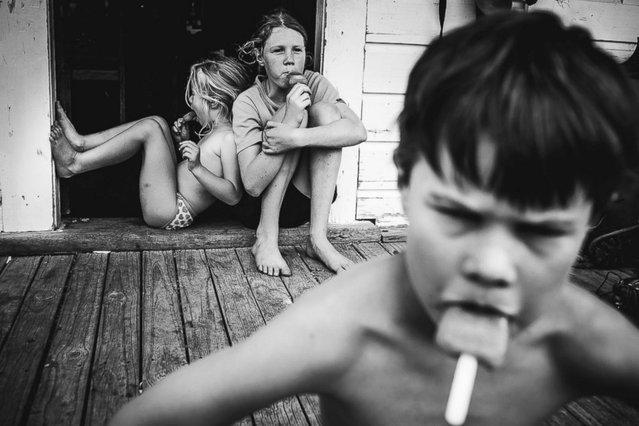
New Zealand photographer Niki Boon captured her children, who are growing up with limited electronics, in the photo series “Childhood in the Raw Photos”. Niki Boon began taking photos as a hobby while she was working as a physiotherapist in Scotland. However, the New Zealand native found her interest in the art waning while she travelled, and it wasn’t until she had returned home and started raising a family that her passion was rekindled. “Childhood in the Raw”, an ongoing photo series of her four children’s technology-free life on her 10-acre property in New Zealand, is the perennial fruit of this passion. (Photo by Niki Boon)

New Zealand photographer Niki Boon captured her children, who are growing up with limited electronics, in the photo series “Childhood in the Raw Photos”. Niki Boon began taking photos as a hobby while she was working as a physiotherapist in Scotland. However, the New Zealand native found her interest in the art waning while she travelled, and it wasn’t until she had returned home and started raising a family that her passion was rekindled. “Childhood in the Raw”, an ongoing photo series of her four children’s technology-free life on her 10-acre property in New Zealand, is the perennial fruit of this passion. (Photo by Niki Boon)
Details
20 Apr 2016 12:01:00
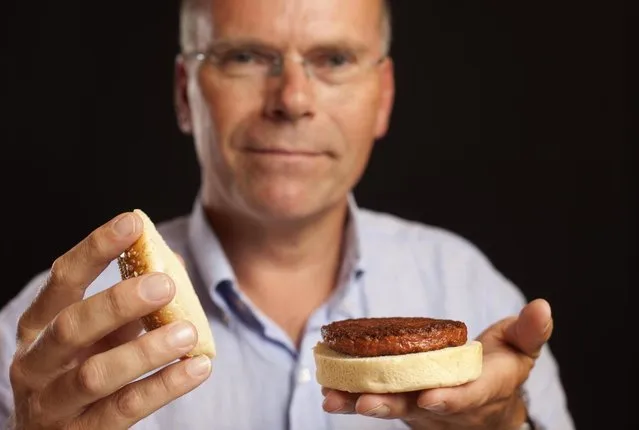
In this handout image provided by Ogilvy, a burger made from cultured beef, which has been developed by Professor Mark Post of Maastricht University in the Netherlands (pictured) is shown to the media during a press conference on August 5, 2013 in London, England. Cultured Beef could help solve the coming food crisis and combat climate change with commercial production of Cultured Beef beginning within ten to twenty years. (Photo by David Parry via Getty Images)

In this handout image provided by Ogilvy, a burger made from cultured beef, which has been developed by Professor Mark Post of Maastricht University in the Netherlands (pictured) is shown to the media during a press conference on August 5, 2013 in London, England. The in-vitro burger, cultured from cattle stem cells, the first example of what its creator says could provide an answer to global food shortages and help combat climate change, was fried in a pan and tasted by two volunteers. The burger is the result of years of research by Dutch scientist Mark Post, a vascular biologist at the University of Maastricht, who is working to show how meat grown in petri dishes might one day be a true alternative to meat from livestock.The meat in the burger has been made by knitting together around 20,000 strands of protein that has been cultured from cattle stem cells in Post's lab. (Photo by David Parry)

Details
06 Aug 2013 08:48:00
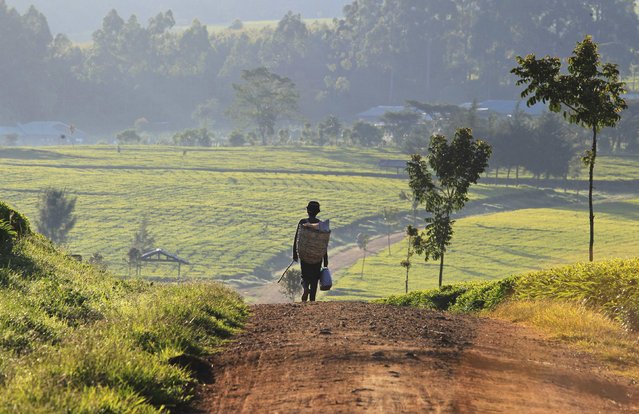
A man walks in the early morning to start his day picking tea leaves at a plantation in Nandi Hills, in Kenya's highlands region west of capital Nairobi, November 5, 2014. Emerald-coloured tea bushes blanketing the rolling hills of Nandi County have long provided a livelihood for small-scale farmers, helping make Kenya one of the world's biggest tea exporters. But ideal weather and bigger harvests, instead of producing bumper earnings, have led to a glut of Kenya's speciality black tea. (Photo by Noor Khamis/Reuters)

A man walks in the early morning to start his day picking tea leaves at a plantation in Nandi Hills, in Kenya's highlands region west of capital Nairobi, November 5, 2014. Emerald-coloured tea bushes blanketing the rolling hills of Nandi County have long provided a livelihood for small-scale farmers, helping make Kenya one of the world's biggest tea exporters. But ideal weather and bigger harvests, instead of producing bumper earnings, have led to a glut of Kenya's speciality black tea. (Photo by Noor Khamis/Reuters)

Details
17 Nov 2014 12:44:00