Loading...
Done
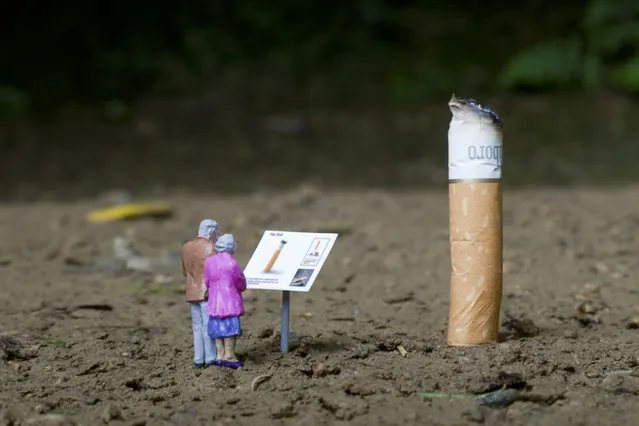
little people street art

The street artist known only as Slinkachu has been abandoning little people on the streets of London since 2006. His first project, “Little People in the City”, saw minature men, women and children living their lives on the streets of London and was immortalised in the 2008 book entitled “Little People in the City”. Since then, Slinkachu has done a number of other projects, notably “Whatever Happened to the Men of Tomorrow” which documented the decline of a tiny, middleaged and balding super-hero on the streets of London and “Inner City Snail – a slow moving street art project” which saw Slinkachu “customising” a number of London snails which then presumably went about their business none the wiser.
Details
09 Jun 2012 12:11:00
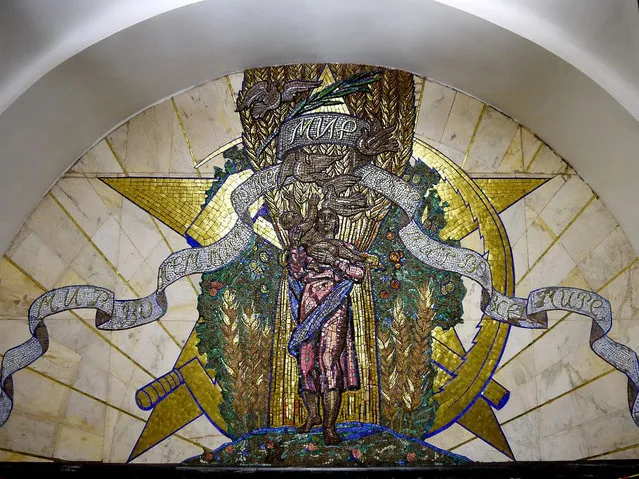
Moscow Metro

The is a rapid transit system serving Moscow and the neighbouring town of Krasnogorsk. Opened in 1935 with one 11-kilometre (6.8 mi) line and 13 stations, it was the first underground railway system in the Soviet Union. As of 2011, the Moscow Metro has 185 stations and its route length is 305.7 kilometres (190.0 mi). The system is mostly underground, with the deepest section 84 metres (276 ft) at the Park Pobedy station. The Moscow Metro is the world's second most heavily used rapid transit system after Tokyo's twin subway.
Details
13 Jun 2012 09:17:00
barbarian-art

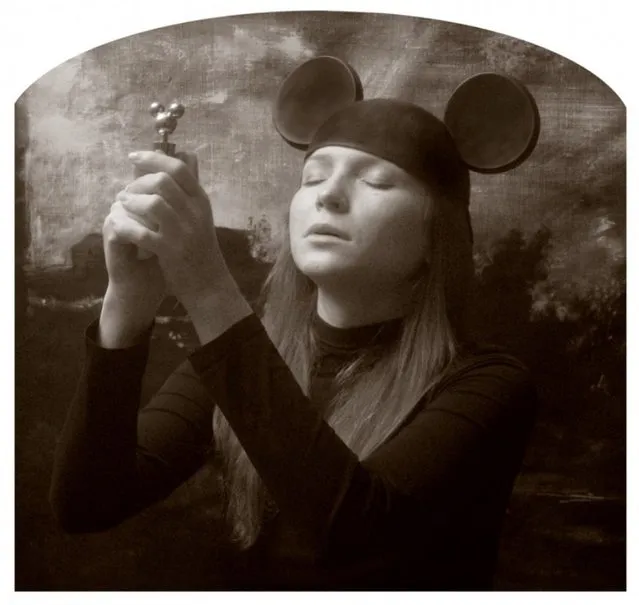
To produce the images that convey his fatalistic and ironic approach to life, tinged with hope, he needed the environment and knowledge of Mother Russia, oiled with a bit of bribery to certain circus trainers. Enter the Great Russian Bear, the personification of Russia for the last several centuries, onto center stage and into his studio. The bear is recognized as both brutish and cute – Misha was the mascot for the 1980 Olympic Games – and has remained a symbol of Russia since Tsarist times. In 2009 it is the symbol of the United Russia Party.
Details
13 Apr 2015 09:10:00
3D drawings


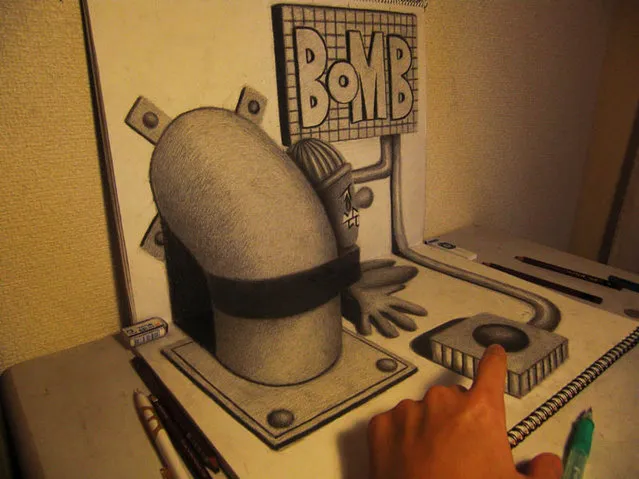
Nagai Hideyuki is a 21 year old artist from Tokyo, Japan. His recent series of 3D artworks using only paper and pencils have been spreading like wildfire online. And for good reason, his drawings are truly incredible. His typical set up involves two sketchbooks. One placed upright against a wall while the other lays flat on his desk. This simple set up is the environment for his anamorphic art.
Details
01 Jul 2012 14:21:00
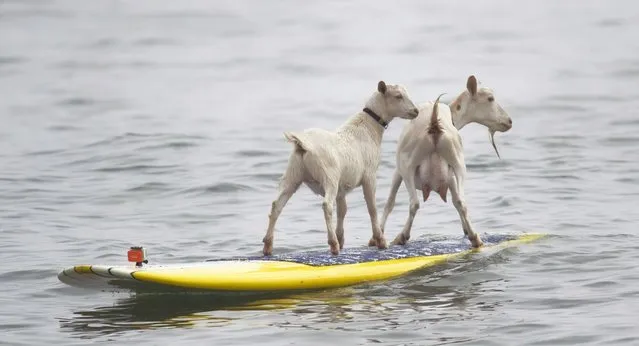
Goat herder Dana McGregor's goats Pismo, left, and Goatee surf at San Onofre State Beach, Calif., on July 11, 2012

Goat herder Dana McGregor's goats Pismo, left, and Goatee surf at San Onofre State Beach, Calif, on July 11, 2012. McGregor started taking Pismo's mother Goatee to the beach, and it wasn't long before she was on a surfboard. When Pismo was born, McGregor put her on a board too, and she was a natural, he says. (Photo by Rod Veal/The Orange County Register via AP)
Details
20 Jul 2012 11:02:00
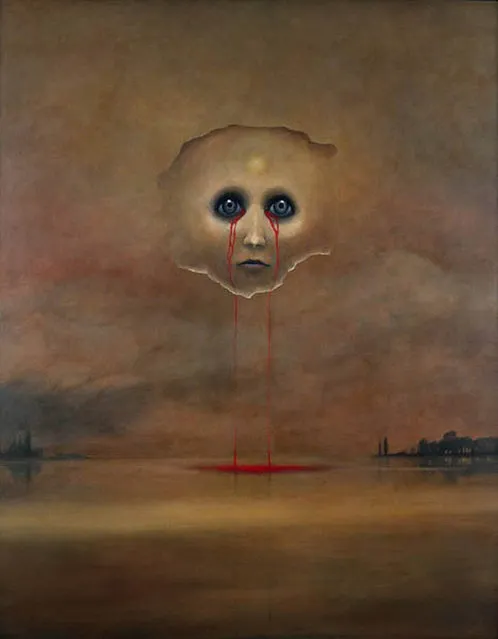
Art by  Zdzisław Beksiński

Zdzisław Beksiński, 24 February 1929 – 21 February 2005) was a renowned Polish painter, photographer, and sculptor. Beksiński executed his paintings and drawings either in what he called a 'Baroque' or a 'Gothic' manner. The first style is dominated by representation, with the best-known examples coming from his fantastic realism period when he painted disturbing images of a surrealistic, nightmarish environment. The second style is more abstract, being dominated by form, and is typified by Beksiński's later paintings.

Beksiński was murdered in 2005.
Details
31 Jul 2012 08:45:00
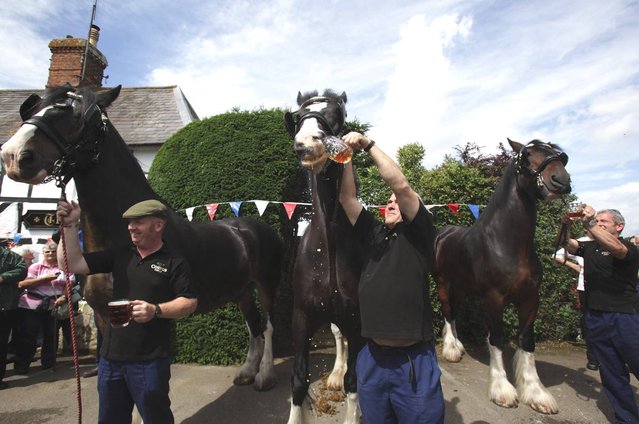
Monty, (C) the Wadworth brewery shire horse gets given a pint of beer outside the Raven Inn in Poulshot as he starts his two-week annual holiday on August 3, 2012 near Devizes, England. (Photo by Matt Cardy)

Monty, (C) the Wadworth brewery shire horse gets given a pint of beer outside the Raven Inn in Poulshot as he starts his two-week annual holiday on August 3, 2012 near Devizes, England. (Photo by Matt Cardy)
Details
04 Aug 2012 08:58:00
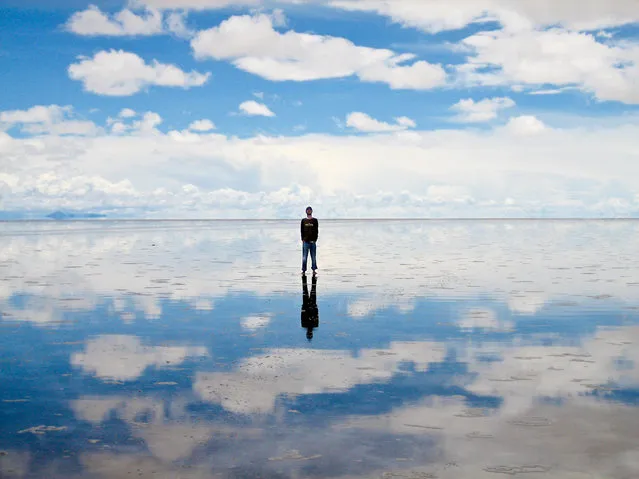
Salar de Uyuni

Salar de Uyuni (or Salar de Tunupa) is the world's largest salt flat at 10,582 square kilometers (4,086 sq mi). It is located in the Potosí and Oruro departments in southwest Bolivia, near the crest of the Andes, and is elevated 3,656 meters (11,995 ft) above mean sea level. The Salar was formed as a result of transformations between several prehistoric lakes. It is covered by a few meters of salt crust, which has an extraordinary flatness with the average altitude variations within one meter over the entire area of the Salar.
Details
04 Aug 2012 08:42:00