Loading...
Done
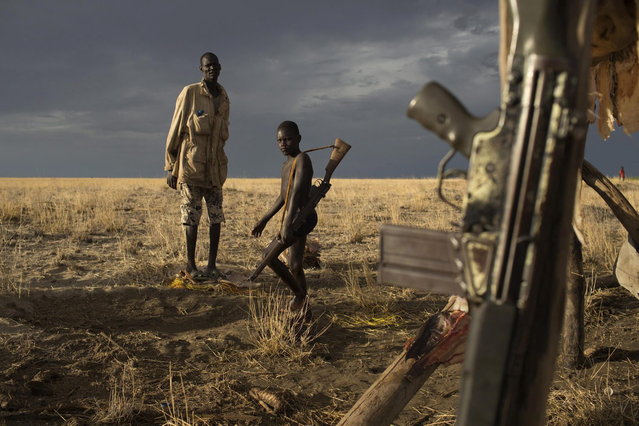
A Turkana man and a boy carrying a gun look on as a G3 battle rifle hangs from a structure used to dry fish at a fishing camp on the shores of Lake Turkana, some kilometres from Todonyang near the Kenya-Ethiopia border in northwestern Kenya October 12, 2013. (Photo by Siegfried Modola/Reuters)

A Turkana man and a boy carrying a gun look on as a G3 battle rifle hangs from a structure used to dry fish at a fishing camp on the shores of Lake Turkana, some kilometres from Todonyang near the Kenya-Ethiopia border in northwestern Kenya October 12, 2013The Turkana are traditionally nomadic pastoralists, but they have seen the pasture that they need to feed their herds suffer from recurring droughts and many have turned to fishing. However, Lake Turkana is overfished, and scarcity of food and pastureland is fuelling long-standing conflict with Ethiopian indigenous Dhaasanac, who have seen grazing grounds squeezed by large-scale government agricultural schemes in southern Ethiopia. The Dhaasanac now venture ever deeper into Kenyan territory in search of fish and grass, clashing with neighbours. Fighting between the communities has a long history, but the conflict has become ever more fatal as automatic weapons from other regional conflicts seep into the area. While the Turkana region is short of basics like grass and ground-water, it contains other resources including oil reserves and massive, newly discovered underground aquifers. (Photo by Siegfried Modola/Reuters)
Details
05 Dec 2013 12:08:00
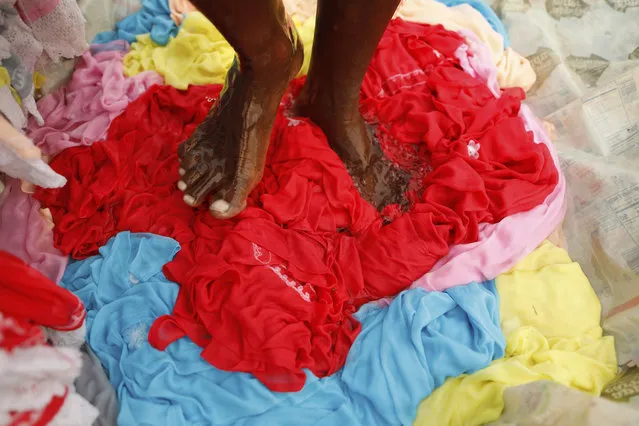
A dhobi, or a washerman washes cloths on the banks of the River Gomti in Lucknow, India, Saturday, September 12, 2020. Dhobis are traditional laundry workers who wash clothes by hand and dry them in the sun, an occupation which has been in existence for generations. Most cities in India have a Dhobi Ghat, or washermen's area, where the city's pile of clothes is laundered. This practice is still popular in India, despite of modern technology. Around 1,000 families work in Lucknow's Dhobi Ghat. However, in light of the novel coronavirus, their wages have decreased drastically. With each family earning around US$100-200 per month. (Photo by Rajesh Kumar Singh/AP Photo)

A dhobi, or a washerman washes cloths on the banks of the River Gomti in Lucknow, India, Saturday, September 12, 2020. Dhobis are traditional laundry workers who wash clothes by hand and dry them in the sun, an occupation which has been in existence for generations. Most cities in India have a Dhobi Ghat, or washermen's area, where the city's pile of clothes is laundered. This practice is still popular in India, despite of modern technology. Around 1,000 families work in Lucknow's Dhobi Ghat. However, in light of the novel coronavirus, their wages have decreased drastically. With each family earning around US$100-200 per month. (Photo by Rajesh Kumar Singh/AP Photo)
Details
25 Sep 2020 00:03:00
People drink in the street in the Soho area of London, on April 12, 2021 as coronavirus restrictions are eased across the country in step two of the government's roadmap out of England's third national lockdown. Britons on Monday toasted a significant easing of coronavirus restrictions, with early morning pints – and much-needed haircuts – as the country took a tentative step towards the resumption of normal life. Businesses including non-essential retail, gyms, salons and outdoor hospitality were all able to open for the first time in months in the second step of the government's roadmap out of lockdown. (Photo by Tolga Akmen/AFP Photo)

People drink in the street in the Soho area of London, on April 12, 2021 as coronavirus restrictions are eased across the country in step two of the government's roadmap out of England's third national lockdown. Britons on Monday toasted a significant easing of coronavirus restrictions, with early morning pints – and much-needed haircuts – as the country took a tentative step towards the resumption of normal life. Businesses including non-essential retail, gyms, salons and outdoor hospitality were all able to open for the first time in months in the second step of the government's roadmap out of lockdown. (Photo by Tolga Akmen/AFP Photo)
Details
13 Apr 2021 08:02:00
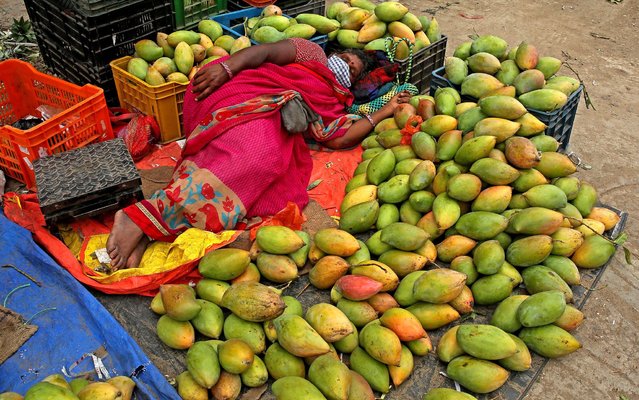
A woman taking a nap on mangoes at city market area after the city eased the lockdown in Bangalore, India 12 July 2021. The Karnataka government eases in covid-19 related lockdown restrictions in the wake of lower coronavirus cases and positivity rate falling below 5% percent. The Karnataka state government administering record 2.5-crore doses till date since the vaccination drive was launched across the state on January 16, Karnataka ranked first in South India in inoculating maximum number of its eligible population, said state Health Minister K. Sudhakar. (Photo by Jagadeesh N.V./EPA/EFE)

A woman taking a nap on mangoes at city market area after the city eased the lockdown in Bangalore, India 12 July 2021. The Karnataka government eases in covid-19 related lockdown restrictions in the wake of lower coronavirus cases and positivity rate falling below 5% percent. The Karnataka state government administering record 2.5-crore doses till date since the vaccination drive was launched across the state on January 16, Karnataka ranked first in South India in inoculating maximum number of its eligible population, said state Health Minister K. Sudhakar. (Photo by Jagadeesh N.V./EPA/EFE)
Details
19 Jul 2021 09:24:00
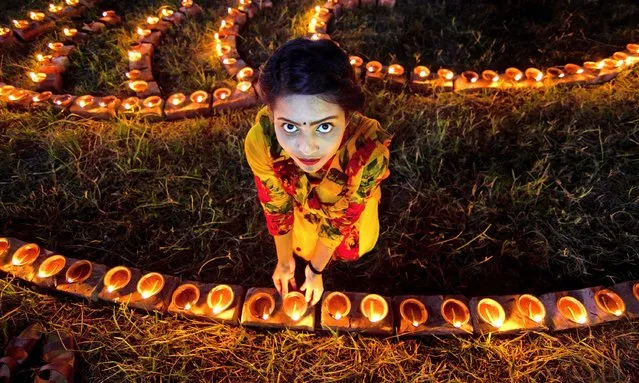
Hindu devotees light “Diyas” (earthen lamps) on a Rangoli, a framework of decorated pattern, as part of Diwali festivities in a temple premises in Dhaka, Bangladesh on November 12, 2023. The festival takes place every year in accordance with the Hindu lunar calendar. The word “Diwali” is derived from the Sanskrit word “Deepavali”, meaning series of lighted lamps; hence, it is also known as the festival of lights. Diwali is typically celebrated by socializing and exchanging gifts with family and friends. Many light oil lamps or candles to symbolize a victory of light over darkness, and fireworks are set off as part of the celebrations. (Photo by Joy Saha/Rex Features/Shutterstock)

Hindu devotees light “Diyas” (earthen lamps) on a Rangoli, a framework of decorated pattern, as part of Diwali festivities in a temple premises in Dhaka, Bangladesh on November 12, 2023. The festival takes place every year in accordance with the Hindu lunar calendar. The word “Diwali” is derived from the Sanskrit word “Deepavali”, meaning series of lighted lamps; hence, it is also known as the festival of lights. Diwali is typically celebrated by socializing and exchanging gifts with family and friends. Many light oil lamps or candles to symbolize a victory of light over darkness, and fireworks are set off as part of the celebrations. (Photo by Joy Saha/Rex Features/Shutterstock)
Details
18 Dec 2023 00:11:00
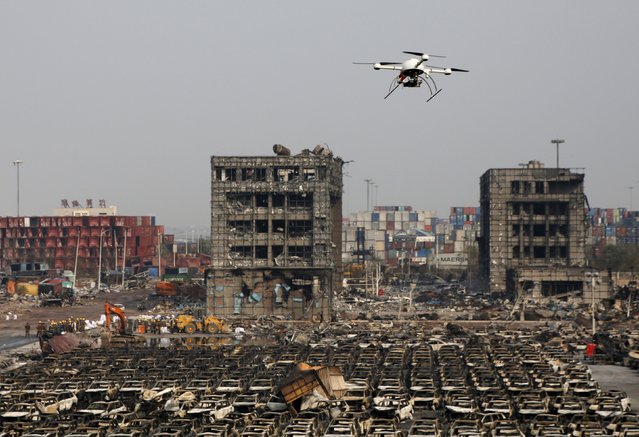
A drone operated by paramilitary police flies over the site of last week's explosions at Binhai new district in Tianjin, China, August 17, 2015. (Photo by Kim Kyung-Hoon/Reuters)

A drone operated by paramilitary police flies over the site of last week's explosions at Binhai new district in Tianjin, China, August 17, 2015. Many operations have resumed at China's Tianjin port, trade sources said, after explosions last week that killed more than 100 people and disrupted business at what is an important oil, gas and bulk import harbor for Asia's biggest economy. The explosions on August 12 led to the disruption of all chemical and oil tanker discharges at the port, and imports of iron ore were also affected. (Photo by Kim Kyung-Hoon/Reuters)
Details
18 Aug 2015 14:32:00
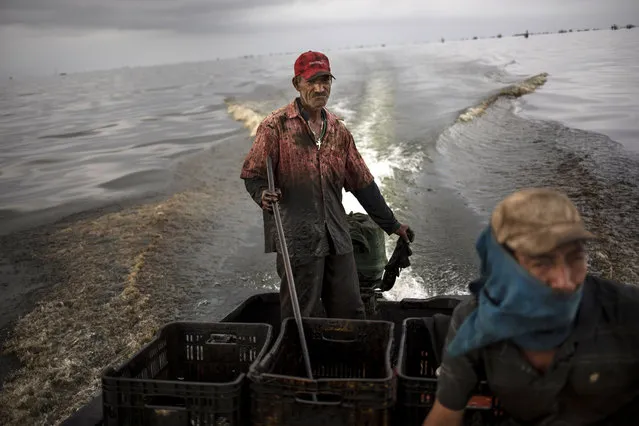
Fisherman Jose Miguel Perez, whose nickname is “Taliban”, navigates the oil infested waters of Lake Maracaibo, near Cabimas, Venezuela, May 21, 2019. Nobody lives as closely with the environmental fallout of Venezuela's collapsing oil industry as the fishermen who scratch out an existence on the blackened, sticky shores of Lake Maracaibo. (Photo by Rodrigo Abd/AP Photo)

Fisherman Jose Miguel Perez, whose nickname is “Taliban”, navigates the oil infested waters of Lake Maracaibo, near Cabimas, Venezuela, May 21, 2019. Nobody lives as closely with the environmental fallout of Venezuela's collapsing oil industry as the fishermen who scratch out an existence on the blackened, sticky shores of Lake Maracaibo. (Photo by Rodrigo Abd/AP Photo)
Details
26 Nov 2019 00:03:00
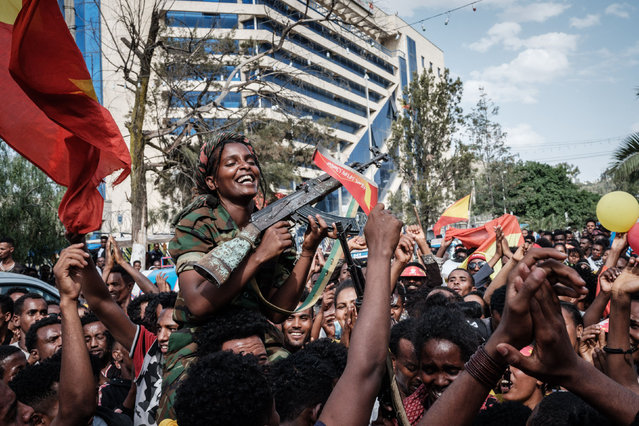
Female soldiers of Tigray Defence Force (TDF) celebrate while they sit on men's shoulders as people celebrate their return on a street in Mekele, the capital of Tigray region, Ethiopia, on June 29, 2021. Rebel fighters in Ethiopia's war-hit Tigray seized control of more territory on June 29, 2021, one day after retaking the local capital and vowing to drive all “enemies” out of the region. (Photo by Yasuyoshi Chiba/AFP Photo)

Female soldiers of Tigray Defence Force (TDF) celebrate while they sit on men's shoulders as people celebrate their return on a street in Mekele, the capital of Tigray region, Ethiopia, on June 29, 2021. Rebel fighters in Ethiopia's war-hit Tigray seized control of more territory on June 29, 2021, one day after retaking the local capital and vowing to drive all “enemies” out of the region. (Photo by Yasuyoshi Chiba/AFP Photo)
Details
16 Jul 2021 10:26:00