Loading...
Done
The top layer of muskeg and earth (L) is removed at the Syncrude tar sands operations near Fort McMurray, Alberta, September 17, 2014. Syncrude currently produces 350,000 barrels per day of high quality light, low sulphur crude oil according to company reports. (Photo by Todd Korol/Reuters)

The top layer of muskeg and earth (L) is removed at the Syncrude tar sands operations near Fort McMurray, Alberta, September 17, 2014. Syncrude currently produces 350,000 barrels per day of high quality light, low sulphur crude oil according to company reports. (Photo by Todd Korol/Reuters)
Details
21 Sep 2014 11:06:00
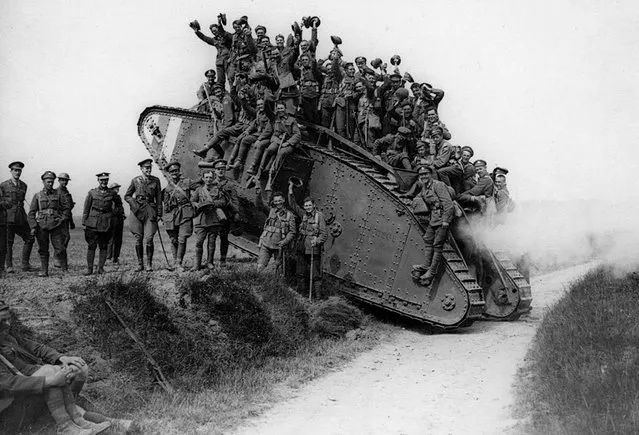
These black-and-white photos are taken from the new book “Armoured Warfare in the First World War 1916 – 1918” by Anthony Tucker-Jones and published by Pen & Sword Military. “Interestingly the British, French and Germans took completely different approaches with varying results”. The British military produced “Little Willie” in Autumn 1915 weighing 18 tonnes, which had a crew of two plus four gunners. “Inspired by a tracked artillery tractor “Little Willie” was referred to as a water tank – hence the name tank – to ensure secrecy”, said Anthony. “This led to the strange looking Mark I with its peculiar rhomboid shape, designed to cross trenches with guns in sponsons on either side. The Germans saw the tank as unchivalrous and were slow to grasp its utility. They favoured the Stormtrooper (specialist soldiers used to infiltrate enemy trenches) and artillery, not the tank”, said Anthony. “However, they didn’t hesitate to make use of captured British tanks. Although the tank helped secure victory and German soldiers dubbed it “Germany’s Downfall” the country was ultimately brought to its knees by the Allies blockade”. Here: British troops hitch a ride on a Mark IV after the massed tank fleet spearheading attack at Cambrai on November 20, 1917. (Photo by Anthony Tucker-Jones/Mediadrumworld.com)

These black-and-white photos are taken from the new book “Armoured Warfare in the First World War 1916 – 1918” by Anthony Tucker-Jones and published by Pen & Sword Military. Here: British troops hitch a ride on a Mark IV after the massed tank fleet spearheading attack at Cambrai on November 20, 1917. (Photo by Anthony Tucker-Jones/Mediadrumworld.com)
Details
23 Feb 2017 00:02:00
People take part in a protest outside the Department for Education, London, Sunday August 16, 2020, in response to the A-level results. The British government has been urged to “get a grip” over how grades are being awarded to school students, who were unable to take exams earlier this summer because of the coronavirus pandemic. The latest confusion emerged late Saturday when England’s exam regulator launched a review on its own just-published guidance on how students can appeal grades awarded under a complicated system. (Photo by London News Pictures/The Sun)

People take part in a protest outside the Department for Education, London, Sunday August 16, 2020, in response to the A-level results. The British government has been urged to “get a grip” over how grades are being awarded to school students, who were unable to take exams earlier this summer because of the coronavirus pandemic. The latest confusion emerged late Saturday when England’s exam regulator launched a review on its own just-published guidance on how students can appeal grades awarded under a complicated system. (Photo by London News Pictures/The Sun)
Details
18 Aug 2020 00:07:00
Ecocapsules By Nice Architects

A Slovakian company has designed an egg-shaped and cozy micro-home that should work ideally for anybody who wants to “go off the grid” and “live off the land” – the Ecocapsule.
Details
29 May 2015 11:13:00


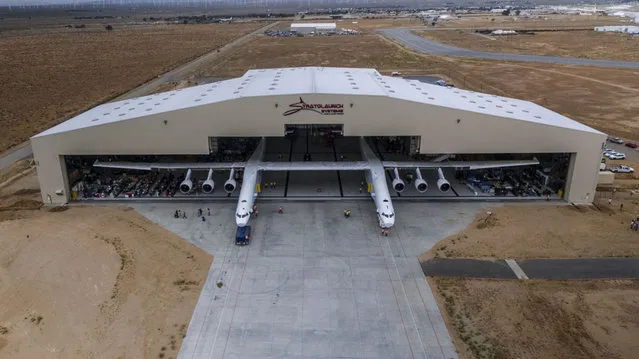
Microsoft co-founder Paul Allen has spent the last six years working on a giant aircraft capable of launching rockets to space. Today, his company Stratolaunch Systems literally rolled that plane out of its hangar in the Mojave Desert for the first time ever.
Details
01 Jun 2017 09:11:00


Mazda Motor introduces the company's concept vehicle, Taiki during the press day of the 40th Tokyo Motor Show at Makuhari Messe, on October 24, 2007 in Chiba Prefecture, Japan. (Photo by Koichi Kamoshida/Getty Images)
Details
18 May 2011 09:23:00
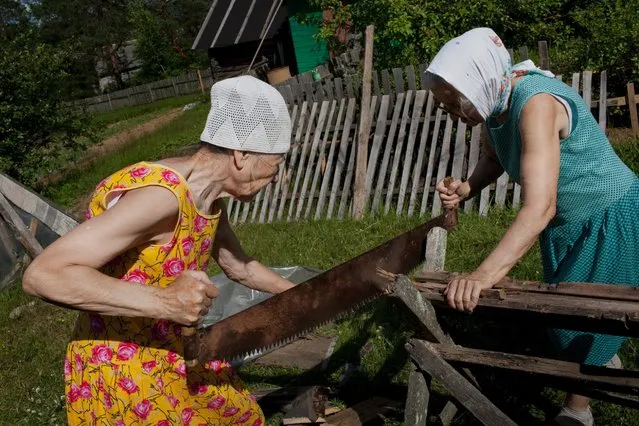
“Two-Handed Saw, 2014”. “Most of the neighbors have switched to power tools to run their households, the buzz of chain saws and weed-whackers overpowering the quieter sounds of country life, but my aunts hold on to the two-handed saw that's decades old, the sickle and scythe that need to be sharpened and polished after each use, the old axe that's becoming heavier each year. Each of these objects is familiar, holding memories of their brother, who succumbed to cancer a few years ago, of days before my grandfather lost his vision in the 50's, of busier days and longer futures”, Sablin told. (Photo by Nadia Sablin)

In northwest Russia, in a small village called Alekhovshchina, Nadia Sablin's aunts spend the warmer months together in the family home and live as the family has always lived, chopping wood to heat the house and making their own clothes. Sablin's book of photographs, “Aunties: The Seven Summers of Alevtina and Ludmila”, is published by Duke University Press. Here: “Two-Handed Saw, 2014”. (Photo by Nadia Sablin)
Details
25 Feb 2016 12:12:00
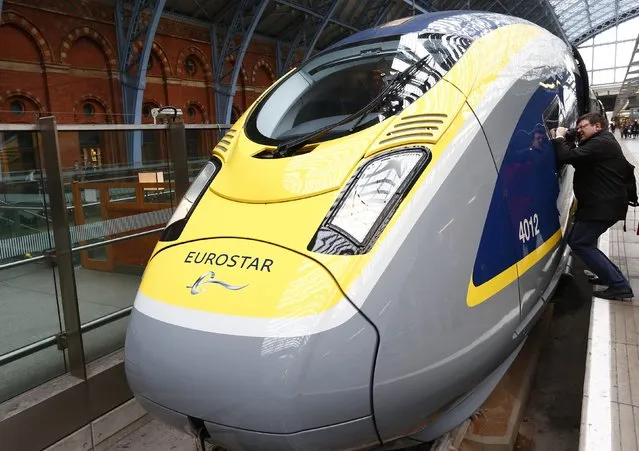
A man tries to photograph the interior of the driver's cab belonging to Eurostar's new Siemens e320 train at St Pancras station in central London, November 13, 2014. (Photo by Andrew Winning/Reuters)

A man tries to photograph the interior of the driver's cab belonging to Eurostar's new Siemens e320 train at St Pancras station in central London, November 13, 2014. Eurostar, the company that runs passenger trains through the Channel tunnel between London and Paris, said it would buy seven additional e320 trains from Siemens for about 300 million pounds ($473 million). The company placed an order for 10 new trains in 2010, the first of which is due to enter commercial service next year, enabling the company to add new routes. (Photo by Andrew Winning/Reuters)
Details
14 Nov 2014 13:50:00