Loading...
Done
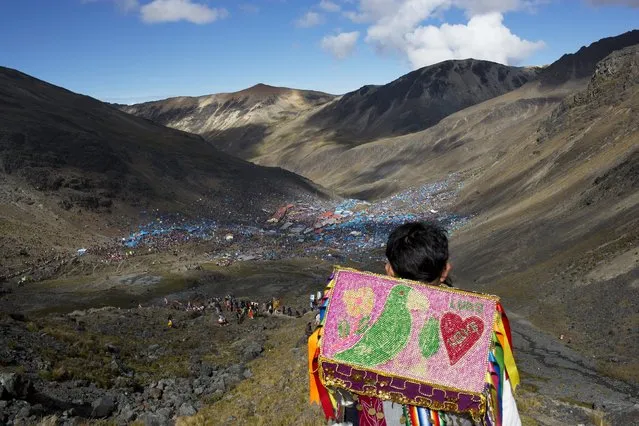
In this May 24, 2016 photo, a young boy descends the Qullqip'unqu mountain looking out at the tens of thousands of pilgrims gathered to celebrate the three-day festival Qoyllur Rit’i, translated from the Quechua language as Snow Star, in the Andean Sinakara Valley, in Peru's Cusco region. The celebration that mixes Catholic and indigenous beliefs honors Jesus as well as the area’s glacier, which is considered sacred among some indigenous people. While the native celebration is far older, the Christian part of the ritual stretches back to the 1700s, when Jesus is said to have appeared to a young shepherd in the form of another boy. (Photo by Rodrigo Abd/AP Photo)

In this May 24, 2016 photo, a young boy descends the Qullqip'unqu mountain looking out at the tens of thousands of pilgrims gathered to celebrate the three-day festival Qoyllur Rit’i, translated from the Quechua language as Snow Star, in the Andean Sinakara Valley, in Peru's Cusco region. The celebration that mixes Catholic and indigenous beliefs honors Jesus as well as the area’s glacier, which is considered sacred among some indigenous people. While the native celebration is far older, the Christian part of the ritual stretches back to the 1700s, when Jesus is said to have appeared to a young shepherd in the form of another boy. (Photo by Rodrigo Abd/AP Photo)
Details
04 Jun 2016 11:52:00
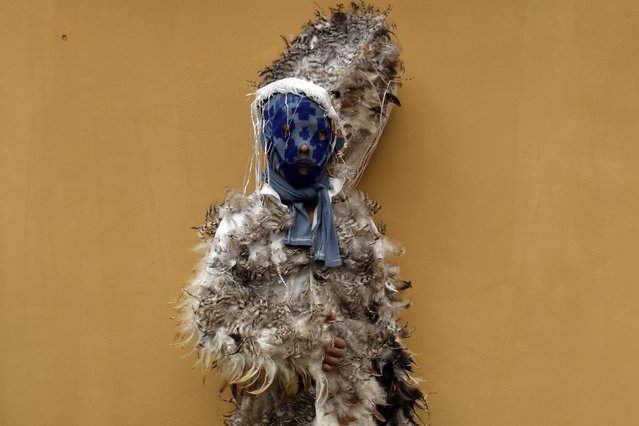
Francisco Solano poses for a photo in his bird-feather suit after attending a Mass commemorating the feast day of St. Francis Solano, in Emboscada, Paraguay, Friday, July 24, 2015. Some 500 people attended the festivity - a mix of indigenous and Guarani Indian beliefs. The festival begins with a Mass, continues with a procession of the diminutive wooden statue of St. Francis, and ends with people dancing in suits made with black, white, brown and grey feathers. (Photo by Jorge Saenz/AP Photo)

Francisco Solano poses for a photo in his bird-feather suit after attending a Mass commemorating the feast day of St. Francis Solano, in Emboscada, Paraguay, Friday, July 24, 2015. Some 500 people attended the festivity – a mix of indigenous and Guarani Indian beliefs. The festival begins with a Mass, continues with a procession of the diminutive wooden statue of St. Francis, and ends with people dancing in suits made with black, white, brown and grey feathers. (Photo by Jorge Saenz/AP Photo)
Details
26 Jul 2015 10:58:00

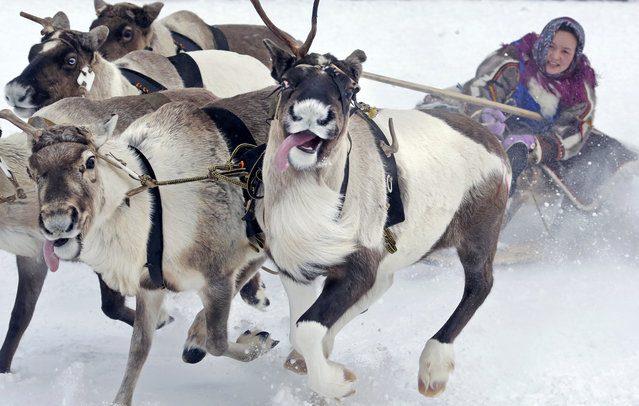
In this photo taken on Sunday, March 15, 2015, a Nenets woman rides steers a sled during a reindeer race at the Reindeer Herder's Day in the city of Nadym, in Yamal-Nenets Region, 2500 kilometers (about 1553 miles) northeast of Moscow, Russia. For the indigenous nomadic Nenets people, the Reindeer Herder's Day offers a chance to show their prowess in wrestling, high jumps and other traditional local sports, but, above all, reindeer races. (Photo by Dmitry Lovetsky/AP Photo)

In this photo taken on Sunday, March 15, 2015, a Nenets woman rides steers a sled during a reindeer race at the Reindeer Herder's Day in the city of Nadym, in Yamal-Nenets Region, 2500 kilometers (about 1553 miles) northeast of Moscow, Russia. For the indigenous nomadic Nenets people, the Reindeer Herder's Day offers a chance to show their prowess in wrestling, high jumps and other traditional local sports, but, above all, reindeer races. (Photo by Dmitry Lovetsky/AP Photo)
Details
24 Mar 2015 10:36:00
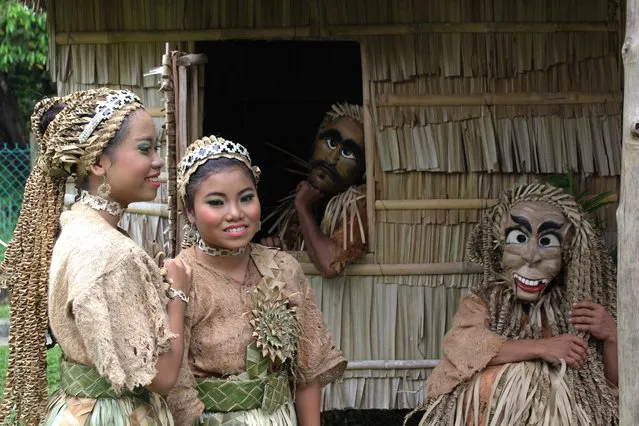
The People of Mah Meri tribe at home at Pulau Carey village on December 03, 2016 in Selangor, Malaysia. (Photo by Yuli Seperi/Sijori Images/Barcroft India)

The People of Mah Meri tribe at home at Pulau Carey village on December 03, 2016 in Selangor, Malaysia. The Mah Meri people are one 18 tribes of Orang Asal (indigenous people) living in west Malaysia. The Mah Meri are know for thei wood carvings and also for the richness of their songs and dances. (Photo by Yuli Seperi/Sijori Images/Barcroft India)
Details
06 Dec 2016 10:38:00
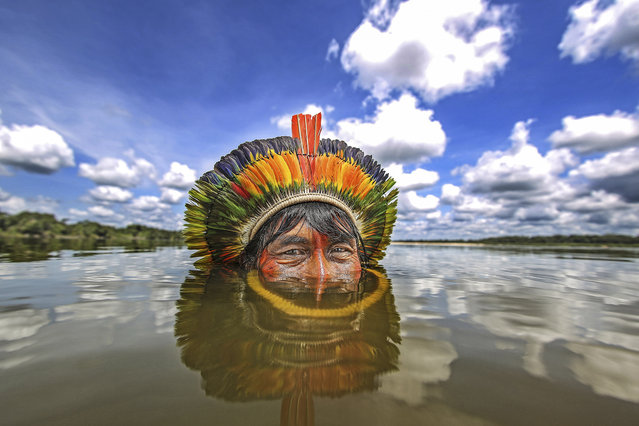
Bej indian in the Xingu river, state of Mato Grosso, Brazil on December 20, 2015 .(Photo by Ricardo Stuckert/Caters News Agency)

These images offer a rare glimpse of life within remote Brazilian tribes. Award winning photographer Ricardo, 47, said: “The pictures show the traditional way of life of these people who live in harmony with nature. The photos provide an overview of the contemporary situation of the indigenous people in Brazil”. Here: Bej indian in the Xingu river, state of Mato Grosso, Brazil on December 20, 2015 .(Photo by Ricardo Stuckert/Caters News Agency)
Details
12 Dec 2017 06:46:00
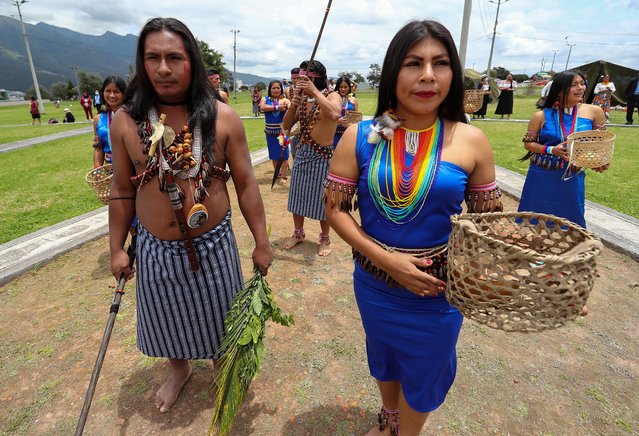
Ecuadorian indigenous people celebrate the festival of the moon or Kulla Raymi, in Quito, Ecuador, 21 September 2021. A circle on the ground made up of fruits and inside the Andean symbol of the chacana, multinational geometric flags and a cross that symbolizes the four cardinal points, were the setting in which the festival of the moon, the Kulla, was commemorated this Tuesday. Raymi, on a hill in Quito. It is one of the four most significant festivities of the Andean agroecological calendar, which commemorates the beginning of life and exalts women as the maximum representation of fertility. (Photo by Jose Jacome/EPA/EFE)

Ecuadorian indigenous people celebrate the festival of the moon or Kulla Raymi, in Quito, Ecuador, 21 September 2021. A circle on the ground made up of fruits and inside the Andean symbol of the chacana, multinational geometric flags and a cross that symbolizes the four cardinal points, were the setting in which the festival of the moon, the Kulla, was commemorated this Tuesday. Raymi, on a hill in Quito. It is one of the four most significant festivities of the Andean agroecological calendar, which commemorates the beginning of life and exalts women as the maximum representation of fertility. (Photo by Jose Jacome/EPA/EFE)
Details
22 Sep 2021 09:01:00
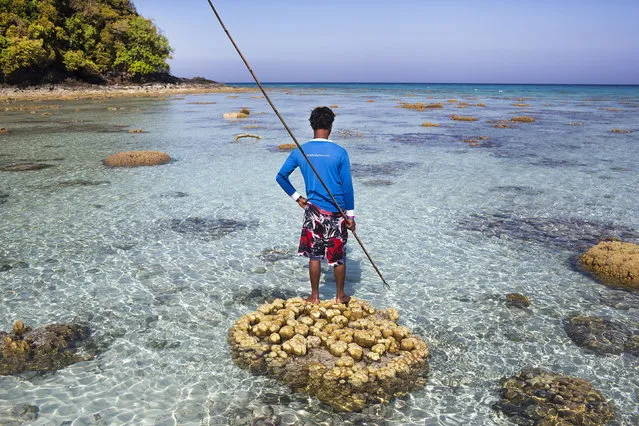
Hook, an indigenous Moken man, holds a three-pronged throwing spear and searches for fish in the waters of Ko Surin National Park. March 1, 2013 – Ko Surin, Thailand. (Photo by Taylor Weidman/zReportage via ZUMA Press)

“For centuries, the Moken sea nomads have traveled the islands between Thailand and Myanmar fishing and foraging for food on the sea floor. Throughout the Mergui Archipelago, Moken migrate in flotillas of Kabangs (traditional boat of the Moken people), stopping at different islands and beaches. Expert freedivers, the Moken have adapted physically to an aquatic life, developing unique characteristics that let them see better and hold their breath longer while underwater”. – Taylor Weidman. Photo: Hook, an indigenous Moken man, holds a three-pronged throwing spear and searches for fish in the waters of Ko Surin National Park. March 1, 2013 – Ko Surin, Thailand. (Photo by Taylor Weidman/zReportage via ZUMA Press)
Details
24 Mar 2014 06:45:00
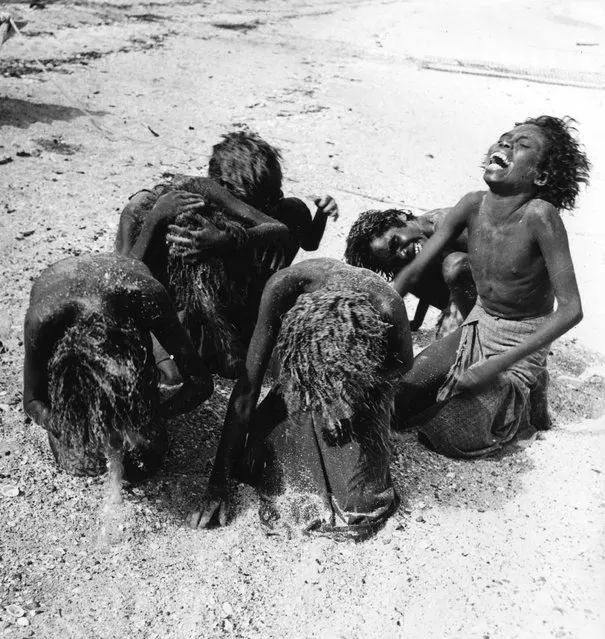
1st January 1950:  Aboriginal women washing their hair with sand at Arnhem land in the Northern Territory of Australia.  (Photo by Three Lions/Getty Images)

“Australian Aborigines are those people regarded as indigenous to the Australian continent. In the High Court of Australia, Australian Aborigines have been specifically identified as a group of people who share, in common, biological ancestry back to the original occupants of the continent”. – Wikipedia

Photo: Aboriginal women washing their hair with sand at Arnhem land in the Northern Territory of Australia. 1st January 1950. (Photo by Three Lions)
Details
02 Feb 2014 07:29:00