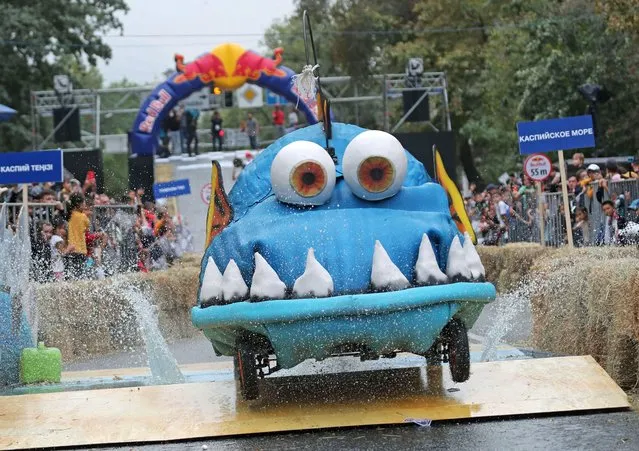
Competitors drive their homemade vehicle without an engine during the Red Bull Soapbox Race in Almaty, Kazakhstan on September 11, 2022. (Photo by Pavel Mikheyev/Reuters)
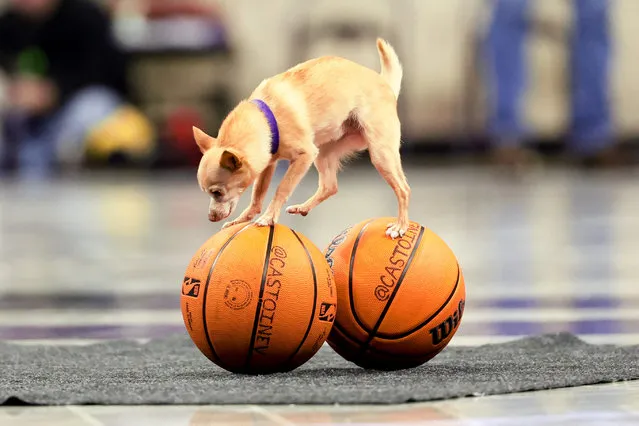
Scooby performs at halftime of the game between the TCU Horned Frogs and Texas Tech Red Raiders at Ed and Rae Schollmaier Arena in Fort Worth, Texas on January 30, 2024. (Photo by Kevin Jairaj/USA TODAY Sports)
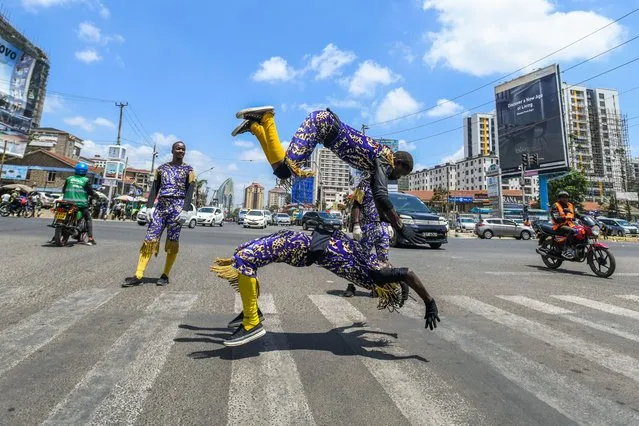
People in colorful costumes perform acrobatics for drivers waiting at red lights in Nairobi, Kenya on February 20, 2024. (Photo by Gerald Anderson/Anadolu via Getty Images)
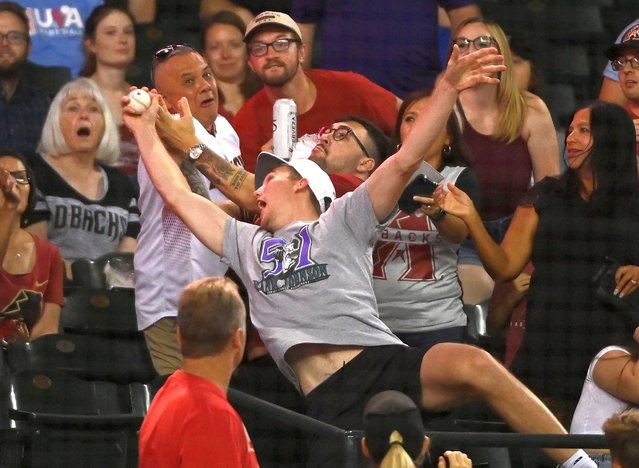
An Arizona Diamondbacks fan catches a foul ball during the seventh inning against the Cincinnati Reds at Chase Field on June 14, 2022 in Phoenix, Arizona. (Photo by Norm Hall/Getty Images)
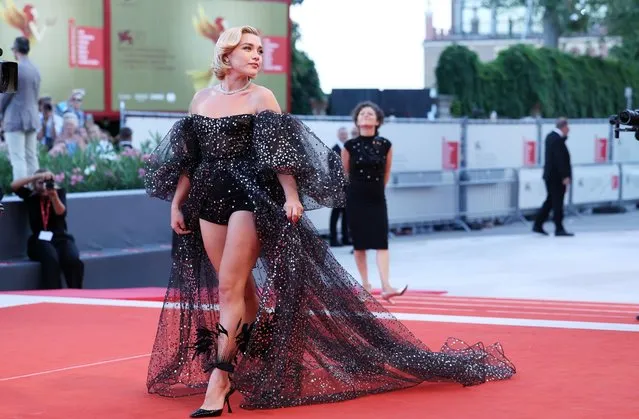
English actress Florence Pugh attends the “Don't Worry Darling” red carpet at the 79th Venice International Film Festival on September 05, 2022 in Venice, Italy. (Photo by Vittorio Zunino Celotto/Getty Images)
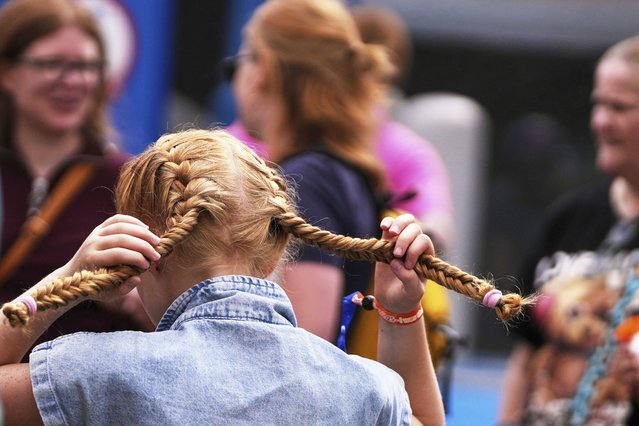
A young girl pulls on her braids during the Red Head Days festival in Tilburg, Netherlands, Saturday, August 30, 2025. (Photo by Virginia Mayo/AP Photo)
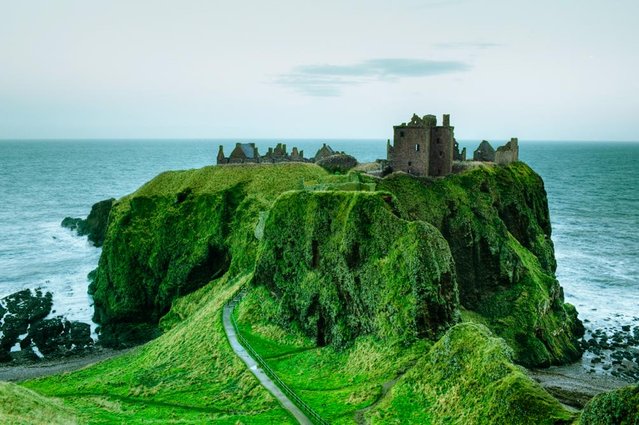
Dunnottar Castleis a ruined medieval fortress located upon a rocky headland on the north-east coast of Scotland, about 3 kilometres (1.9 mi) south of Stonehaven. The surviving buildings are largely of the 15th and 16th centuries, but the site is believed to have been fortified in the Early Middle Ages. Dunnottar has played a prominent role in the history of Scotland through to the 18th-century Jacobite risings because of its strategic location and the strength of its situation. Dunnottar is best known as the place where the Honours of Scotland, the Scottish crown jewels, were hidden from Oliver Cromwell's invading army in the 17th century. The property of the Keiths from the 14th century, and the seat of the Earl Marischal, Dunnottar declined after the last Earl forfeited his titles by taking part in the Jacobite rebellion of 1715. The castle was restored in the 20th century and is now open to the public.