Loading...
Done
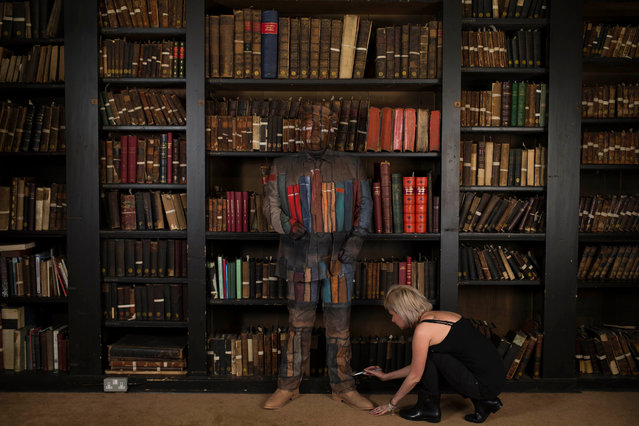
Armed forces veteran Frank Simpson at the Portico library being camouflaged by body artist Carolyn Roper in Manchester, UK on May 16, 2016 as part of the #CountThemIn campaign launched on Monday by the Royal British Legion. (Photo by Jon Super/Royal British Legion/PA Wire)

Armed forces veteran Frank Simpson at the Portico library being camouflaged by body artist Carolyn Roper in Manchester, UK on May 16, 2016 as part of the #CountThemIn campaign launched on Monday by the Royal British Legion. (Photo by Jon Super/Royal British Legion/PA Wire)
Details
17 May 2016 13:10:00
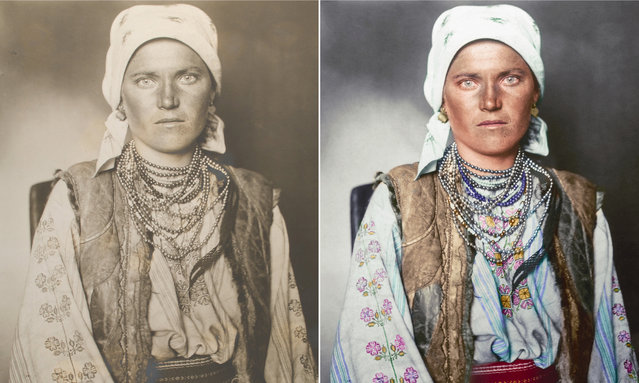
A Ruthenian woman circa 1906 from the region historically inhabiting the kingdom of the Rus, incorporating parts of modern-day Slavic speaking countries. Her outfit consists of a shirt and underskirt made from linen embroidered with traditional floral-based patterns. (Photo by Augustus Francis Sherman/New York Public Library/The Guardian)

Many of the 12 million people who entered the US through New York’s Ellis Island wore traditional dress from their homelands. Here: A Ruthenian woman circa 1906 from the region historically inhabiting the kingdom of the Rus, incorporating parts of modern-day Slavic speaking countries. Her outfit consists of a shirt and underskirt made from linen embroidered with traditional floral-based patterns. (Photo by Augustus Francis Sherman/New York Public Library/The Guardian)
Details
03 Oct 2016 09:15:00
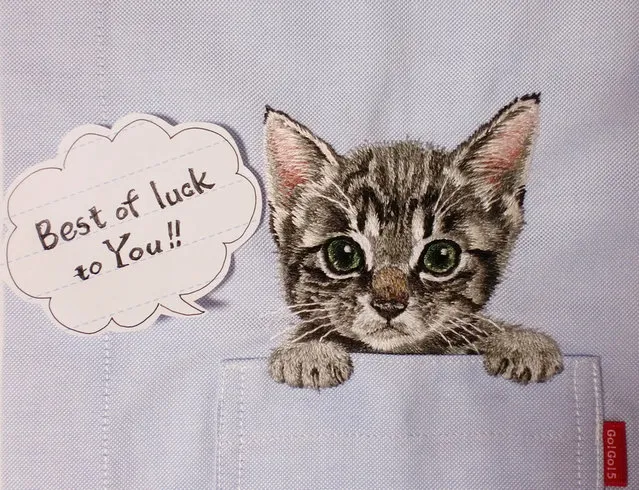
Embroider Cats On Shirts By Hiroko Kubota

Japanese embroidery artist Hiroko Kubota was in the process of making custom sized clothes for her smaller-framed son when he made a small request: could some of the shirts have cats on them? Kubota explains her son was somewhat obsessed with cats and had collected a small library of adorable images found around the web.
Details
18 Jun 2015 16:59:00
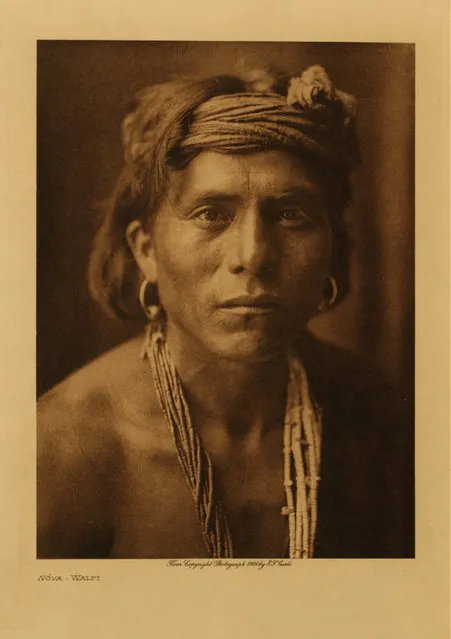
Nova, a Walpi, in 1906. (Photo by Edward S. Curtis)

At the beginning of the 20th century, Edward S. Curtis set out to document what he saw as a disappearing race: the Native American. From 1907 to 1930, Curtis took more than 2,000 photos of 80 tribes stretching from the Great Plains to the Pacific Northwest and Alaska. He then published and sold these photos, along with narrative text, in 20 volumes of work known as “The North American Indian”. It is one of the most significant collections of its kind, “probably the most important photographic document of its age and its topic,” said Jeffrey Garrett, associate university librarian for Special Libraries at Northwestern University. (Photo by Edward S. Curtis)

Details
07 Sep 2014 12:57:00
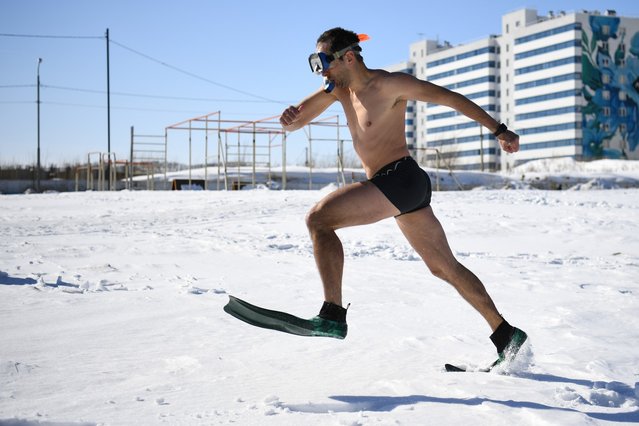
A member of a winter swimming club wears flippers during the celebration of Maslenitsa, also known as Pancake Week, a pagan holiday, marking the end of the winter, in Novosibirsk, Russia. (Photo by Alexandr Kryazhev/Sputnik/Profimedia)

A member of a winter swimming club wears flippers during the celebration of Maslenitsa, also known as Pancake Week, a pagan holiday, marking the end of the winter, in Novosibirsk, Russia. (Photo by Alexandr Kryazhev/Sputnik/Profimedia)
Details
15 Mar 2021 10:27:00
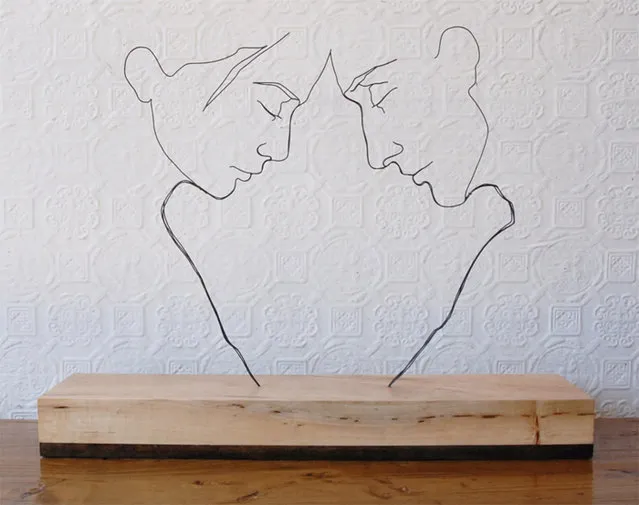
Gavin Worth's Steel Wire Sculptures

“I was born in Zimbabwe, Africa in 1981 and grew up in Las Cruces, New Mexico. I graduated with a degree in Acting, and after college, worked as an actor and musician for the Santa Fe Shakespeare Festival, the San Francisco Shakespeare Festival, and the California Shakespeare Theater. I have had a lifelong passion for drawing, painting, and sculpture since I first saw Michelangelo's “Head of Leda” in a book in the library”.

Gavin Worth
Details
09 Mar 2013 10:54:00
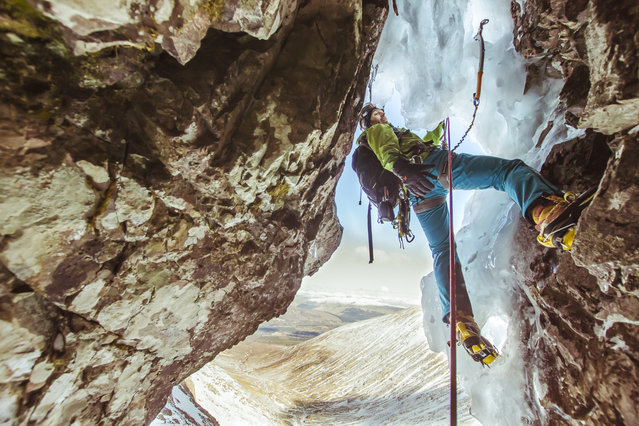
“Winter Climbing from inside Ben Nevis”. The view from inside the mountain, as a winter climber passes through the cave on Minus Three gully. Photo location: Ben Nevis, Fort William, Scotland. (Photo and caption by Daniel Wildey/National Geographic Photo Contest)

“Winter Climbing from inside Ben Nevis”. The view from inside the mountain, as a winter climber passes through the cave on Minus Three gully. Photo location: Ben Nevis, Fort William, Scotland. (Photo and caption by Daniel Wildey/National Geographic Photo Contest)
Details
24 Jun 2014 12:18:00
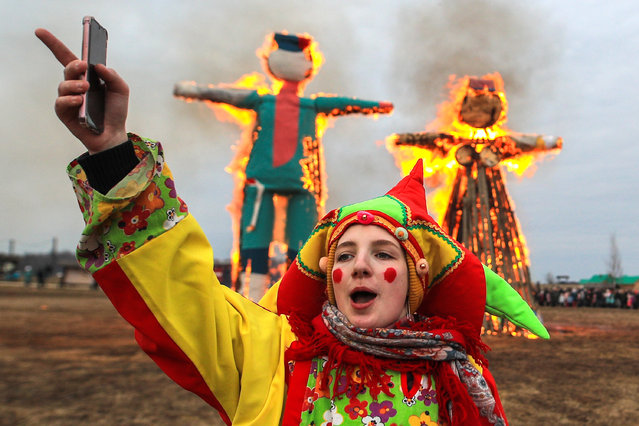
Burning effigies of winter during a celebration of Maslenitsa festival (Pancake Week) at the Etnomir (Ethnoworld) cultural and educational center in Kaluga Region, Russia on March 1, 2020. The holiday celebrates the end of winter and marks the arrival of spring. (Photo by Sergei Bobylev/TASS)

Burning effigies of winter during a celebration of Maslenitsa festival (Pancake Week) at the Etnomir (Ethnoworld) cultural and educational center in Kaluga Region, Russia on March 1, 2020. The holiday celebrates the end of winter and marks the arrival of spring. (Photo by Sergei Bobylev/TASS)
Details
04 Mar 2020 00:05:00