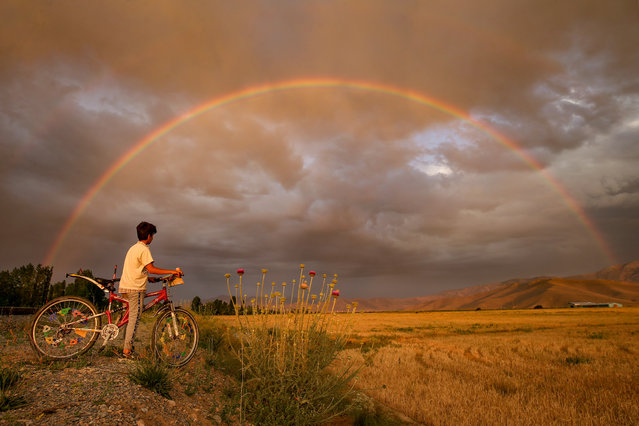
A boy with his bike is seen as rainbow appears after a rainfall in Edremit district of Van province in Turkey on July 08, 2020. (Photo by Ozkan Bilgin/Anadolu Agency via Getty Images)
People take part in a traditional mid-summer solstice night celebration (Rasos Festival) at the Open-Air Museum of Lithuania in Rumsiskes, east of Kaunas, Lithuania, on late June 23, 2020. (Photo by Petras Malukas/AFP Photo)
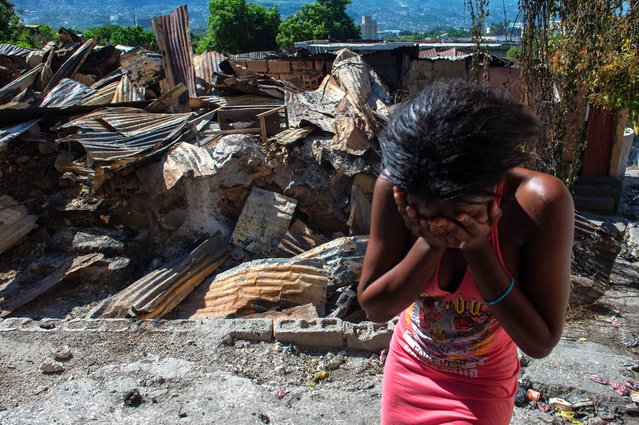
A woman cries outside her house after armed gangs set it on fire in the Post Marchand neighborhood of Port-au-Prince on December 17, 2024. (Photo by Clarens Siffroy/AFP Photo)
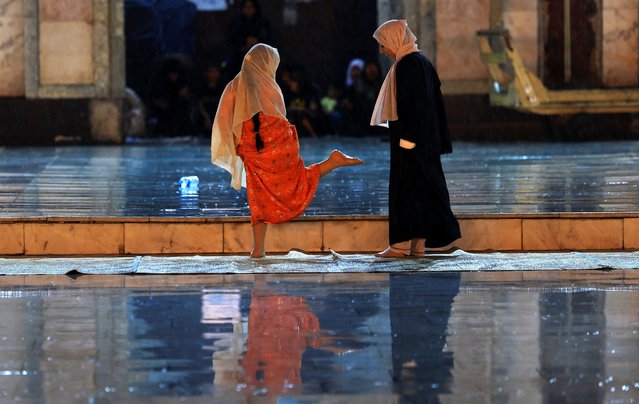
A Sunni Muslim child plays in the rain as she arrives for Eid al-Fitr prayers at the shrine of cleric Sheikh Abdul Qadir al-Gailani in Baghdad, Iraq on March 31, 2025. (Photo by Thaier Al-Sudani/Reuters)
A Jennie fan waits in the crowd for Jennie's perform at the Coachella Valley Music and Arts Festival in Indio, California, U.S., April 13, 2025. (Photo by Daniel Cole/Reuters)
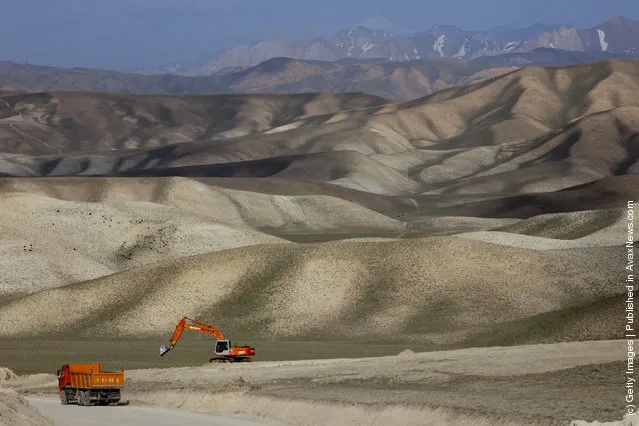
Heavy equipment works along the still under construction Bamiyan-Yakawlang road June 10, 2011 in Yakawlang, Afghanistan. The 69 Million US$ project is supported by the Government of Japan and World Bank. The 90K road project was started three years ago and is slated to be finished within another year. This new road means faster travel from Bamiyan to Afghanistan's only national park, Band-e-Amir. This is in of the safest parts of the country and the hope is to expand tourism in the region. (Photo by Paula Bronstein/Getty Images)
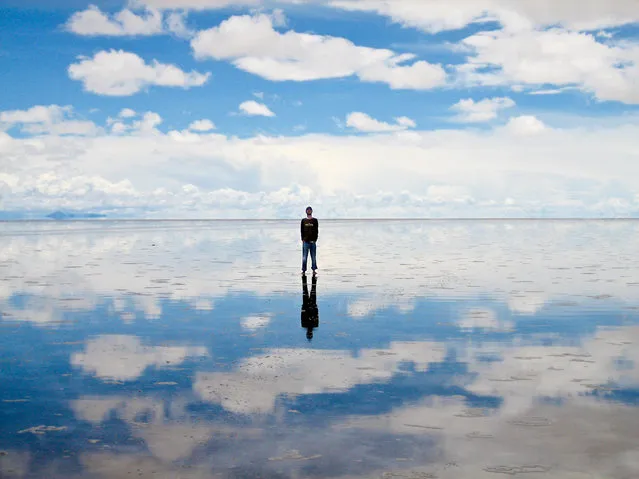
Salar de Uyuni (or Salar de Tunupa) is the world's largest salt flat at 10,582 square kilometers (4,086 sq mi). It is located in the Potosí and Oruro departments in southwest Bolivia, near the crest of the Andes, and is elevated 3,656 meters (11,995 ft) above mean sea level. The Salar was formed as a result of transformations between several prehistoric lakes. It is covered by a few meters of salt crust, which has an extraordinary flatness with the average altitude variations within one meter over the entire area of the Salar.
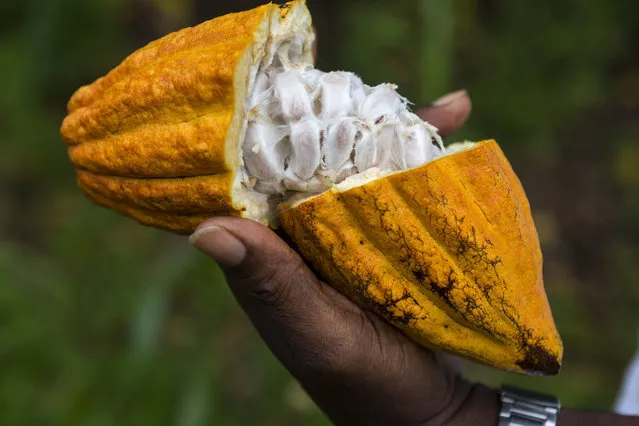
Chocolate is the greatest gift the Earth has given us. The dessert table would be a sad sight without it. It’s so beloved, so appreciated, that the Swedish scientist who named the cocoa plant that gives us chocolate called it Theobroma cacao, which means “food of the gods”. Here: Farmer holding a freshly cut cocoa bean pod, revealing the pulp and seed inside on a rainforest farm. (Photo by Doug McKinlay/Getty Images)