A Border Collie competes in the Flyball during The World Dog Games at Acer Arena on October 31, 2009 in Sydney, Australia. (Photo by Brendon Thorne/Getty Images)
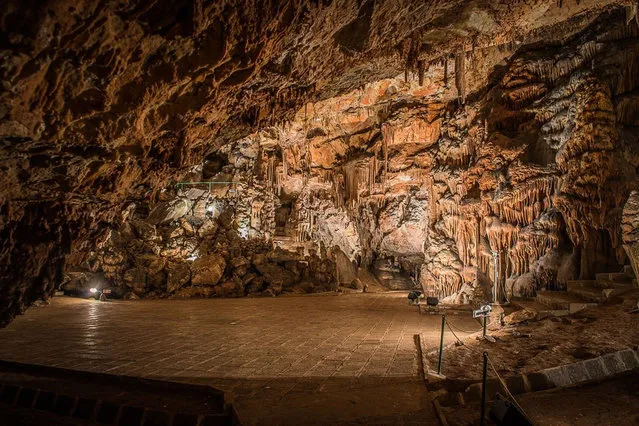
Saeva dupka (Bulgarian: Съева дупка) is a cave in Northern Bulgaria near the village of Brestnitsa, Lovech Province (43°2′N 24°11′E). Its five halls and 400 metres of corridors offer some of the most beautiful cave formations in the country. Besides that the cave has hosted many Choral music performances, thanks to the excellent acoustic conditions. Saeva dupka was named after two brothers Seyu and Sae who used it as a hiding place during the Ottoman occupation of Bulgaria. Recent excavations have showed the cave was inhabited since Roman times. Currently Saeva dupka is one of the 100 Tourist Sites of Bulgaria.
It looks like 2024 has ended and we are still alive (although of course it's not evening yet). Well, let's wish ourselves the same in the future. If someone wants to put USDT TRC20 under the tree: TDWPvSi7RY4wNZPukDRyKghhLGTGsRNRBe (nobody will put anything, of course – but you understand, it's a ritual). Happy New Year! And now disco.
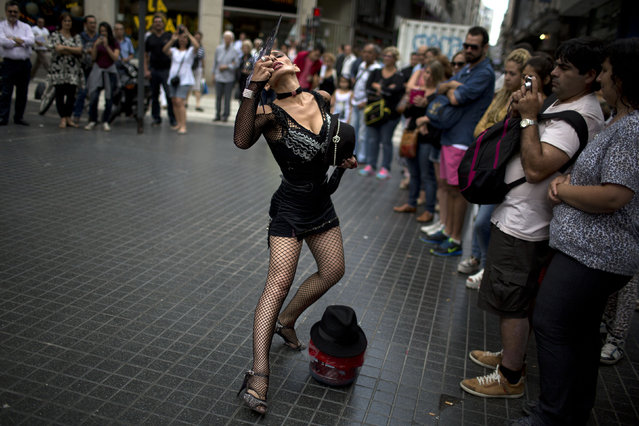
A street artist dances tango in Buenos Aires, Argentina, Tuesday, January 20, 2015. Tango is a partner dance that originated in the 1890's along the Rio de la Plata, the border between Uruguay and Argentina. UNESCO approved in 2009, a joint proposal by the two nations to include the dance in its Intangible Cultural Heritage List. (Photo by Rodrigo Abd/AP Photo)
Growing cities, overuse of fertilizers and factory wastewater have degraded China's water supplies to the extent that half the nation's rivers and lakes are severely polluted. China aims to spend $850 billion to improve filthy water supplies over the next decade, but even such huge outlays may do little to reverse damage caused by decades of pollution and overuse in Beijing's push for rapid economic growth. Photo: Fishermen row a boat in the algae-filled Chaohu Lake in Hefei, Anhui province, June 19, 2009. (Photo by Jianan Yu/Reuters)
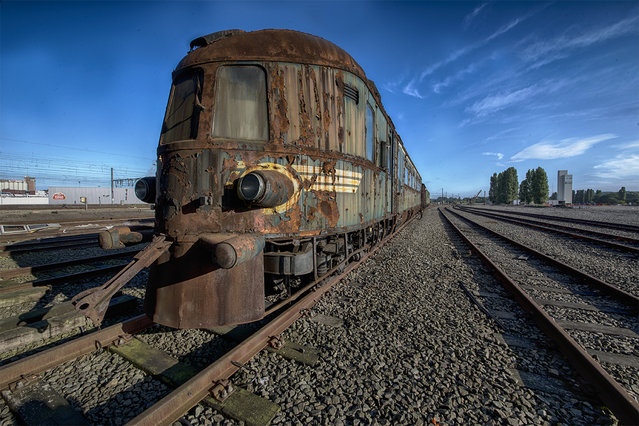
These pictures reveal the crumbling ruins of the famed Grand Orient Express, now hollowed-out and almost reduced to rubble. There are only a couple of the trains, launched in 1883, left in the world. This example stands dormant in Belgium, untouched from its last voyage in the winter of 2009. Rusty ceilings, moth-eaten seats and tattered floors capture its level of decay. A Rotterdam-based urban photographer Brian Romeijn managed to snap these pictures while exploring the area. (Photo by Brian Romeijn/IMP Features)
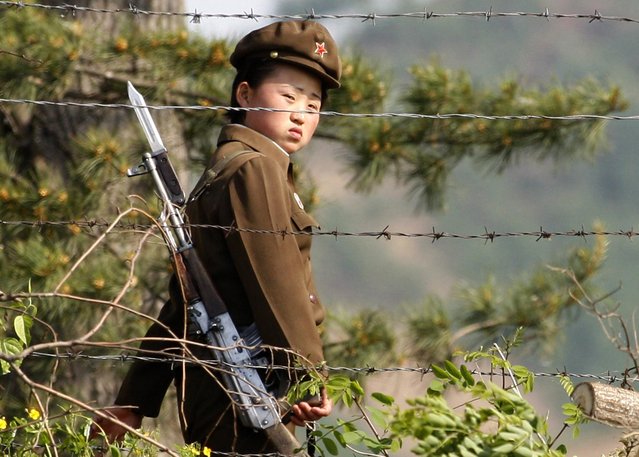
In this photo taken June 3, 2009, a female North Korean soldier looks out from behind a barbed-wire fence around a camp on the North Korean river banks across from Hekou, northeastern China's Liaoning province. North Korea's top court has convicted two U.S. journalists, and sentenced them to 12 years in labor prison, the country's state news agency reported Monday. (Photo by Ng Han Guan/AP Photo)