Loading...
Done
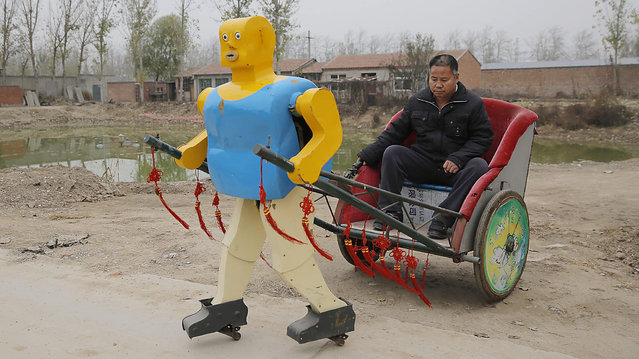
Robot inventor Wu Yulu sits on a rickshaw driven by a robot which he invented in his village in rural Beijing's Tongzhou district, China, 17 November 2016. The 54-year-old Chinese farmer living in rural Beijing's Tongzhou district invented 63 robots in the past 30 years. Wu, who only received primary school education, plans to give up the agricultural work for his robot products. He regularly participates in exhibitions, transfers patent rights and teaches at the university to earn money. (Photo by Wu Hong/EPA)

Robot inventor Wu Yulu sits on a rickshaw driven by a robot which he invented in his village in rural Beijing's Tongzhou district, China, 17 November 2016. The 54-year-old Chinese farmer living in rural Beijing's Tongzhou district invented 63 robots in the past 30 years. Wu, who only received primary school education, plans to give up the agricultural work for his robot products. He regularly participates in exhibitions, transfers patent rights and teaches at the university to earn money. (Photo by Wu Hong/EPA)
Details
21 Nov 2016 10:41:00
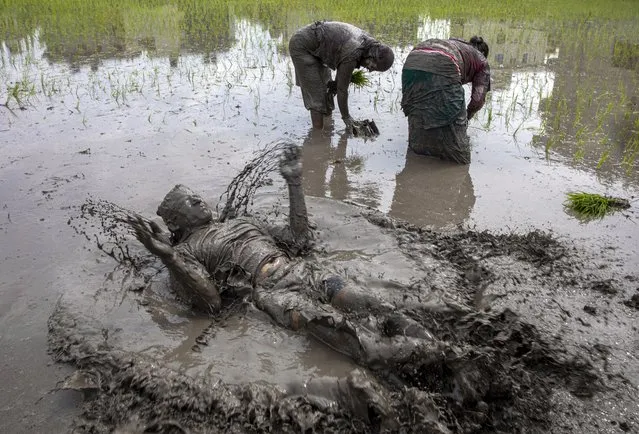
People splash mud water in a paddy field on National Paddy Day in Tokha village, on the outskirt of capital Kathmandu, Nepal, 29 June 2021. Nepal is celebrating National Paddy Day with various events on 29 June. On this day, known as Asar Pandra, farmers begin the annual rice planting season and mark the day with various festivities such as preparing rice meals with muddy water, mud being a symbol for a prosperous season. Sixty percent of Nepal's agriculture industry relies on monsoon rain while 40 percent is carried out through irrigation. Agriculture is a major contributor to the country's GDP. (Photo by Narendra Shrestha/EPA/EFE)

People splash mud water in a paddy field on National Paddy Day in Tokha village, on the outskirt of capital Kathmandu, Nepal, 29 June 2021. Nepal is celebrating National Paddy Day with various events on 29 June. On this day, known as Asar Pandra, farmers begin the annual rice planting season and mark the day with various festivities such as preparing rice meals with muddy water, mud being a symbol for a prosperous season. Sixty percent of Nepal's agriculture industry relies on monsoon rain while 40 percent is carried out through irrigation. Agriculture is a major contributor to the country's GDP. (Photo by Narendra Shrestha/EPA/EFE)
Details
10 Jul 2021 08:53:00
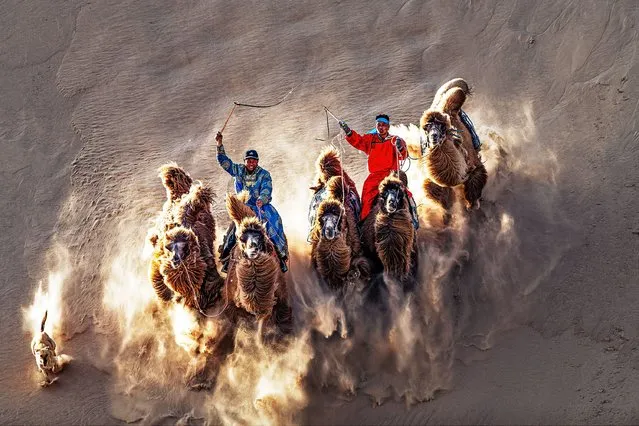
Camels kick up clouds of sand as they race down a steep dune. The camels can reach speeds of up to 40 kilometres per hour as they descend the ten-metre tall dunes on April 20, 2022. The photos were taken by photographer Qian Guo in Naiman Banner, near the city of Tongliao in the Inner Mongolia region of northeastern China. The 58 year old said: “These are local Mongolian farmers, and two of them are a father and a son. They have more than ten camels which they farm and train”. (Photo by Qian Guo/Solent News & Photo Agency)

Camels kick up clouds of sand as they race down a steep dune. The camels can reach speeds of up to 40 kilometres per hour as they descend the ten-metre tall dunes on April 20, 2022. The photos were taken by photographer Qian Guo in Naiman Banner, near the city of Tongliao in the Inner Mongolia region of northeastern China. The 58 year old said: “These are local Mongolian farmers, and two of them are a father and a son. They have more than ten camels which they farm and train”. (Photo by Qian Guo/Solent News & Photo Agency)
Details
25 Apr 2022 04:34:00
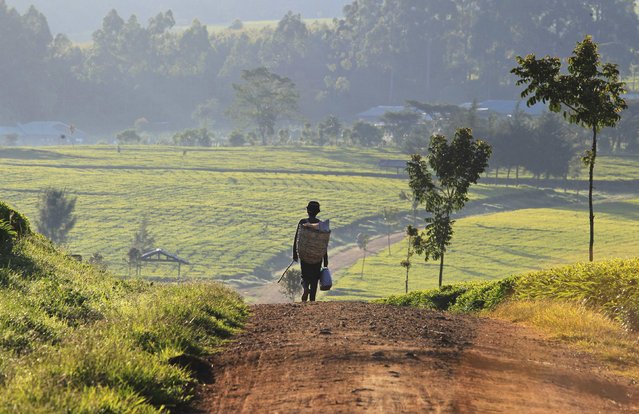
A man walks in the early morning to start his day picking tea leaves at a plantation in Nandi Hills, in Kenya's highlands region west of capital Nairobi, November 5, 2014. Emerald-coloured tea bushes blanketing the rolling hills of Nandi County have long provided a livelihood for small-scale farmers, helping make Kenya one of the world's biggest tea exporters. But ideal weather and bigger harvests, instead of producing bumper earnings, have led to a glut of Kenya's speciality black tea. (Photo by Noor Khamis/Reuters)

A man walks in the early morning to start his day picking tea leaves at a plantation in Nandi Hills, in Kenya's highlands region west of capital Nairobi, November 5, 2014. Emerald-coloured tea bushes blanketing the rolling hills of Nandi County have long provided a livelihood for small-scale farmers, helping make Kenya one of the world's biggest tea exporters. But ideal weather and bigger harvests, instead of producing bumper earnings, have led to a glut of Kenya's speciality black tea. (Photo by Noor Khamis/Reuters)

Details
17 Nov 2014 12:44:00
Nepalese students of Himalayan agriculture college play in mud water in a paddy field to celebrate the National Paddy Day in Badegaun village, Lalitpur, Nepal, 29 June 2016. More than 100 students and teachers of Himalayan agriculture college participated in the National paddy day by planting rice and playing in mud water as Nepal is celebrating National Paddy Day with various event. On this day, known as Asar Pandra, farmers begin the annual rice planting season and mark the day with various festivities such as preparing rice meals with muddy water, mud being a symbol for a prosperous season. (Photo by Narendra Shrestha/EPA)

Nepalese students of Himalayan agriculture college play in mud water in a paddy field to celebrate the National Paddy Day in Badegaun village, Lalitpur, Nepal, 29 June 2016. More than 100 students and teachers of Himalayan agriculture college participated in the National paddy day by planting rice and playing in mud water as Nepal is celebrating National Paddy Day with various event. (Photo by Narendra Shrestha/EPA)
Details
30 Jun 2016 11:17:00
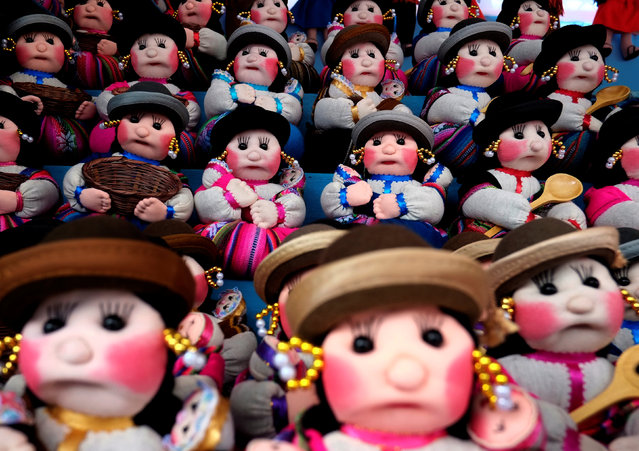
Aymara dolls are seen during the “Alasitas” fair, where people buy miniature versions of goods they hope to acquire in real life, in La Paz, Bolivia, January 24, 2017. Shoppers fill their baskets with miniature versions of things they desire – everything from cars, houses computers – to give to Ekeko the God of abundance, in the hope he will being therm good fortune. And it is all carried out with a priest’s blessing. Originally, the Festival of Alasitas was a celebration by farmers praying for plentiful crops.Today, the meaning amounts to the same only locals hope for more material goods. (Photo by David Mercado/Reuters)

Aymara dolls are seen during the “Alasitas” fair, where people buy miniature versions of goods they hope to acquire in real life, in La Paz, Bolivia, January 24, 2017. Shoppers fill their baskets with miniature versions of things they desire – everything from cars, houses computers – to give to Ekeko the God of abundance, in the hope he will being therm good fortune. (Photo by David Mercado/Reuters)
Details
26 Jan 2017 12:56:00
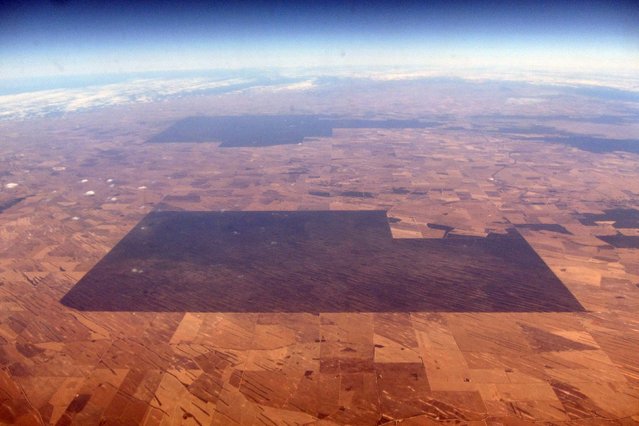
An area of vegetation can be seen amongst drought effected farmland in South Australia, November 12, 2015. (Photo by David Gray/Reuters)

An area of vegetation can be seen amongst drought effected farmland in South Australia, November 12, 2015. A pioneering Australian scheme to improve the management of water in the world's driest inhabited continent is facing its first real test as an intensifying El Nino threatens crops and builds tensions between farmers and environmentalists. An El Nino, a warming of sea-surface temperatures in the Pacific, is already causing drought and other extreme weather, affecting millions of people across parts of the world, and experts warn that the intensifying weather pattern could emerge as one of the strongest on record. (Photo by David Gray/Reuters)
Details
15 Nov 2015 08:01:00
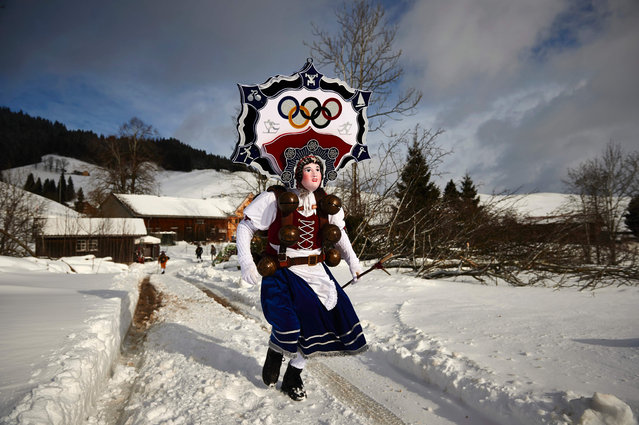
A leader “Rolli” of a yodel group “Schuppel” runs in the snow in front of a farmstead during the “Silvesterchlausen” in the early morning in Urnaesch in the Swiss canton Appenzell Ausserroden on January 13, 2017. The “Silvesterchlausen” is a tradition of the Swiss canton Appenzell, where colorfull characters organized in groups called “Schuppel”, chase out the old year and welcome the new one. They run all day long from farmstead to farmstead, gather together to sing a jodel and great the farmers. A “Schuppel” consists of some “Schelli” and two “Rolli”, sometimes with female dresses and nice scenes over the head, despite the dress all participants are males. The Silversterchlausen run twice a year, first for the new Silvester on December 31, and then again on January 13, for the old Silvester following the Julian calendar. (Photo by Michael Buholzer/AFP Photo)

A leader “Rolli” of a yodel group “Schuppel” runs in the snow in front of a farmstead during the “Silvesterchlausen” in the early morning in Urnaesch in the Swiss canton Appenzell Ausserroden on January 13, 2017. (Photo by Michael Buholzer/AFP Photo)
Details
14 Jan 2017 12:41:00