Loading...
Done
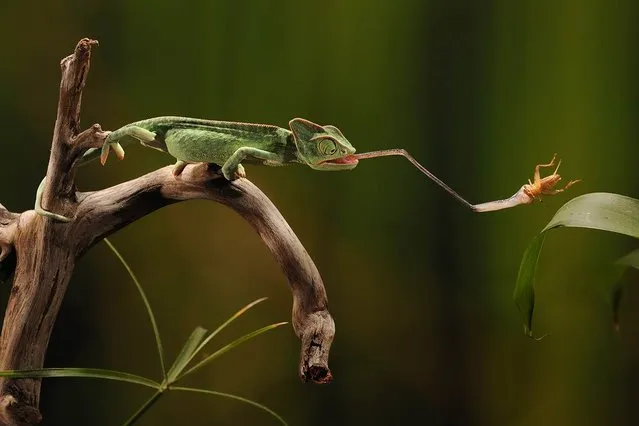
A veiled chameleon extends its tongue to catch a cricket

“Scott Linstead is an internationally published, freelance wildlife photographer/writer. His clients include Natural History Magazine, Hewlett Packard, Ranger Rick Magazine and a number of wildlife publications in North America and Europe. Scott's column on the techniques of bird photography appears in every issue of Outdoor Photography Canada”.

Photo: A veiled chameleon extends its tongue to catch a cricket. Canadian wildlife photographer Scott Linstead, formerly an aerospace engineer and high school teacher, uses a device called Phototrap “to not only photograph the elusive, but also the unimaginably quick”. (Photo by Scott Linstead)
Details
22 May 2012 11:32:00


These rare photos capture the Flight Deck (cockpit) of the Space Shuttle Endeavour, fully powered for one of the final times. Just a few weeks later, at 9:58am EDT on May 11, Endeavour was powered down for the final time in history. It was the last of the three space shuttles to have power. Below, other views show the mid-deck, gutted of its lockers and storage areas, and three final photos show the white room entrance in the Orbiter Processing Facility, signed by thousands over the years.
Details
03 Oct 2012 13:49:00
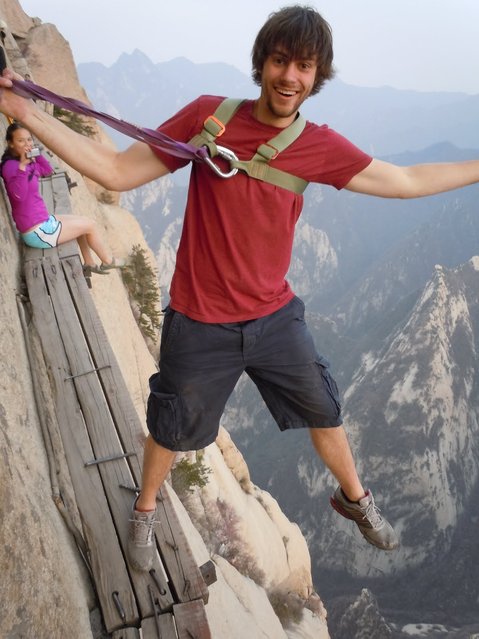
Trip to Xi'an 西安. (Photo by Grant)

“Mount Hua, or Hua Shan, or Xiyue located near the city of Huayin in Shaanxi province, about 120 kilometres (75 mi) east of Xi'an. It is one of China's Five Great Mountains, and has a long history of religious significance. Originally classified as having three peaks, in modern times the mountain is classified as five main peaks, of which the highest is the South Peak at 2,154.9 metres (7,070 ft)”. – Wikipedia

Photo: Trip to Xi'an 西安. (Photo by Grant Robinson)
Details
11 Nov 2012 11:39:00
Dancers attend a dress rehearsal. (Photo by Hannibal Hanschke/Reuters)

Dancers attend a dress rehearsal for the new grand show “THE WYLD” at Friedrichstadt-Palast in Berlin October 2, 2014. Ten choreographers are working with 60 dancers from the world's largest show ballet company to create the flamboyant stage spectacle. The show's name, “THE WYLD”, represents human nature in its diversity and the wilderness of the big city – in this case, Berlin. The premiere of the 10.6 million euro ($13.5 million) show, the largest production budget in the 95-year history of Friedrichstadt-Palast, is on October 23, 2014. (Photo by Hannibal Hanschke/Reuters)
Details
24 Oct 2014 12:03:00
Eva Green poses for the month of July. (Photo by Julia Fullerton-Batten/Campari Calendar 2015)

Campari has officially unveiled the full imagery for the 2015 Calendar, entitled “Mythology Mixology”. This year’s iconic calendar, which stars the beautiful French born actress Eva Green, is the 16th edition in the collection and is dedicated to celebrating Campari’s unique and intriguing history and the intrinsic stories linked to twelve of its best-loved classic cocktails. Here: Eva Green poses for the month of July. (Photo by Julia Fullerton-Batten/Campari Calendar 2015)
Details
18 Nov 2014 11:24:00
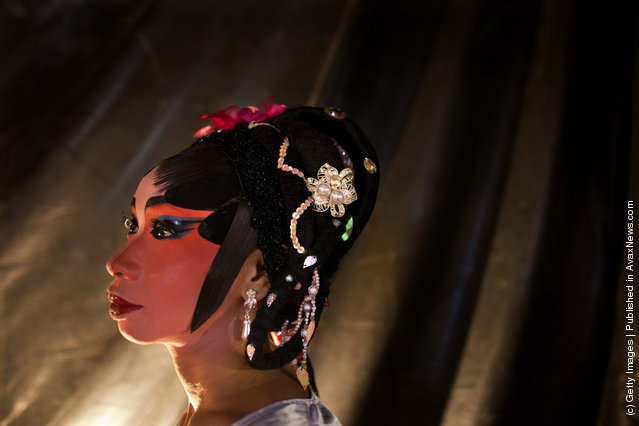
Behind The Scenes At The Chinese Opera In Thailand

Wanwisa, a Lao Yi Lai Heng Chinese opera performer waits backstage at the Plub Plachai temple on January 25, 2012 in Bangkok, Thailand. The traditional Chinese art form involving music, singing, martial arts and acting has a history of more than 500 years. There are about 30 members working with the group doing specials shows all week to celebrate the Chinese New year. The Chinese opera is popular in many parts of China, Malaysia, Singapore, Thailand and Macau. (Photo by Paula Bronstein/Getty Images)
Details
28 Jan 2012 12:14:00
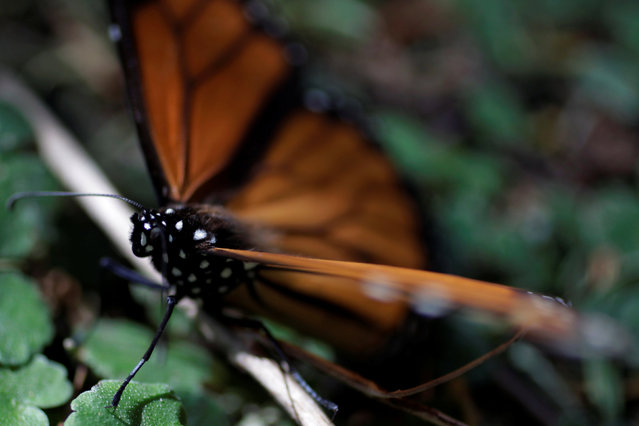
A monarch butterfly rests on the ground at the Sierra Chincua butterfly sanctuary on a mountain in Angangeo, Michoacan November 24, 2016. Angangueo is a town and municipality located in far eastern Michoacán state in central Mexico noted for its history of mining and its location in the Monarch Butterfly Biosphere Reserve. The Monarch Butterfly Biosphere Reserve is a World Heritage Site containing most of the over-wintering sites of the eastern population of the monarch butterfly. The reserve is located in the Trans-Mexican Volcanic Belt pine-oak forests ecoregion on the border of Michoacán and State of Mexico, 100 km (62 miles), northwest of Mexico City. Millions of butterflies arrive in the reserve annually. Butterflies only inhabit a fraction of the 56,000 hectares of the reserve from October–March. (Photo by Carlos Jasso/Reuters)

A monarch butterfly rests on the ground at the Sierra Chincua butterfly sanctuary on a mountain in Angangeo, Michoacan November 24, 2016. Angangueo is a town and municipality located in far eastern Michoacán state in central Mexico noted for its history of mining and its location in the Monarch Butterfly Biosphere Reserve. The Monarch Butterfly Biosphere Reserve is a World Heritage Site containing most of the over-wintering sites of the eastern population of the monarch butterfly. (Photo by Carlos Jasso/Reuters)
Details
26 Nov 2016 10:20:00
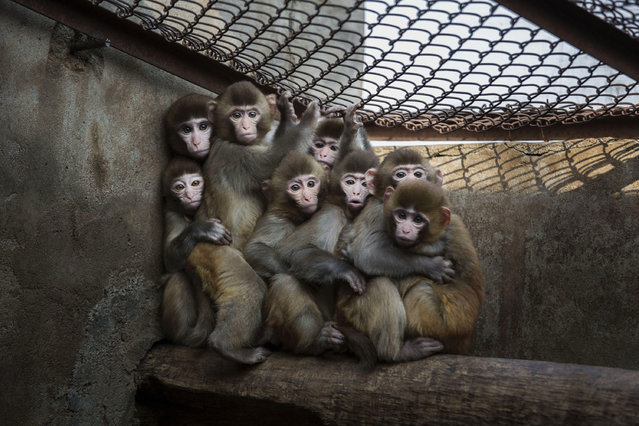
Macaque monkeys crowd together in their cage at a monkey farm on February 3, 2016 in Xinye county, Henan province, China. The area boasts a centuries-long and lucrative history of raising and training monkeys for performance. In Xinye, villagers are seeing an increase in business with the lunar calendar's “Year of the Monkey”. Farmers say most of the monkeys are bred and raised for domestic zoos, circuses, and performing groups, but add that some are also sold for medical research in China and the United States. Despite the popularity of the tradition, critics contend the training methods and conditions constitute animal cruelty. (Photo by Kevin Frayer/Getty Images)

Macaque monkeys crowd together in their cage at a monkey farm on February 3, 2016 in Xinye county, Henan province, China. The area boasts a centuries-long and lucrative history of raising and training monkeys for performance. In Xinye, villagers are seeing an increase in business with the lunar calendar's “Year of the Monkey”. Farmers say most of the monkeys are bred and raised for domestic zoos, circuses, and performing groups, but add that some are also sold for medical research in China and the United States. Despite the popularity of the tradition, critics contend the training methods and conditions constitute animal cruelty. (Photo by Kevin Frayer/Getty Images)
Details
31 Dec 2016 09:56:00