Loading...
Done
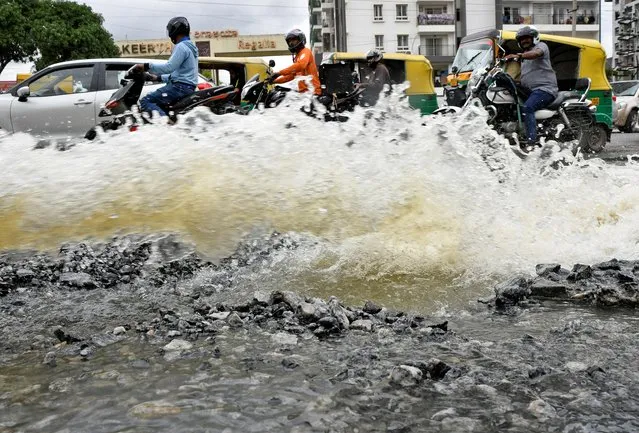
Traffic moves as water is pumped out of an inundated residential area following torrential rains in Bengaluru, India on September 7, 2022. (Photo by Samuel Rajkumar/Reuters)

Traffic moves as water is pumped out of an inundated residential area following torrential rains in Bengaluru, India on September 7, 2022. (Photo by Samuel Rajkumar/Reuters)
Details
14 Sep 2022 05:17:00
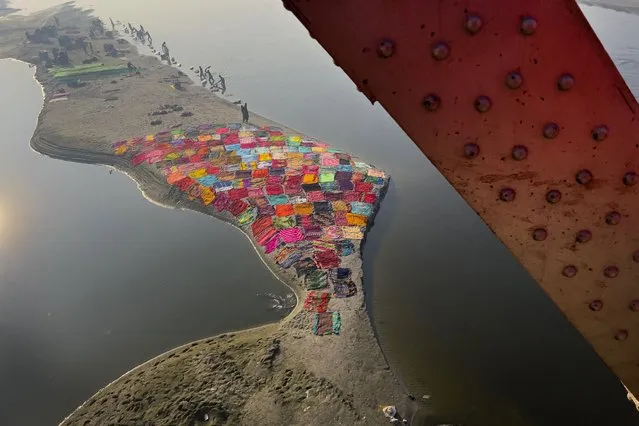
Washermen put their clothes out to dry on the banks of the River Yamuna as seen from a railway bridge near Agra, India, Saturday, December 17, 2022. (Photo by Rajesh Kumar Singh/AP Photo)

Washermen put their clothes out to dry on the banks of the River Yamuna as seen from a railway bridge near Agra, India, Saturday, December 17, 2022. (Photo by Rajesh Kumar Singh/AP Photo)
Details
22 Dec 2022 05:33:00
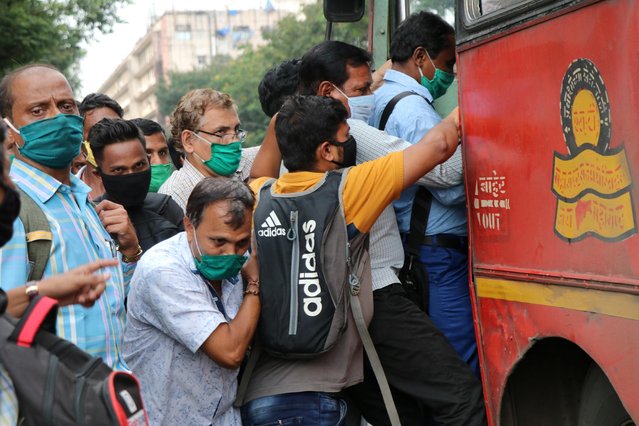
People board a passenger bus during rush hour at a bus terminal, amidst the coronavirus disease (COVID-19) outbreak, in Mumbai, India, September 9, 2020. (Photo by Niharika Kulkarni/Reuters)

People board a passenger bus during rush hour at a bus terminal, amidst the coronavirus disease (COVID-19) outbreak, in Mumbai, India, September 9, 2020. (Photo by Niharika Kulkarni/Reuters)
Details
15 Sep 2020 00:05:00
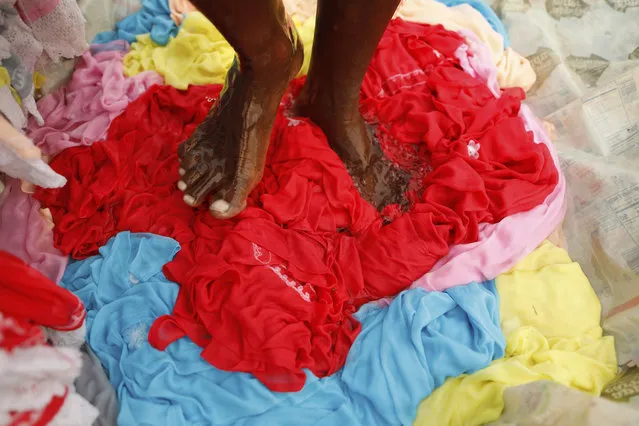
A dhobi, or a washerman washes cloths on the banks of the River Gomti in Lucknow, India, Saturday, September 12, 2020. Dhobis are traditional laundry workers who wash clothes by hand and dry them in the sun, an occupation which has been in existence for generations. Most cities in India have a Dhobi Ghat, or washermen's area, where the city's pile of clothes is laundered. This practice is still popular in India, despite of modern technology. Around 1,000 families work in Lucknow's Dhobi Ghat. However, in light of the novel coronavirus, their wages have decreased drastically. With each family earning around US$100-200 per month. (Photo by Rajesh Kumar Singh/AP Photo)

A dhobi, or a washerman washes cloths on the banks of the River Gomti in Lucknow, India, Saturday, September 12, 2020. Dhobis are traditional laundry workers who wash clothes by hand and dry them in the sun, an occupation which has been in existence for generations. Most cities in India have a Dhobi Ghat, or washermen's area, where the city's pile of clothes is laundered. This practice is still popular in India, despite of modern technology. Around 1,000 families work in Lucknow's Dhobi Ghat. However, in light of the novel coronavirus, their wages have decreased drastically. With each family earning around US$100-200 per month. (Photo by Rajesh Kumar Singh/AP Photo)
Details
25 Sep 2020 00:03:00
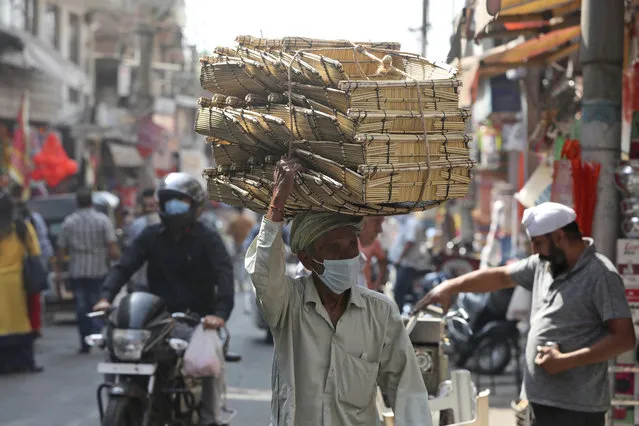
An Indian villager wearing a face mask as a precaution against the coronavirus sells his ware at market in Jammu, India, Friday, October 9, 2020. (Photo by Channi Anand/AP Photo)

An Indian villager wearing a face mask as a precaution against the coronavirus sells his ware at market in Jammu, India, Friday, October 9, 2020. (Photo by Channi Anand/AP Photo)
Details
14 Oct 2020 00:05:00
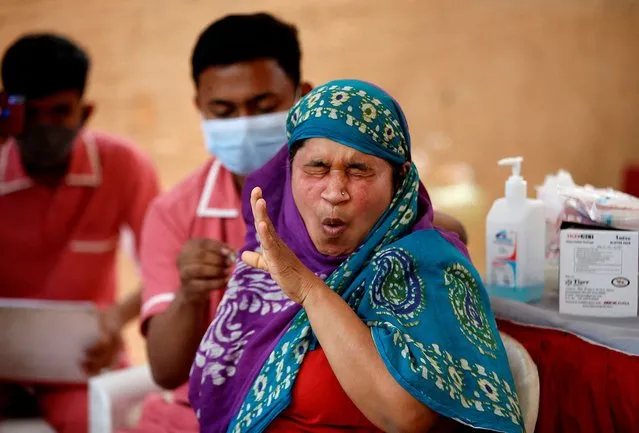
A woman reacts as she receives a dose of the COVISHIELD vaccine against the coronavirus disease (COVID-19), manufactured by Serum Institute of India, at a vaccination centre in Ahmedabad, India, December 27, 2021. (Photo by Amit Dave/Reuters)

A woman reacts as she receives a dose of the COVISHIELD vaccine against the coronavirus disease (COVID-19), manufactured by Serum Institute of India, at a vaccination centre in Ahmedabad, India, December 27, 2021. (Photo by Amit Dave/Reuters)
Details
04 Jan 2022 07:50:00
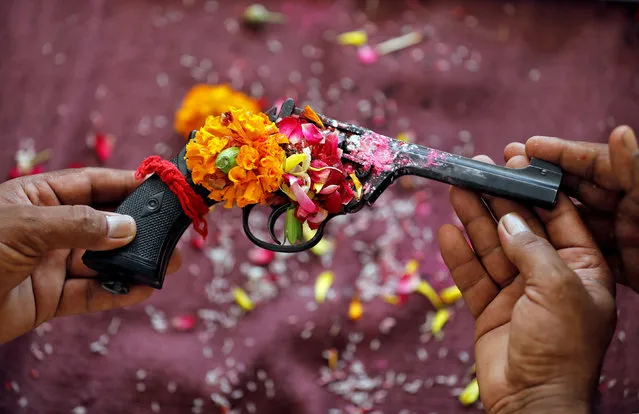
Police officers hold a revolver as they offer prayers to their weapons as part of a ritual at their headquarters on the occasion of Dussehra, or Vijaya Dashami, festival in Ahmedabad, India, October 8, 2019. (Photo by Amit Dave/Reuters)

Police officers hold a revolver as they offer prayers to their weapons as part of a ritual at their headquarters on the occasion of Dussehra, or Vijaya Dashami, festival in Ahmedabad, India, October 8, 2019. (Photo by Amit Dave/Reuters)
Details
17 Oct 2019 00:01:00
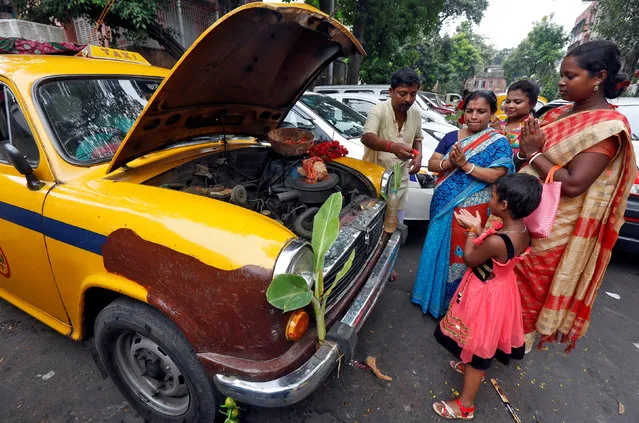
Family members of a taxi driver offer prayer in front of their taxi during the Vishwakarma Puja or the festival of the Hindu deity of architecture and machinery in Kolkata, India, September 17, 2017. (Photo by Rupak De Chowdhuri/Reuters)

Family members of a taxi driver offer prayer in front of their taxi during the Vishwakarma Puja or the festival of the Hindu deity of architecture and machinery in Kolkata, India, September 17, 2017. (Photo by Rupak De Chowdhuri/Reuters)
Details
22 Sep 2017 07:09:00