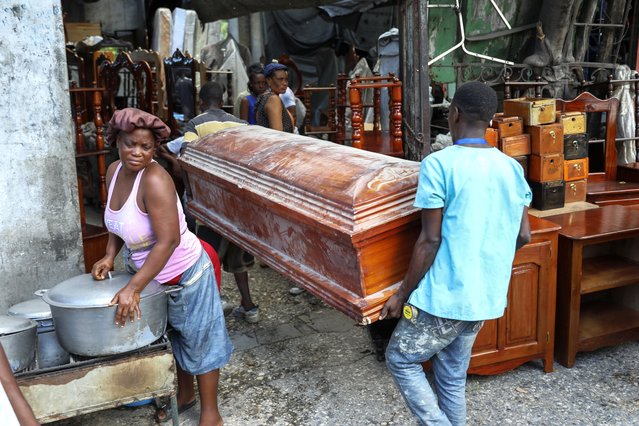
People carry an empty coffin past a street food vendor into the shop that is buying it to repair and sell in Port-au-Prince, Haiti, Friday, September 13, 2024. (Photo by Odelyn Joseph/AP Photo)
Kids in fancy dress eat for free at Asda Cafés in Leeds, UK on Halloween on 31st October, 2025 – a real treat for families this spooky season. (Photo by Doug Jackson/PinPep)
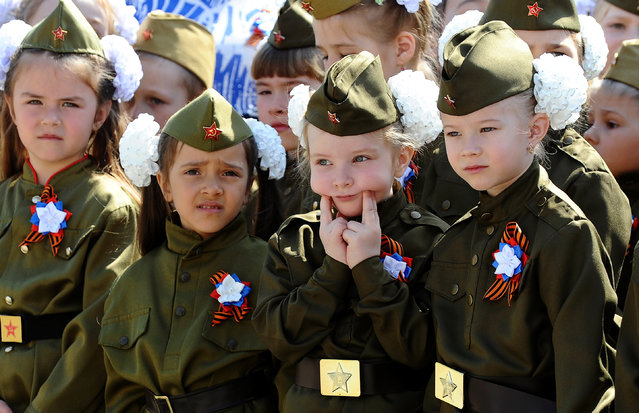
Children wearing military uniform take part in a parade, held by Russian servicemen, pupils of infant and primary schools, which is a public event to honour World War Two veterans and to mark the upcoming Victory Day, in Rostov-on-Don, Russia on April 25, 2019. (Photo by Sergey Pivovarov/Reuters)
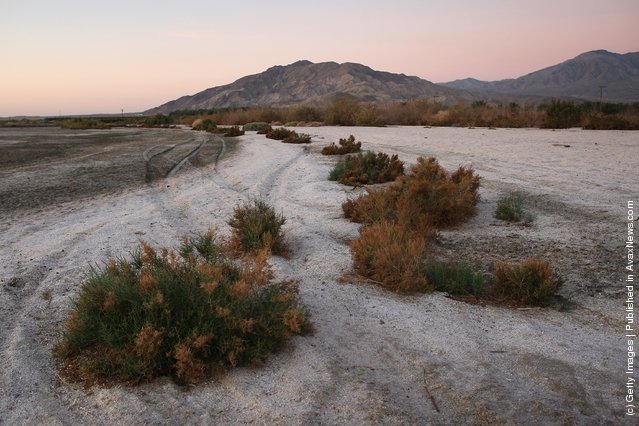
Salt-resistant plants grow in sand made up of small fish bones on the shore of the Salton Sea before sunrise in an area where a controversial development would create a new town for nearly 40,000 people on the northwest shore of the biggest lake in California, the Salton Sea, on March 21, 2012 south of Mecca, California. (Photo by David McNew/Getty Images)
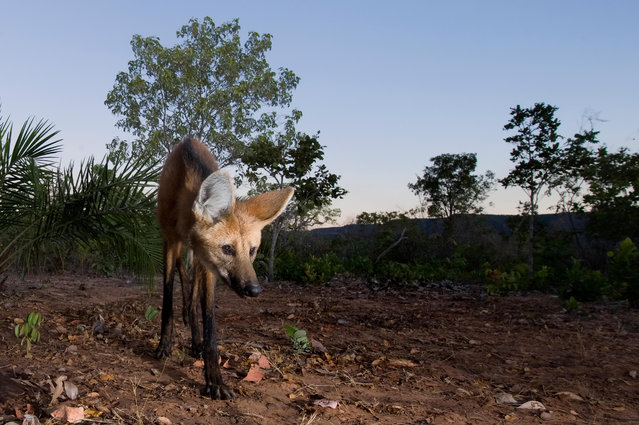
Global wildlife populations will decline by 67% by 2020 unless urgent action is taken to reduce human impact on species and ecosystems, warns the biennial Living Planet Index report from WWF (World Wide Fund for Nature) and ZSL (Zoological Society of London). From elephants to eels, here are some of the wildlife populations most affected by human activity. Here: The maned wolf is among the large mammals in the Brazilian Cerrado that are threatened by the increasing conversion of grasslands into farmland for grazing and growing crops. (Photo by Ben Cranke/Nature Picture Library/Alamy Stock Photo)
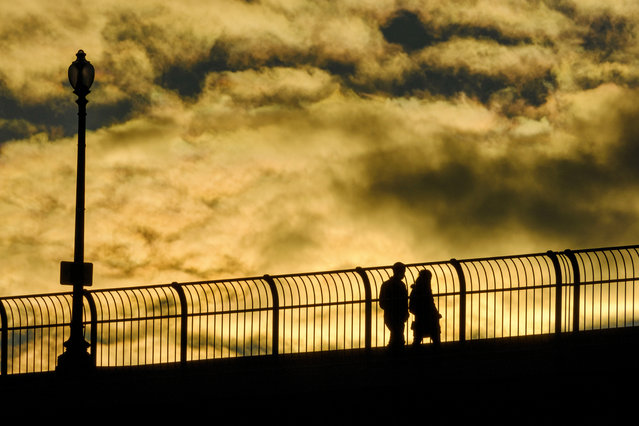
A couple walks across the Francis Scott Key Bridge as the setting sun lights up the clouds in Washington, Friday, October 30, 2020. (Photo by J. David Ake/AP Photo)
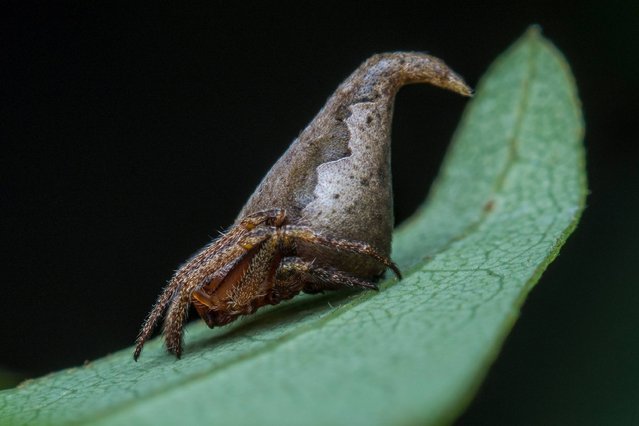
In this handout photograph received from Sumukha J.N on December 15, 2016, the newly-discovered spider Eriovixia Gryffindori sits on a leaf in the Kans in India's Western Ghats. (Photo by Sumukha J.N./AFP Photo)