Loading...
Done
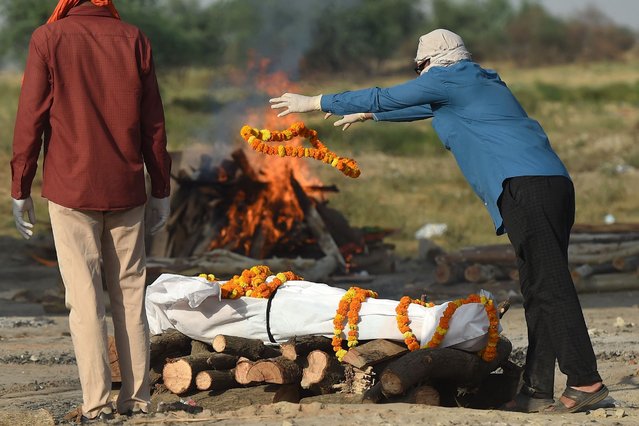
Relatives perform the last rites before the cremation of their loved one who died due to the Covid-19 coronavirus at a cremation ground in Allahabad on May 4, 2021. (Photo by Sanjay Kanojia/AFP Photo)

Relatives perform the last rites before the cremation of their loved one who died due to the Covid-19 coronavirus at a cremation ground in Allahabad on May 4, 2021. (Photo by Sanjay Kanojia/AFP Photo)
Details
12 May 2021 08:58:00
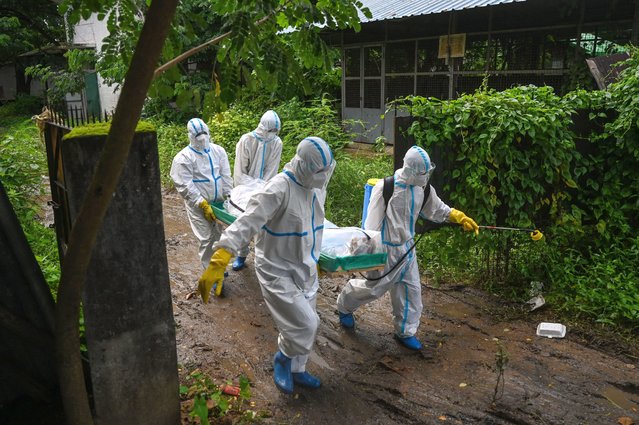
Volunteers wearing personal protective equipment (PPE) carry the body of a victim of the Covid-19 coronavirus to a cemetery in Hlegu Township in Yangon on July 10, 2021. (Photo by Ye Aung Thu/AFP Photo)

Volunteers wearing personal protective equipment (PPE) carry the body of a victim of the Covid-19 coronavirus to a cemetery in Hlegu Township in Yangon on July 10, 2021. (Photo by Ye Aung Thu/AFP Photo)
Details
12 Aug 2021 08:31:00
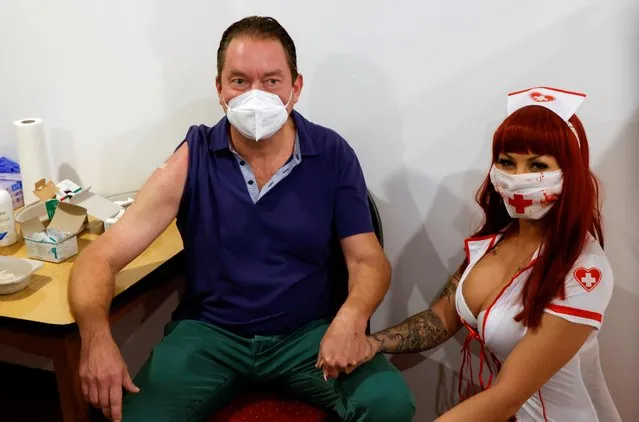
A woman dressed as a nurse sits next to Gerhard after a coronavirus disease (COVID-19) vaccination in a brothel in Vienna, Austria on November 8, 2021. (Photo by Leonhard Foeger/Reuters)

A woman dressed as a nurse sits next to Gerhard after a coronavirus disease (COVID-19) vaccination in a brothel in Vienna, Austria on November 8, 2021. (Photo by Leonhard Foeger/Reuters)
Details
11 Nov 2021 08:38:00
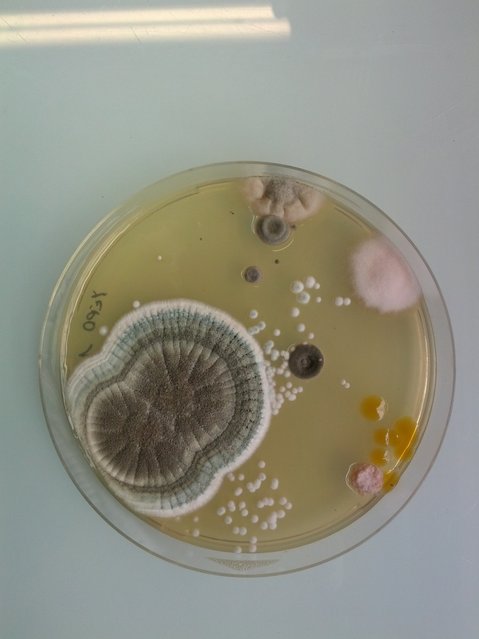
Magical Contamination By Antoine Bridier-Nahmias

Modern art is truly fascinating. Not in a way that it produces some novel things that will fascinate future generations for decades and even centuries to come. No, that is very far from the truth. On the contrary, modern art is essentially anything (yes, any little thing) that is a bit unusual and was created by a famous person. Let’s take the creation of Antoine Bridier-Nahmias for example. His brainchild is a set of pictures of petri dishes that were contaminated by various cultures of fungi. If this is art, I missed my chance of becoming famous when I accidentally left a piece of bread in a bag in a cupboard for about six months, and didn’t take a picture of the rather shocking results that awaited me when I finally discovered it. (Photo by Antoine Bridier-Nahmias)
Details
12 Dec 2014 13:03:00
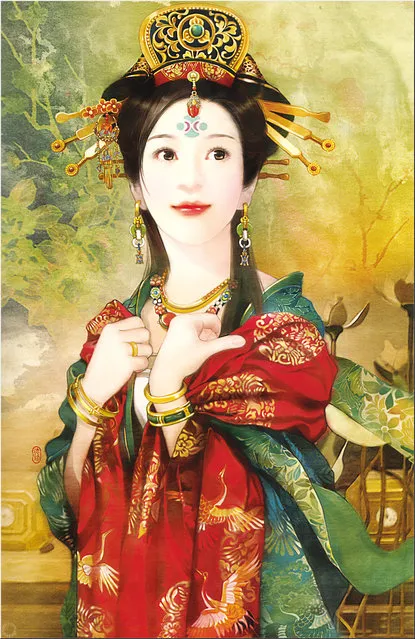
Der Jen (Dezhen; 德珍繪館) – The beauty of Brocade

“Der Jen (Dezhen; 德珍繪館) has achieved fame in her homeland and that fame is now spreading to other parts of the world as more and more people become familiar with her beautiful paintings. This Taiwanese artist depicts these beautiful ladies in classic, traditional dress that would have been worn by members of the royal court or an empress herself. Traditional hair styles and jewelry depicted in her pieces are also considered authentic. Der Jens art can be found in Chinese advertising, childrens magazines, romance novels, tarot cards, and even on public transit tickets. Its also making its way to our pcs as desktop wallpaper”.

Photo: Der Jen (Dezhen; 德珍繪館) – “The beauty of Brocade” (please click to enlarge).
Details
17 Oct 2012 12:03:00
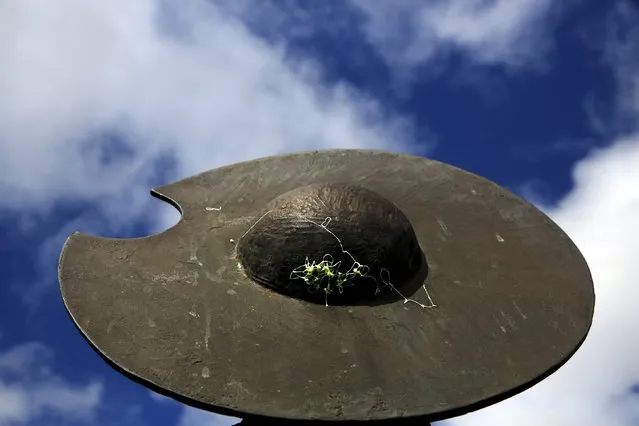
A sculpture of Don Quixote shows him wearing the basin he mistook for the enchanted helmet of the fictional Moorish king Mambrino in Alcazar de San Juan, Spain, April 5, 2016. (Photo by Susana Vera/Reuters)

A sculpture of Don Quixote shows him wearing the basin he mistook for the enchanted helmet of the fictional Moorish king Mambrino in Alcazar de San Juan, Spain, April 5, 2016. The arid central Spanish region of La Mancha is the setting for “Don Quixote”, the seventeenth-century novel by Miguel de Cervantes. Four hundred years after his death, references to the characters of Don Quixote, his loyal squire Sancho Panza and his beautiful lady Dulcinea abound in the surrounding villages from sweet treats to theatre productions involving livestock. Cervantes did not give away the name of the birthplace of Don Quixote, a middle-aged gentleman who becomes obsessed with chivalrous ideals. But many identify the village of Argamasilla de Alba as his hometown. The anniversary of Cervantes’ death is marked on the 23 April. (Photo by Susana Vera/Reuters)
Details
21 Apr 2016 12:32:00
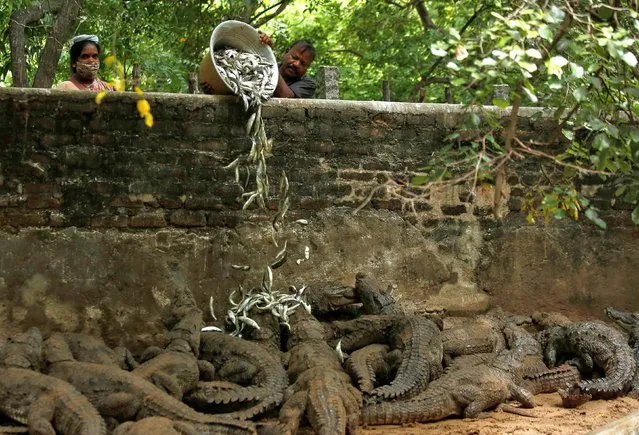
Zoo keepers feed crocodiles in their enclosure at the Madras Crocodile Bank, closed due to the outbreak of coronavirus disease (COVID-19), in Mahabalipuram, India, August 3, 2020. (Photo by P. Ravikumar/Reuters)

Zoo keepers feed crocodiles in their enclosure at the Madras Crocodile Bank, closed due to the outbreak of coronavirus disease (COVID-19), in Mahabalipuram, India, August 3, 2020. (Photo by P. Ravikumar/Reuters)
Details
18 Aug 2020 00:05:00
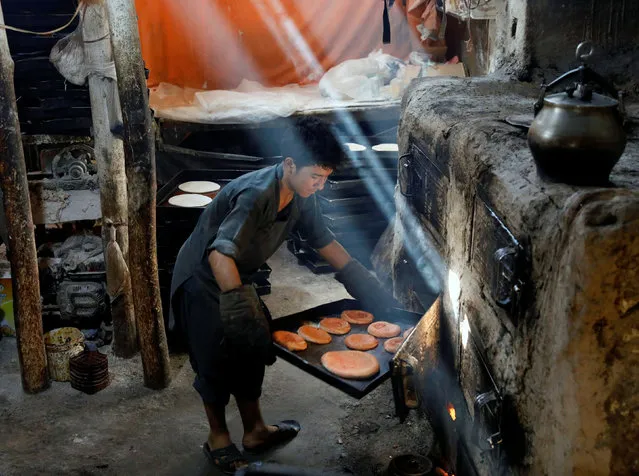
A man prepares cookies at a small traditional factory for the Eid al-Adha, amid the spread of the coronavirus disease (COVID-19), in Kabul, Afghanistan on July 29, 2020. (Photo by Mohammad Ismail/Reuters)

A man prepares cookies at a small traditional factory for the Eid al-Adha, amid the spread of the coronavirus disease (COVID-19), in Kabul, Afghanistan on July 29, 2020. (Photo by Mohammad Ismail/Reuters)
Details
27 Aug 2020 00:01:00