Loading...
Done
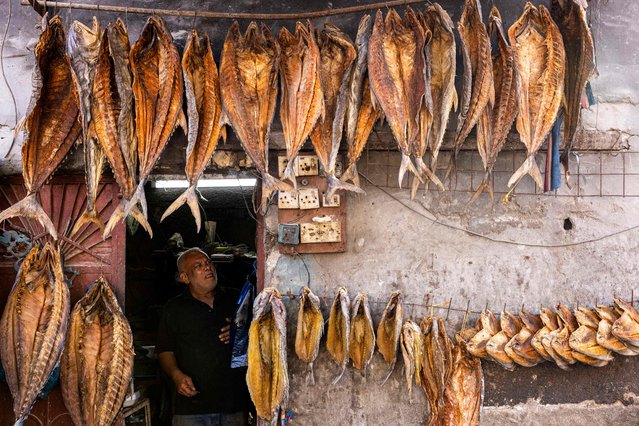
An Iraqi man sells dried fish ahead of Eid al-Fitr, which marks the end of the Muslim holy fasting month of Ramadan, in Basra on April 8, 2024. (Photo by Hussein Faleh/AFP Photo)

An Iraqi man sells dried fish ahead of Eid al-Fitr, which marks the end of the Muslim holy fasting month of Ramadan, in Basra on April 8, 2024. (Photo by Hussein Faleh/AFP Photo)
Details
18 May 2024 00:07:00
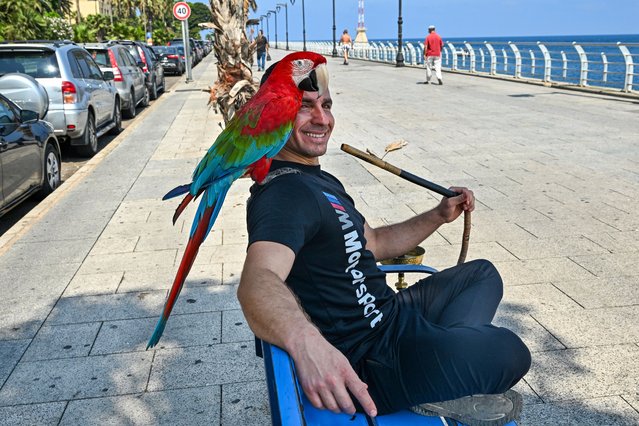
A man smokes a water pipe sitting on a bench with his pet parrot at the Ain al Mreisseh seaside promenade in Beirut on June 28, 2024. (Photo by Joseph Eid/AFP Photo)

A man smokes a water pipe sitting on a bench with his pet parrot at the Ain al Mreisseh seaside promenade in Beirut on June 28, 2024. (Photo by Joseph Eid/AFP Photo)
Details
26 Jul 2024 04:20:00
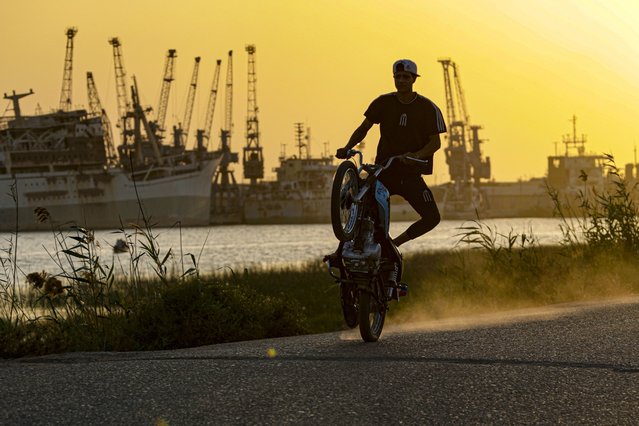
A man rides his motorcycle as the sun sets in Basra, Iraq, Monday, May 9, 2022. (Photo by Nabil al-Jurani/AP Photo)

A man rides his motorcycle as the sun sets in Basra, Iraq, Monday, May 9, 2022. (Photo by Nabil al-Jurani/AP Photo)
Details
01 Jun 2022 05:23:00
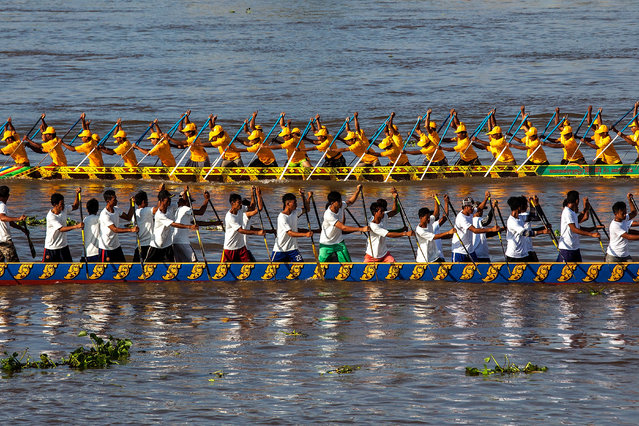
Boat crew members train on the waters of the Tonle Sap River on the morning of the first day of the Water Festival on November 13, 2016 in Phnom Penh, Cambodia. The yearly three-day Water Festival is one of the most important holidays in Cambodia and celebrates the end of the rainy season and the start of the rice harvesting. The Festival also coincides with the Tonle Sap river reversing course, which it does twice a year. Approximately 2 million people are expected to attend this year's festival, during which 259 boats and nearly 20,000 oarsmen will participate in the races. After a fatal stampede resulting in the death of some 353 people during the Water Festival in 2010, it has been cancelled four times over the past five years, with weather used as an official excuse. (Photo by Omar Havana/Getty Images)

Boat crew members train on the waters of the Tonle Sap River on the morning of the first day of the Water Festival on November 13, 2016 in Phnom Penh, Cambodia. The yearly three-day Water Festival is one of the most important holidays in Cambodia and celebrates the end of the rainy season and the start of the rice harvesting. The Festival also coincides with the Tonle Sap river reversing course, which it does twice a year. Approximately 2 million people are expected to attend this year's festival, during which 259 boats and nearly 20,000 oarsmen will participate in the races. After a fatal stampede resulting in the death of some 353 people during the Water Festival in 2010, it has been cancelled four times over the past five years, with weather used as an official excuse. (Photo by Omar Havana/Getty Images)
Details
15 Nov 2016 11:26:00
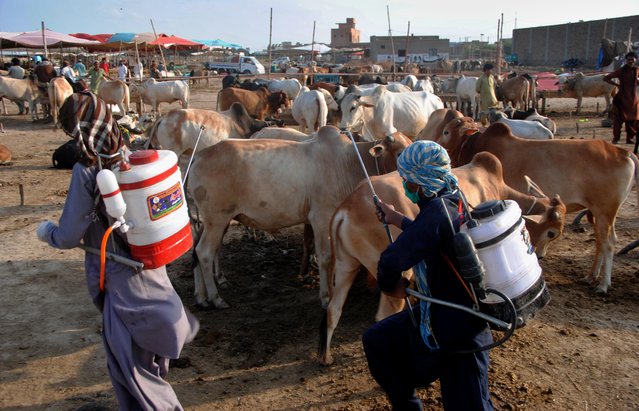
Health workers wearing face masks spray disinfectant liquid on sacrificial animals amid concerns over the spread of the SARS-CoV-2 coronavirus that causes the pandemic COVID-19 disease ahead of the Muslim festival of Eid al-Adha at an animal market in Hyderabad, southern Pakistan, 21 July 2020. Eid al-Adha, also known as the Festival of the Sacrifice, is the second and holiest of the two main Islamic holidays celebrated each year (the other one being Eid al-Fitr). Every year, on the 10th day of the Islamic lunar month of Dhu al-Hijjah, Muslims around the world ritually slaughter a sacrificial animal and split the meat into three parts: one is reserved for the family, another for friends and relatives, and the third is given to the poor and needy. The Saudi Supreme Court has declared that the first day of Eid al-Adha this year falls on 31 July. (Photo by Nadeem Khawar/EPA/EFE)

Health workers wearing face masks spray disinfectant liquid on sacrificial animals amid concerns over the spread of the SARS-CoV-2 coronavirus that causes the pandemic COVID-19 disease ahead of the Muslim festival of Eid al-Adha at an animal market in Hyderabad, southern Pakistan, 21 July 2020. (Photo by Nadeem Khawar/EPA/EFE)
Details
23 Jul 2020 00:07:00
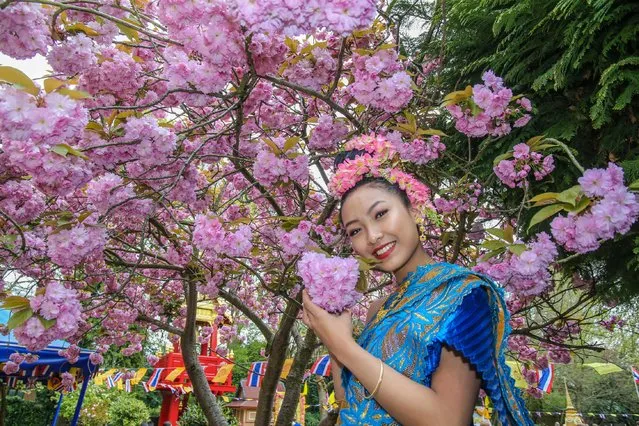
Members of the British Thai celebrate the Thai New Year (Songkran) at the Buddhapadipa Temple on April 16, 2018 in London, England. Buddhapadipa Temple, the largest Thai temple in the UK with religious ceremonies Thai classical music and dancing performances as well as stalls selling Thai food, groceries and souvenirs. (Photo by Paul Quezada-Neiman/Alamy Live News)

Members of the British Thai celebrate the Thai New Year (Songkran) at the Buddhapadipa Temple on April 16, 2018 in London, England. Buddhapadipa Temple, the largest Thai temple in the UK with religious ceremonies Thai classical music and dancing performances as well as stalls selling Thai food, groceries and souvenirs. (Photo by Paul Quezada-Neiman/Alamy Live News)
Details
16 Apr 2019 00:05:00
A child prays next to a woman during Eid al-Fitr prayers in Bucharest, Romania, Monday, May 2, 2022. Members of the Romanian Muslim community gathered for Eid al-Fitr prayers, marking the end of the holy fasting month of Ramadan, at the Dinamo stadium in the Romanian capital, in the largest Muslim public gathering of the year in Romania. (Photo by Andreea Alexandru/AP Photo)

A child prays next to a woman during Eid al-Fitr prayers in Bucharest, Romania, Monday, May 2, 2022. Members of the Romanian Muslim community gathered for Eid al-Fitr prayers, marking the end of the holy fasting month of Ramadan, at the Dinamo stadium in the Romanian capital, in the largest Muslim public gathering of the year in Romania. (Photo by Andreea Alexandru/AP Photo)
Details
20 Jul 2023 04:16:00
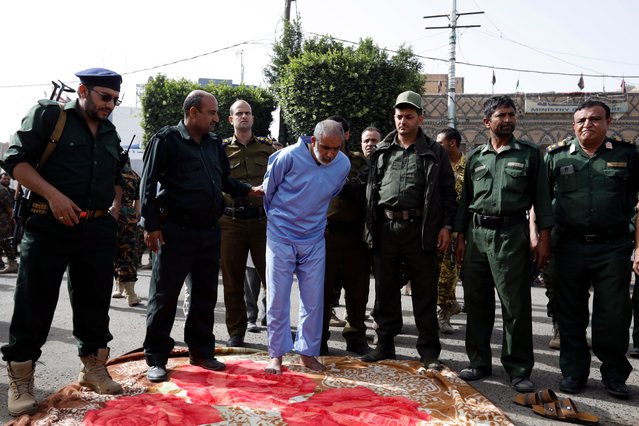
Ali al-Naami, convicted of murdering his three daughters, is placed on a carpet to be executed at a public square in Sana'a, Yemen, 16 June 2021. Defendant Ali al-Naami, 40, convicted of killing his daughters Rahaf, 7, Raghad, 12, and Malak, 14, in June 2019, was executed by an executioner in front of hundreds of spectators in a public square in Sana'a. He had admitted to strangling them and drowning them in a water tank after the mother left the house due to domestic disputes with him. (Photo by Yahya Arhab/EPA/EFE)

Ali al-Naami, convicted of murdering his three daughters, is placed on a carpet to be executed at a public square in Sana'a, Yemen, 16 June 2021. Defendant Ali al-Naami, 40, convicted of killing his daughters Rahaf, 7, Raghad, 12, and Malak, 14, in June 2019, was executed by an executioner in front of hundreds of spectators in a public square in Sana'a. He had admitted to strangling them and drowning them in a water tank after the mother left the house due to domestic disputes with him. (Photo by Yahya Arhab/EPA/EFE)
Details
20 Jun 2021 08:10:00