Loading...
Done
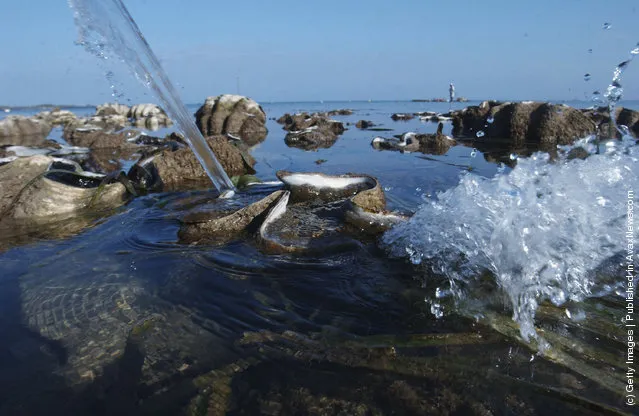
Tridacna Gigas, or Giant Clams

“The giant clam, Tridacna gigas (known as pā’ua in Cook Islands Māori), is the largest living bivalve mollusc. T. gigas is one of the most endangered clam species. It was mentioned as early as 1825 in scientific reports. One of a number of large clam species native to the shallow coral reefs of the South Pacific and Indian oceans, they can weigh more than 200 kilograms (440 lb) measure as much as 120 cm (47 in) across, and have an average lifespan in the wild of 100 years or more”. – Wikipedia

Photo: Tridacna Gigas, or Giant Clams spew water as a traditional fisherman passes by a small sanctuary on January 23, 2004 near Bolinao in the Northern Philippines. The clams, prime builders for coral reefs and providing shelter for spawning fish and other marine life, are exposed by low tides in the sanctuary. Overfishing and pollution throughout the country are not only threatening food security, but are also starting to choke one of the few working clam sanctuaries in the world. (Photo by David Greedy/Getty Images)
Details
01 Oct 2011 13:10:00
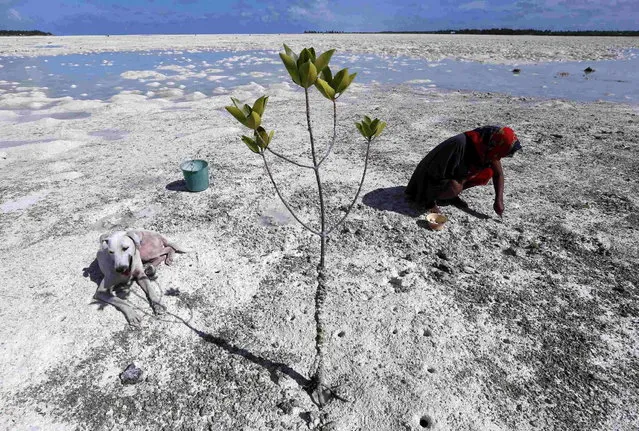
A dog sits in the shade of a mangrove tree as a woman uses a fork to dig for shellfish on the reef-mud flats of a lagoon located at South Tarawa in the central Pacific island nation of Kiribati May 23, 2013. (Photo by David Gray/Reuters)

A dog sits in the shade of a mangrove tree as a woman uses a fork to dig for shellfish on the reef-mud flats of a lagoon located at South Tarawa in the central Pacific island nation of Kiribati May 23, 2013. Kiribati consists of a chain of 33 atolls and islands that stand just metres above sea level, spread over a huge expanse of otherwise empty ocean. With surrounding sea levels rising, Kiribati President Anote Tong has predicted his country will likely become uninhabitable in 30-60 years because of inundation and contamination of its freshwater supplies. (Photo by David Gray/Reuters)
Details
13 Jun 2013 09:23:00
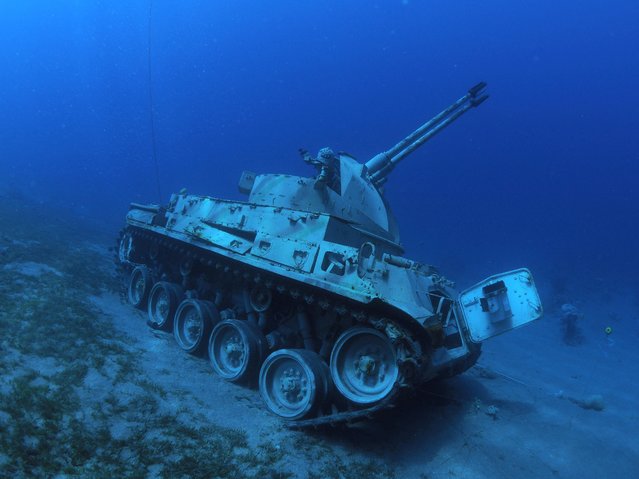
This handout picture released by Jordan's Aqaba Special Economic Zone Authority (ASEZA) on July 23, 2019 shows a Jordanian Armed Forces armored vehicle lies on the seabed of the Red Sea off the coast of the southern port city of Aqaba, part of a new underwater military museum. (Photo by Aqaba Special Economic Zone Authority via Reuters)

This handout picture released by Jordan's Aqaba Special Economic Zone Authority (ASEZA) on July 23, 2019 shows a Jordanian Armed Forces armored vehicle lies on the seabed of the Red Sea off the coast of the southern port city of Aqaba, part of a new underwater military museum. (Photo by Aqaba Special Economic Zone Authority via Reuters)
Details
26 Jul 2019 00:07:00
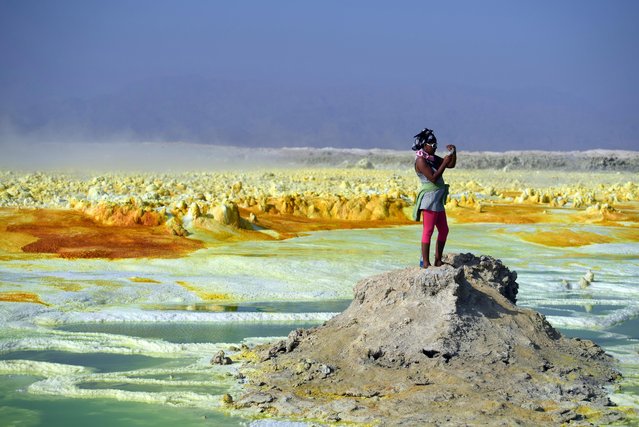
A tourist take a photograph of a sulphur lake in the Danakil Depression on January 23, 2017 near Dallol, Ethiopia. (Photo by Carl Court/Getty Images)

A tourist take a photograph of a sulphur lake in the Danakil Depression on January 23, 2017 near Dallol, Ethiopia. The depression lies 100 metres below sea level and is one of the hottest and most inhospitable places on Earth. Despite the gruelling conditions, Ethiopians continue a centuries old industry of mining salt from the ground by hand in temperatures that average 34.5 degrees centigrade but have risen to over 50 degrees. (Photo by Carl Court/Getty Images)
Details
25 Jan 2017 11:36:00
Bangladeshi people walk in a polluted air environment in Dhaka, Bangladesh on September 3, 2020. A study says, air pollution shortens life expectancy by seven years in Bangladesh. (Photo by Sultan Mahmud Mukut/SOPA Images/Rex Features/Shutterstock)

Bangladeshi people walk in a polluted air environment in Dhaka, Bangladesh on September 3, 2020. A study says, air pollution shortens life expectancy by seven years in Bangladesh. (Photo by Sultan Mahmud Mukut/SOPA Images/Rex Features/Shutterstock)
Details
17 Sep 2020 00:05:00
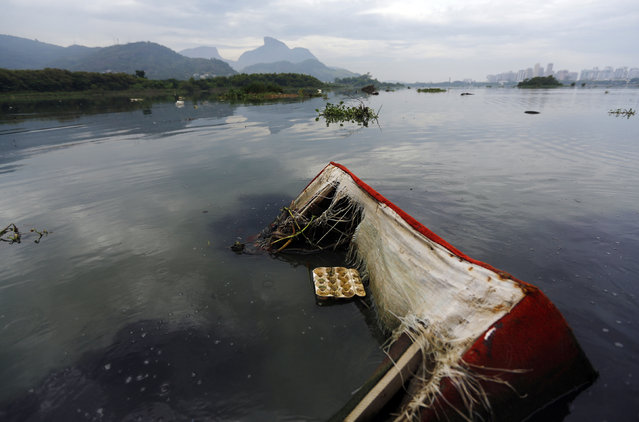
A sofa floats in the polluted waters of Jacarepagua Lagoon, during a press tour in Rio de Janeiro, March 9, 2015. A press tour was organised by biologist Mario Moscatelli, to call attention to pollution on the waters of the lagoons which surround the Rio 2016 Olympic Park. (Photo by Ricardo Moraes/Reuters)

A sofa floats in the polluted waters of Jacarepagua Lagoon, during a press tour in Rio de Janeiro, March 9, 2015. A press tour was organised by biologist Mario Moscatelli, to call attention to pollution on the waters of the lagoons which surround the Rio 2016 Olympic Park. (Photo by Ricardo Moraes/Reuters)
Details
09 Aug 2015 11:04:00
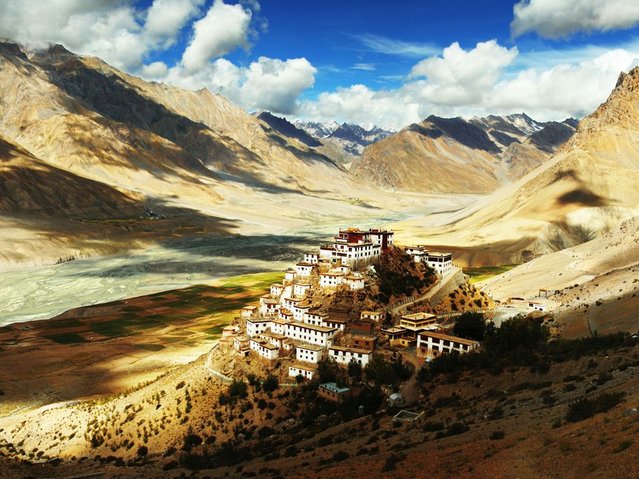
Buddhist Monastery Key Gompa

Key Gompa (also spelled Ki, Kye or Kee) is a Tibetan Buddhist monastery located on top of a hill at an altitude of 4,166 metres (13,668 ft) above sea level, close to the Spiti River, in the Spiti Valley of Himachal Pradesh, Lahaul and Spiti district, India. It is the biggest monastery of Spiti Valley and a religious training centre for Lamas. It reportedly had 100 monks in 1855.
Details
05 Dec 2013 10:48:00
Two women look at a mobile phone as they stand on Tiananmen Square during a sand storm in heavily polluted weather in Beijing on February 28, 2013. Beijing residents were urged to stay indoors as pollution levels soared before a sandstorm brought further misery to China's capital. (Photo by Ed Jones/AFP Photo)

Two women look at a mobile phone as they stand on Tiananmen Square during a sand storm in heavily polluted weather in Beijing on February 28, 2013. Beijing residents were urged to stay indoors as pollution levels soared before a sandstorm brought further misery to China's capital. (Photo by Ed Jones/AFP Photo)
Details
28 Feb 2013 11:46:00