Loading...
Done
Greater Sage-Grouse

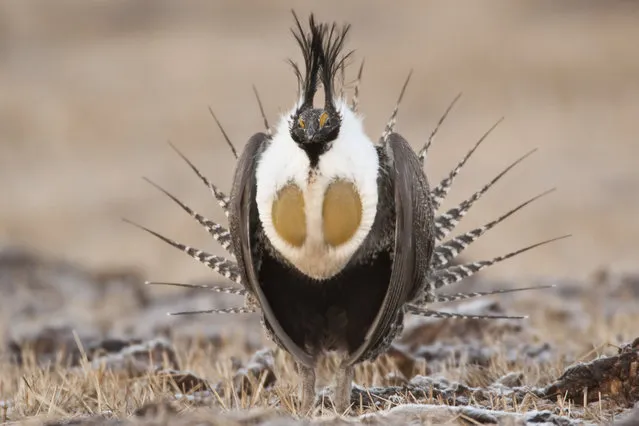
The Greater Sage-Grouse is certainly a formidable-looking bird. Being the largest grouse in North America and having tail feathers, which look like giant spikes, make for a ferocious sight. These birds are well known for their complicated courtship rituals, in which the males perform a special “strutting display” to attract the females. Another distinct feature of the Greater Sage-Grouse is two large yellow throat sacs (gular sacs), which are inflated by the males during the courtship display. Unlike pelicans, whose gular sacs are used to store fish while hunting, the throat sacks of the Greater Sage-Grouse are merely for display.
Details
21 Nov 2014 12:25:00
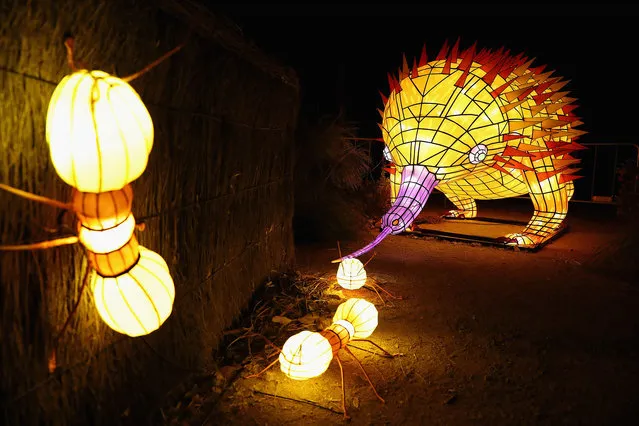
An echidna light sculpture eating ants is displayed during a media preview of Vivid Sydney illuminated displays at Taronga Zoo on May 24, 2016 in Sydney, Australia. Vivid is lighting up at Taronga Zoo for the first time with ten giant animal sculptures representing critical species the zoo is committed to protecting. Held annually, Vivid Sydney is the world's largest festival of light, music and ideas running for 23 days. (Photo by Cameron Spencer/Getty Images)

An echidna light sculpture eating ants is displayed during a media preview of Vivid Sydney illuminated displays at Taronga Zoo on May 24, 2016 in Sydney, Australia. Vivid is lighting up at Taronga Zoo for the first time with ten giant animal sculptures representing critical species the zoo is committed to protecting. Held annually, Vivid Sydney is the world's largest festival of light, music and ideas running for 23 days. (Photo by Cameron Spencer/Getty Images)
Details
25 May 2016 13:23:00
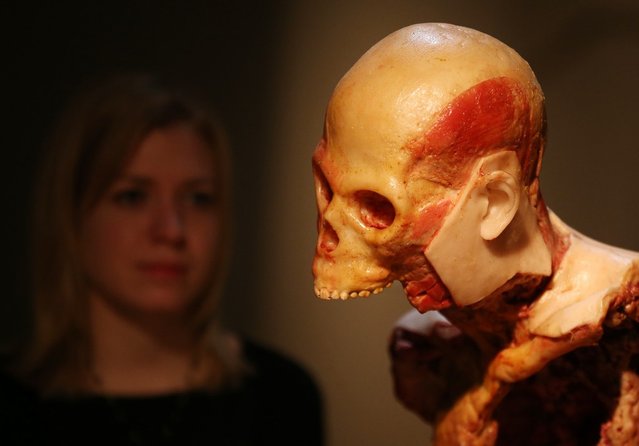
An artwork entitled 'Are you still mad at me ?' by John Isaacs is displayed at the Death: A Self-portrait exhibition at the Wellcome Collection on November 14, 2012 in London, England. The exhibition showcases 300 works from a unique collection by Richard Harris, a former antique print dealer from Chicago, devoted to the iconography of death. The display highlights art works, historical artifacts, anatomical illustrations and ephemera from around the world and opens on November 15, 2012 until February 24, 2013.  (Photo by Peter Macdiarmid)

An artwork entitled “Are you still mad at me?” by John Isaacs is displayed at the Death: A Self-portrait exhibition at the Wellcome Collection on November 14, 2012 in London, England. The exhibition showcases 300 works from a unique collection by Richard Harris, a former antique print dealer from Chicago, devoted to the iconography of death. The display highlights art works, historical artifacts, anatomical illustrations and ephemera from around the world and opens on November 15, 2012 until February 24, 2013. (Photo by Peter Macdiarmid)
Details
15 Nov 2012 09:41:00
Sculpture By Miles Van Rensselaer

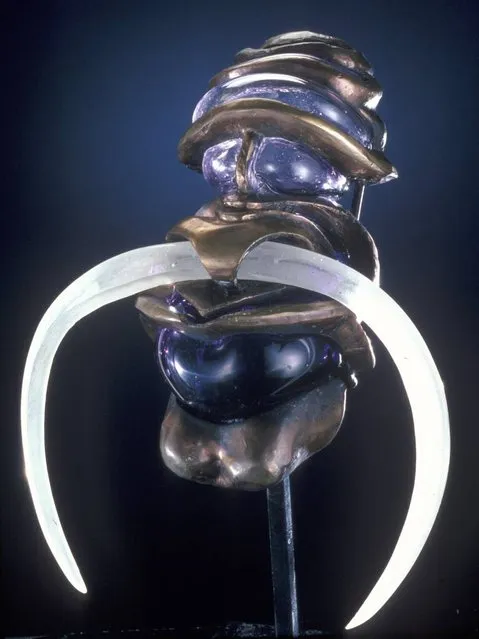
Miles Van Rensselaer using everything from glass and crystal to bronze and iron, from gold and silver to tooth and bone, from steel, copper and lead to wood, clay, feather and hair. He has been fortunate enough to work – and humbled by working – with and among talented artists from all over the world. His work is his homage to these people and their vanishing ways of life, his translation of their technique, imagery, idea of “primitive” art into modern Western materials.
Details
14 Sep 2015 07:55:00
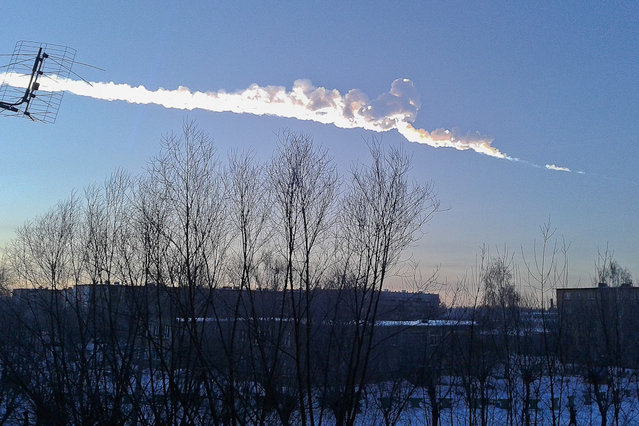
Meteor falls in Russia's Chelyabinsk region on February 15 , 2013. (Photo by Alexey Bulaew/RIA Nowosti)

“A meteor streaked across the sky above Russia's Ural Mountains on Friday morning, causing sharp explosions and injuring more than 500 people (20 had been hospitalized in serious condition), many of them hurt by broken glass. “There was panic. People had no idea what was happening. Everyone was going around to people's houses to check if they were OK”, said Sergey Hametov, a resident of Chelyabinsk, about 1500 kilometres (930 miles) east of Moscow, the biggest city in the affected region”. (Photo by Alexey Bulaew/RIA Nowosti)
Details
15 Feb 2013 12:04:00
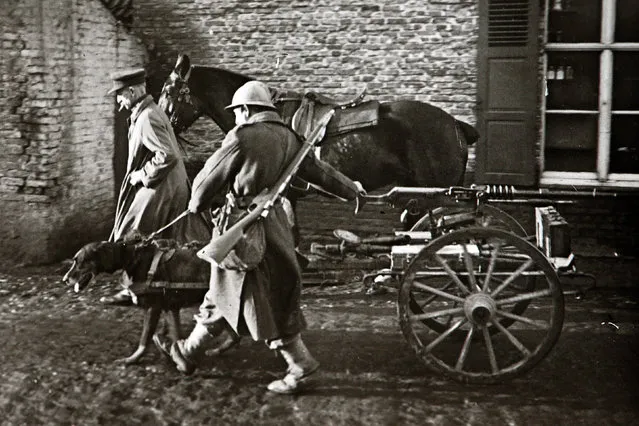
An undated archive picture shows a dog pulling a Belgian machine gun at an unknown location in northern France. (Photo by Collection Odette Carrez/Reuters)

An undated archive picture shows a dog pulling a Belgian machine gun at an unknown location in northern France. A Viscount in the Armoured Cavalry Branch of the French Army left behind a collection of hundreds of glass plates taken during World War One (WWI) that have never before been published. The images, by an unknown photographer, show the daily life of soldiers in the trenches, destruction of towns and military leaders. The year 2014 marks the 100th anniversary of the start of WWI. (Photo by Collection Odette Carrez/Reuters)
Details
23 May 2014 09:11:00
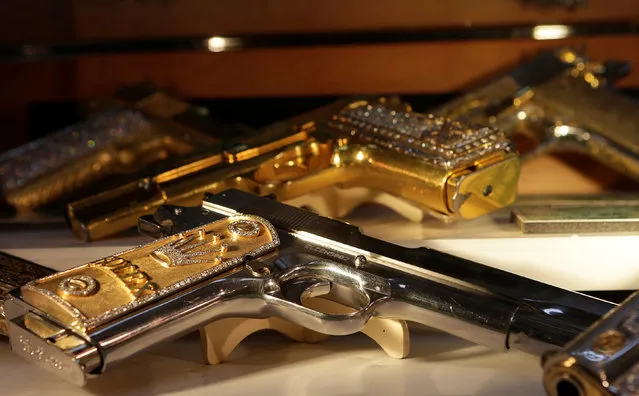
Guns decorated with gold and jewellery are displayed in the Drugs Museum, used by the military to showcase to soldiers the lifestyles of Mexican drug lords, at the headquarters of the Ministry of Defense in Mexico City, October 14, 2016. (Photo by Henry Romero/Reuters)

Guns decorated with gold and jewellery are displayed in the Drugs Museum, used by the military to showcase to soldiers the lifestyles of Mexican drug lords, at the headquarters of the Ministry of Defense in Mexico City, October 14, 2016. (Photo by Henry Romero/Reuters)
Details
16 Oct 2016 10:54:00
Pakistan girls make selfies holding a Pakistan-made weapon displayed at the four-day International Defence Exhibition and Seminar (IDEAS) 2016 in Karachi, Pakistan, Wednesday, November 23, 2016. (Photo by Shakil Adil/AP Photo)

Pakistan girls make selfies holding a Pakistan-made weapon displayed at the four-day International Defence Exhibition and Seminar (IDEAS) 2016 in Karachi, Pakistan, Wednesday, November 23, 2016. (Photo by Shakil Adil/AP Photo)
Details
05 Dec 2016 11:50:00