Loading...
Done
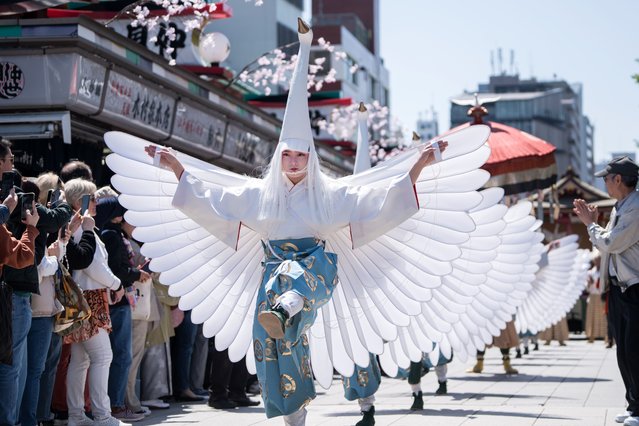
Dancers perform during the Shirasagi-no Mai, or White Heron Dance, at the Sensoji Temple on April 09, 2023 in Tokyo, Japan. The parade, which originated in the 8th-12th century in Kyoto, was revived in 1968 to celebrate Tokyo's 100th Anniversary and to wish for peace. The dance is now held twice a year, in April and November, at the Sensoji Temple in Asakusa, one of Tokyo's most popular tourist destinations for foreign visitors. (Photo by Tomohiro Ohsumi/Getty Images)

Dancers perform during the Shirasagi-no Mai, or White Heron Dance, at the Sensoji Temple on April 09, 2023 in Tokyo, Japan. The parade, which originated in the 8th-12th century in Kyoto, was revived in 1968 to celebrate Tokyo's 100th Anniversary and to wish for peace. The dance is now held twice a year, in April and November, at the Sensoji Temple in Asakusa, one of Tokyo's most popular tourist destinations for foreign visitors. (Photo by Tomohiro Ohsumi/Getty Images)
Details
25 Apr 2023 03:32:00
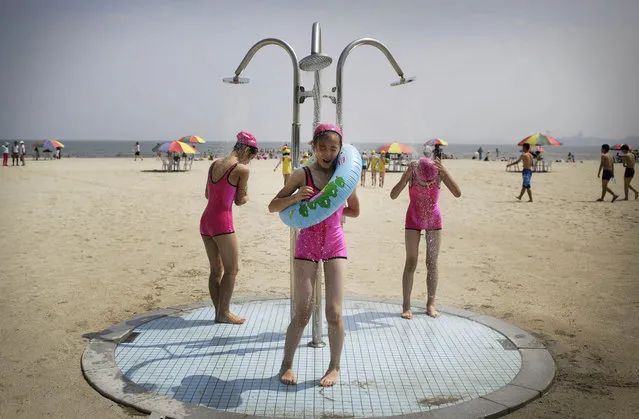
North Korean girls in similar bathing suits stand under a shower at the Songdowon International Children's Camp, Tuesday, July 29, 2014, in Wonsan, North Korea. The camp, which has been operating for nearly 30 years, was originally intended mainly to deepen relations with friendly countries in the Communist or non-aligned world. But officials say they are willing to accept youth from anywhere – even the United States. (Photo by Wong Maye-E/AP Photo)

North Korean girls in similar bathing suits stand under a shower at the Songdowon International Children's Camp, Tuesday, July 29, 2014, in Wonsan, North Korea. The camp, which has been operating for nearly 30 years, was originally intended mainly to deepen relations with friendly countries in the Communist or non-aligned world. But officials say they are willing to accept youth from anywhere – even the United States. (Photo by Wong Maye-E/AP Photo)
Details
31 Jul 2014 10:12:00
Young revelers take part in a parade called "La Calabiuza" on November 1, 2015, on the eve of the Day of the Dead in Tonacatepeque, 20 kms (13 miles) north of San Salvador. During the celebration, the residents of Tonacatepeque, originally an indigenous community, recall the characters from the mythology of Cuscatlan – pre-Columbian west and central regions of El Salvador – and their dead relatives. (Photo by Marvin Recinos/AFP Photo)

Young revelers take part in a parade called "La Calabiuza" on November 1, 2015, on the eve of the Day of the Dead in Tonacatepeque, 20 kms (13 miles) north of San Salvador. During the celebration, the residents of Tonacatepeque, originally an indigenous community, recall the characters from the mythology of Cuscatlan – pre-Columbian west and central regions of El Salvador – and their dead relatives. (Photo by Marvin Recinos/AFP Photo)
Details
04 Nov 2015 11:50:00
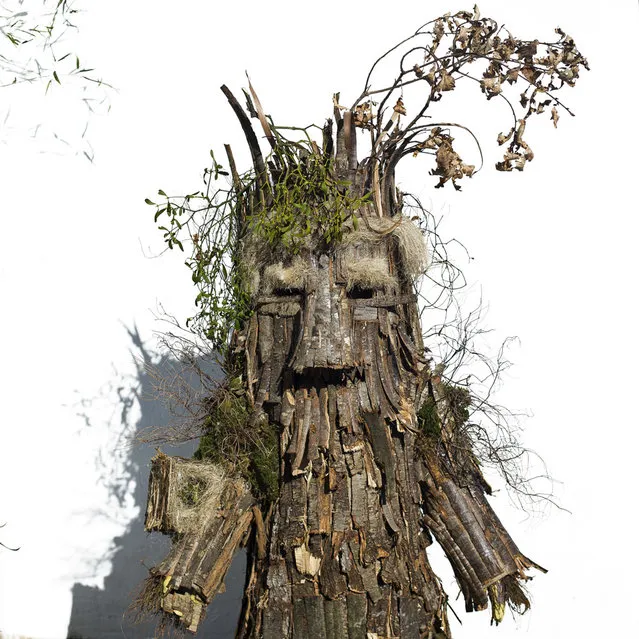
A man dressed as a  “Trapajon”, representing entities of nature, poses for a picture after taking part in the Vijanera Festival in Silio, northern Spain, Sunday, Jan. 6, 2013. The Vijanera masquerade, of pre-Roman origin, is the first carnival of the year in Europe symbolizing the triumph of good over evil and involving the participation of crowds of residents wearing different masks, animal skins and brightly colored clothing with its own complex function and symbolism and becoming the living example of the survival of archaic cults to nature. (Photo by Daniel Ochoa de Olza/AP Photo)

A man dressed as a “Trapajon”, representing entities of nature, poses for a picture after taking part in the Vijanera Festival in Silio, northern Spain, Sunday, Jan. 6, 2013. The Vijanera masquerade, of pre-Roman origin, is the first carnival of the year in Europe symbolizing the triumph of good over evil and involving the participation of crowds of residents wearing different masks, animal skins and brightly colored clothing with its own complex function and symbolism and becoming the living example of the survival of archaic cults to nature. (Photo by Daniel Ochoa de Olza/AP Photo)
Details
19 Jan 2013 13:01:00
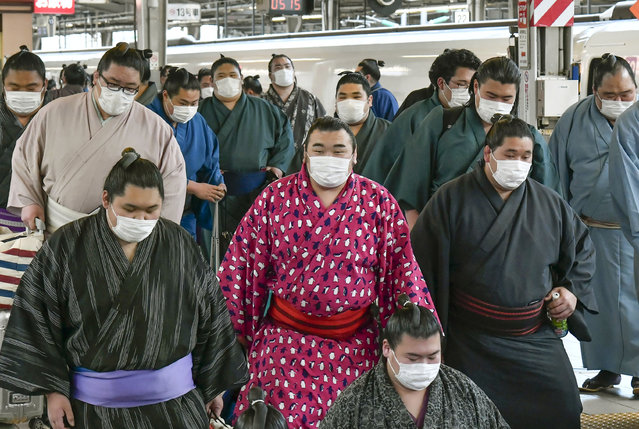
In this Sunday, February 23, 2020, photo, sumo wrestlers wearing masks arrive at Shin Osaka railway station in Osaka, western Japan. A viral outbreak that began in China has infected more than 79,000 people globally. The World Health Organization has named the illness COVID-19, referring to its origin late last year and the coronavirus that causes it. (Photo by Kyodo News via AP Photo)

In this Sunday, February 23, 2020, photo, sumo wrestlers wearing masks arrive at Shin Osaka railway station in Osaka, western Japan. A viral outbreak that began in China has infected more than 79,000 people globally. The World Health Organization has named the illness COVID-19, referring to its origin late last year and the coronavirus that causes it. (Photo by Kyodo News via AP Photo)
Details
10 Mar 2020 00:03:00
Belgian Hotel CasAnus

Hotel CasAnus has all the elements of a great weekend getaway. It's just shaped like a giant human colon. On a small island, nestled between Antwerp and Ghent in Flanders, Belgium, this quaint structure is designed like a humongous intestinal tract, complete with an anus replica.
Originally an art sculpture created by the Dutch designer Joep Van Lieshout, CasAnus is now a part of the Verbeke Foundation art park, one of Western Europe’s edgiest art venues.
Details
01 Jun 2015 04:45:00
Matt Town of the st Centingas historic re-enactment group poses for portraits in his home while wearing his replica Saxon armour on October 12, 2016 in Ramsgate, England. (Photo by Leon Neal/Getty Images)

Matt Town of the st Centingas historic re-enactment group poses for portraits in his home while wearing his replica Saxon armour on October 12, 2016 in Ramsgate, England. This weekend marks the 950th anniversary of 1066, the Battle of Hastings and the Norman Conquest, and many historical groups will be participating in a large-scale re-enactment on the site of the original battle. (Photo by Leon Neal/Getty Images)
Details
15 Oct 2016 11:03:00
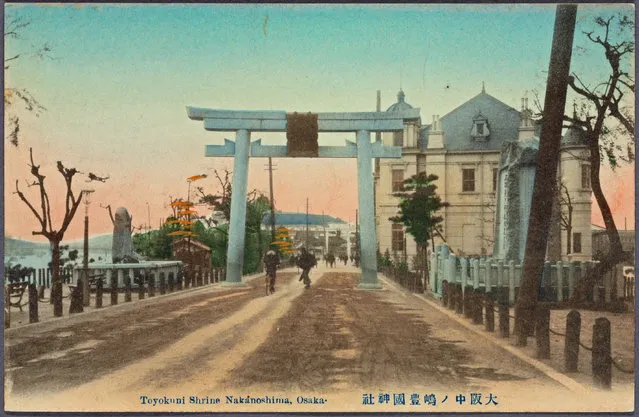
Toyokuni Shrine Nakanoshima, Osaka, Japan. (Photo by New York Public Library/Caters News)

These timeless postcards offer an eye-opening glimpse into life in Japan in the early 20th century. Taken from hand-colored photographs, the postcards showcase the still beauty of the country, depicting a nation on the cusp of modernization. The images feature solemn fishermen, bustling streets, temples and shrines: a country yet to be influenced by Western culture. The tinting effect brings out the rich colors of the natural surroundings, with trees, flowers and cherry blossoms jumping from the original black-and-white images. Here: Toyokuni Shrine Nakanoshima, Osaka, Japan. (Photo by New York Public Library/Caters News)
Details
02 Apr 2016 09:33:00