Loading...
Done
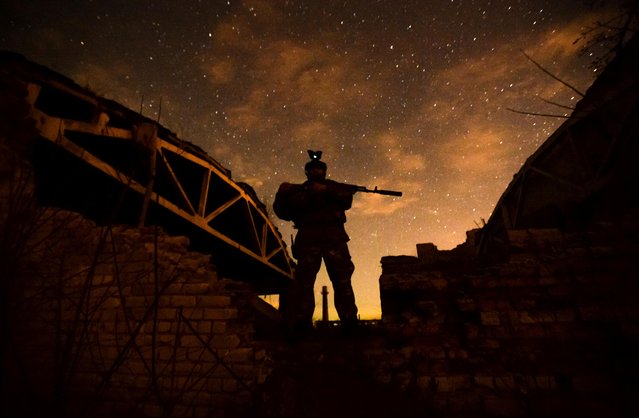
A service member of the Ukrainian armed forces is seen at fighting positions on the line of separation from pro-Russian rebels in Donetsk region, Ukraine on April 10, 2021. (Photo by Oleksandr Klymenko/Reuters)

A service member of the Ukrainian armed forces is seen at fighting positions on the line of separation from pro-Russian rebels in Donetsk region, Ukraine on April 10, 2021. (Photo by Oleksandr Klymenko/Reuters)
Details
16 Apr 2021 09:50:00
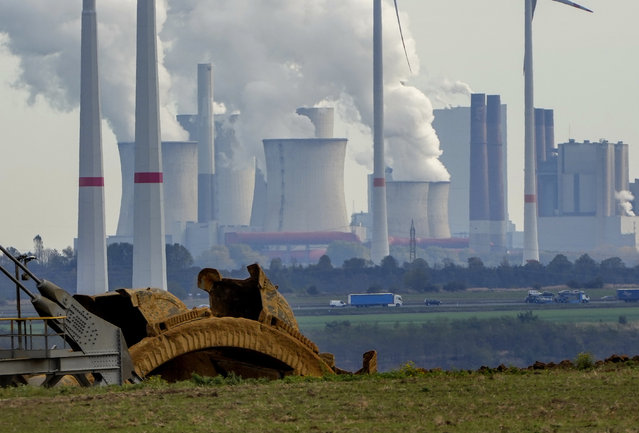
Steam comes out of the chimneys of the coal-fired power station Neurath near the Garzweiler open-cast coal mine in Luetzerath, Germany, Monday, October 25, 2021. The climate change conference COP26 will start next Sunday in Glasgow, Scotland. (Photo by Michael Probst/AP Photo)

Steam comes out of the chimneys of the coal-fired power station Neurath near the Garzweiler open-cast coal mine in Luetzerath, Germany, Monday, October 25, 2021. The climate change conference COP26 will start next Sunday in Glasgow, Scotland. (Photo by Michael Probst/AP Photo)
Details
29 Dec 2021 05:50:00
Kawakanih Yawalapiti, 9, Upper Xingu region of Mato Grosso, Brazil, 2018: Kawakanih lives with her tribe, the Yawalapiti, in Xingu national park, a preserve in the Amazon basin of Brazil. The Yawalapiti collect seeds to preserve species unique to their ecosystem, which lies between the rain forest and savannah. Kawakanih’s diet is simple, consisting mainly of fish, cassava, porridge, fruit and nuts. “It takes five minutes to catch dinner”, says Kawakanih. “When you’re hungry, you just go to the river with your net”. (Photo by Gregg Segal/The Guardian)

Photographer Gregg Segal travelled the world to document children and the food they eat in a week. Partly inspired by the increasing problems of childhood obesity, he tracked traditional regional diets as yet unaffected by globalisation, and ironically, found that the healthiest diets were often eaten by the least well off. (Photo by Gregg Segal/The Guardian)
Details
03 Jul 2019 00:03:00
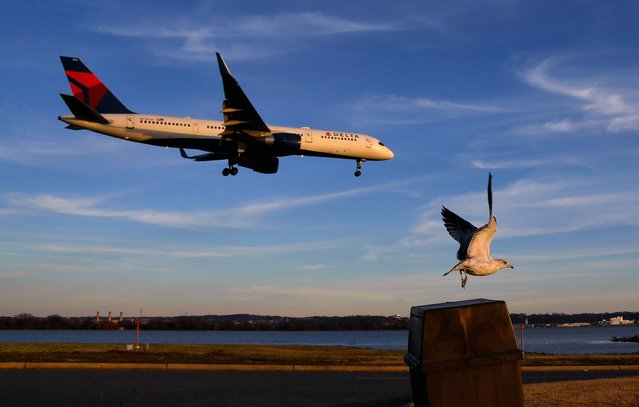
As an airliner prepares to land, a bird takes off at the Gravelly Point park near Reagan National Airport in Arlington, Va. on December 23, 2018. (Photo by Michael S. Williamson/The Washington Post)

As an airliner prepares to land, a bird takes off at the Gravelly Point park near Reagan National Airport in Arlington, Va. on December 23, 2018. (Photo by Michael S. Williamson/The Washington Post)
Details
29 May 2019 00:03:00
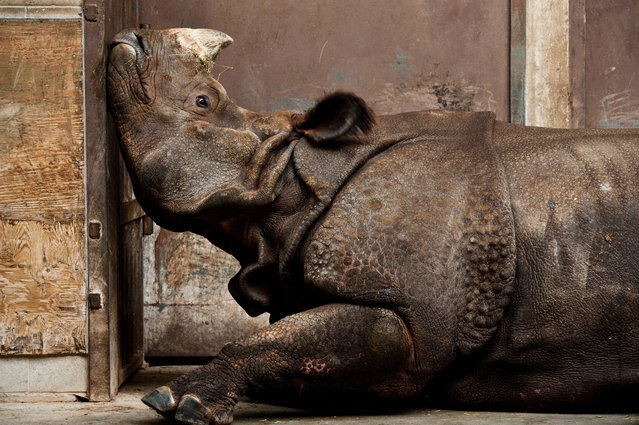
“Honorable Mention”. An Indian rhinoceros, far from home and stuck inside with late-winter blues at the Toronto zoo. Photo location: Toronto, Ontario, Canada. (Photo and caption by Stephen De Lisle/National Geographic Photo Contest)

“Honorable Mention”. An Indian rhinoceros, far from home and stuck inside with late-winter blues at the Toronto zoo. Photo location: Toronto, Ontario, Canada. (Photo and caption by Stephen De Lisle/National Geographic Photo Contest)
Details
20 Dec 2013 10:04:00


Jimmy Arnold, an overweight boy from Rochester, bites into a cake. (Photo by Reg Birkett/Keystone/Getty Images). 14th April 1951
Details
29 Mar 2011 13:25:00
Ako Kondo as Alice, on stage. (Photo by Jeff Busby/The Guardian)

Christopher Wheeldon’s Alice’s Adventures in Wonderland is the biggest production the Australian Ballet has ever undertaken and it’s also one of the most spectacular. Created for the Royal Ballet and designed by Bob Crowley, it involves puppetry, optical illusions, major setpieces and immersive projections, as well as costumes that some dancers have to actually climb into. Here: Ako Kondo as Alice, on stage September 11, 2017 in Melbourne, Australia. (Photo by Jeff Busby/The Guardian)
Details
22 Sep 2017 07:18:00
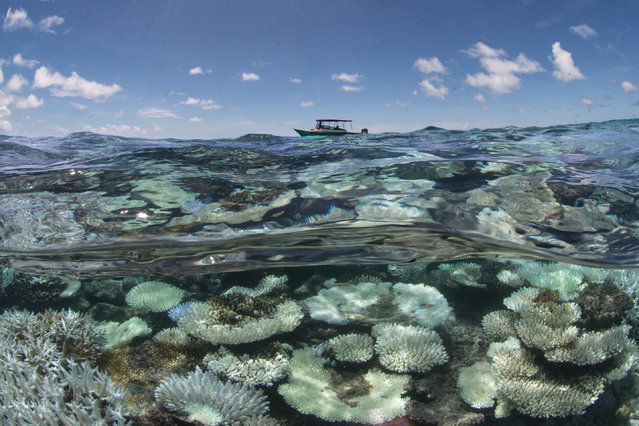
In this May 2016 photo released by The Ocean Agency/XL Catlin Seaview Survey, a boat sails near a coral reef that has been bleached white by heat stress in the Maldives. (Photo by The Ocean Agency/XL Catlin Seaview Survey via AP Photo)

In this May 2016 photo released by The Ocean Agency/XL Catlin Seaview Survey, a boat sails near a coral reef that has been bleached white by heat stress in the Maldives. oral reefs, unique underwater ecosystems that sustain a quarter of the world's marine species and half a billion people, are dying on an unprecedented scale. Scientists are racing to prevent a complete wipeout within decades. (Photo by The Ocean Agency/XL Catlin Seaview Survey via AP Photo)
Details
14 Mar 2017 00:05:00