Loading...
Done
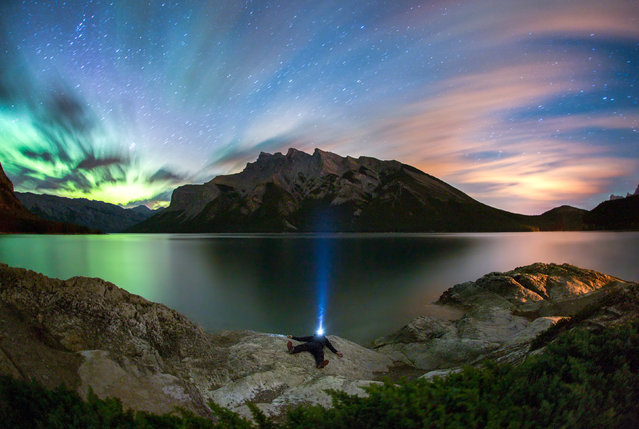
A photographer has shot this series of scenic selfies – scaling freezing mountain tops to snap himself in front of stunning scenery. Paul Zizkas breath-taking work features himself in front of beautiful backdrops such as shimmering lakes, snowy mountains and vibrant auroras. He has travelled to a number of different locations worldwide including Canada, New Zealand, Niue the South Pacific and French Polynesia. (Photo by Paul Zizkas/Caters News)

A photographer has shot this series of scenic selfies – scaling freezing mountain tops to snap himself in front of stunning scenery. Paul Zizkas breath-taking work features himself in front of beautiful backdrops such as shimmering lakes, snowy mountains and vibrant auroras. He has travelled to a number of different locations worldwide including Canada, New Zealand, Niue the South Pacific and French Polynesia. Explorer Paul, from Banff, Alberta, Canada, saw his selfies go viral early in 2014 – and has now unveiled his latest work. He said: I find that sometimes including a person in a landscape scene adds to the photograph – that it conveys a different story. Here: lake Minnewanka, Banff National Park, Alberta, Canada. (Photo by Paul Zizkas/Caters News)
Details
14 Dec 2014 12:18:00
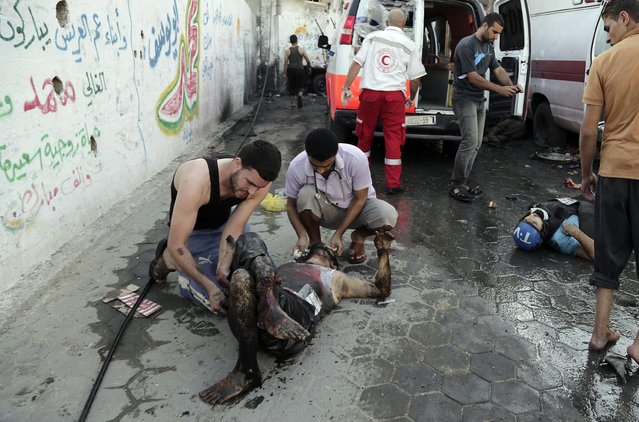
In this July 30, 2014 photo, neighbors help gravely injured Mohammed al-Selek, 39, wounded by an Israeli mortar strike as he lays next to the body of Palestinian journalist Rami Reyan who was killed, in the Shijaiyah neighborhood of the northern Gaza Strip. Al-Selek's life changed forever last July 30, when the shells slammed into his home killing all his three children, his father and six other relatives. (Photo by Adel Hana/AP Photo)

In this July 30, 2014 photo, neighbors help gravely injured Mohammed al-Selek, 39, wounded by an Israeli mortar strike as he lays next to the body of Palestinian journalist Rami Reyan who was killed, in the Shijaiyah neighborhood of the northern Gaza Strip. Al-Selek's life changed forever last July 30, when the shells slammed into his home killing all his three children, his father and six other relatives. A year later, al-Selek, who lost his leg during the airstrike, still struggles to recover and come to terms with his family's loss in the 50-day Israel-Hamas war. (Photo by Adel Hana/AP Photo)
Details
07 Jul 2015 11:28:00
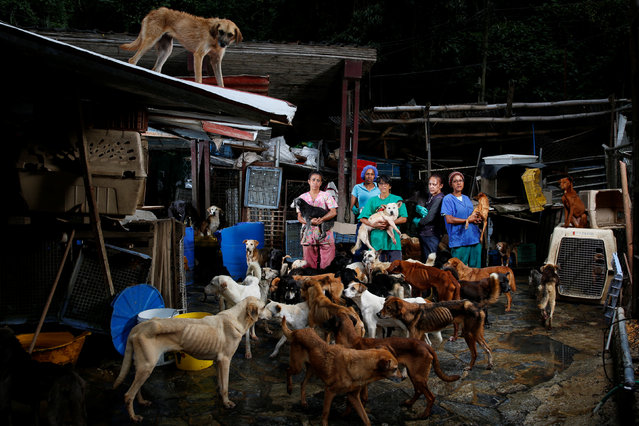
(L-R) Maria Silva, Milena Cortes, Maria Arteaga, Jackeline Bastidas and Gissy Abello pose for a picture at the Famproa dogs shelter where they work, in Los Teques, Venezuela, August 25, 2016. Venezuelans struggling to feed their families let alone their pets are dumping animals on the streets, in parks and at makeshift homes overrun with scrawny animals amid an economic crisis. An hour from Caracas in Los Teques, hundreds of dogs bark and run around the streets scavenging for food outside a makeshift shelter. People come by every few hours to hand over scrawny dogs which are fed by volunteers every day. Venezuela is undergoing a major economic and social crisis, with shortages of basic foods and medicines. Triple digit inflation is hitting everybody hard, including those who own pets. (Photo by Carlos Garcia Rawlins/Reuters)

(L-R) Maria Silva, Milena Cortes, Maria Arteaga, Jackeline Bastidas and Gissy Abello pose for a picture at the Famproa dogs shelter where they work, in Los Teques, Venezuela, August 25, 2016. Venezuelans struggling to feed their families let alone their pets are dumping animals on the streets, in parks and at makeshift homes overrun with scrawny animals amid an economic crisis. An hour from Caracas in Los Teques, hundreds of dogs bark and run around the streets scavenging for food outside a makeshift shelter. (Photo by Carlos Garcia Rawlins/Reuters)
Details
08 Sep 2016 10:01:00
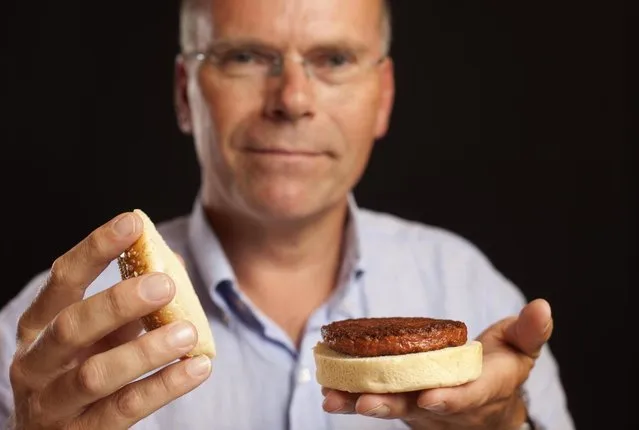
In this handout image provided by Ogilvy, a burger made from cultured beef, which has been developed by Professor Mark Post of Maastricht University in the Netherlands (pictured) is shown to the media during a press conference on August 5, 2013 in London, England. Cultured Beef could help solve the coming food crisis and combat climate change with commercial production of Cultured Beef beginning within ten to twenty years. (Photo by David Parry via Getty Images)

In this handout image provided by Ogilvy, a burger made from cultured beef, which has been developed by Professor Mark Post of Maastricht University in the Netherlands (pictured) is shown to the media during a press conference on August 5, 2013 in London, England. The in-vitro burger, cultured from cattle stem cells, the first example of what its creator says could provide an answer to global food shortages and help combat climate change, was fried in a pan and tasted by two volunteers. The burger is the result of years of research by Dutch scientist Mark Post, a vascular biologist at the University of Maastricht, who is working to show how meat grown in petri dishes might one day be a true alternative to meat from livestock.The meat in the burger has been made by knitting together around 20,000 strands of protein that has been cultured from cattle stem cells in Post's lab. (Photo by David Parry)
Details
06 Aug 2013 08:48:00
The Evolution Of Video Game Controllers By Javier Laspiur

Javier, who is based in Madrid, appears to predominantly work in photography and illustration, his series of photographs could be said to take inspiration from his current design work with brands such as Playstation.
Details
14 Aug 2014 10:29:00
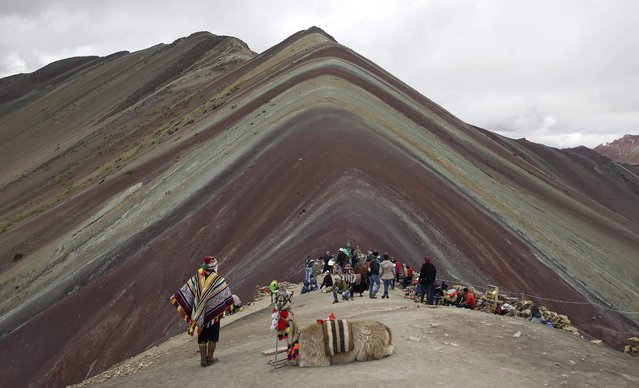
In this March 2, 2018 photo, an Andean man rests with his llama while tourists take in the natural wonder of Rainbow Mountain in Pitumarca, Peru. Tourists gasp for breath as they climb for two hours to the 16,404-foot (5,000-meter) peak in the Peruvian Andes, but stunned by the magical beauty that unfurls before them. (Photo by Martin Mejia/AP Photo)

In this March 2, 2018 photo, an Andean man rests with his llama while tourists take in the natural wonder of Rainbow Mountain in Pitumarca, Peru. Tourists gasp for breath as they climb for two hours to the 16,404-foot (5,000-meter) peak in the Peruvian Andes, but stunned by the magical beauty that unfurls before them. (Photo by Martin Mejia/AP Photo)
Details
07 May 2018 00:01:00
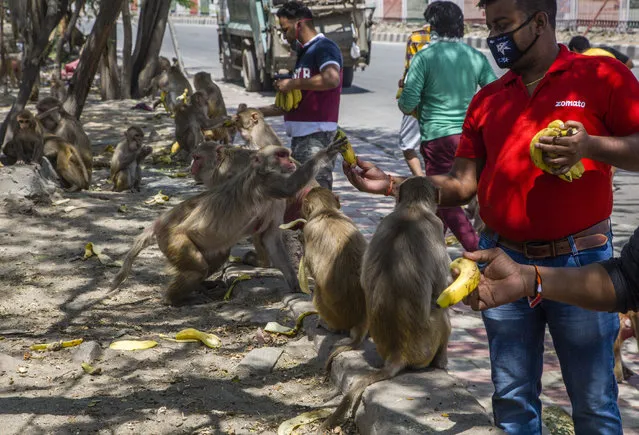
Men give bananas to monkeys gathered on the side of the road as India remains under an unprecedented lockdown over the highly contagious coronavirus (COVID-19) on April 08, 2020 in New Delhi, India. Wild animals, including monkeys, are roaming human settlements in India as people are staying indoors due to the 21-day lockdown. With India's 1.3 billion population and tens of millions of cars off the roads, wildlife is moving towards areas inhabited by humans. Wild animals in many countries have been seen roaming streets. A study says some 60 percent of the new diseases found around the globe every year are zoonotic, meaning they originate in animals and are passed on to humans. COVID-19 is a zoonotic disease that is suspected to have come from the wet markets of Wuhan, China. (Photo by Yawar Nazir/Getty Images)

Men give bananas to monkeys gathered on the side of the road as India remains under an unprecedented lockdown over the highly contagious coronavirus (COVID-19) on April 08, 2020 in New Delhi, India. Wild animals, including monkeys, are roaming human settlements in India as people are staying indoors due to the 21-day lockdown. (Photo by Yawar Nazir/Getty Images)
Details
12 Apr 2020 00:05:00
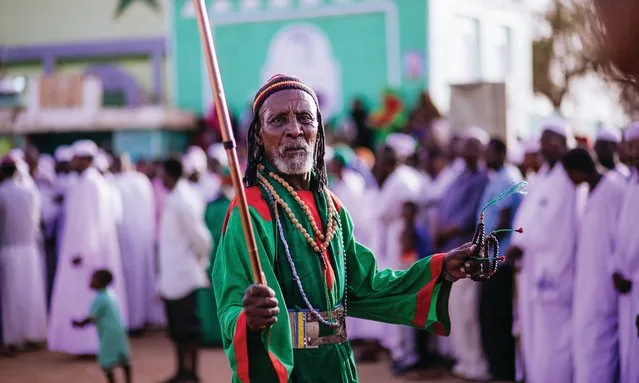
In Omdurman, the largest city in Sudan, the Qadiriyya Sufi order meets every Friday outside Sheikh Hamed Al Nil mosque, which houses the tomb of their 19th century Sufi leader. (Photo by Ala Kheir, John Burns and Ibrahim Algrefwi/Brownbook)

In Omdurman, the largest city in Sudan, the Qadiriyya Sufi order meets every Friday outside Sheikh Hamed Al Nil mosque, which houses the tomb of their 19th century Sufi leader. (Photo by Ala Kheir, John Burns and Ibrahim Algrefwi/Brownbook)
Details
21 Feb 2016 11:47:00