Loading...
Done
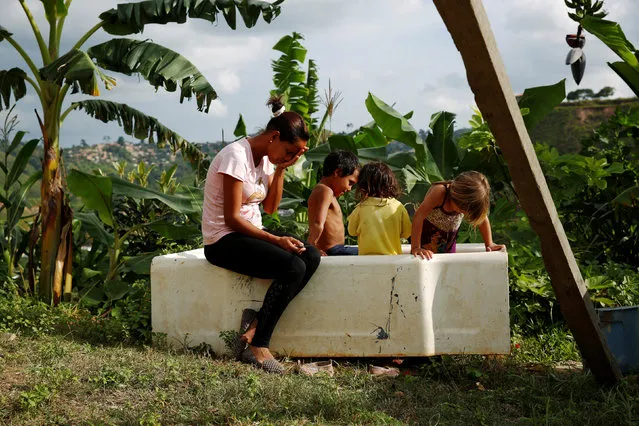
Lisibeht Martinez (L), 30, who was sterilized one year ago, sits next to her children while they play in a bathtub in the backyard of their house in Los Teques, Venezuela July 19, 2016. (Photo by Carlos Garcia Rawlins/Reuters)

Venezuela's food shortages, inflation and crumbling medical sector have become such a source of anguish that a growing number of young women are reluctantly opting for sterilizations rather than face the hardship of pregnancy and child-rearing. Traditional contraceptives like condoms or birth control pills have virtually vanished from store shelves, pushing women towards the hard-to-reverse surgery. While no recent national statistics on sterilizations are available, doctors and health workers say demand for the procedure is growing. (Photo by Carlos Garcia Rawlins/Reuters)
Details
04 Aug 2016 12:22:00
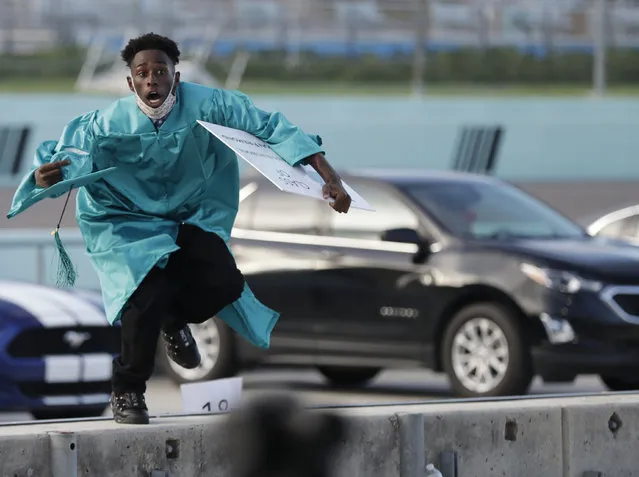
Richardson Fremond leaps over a wall as he runs to collect an award during a graduation ceremony for the senior class of Chambers High School at Homestead-Miami Speedway, Tuesday, June 23, 2020, in Homestead, Fla. Forty-one seniors graduated from the school and crossed the start-finish line to receive their diplomas, during the coronavirus pandemic. (Photo by Wilfredo Lee/AP Photo)

Richardson Fremond leaps over a wall as he runs to collect an award during a graduation ceremony for the senior class of Chambers High School at Homestead-Miami Speedway, Tuesday, June 23, 2020, in Homestead, Fla. Forty-one seniors graduated from the school and crossed the start-finish line to receive their diplomas, during the coronavirus pandemic. (Photo by Wilfredo Lee/AP Photo)
Details
30 Jun 2020 00:05:00
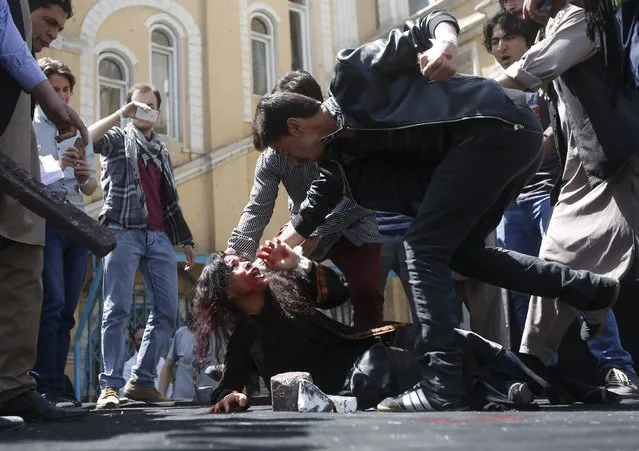
Afghan artists perform a re-enactment of the lynching of Farkhunda, a 27-year old woman, to protest against her killing in Kabul, April 27, 2015. (Photo by Omar Sobhani/Reuters)

Afghan artists perform a re-enactment of the lynching of Farkhunda, a 27-year old woman, to protest against her killing in Kabul, April 27, 2015. Farkhunda, who was killed by an angry mob in front of police in the Afghan capital in March for allegedly burning a copy of Islam's holy book was wrongly accused, Afghanistan's top criminal investigator said on March 22. The killing has fuelled anger about the weak rule of law and corruption that is crippling the country's instutitions. (Photo by Omar Sobhani/Reuters)
Details
28 Apr 2015 13:39:00
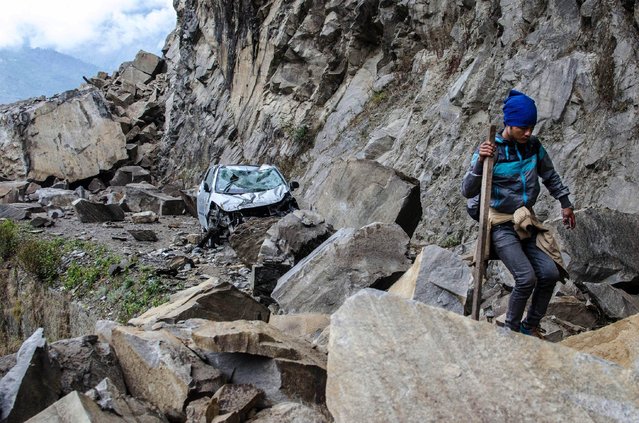
In this Monday, April 27, 2015 photo, a Nepalese man walks over fallen rocks and past a crushed car on the way to Dhunche, Nepal, a village in Langtang National Park, two days after a 7.8-magnatude earthquake hit the region. (Photo by Joe Sieder via AP Photo)

In this Monday, April 27, 2015 photo, a Nepalese man walks over fallen rocks and past a crushed car on the way to Dhunche, Nepal, a village in Langtang National Park, two days after a 7.8-magnatude earthquake hit the region. The photographer, Joe Sieder, said the man was part of a group of Nepalese workers and trekkers who left Syabrubesi earlier that day and hiked about 30 km (19 miles) for 13 hours, mostly over boulder-strewn roads with some small landslides along the way to make their way to a passable road. (Photo by Joe Sieder via AP Photo)
Details
30 Apr 2015 10:54:00
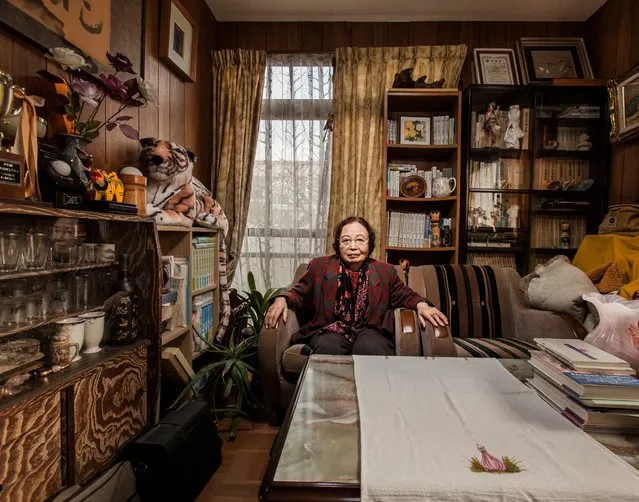
Takeoka Chisaka, Hiroshima, Japan. “One morning in August 1945, I was walking home from the night shift at a factory in Hiroshima. As I reached my door, there was a huge explosion. When I came to, my head was bleeding and I had been blasted 30m away”. (Photo and caption by Sasha Maslov)

Takeoka Chisaka, Hiroshima, Japan. “One morning in August 1945, I was walking home from the night shift at a factory in Hiroshima. As I reached my door, there was a huge explosion. When I came to, my head was bleeding and I had been blasted 30m away. The atomic bomb had detonated. When I found my mother, her eyes were badly burned. A doctor said they had to come out, but he didn’t have the proper tools so used a knife instead. It was hellish. I became a peace-worker after the war. In the 1960s, at a meeting at the UN, I met one of the people who created the atomic bomb. He apologised”. (Photo and caption by Sasha Maslov)
Details
11 May 2015 11:56:00
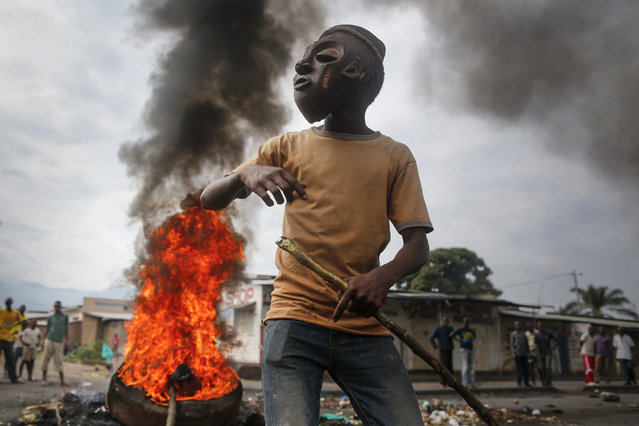
A masked Burundian protester faces soldiers in front of a burning barricade during an anti-government demonstration against President Pierre Nkurunziza's bid for a third term in the capital Bujumbura, Burundi, 25 May 2015. (Photo by Dai Kurokawa/EPA)

A masked Burundian protester faces soldiers in front of a burning barricade during an anti-government demonstration against President Pierre Nkurunziza's bid for a third term in the capital Bujumbura, Burundi, 25 May 2015. Street protests continued on 25 May as the United Nations Secretary-General Ban Ki-moon condemned the killing of the leader of the oppsition party Union for Peace and Development (UPD) Zedi Feruzi who opposed Nkurunziza's bid. (Photo by Dai Kurokawa/EPA)
Details
26 May 2015 11:10:00
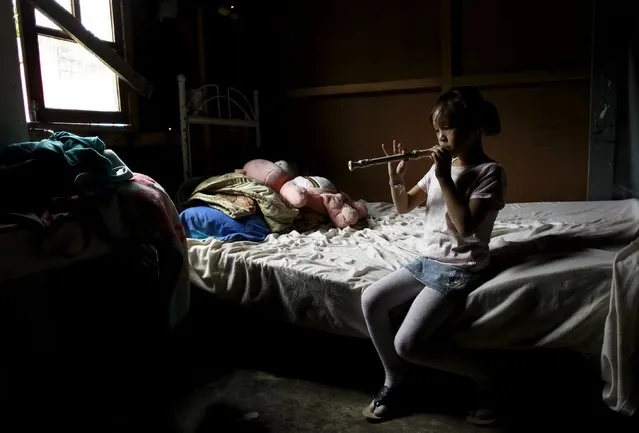
Lisandra Perez, 7, practices in his house before his flute lesson at the Integral System of Artistic Education for Social Inclusion (SIFAIS) center in the poor neighborhood of La Carpio, Costa Rica October 8, 2015. (Photo by Juan Carlos Ulate/Reuters)

Lisandra Perez, 7, practices in his house before his flute lesson at the Integral System of Artistic Education for Social Inclusion (SIFAIS) center in the poor neighborhood of La Carpio, Costa Rica October 8, 2015. SIFAIS center is developing a social program with the help of 156 volunteers who teach art, music, sports and education, for children and youth living in La Carpio, known for being the home to gangs, violence, drugs and social vulnerability, according to the centre. (Photo by Juan Carlos Ulate/Reuters)
Details
15 Oct 2015 08:02:00
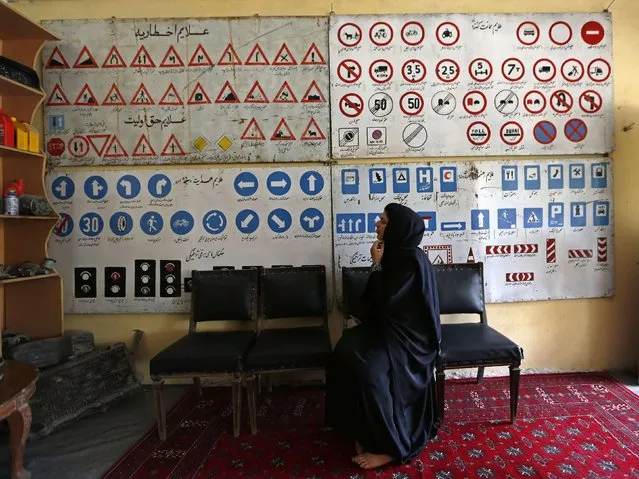
A women attends a class at a driving school in Kabul August 17, 2014. Kabul is one of the world's fastest growing cities and its streets are increasingly blocked by cars and buses. In the city's private driving schools, students pay a $60 fee for a 45-day course, which includes oral and practical driving tests at the country's Traffic Department. (Photo by Mohammad Ismail/Reuters)

A women attends a class at a driving school in Kabul August 17, 2014. Kabul is one of the world's fastest growing cities and its streets are increasingly blocked by cars and buses. In the city's private driving schools, students pay a $60 fee for a 45-day course, which includes oral and practical driving tests at the country's Traffic Department. Some of the women who have signed up say learning to drive is a way to escape unwanted gazes and physical harassment on the cramped, crowded minibuses that are often the only method of urban public transport. (Photo by Mohammad Ismail/Reuters)
Details
19 Dec 2014 12:56:00