Loading...
Done
Participants perform a dragon dance as they march during a lantern parade marking the start of a month- long “Lotus Lantern Festival” to celebrate the upcoming Buddha' s birthday, in Seoul on April 29, 2017 Buddha' s birthday falls on May 3. (Photo by Ed Jones/AFP Photo)

Participants perform a dragon dance as they march during a lantern parade marking the start of a month- long “Lotus Lantern Festival” to celebrate the upcoming Buddha' s birthday, in Seoul on April 29, 2017 Buddha' s birthday falls on May 3. (Photo by Ed Jones/AFP Photo)
Details
01 May 2017 10:12:00
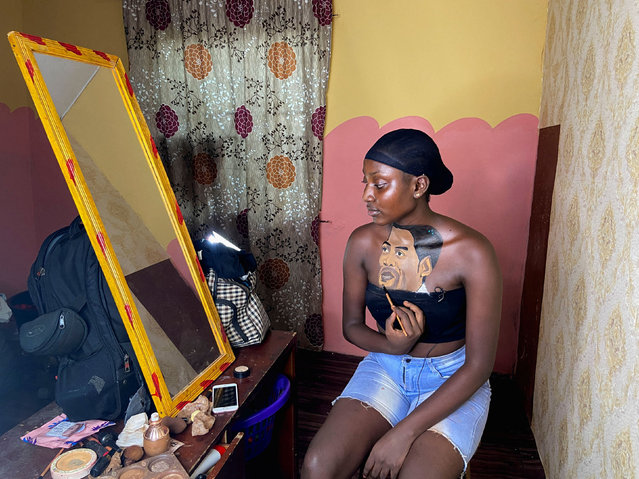
Nigerian make-up artist, Mary Oni, creates artwork on her chest using make-up, in her home in Lagos, Nigeria on January 26, 2022. (Photo by Seun Sanni/Reuters)

Nigerian make-up artist, Mary Oni, creates artwork on her chest using make-up, in her home in Lagos, Nigeria on January 26, 2022. (Photo by Seun Sanni/Reuters)
Details
12 Feb 2022 06:24:00
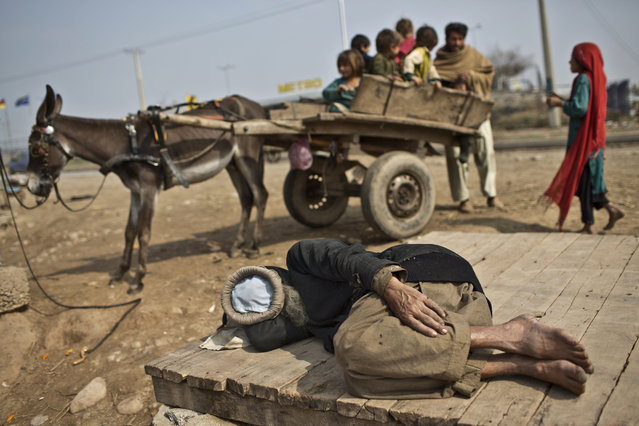
Children play on a donkey cart belonging to an elderly Afghan refugee sleeping on a roadside on the outskirts of Islamabad, Pakistan, Wednesday, February 18, 2015. (Photo by Muhammed Muheisen/AP Photo)

Children play on a donkey cart belonging to an elderly Afghan refugee sleeping on a roadside on the outskirts of Islamabad, Pakistan, Wednesday, February 18, 2015. (Photo by Muhammed Muheisen/AP Photo)
Details
06 Apr 2015 08:57:00
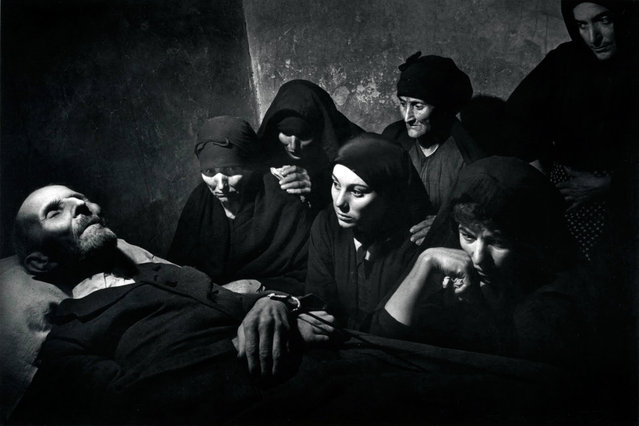
His wife, daughter, granddaughter and friends have their last earthly visit with a villager. (Photo by W. Eugene Smith/Time & Life Pictures)

“Originally published in the April 9, 1951, issue of LIFE magazine, W. Eugene Smith’s photo essay, «Spanish Village», has been lauded for more than six decades as the most moving photographic portrait ever made of daily life in rural Spain during the rule of dictator Francisco Franco”. – Time & Life Pictures. Photo: His wife, daughter, granddaughter and friends have their last earthly visit with a villager. (Photo by W. Eugene Smith/Time & Life Pictures)
Details
30 Apr 2013 10:11:00
In this September 9, 2018 photo, a diver holds onto his catch of lobsters during a fishing journey in the Miskito coast near Cay Savannah, Honduras. A diver makes 75 lempiras ($3) per pound of lobster. An average 10-pound daily haul of lobster is a windfall for people in one of the most impoverished regions of the Americas, so many take the risk, and many suffer for it. (Photo by Rodrigo Abd/AP Photo)

In this September 9, 2018 photo, a diver holds onto his catch of lobsters during a fishing journey in the Miskito coast near Cay Savannah, Honduras. A diver makes 75 lempiras ($3) per pound of lobster. An average 10-pound daily haul of lobster is a windfall for people in one of the most impoverished regions of the Americas, so many take the risk, and many suffer for it. (Photo by Rodrigo Abd/AP Photo)
Details
23 Jan 2019 00:01:00
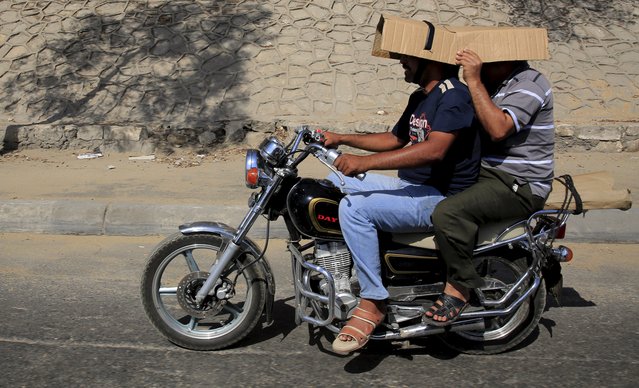
Men cover their heads from the sun while riding on a motorcycle during a hot day in Cairo, Egypt, August 17, 2015. A heatwave killed at least 61 people across Egypt from Sunday to Tuesday and caused nearly 600 people to be admitted to hospital, Egypt's health ministry said on state news agency MENA on Wednesday. (Photo by Amr Abdallah Dalsh/Reuters)

Men cover their heads from the sun while riding on a motorcycle during a hot day in Cairo, Egypt, August 17, 2015. A heatwave killed at least 61 people across Egypt from Sunday to Tuesday and caused nearly 600 people to be admitted to hospital, Egypt's health ministry said on state news agency MENA on Wednesday. (Photo by Amr Abdallah Dalsh/Reuters)
Details
18 Aug 2015 13:47:00
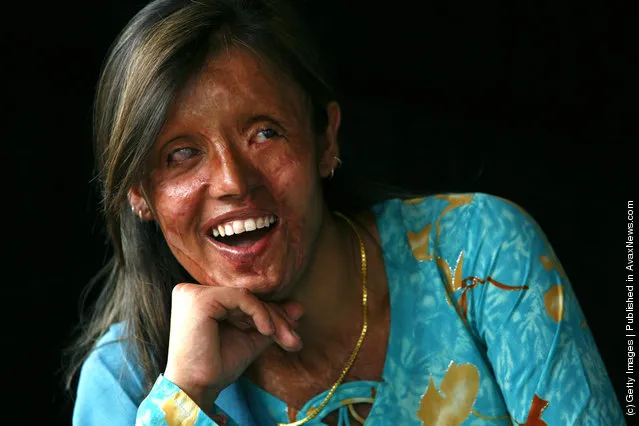
Saira Liaqat, 22, a victim of acid violence who was burned 4 years ago

Saira Liaqat, 22, a victim of acid violence who was burned 4 years ago, poses in Islamabad, June 11, 2007. Saira is from Lahore and was attacked with acid thrown on her over an argument relating to an arranged marriage. (Photo by Paula Bronstein/Getty Images)
Details
14 Feb 2012 10:25:00
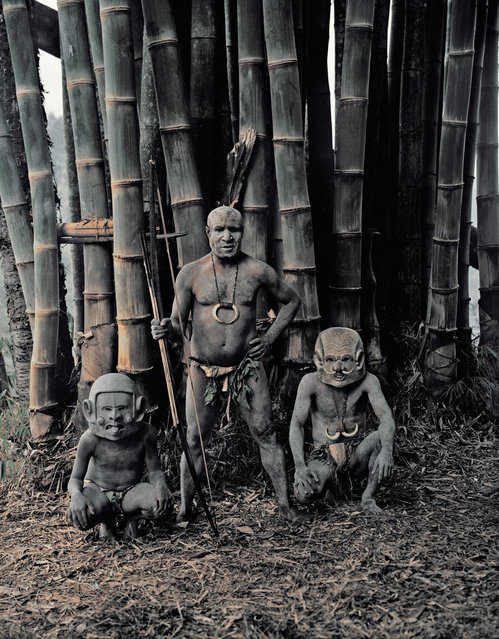
“Asaro from the Eastern Highlands”. The mudmen could not cover their faces with mud because the people of Papua New Guinea thought that the mud from the Asaro river was poisonous. So instead of covering their faces with this alleged poison, they made masks from pebbles that they heated and water from the waterfall, with unusual designs such as long or very short ears either going down to the chin or sticking up at the top, long joined eyebrows attached to the top of the ears, horns and sideways mouths. (Jimmy Nelson)

“Asaro from the Eastern Highlands”. The mudmen could not cover their faces with mud because the people of Papua New Guinea thought that the mud from the Asaro river was poisonous. So instead of covering their faces with this alleged poison, they made masks from pebbles that they heated and water from the waterfall, with unusual designs such as long or very short ears either going down to the chin or sticking up at the top, long joined eyebrows attached to the top of the ears, horns and sideways mouths. (Photo and caption by Jimmy Nelson)
Details
20 Oct 2013 08:54:00