Loading...
Done
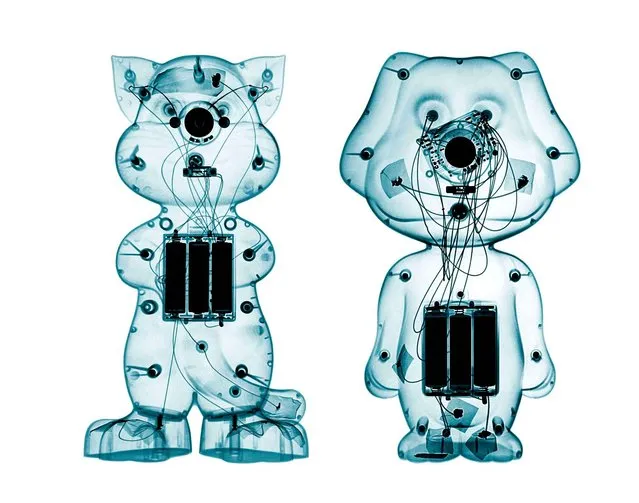
Australian photographer Brendan Fitzpatrick’s X-ray photographs expose the inner workings of toys. Fitzpatrick’s photographs are both whimsical and mechanical, evoking the curiosity of childhood and the desire to discover how things look and work from other perspectives. (Photo by Brendan Fitzpatrick)

Australian photographer Brendan Fitzpatrick’s X-ray photographs expose the inner workings of toys. Fitzpatrick’s photographs are both whimsical and mechanical, evoking the curiosity of childhood and the desire to discover how things look and work from other perspectives. The strategic placement of wires, batteries, and screws are revealed, the complexity of the inside contrasting with the seemingly simplistic design of the outside. Fitzpatrick uses chest X-ray and mammogram machines to photograph flowers, toys, and creatures, then enhances the color in the images in order to more effectively distinguish the various parts that have been exposed. This photographs are part of series he calls “Invisible Light”. (Photo by Brendan Fitzpatrick)
Details
08 Aug 2014 10:59:00


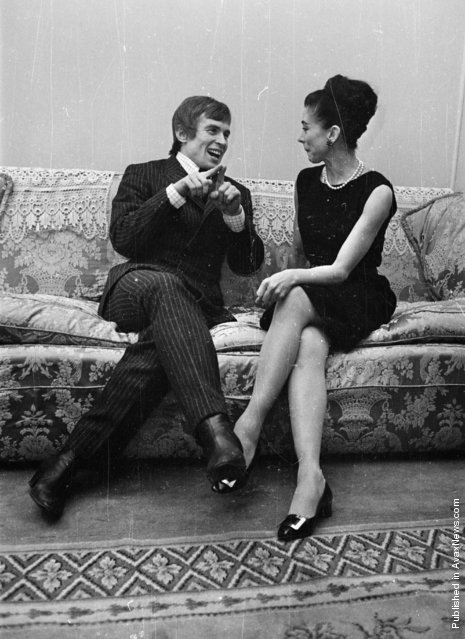
“Rudolf Khametovich Nureyev was a Russian Tatar dancer from the former Soviet Union, primarily known for his work in ballet. Nureyev's artistic skills explored expressive areas of the dance, providing a new role to the male ballet dancer who once served only as support to the women. He defected to the West, despite KGB efforts to stop him. According to KGB archives studied by Peter Watson, Nikita Khrushchev personally signed an order to have Nureyev killed”.

Photo: British ballerina Margot Fonteyn (Margaret Hookham) (1919 – 1991) and her professional partner during his tenure with the Royal Ballet Rudolf Nureyev. (Photo by Potter/Express/Getty Images). 12th December 1965. (Photo by Central Press/Getty Images)
Details
16 Mar 2011 09:10:00
A robot named “Robovie-II”, developed by Japanese robotics research institution ATR, moves around at a grocery store during a shopping assisting experiment by utilizing the robot in an ubiquitous network technology platform in Kyoto, western Japan January 6, 2010. The robot greets the shopper at the entrance of the store, follows him to the shelves while holding a grocery basket and reminds him of the items on a shopping list, which the shopper would have entered beforehand in a specialized mobile device. The experiment is aimed to gather data in order to provide livelihood support for the elderly by using robots and network technologies, ATR's researcher Satoshi Koizumi said. (Photo by Yuriko Nakao/Reuters)

A robot named “Robovie-II”, developed by Japanese robotics research institution ATR, moves around at a grocery store during a shopping assisting experiment by utilizing the robot in an ubiquitous network technology platform in Kyoto, western Japan January 6, 2010. (Photo by Yuriko Nakao/Reuters)
Details
02 Feb 2018 06:54:00
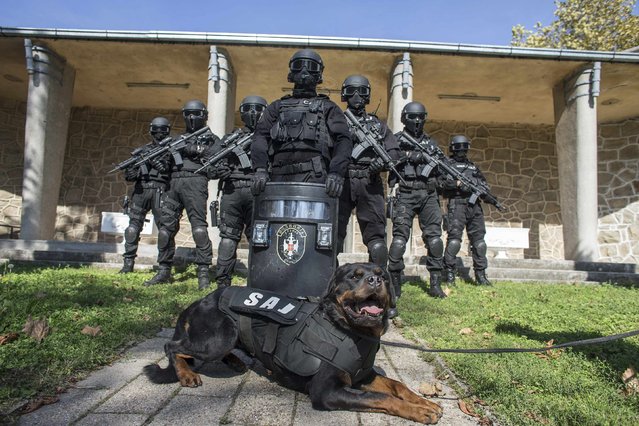
Serbian police officers of the Special Anti-Terrorist Unit pose for a picture in their base outside Belgrade October 8, 2014. (Photo by Marko Djurica/Reuters)

Serbian police officers of the Special Anti-Terrorist Unit pose for a picture in their base outside Belgrade October 8, 2014. When the killing of an unarmed black teenager by a white policeman in Ferguson, Missouri, in August sparked sometimes violent protests, the response of police in camouflage gear and armoured vehicles wielding stun grenades and assault rifles seemed more like a combat operation than a public order measure. Some U.S. police departments have recently acquired U.S. military-surplus hardware from wars abroad, but there are many law enforcers around the world whose rules of engagement also allow the use of lethal force with relatively few restrictions. But for every regulation that gives police wide scope to use firearms, there is another code that sharply limits their use. In Serbia, police may use measures ranging from batons to special vehicles, water cannon and tear gas on groups of people who have gathered illegally and are behaving in a way that is violent or could cause violence, but they may use firearms only when life is endangered. (Photo by Marko Djurica/Reuters)
Details
27 Nov 2014 14:53:00
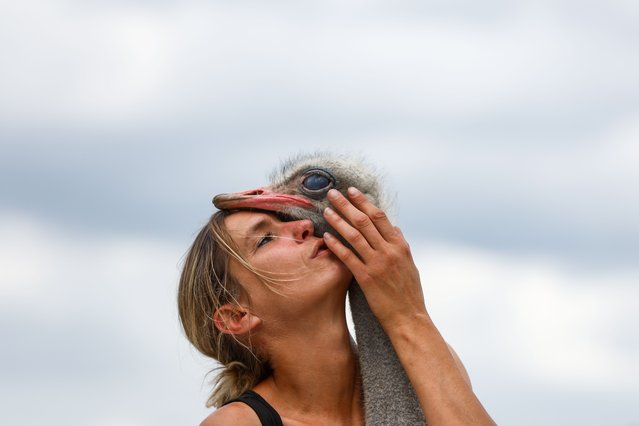
Wendy Adriaens, owner of animal rescue farm “De Passiehoeve” and nicknamed the Ostrich Whisperer, poses for a photo with three-year-old male ostrich Flodder, in Kalmthout, Belgium, 25 July 2022. Flodder and Wendy were separated for seven months since Wendy moved to a bigger farm in January. Flodder spent the seven months at another farm in order to ease the tension between the two ostriches Flodder and Blue who were fighting to the death and had to be separated. Wendy Adriaens has been taking in all kinds of animals that have been mistreated or neglected for some four years at her farm located in the Province of Antwerp. She lives mainly from donations from people who have known her via social networks. An entrance fee to the farm is requested if visitors want to spend some time there. This makes it possible to buy the necessary for the convalescence of the animals. (Photo by Stephanie Lecocq/EPA/EFE/Rex Features/Shutterstock)

Wendy Adriaens, owner of animal rescue farm “De Passiehoeve” and nicknamed the Ostrich Whisperer, poses for a photo with three-year-old male ostrich Flodder, in Kalmthout, Belgium, 25 July 2022. (Photo by Stephanie Lecocq/EPA/EFE/Rex Features/Shutterstock)
Details
31 Jul 2022 06:16:00
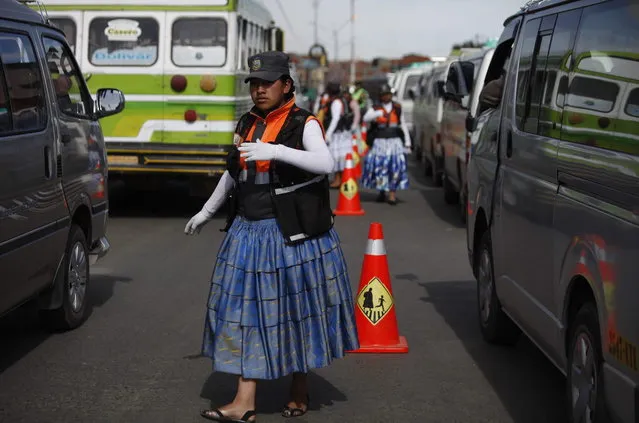
In this December 3, 2013 photo, an Aymara woman cops directs traffic on the streets of El Alto, Bolivia. The women wear the bright petticoats and shawls of indigenous women in the Andes, called cholitas in Bolivian slang, the main difference being that instead of bowler hats they wear khaki green police-style caps. Some don fluorescent traffic vests. (Photo by Juan Karita/AP Photo)

“This city in Bolivia's highlands has hired Aymara women dressed in traditional multilayered Andean skirts and brightly embroidered vests to work as traffic cops and bring order to its road chaos. About 20 of the “traffic cholitas” have been trained to direct cars and buses in El Alto, a teeming, impoverished sister city of La Paz in Bolivia's Andes mountains”. – El Alto via Associated Press. Photo: In this December 3, 2013 photo, an Aymara woman cops directs traffic on the streets of El Alto, Bolivia. The women wear the bright petticoats and shawls of indigenous women in the Andes, called cholitas in Bolivian slang, the main difference being that instead of bowler hats they wear khaki green police-style caps. Some don fluorescent traffic vests. (Photo by Juan Karita/AP Photo)
Details
25 Dec 2013 10:48:00


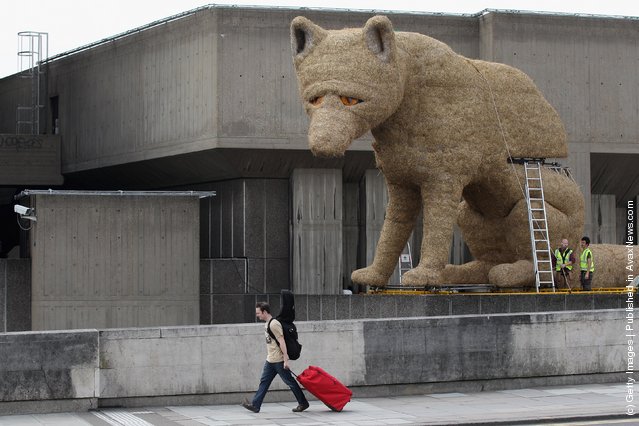
The finishing touches are made to a giant sculpture on the Hayward Gallery entitled “Urban Fox” and made from straw bales on April 18, 2011 in London, England. The sculpture features in the Southbank Centre's 60th anniversary celebration of the 1951 Festival of Britain. The celebration will feature various cultural and creative events and runs from April 22 until September 4, 2011 at London's Southbank Centre. (Photo by Oli Scarff/Getty Images)
Details
22 Apr 2011 09:45:00


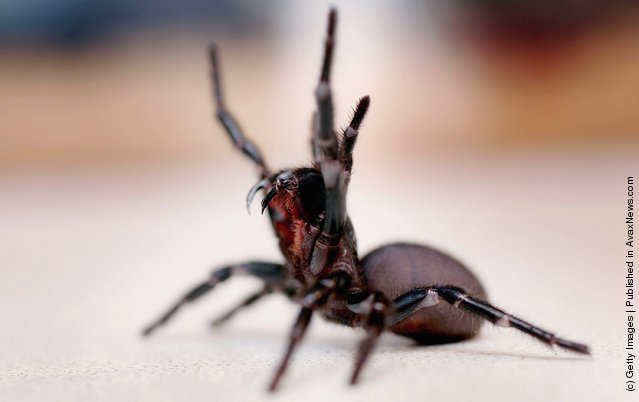
A Funnel Web spider is pictured at the Australian Reptile Park January 23, 2006 in Sydney, Australia. The Funnel Web is one of Australia's deadliest animals, with a venom that is packed with at least 40 different toxic proteins. A bite from a Funnel Web causes massive electrical over-load in the body's nervous system. Finally, fatalities occur from either heart attack or a pulmonary oedema, where the capillaries around the lungs begin to leak fluid and the patient effectively drowns. Death can come as quickly as two hours after a bite if no medical treatment is sought. Due to advances in anti-venom, there has been no death from a Funnel Web bite in Australia since 1980. Australia is home to some of the most deadly and poisonous animals on earth. (Photo by Ian Waldie/Getty Images)
Details
25 Apr 2011 07:49:00