Loading...
Done
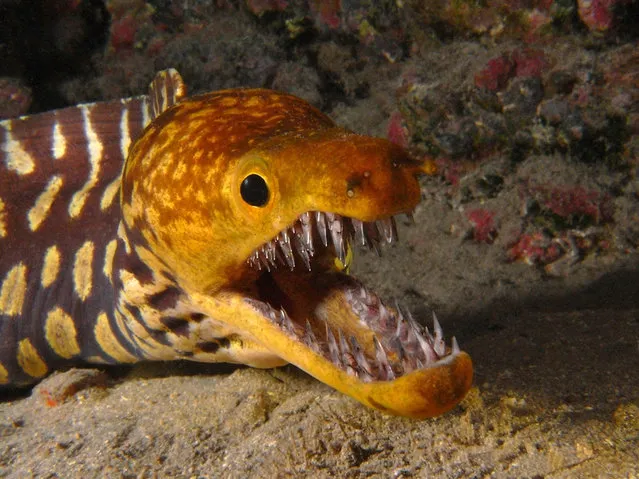
Fangtooth Moray

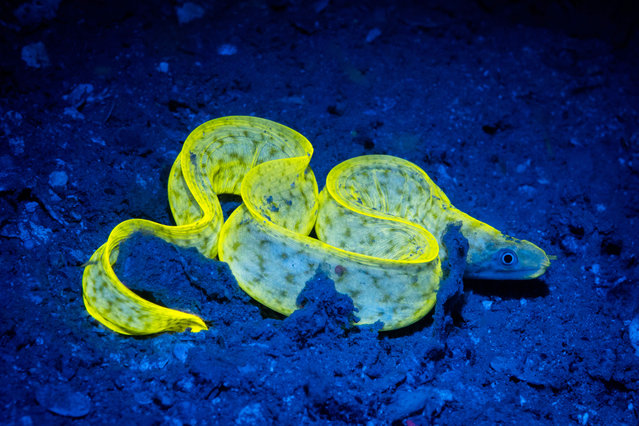
The Fangtooth Moray (sometimes Tiger Moray) is a moray eel of the family Muraenidae found throughout the eastern Atlantic Ocean, including the Canary Islands and Madeira. The Fangtooth Moray is distinctive for its bright yellow colouring and elongated jaw, which is filled with a large number of long "glasslike" teeth. It can reach up to 120 cm in length.
Details
06 Jun 2014 10:36:00
The Two Level Lake Sorvagsvatn

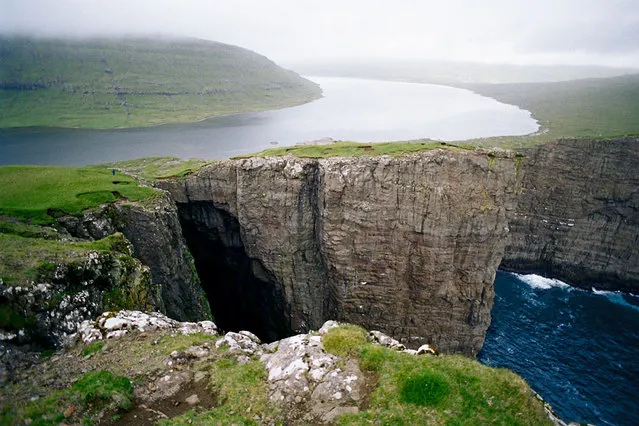
Located on the island of Vagar, in the Faroe Islands, Lake Sorvagsvatn (also known as Leitisvatn) is an amazing lake. What makes the lake interesting is its two different levels. Covering an area of 3.4 square kilometers, it is the biggest lake of the Faroe Islands. Faroe Islands is a group of 18 islands that make Faroe Islands Archipelago in the North Atlantic Ocean. The lake is located about 30 meters above the sea level.
Details
19 Aug 2013 11:27:00
Okinawa Churaumi Aquarium

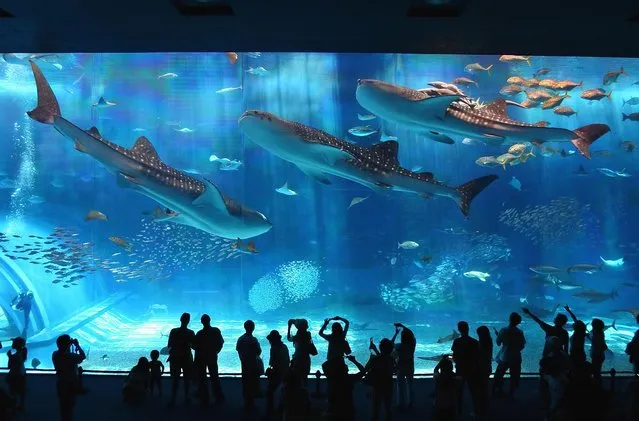
The aquarium is a part of the Ocean Expo Commemorative National Government Park located in Motobu, Okinawa. The aquarium is made up of four floors, with tanks containing deep sea creatures, sharks, coral and tropical fish. The aquarium is set on 19,000 m² of land, with a total of 77 tanks containing 10,000 m³ of water. Water for the saltwater exhibits is pumped into the aquarium from a source 350m offshore, 24 hours a day.
Details
21 Aug 2012 12:45:00
“In these photos, I was shining a blue light on the coral and various biofluorescent animals”. (Photo by Simon Pierce/Caters News Agency)

Neon sea creatures have been captured lighting up the ocean with their vibrant colors – in what looked like a scene from Avatar. Photographer Simon Pierce, 39, took the images over several months after visiting both Nosy Sakatia in Madagascar and Mafia Island in Tanzania recently. (Photo by Simon Pierce/Caters News Agency)
Details
12 Dec 2018 00:05:00
Galapagos – Rocking the Cradle: Four major ocean currents converge along the Galapagos archipelago, creating the conditions for an extraordinary diversity of animal life, April 25, 2016. The islands are home to at least 7,000 flora and fauna species, of which 97 percent of the reptiles, 80 percent of the land birds, 50 percent of the insects and 30 percent of the plants are endemic. The local ecosystem is highly sensitive to the changes in temperature, rainfall and ocean currents that characterize the climatic events known as El Niño and La Niña. These changes cause marked fluctuations in weather and food availability. Many scientists expect the frequency of El Niño and La Niña to increase as a result of climate change, making the Galapagos a possible early-warning location for its effects. (Photo by Thomas P. Peschak for National Geographic/World Press Photo)

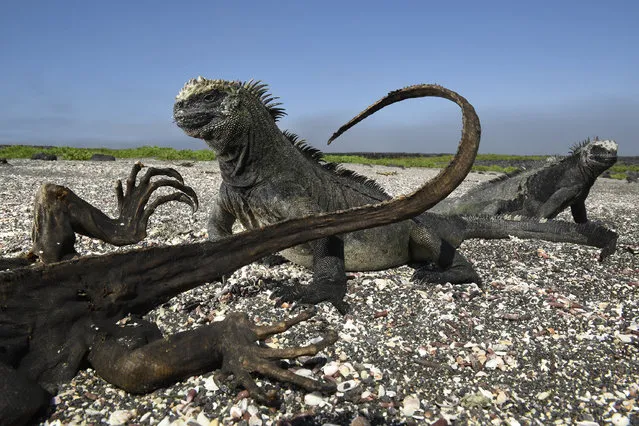
Galapagos – Rocking the Cradle: Four major ocean currents converge along the Galapagos archipelago, creating the conditions for an extraordinary diversity of animal life, April 25, 2016. The islands are home to at least 7,000 flora and fauna species, of which 97 percent of the reptiles, 80 percent of the land birds, 50 percent of the insects and 30 percent of the plants are endemic. (Photo by Thomas P. Peschak for National Geographic/World Press Photo)
Details
16 Apr 2018 00:01:00
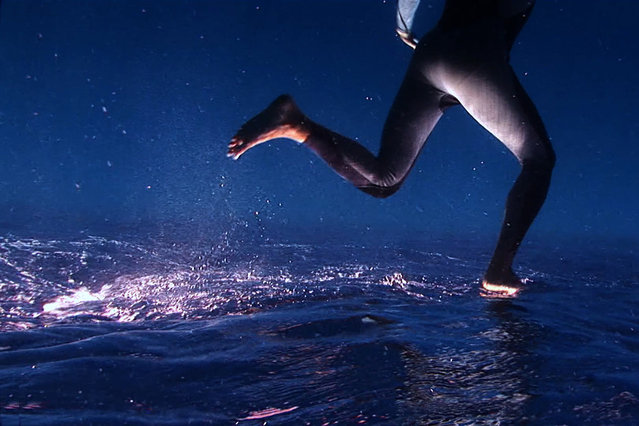
A freediver uses weights, yoga and camera tricks to create the illusion of walking underwater for a film which took three years to shoot and was completed in 2013 in El Hierro, Canary Islands. Like a scene from a Hollywood science-fiction movie, this trick footage shows a man apparently walking on water. The underwater film was shot by biologist Armiche Ramos and brothers Armando and Francisco del Rosario, who used their expertise in freediving to create the illusion. (Photo by Ocean Brothers/Barcroft Media/ABACAPress)

A freediver uses weights, yoga and camera tricks to create the illusion of walking underwater for a film which took three years to shoot and was completed in 2013 in El Hierro, Canary Islands. Like a scene from a Hollywood science-fiction movie, this trick footage shows a man apparently walking on water. The underwater film was shot by biologist Armiche Ramos and brothers Armando and Francisco del Rosario, who used their expertise in freediving to create the illusion. No computer graphics were involved in the production, with the team relying solely on their own skills – and a few hidden secrets. (Photo by Ocean Brothers/Barcroft Media/ABACAPress)
Details
25 Nov 2014 11:05:00
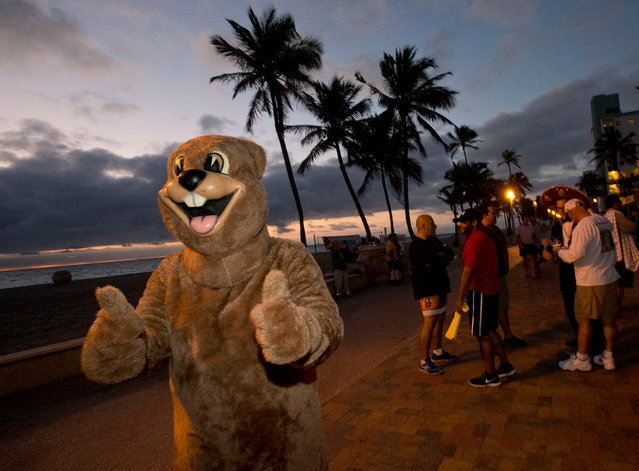
Dressed up as Punxsutawney Phil, Marty Nagy, of Hallandale Beach, Fla., gives thumbs up to passers by before the start of the 12th annual Groundhog Day on Hollywood Beach, Tuesday, February 2, 2016, in Hollywood, Fla. The event, which featured breakfast and an ocean plunge, benefited the Hollywood Beach Lifeguard Competition Team. (Photo by Wilfredo Lee/AP Photo)

Dressed up as Punxsutawney Phil, Marty Nagy, of Hallandale Beach, Fla., gives thumbs up to passers by before the start of the 12th annual Groundhog Day on Hollywood Beach, Tuesday, February 2, 2016, in Hollywood, Fla. The event, which featured breakfast and an ocean plunge, benefited the Hollywood Beach Lifeguard Competition Team. (Photo by Wilfredo Lee/AP Photo)
Details
03 Feb 2016 13:18:00
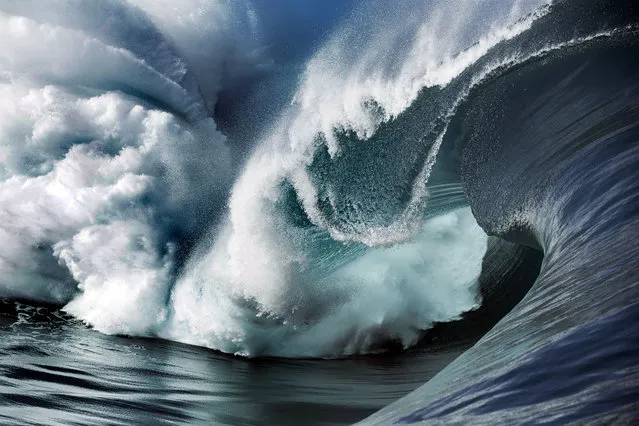
Ben Thouard, 29, regularly dives into the crystal clear waters of Teahupoo, Tahiti's most famous surf break, to snap the empty waves. He stands in the water scouting out particular shapes and the right swell direction and shoots most of his pictures during the golden hours of sunrise and sunset. Here: A shot of a wave crashing down into the ocean in the clear waters of Teahupoo. (Photo by Ben Thouard/Caters News)

Ben Thouard, 29, regularly dives into the crystal clear waters of Teahupoo, Tahiti's most famous surf break, to snap the empty waves. He stands in the water scouting out particular shapes and the right swell direction and shoots most of his pictures during the golden hours of sunrise and sunset. Here: A shot of a wave crashing down into the ocean in the clear waters of Teahupoo. (Photo by Ben Thouard/Caters News)
Details
06 Mar 2016 09:03:00