Loading...
Done
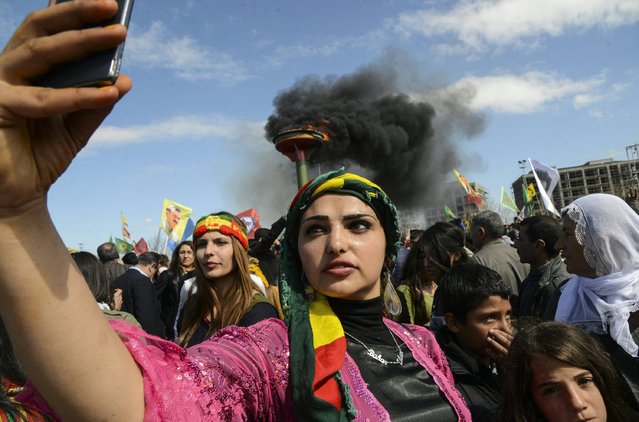
A woman takes a selfie picture as Turkish Kurds gather as part of Newroz celebrations in Diyarbakir, on March 21, 2016. Nowruz, the Farsi-language word for “New Year”, is an ancient Persian festival, celebrated on the first day of spring, on March 21, in Central Asian republics, Iraq, Turkey, Afghanistan and Iran. (Photo by Ilyas Akengin/AFP Photo)

A woman takes a selfie picture as Turkish Kurds gather as part of Newroz celebrations in Diyarbakir, on March 21, 2016. Nowruz, the Farsi-language word for “New Year”, is an ancient Persian festival, celebrated on the first day of spring, on March 21, in Central Asian republics, Iraq, Turkey, Afghanistan and Iran. (Photo by Ilyas Akengin/AFP Photo)
Details
10 Apr 2016 11:58:00


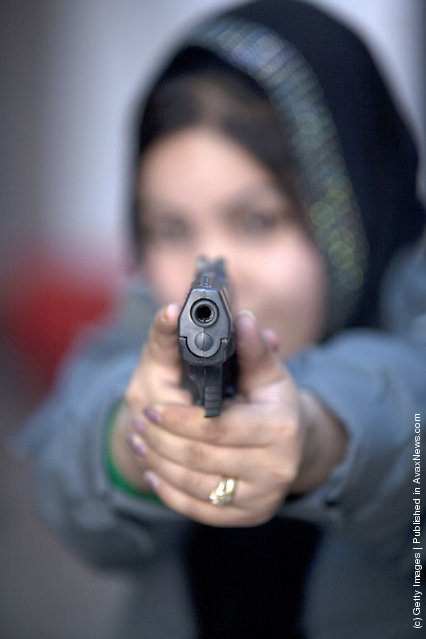
Afghan police recruits undergo training at the Afghan Police Academy October 5, 2010 in Kabul, Afghanistan. (Photo by Majid Saeedi/Getty Images)
Details
15 Apr 2011 12:05:00
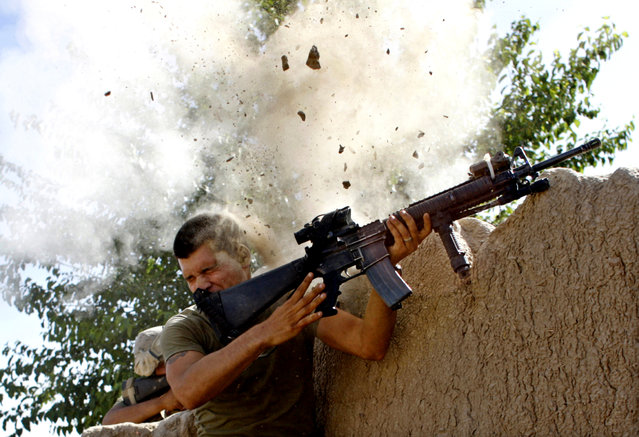
Sgt. William Olas Bee, a U.S. Marine from the 24th Marine Expeditionary Unit, has a close call after Taliban fighters opened fire near Garmsir in Helmand Province of Afghanistan, May 18, 2008. (Photo by Goran Tomasevic/Reuters)

Sgt. William Olas Bee, a U.S. Marine from the 24th Marine Expeditionary Unit, has a close call after Taliban fighters opened fire near Garmsir in Helmand Province of Afghanistan, May 18, 2008. (Photo by Goran Tomasevic/Reuters)
Details
24 Sep 2014 12:07:00
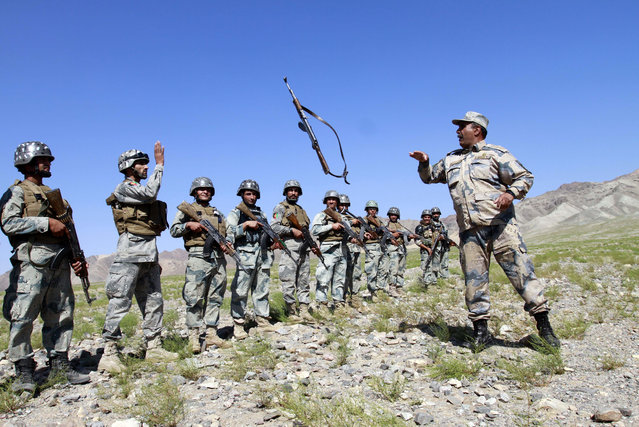
An officer of the Afghan border police throws an assault rifle to a policeman participating in a military exercise on the outskirts of Herat, Afghanistan, Monday, September 7, 2015. Twelve female and seventy male border police personnel participated in the military exercise near the border with Iran in Herat province. (Photo by Hoshang Hashimi/AP Photo)

An officer of the Afghan border police throws an assault rifle to a policeman participating in a military exercise on the outskirts of Herat, Afghanistan, Monday, September 7, 2015. Twelve female and seventy male border police personnel participated in the military exercise near the border with Iran in Herat province. (Photo by Hoshang Hashimi/AP Photo)
Details
08 Sep 2015 12:01:00
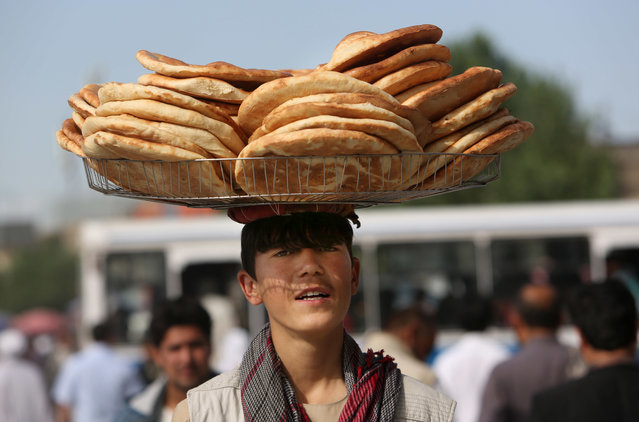
An Afghan street vendor carries bread on his head ahead of the upcoming holy fasting month of Ramadan in Kabul, Afghanistan, Sunday, June 5, 2016. (Photo by Rahmat Gul/AP Photo)

An Afghan street vendor carries bread on his head ahead of the upcoming holy fasting month of Ramadan in Kabul, Afghanistan, Sunday, June 5, 2016. Muslims across the world will be observing the holy fasting month of Ramadan, when they refrain from eating, drinking and smoking from dawn to dusk. (Photo by Rahmat Gul/AP Photo)
Details
06 Jun 2016 11:15:00
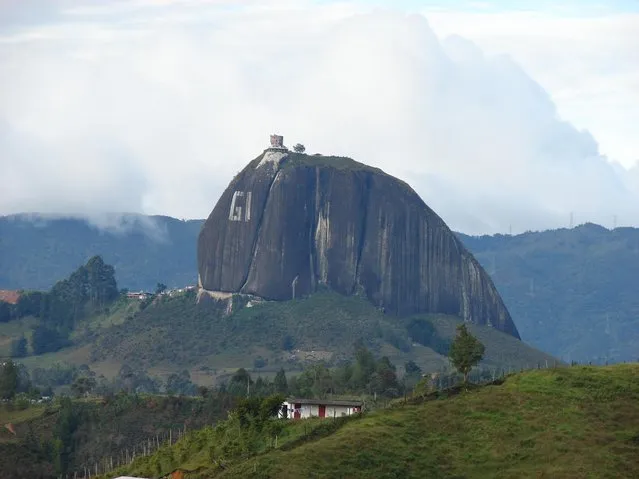
Guatape Rock In Colombia

Guatapé is a town and municipality in Antioquia Department, Colombia. Part of the subregion of Eastern Antioquia. Guatapé is located in the outskirts of Medellín, bordering a reservoir created by the Colombian government for a hydro-electric dam, built in the late 1960s. This quaint town is the gathering place for "Las Vegas", or the small farms of the area. It is also a growing area of recreation for citizens of Medellín, and aims to be a tourist destination for foreign travellers.
Guatapé was founded in 1811, by the Spaniard Don Francisco Giraldo y Jimenez. The name "Guatapé", comes from the Quechua language, related to "stones and water". The area was visited by the conquistadors circa 1551.
Details
25 Dec 2013 09:18:00
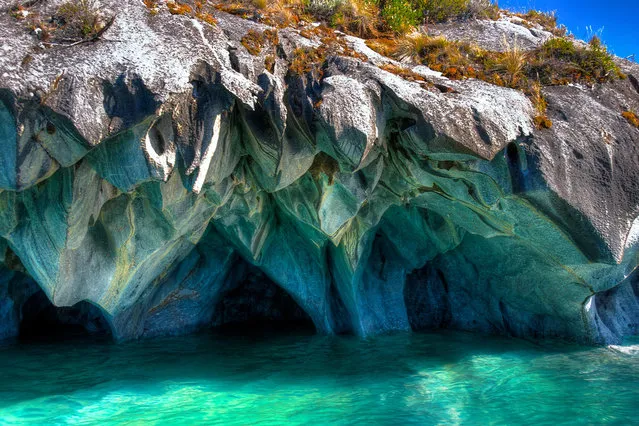
 Marble Caves, Patagonia, Chile

The Marble Caves of Patagonia, Chile, are beautiful vibrant blue caverns, partially submerged in the equally stunning turquoise waters of Carrera Lake. The lake itself is on the border of Argentina and Chile, with the caves located on the Chilean side. The caves are comprised of three main caverns: the Chapel (La Capilla), the Cathedral (El Catedral), and the Cave (La Cueva). Visitors to the caves can explore them in a small boat or kayak, but only when Carrera Lake’s waters are calm and gentle. A rare and invaluable natural wonder, the existence of these caves is currently threatened by plans to build five large dams in the area. If you visit these caves, please treat them with the utmost respect and care.
Details
15 Aug 2012 11:25:00
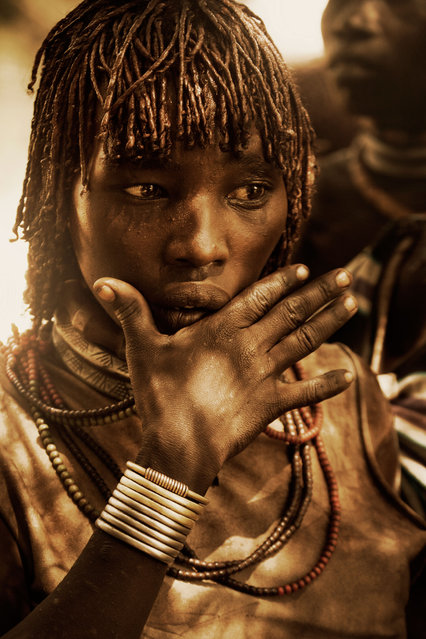
The Hamar people traditionally use red ocher clay to braid the hair of their women. (Photo by Diego Arroyo)

During his time in Ethiopia, New York-based art director and photographer Diego Arroyo spent time with the Hamar, Mursi, Dassanech, and Arbore Tribes. They, along with several others tribes, make up the 200,000 people situated in Africa’s Great Rift Valley. The people of the Omo Valley are still primarily herders and farmers, living an isolated and simple life. While they have yet to be truly touched by globalization, they could soon disappear. Their way of life is being threatened by a massive hydroelectric dam. (Photo by Diego Arroyo)
Details
13 Aug 2014 10:00:00