A model displays a creation from fashion brand Dairiku by designer Dairiku Okamoto for the 2022 Autumn/Winter collection at Tokyo Fashion Week in Tokyo on March 19, 2022. (Photo by Philip Fong/AFP Photo)
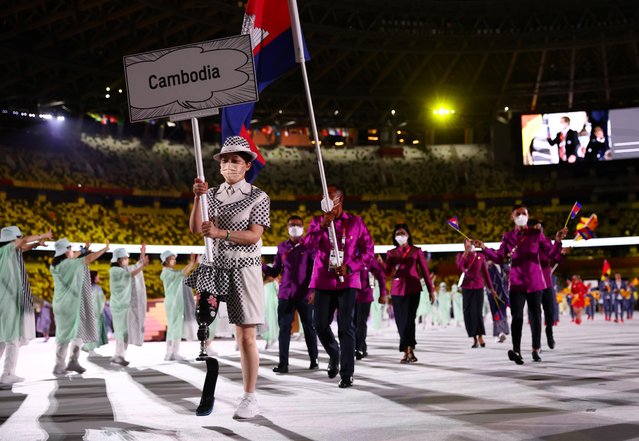
Flag bearers Bunpichmorakat Kheun and Sokong Pen of Team Cambodia during the Opening Ceremony of the Tokyo 2020 Olympic Games at Olympic Stadium on July 23, 2021 in Tokyo, Japan. (Photo by Kai Pfaffenbach/Reuters)
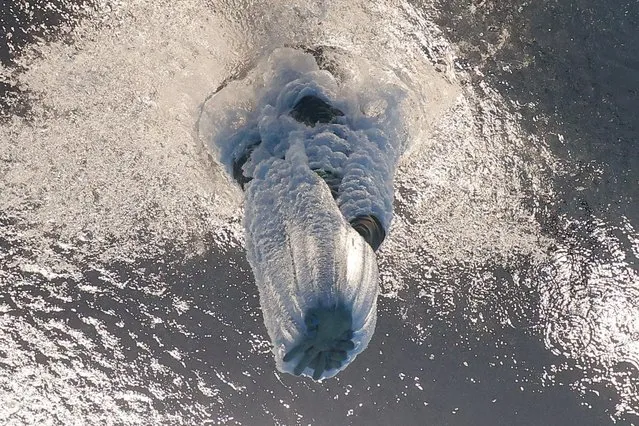
A diving competitor during a practice session at Tokyo Aquatics Centre ahead of the Tokyo 2020 Olympic Games in Japan on Wednesday, July 21, 2021. (Photo by Stefan Wermuth/Reuters)
Team members pose during the closing ceremony of the Tokyo 2020 Olympic Games, on August 8, 2021 at the Olympic Stadium in Tokyo. (Photo by Dan Mullan/Reuters)
A participant marches during the Tokyo Rainbow Pride parade, celebrating advances in LGBTQ+ rights and calling for marriage equality, in Tokyo, Japan on April 21, 2024. (Photo by Issei Kato/Reuters)
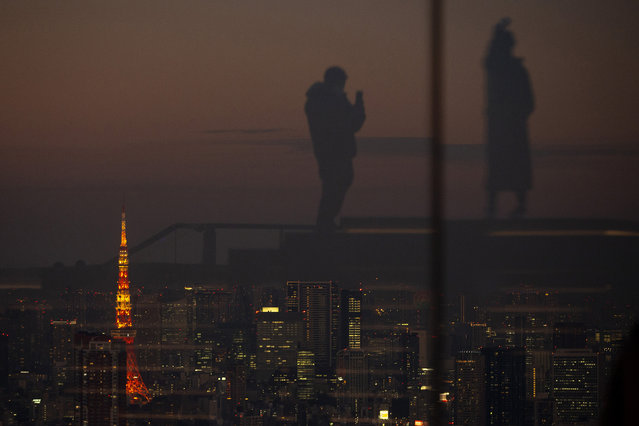
Silhouetted against the warm sunset skyline and the illuminated Tokyo Tower, visitors are reflected on the glass walls of a rooftop observation deck Thursday, January 21, 2021, in Tokyo. (Photo by Kiichiro Sato/AP Photo)
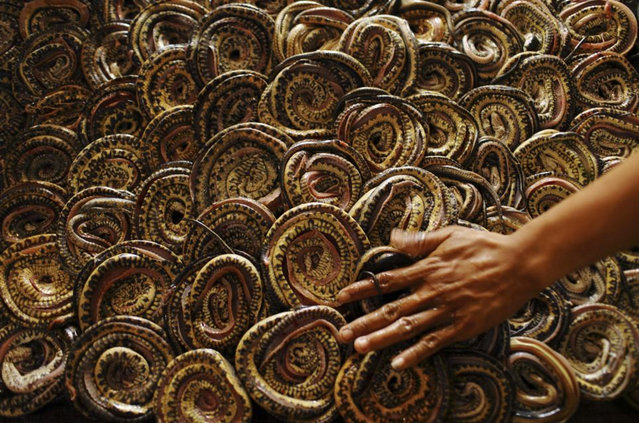
Images from a snake slaughterhouse at Kapetakan village in Indonesia’s West Java province. Wakira, who is known as “Boss Cobra”, owns the slaughterhouse that produces snake meat and skin. Snake meat is believed by some to be a remedy for skin diseases and asthma, as well as an aid to increase virility. The snake skins, measuring in the hundreds of metres, are sold to bag factories in the West and Central Java provinces on a monthly basis. The price of a bag made from snake skin costs between 150,000 rupiah ($ 15.60) and 300,000 rupiah ($31.20), depending on its size. That snakeskin handbag you’ll buy is costing a hell of a lot more.