Loading...
Done
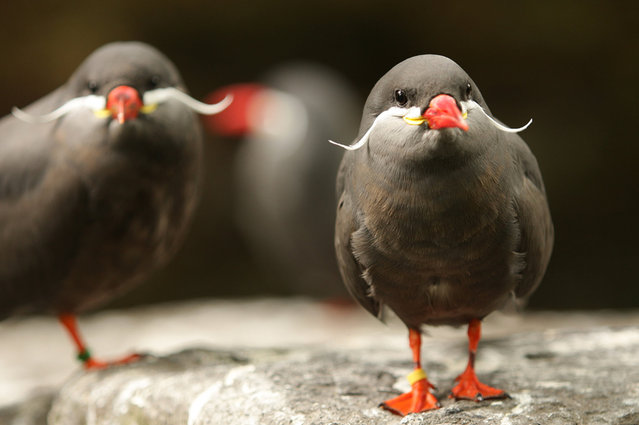
Beard Bird Inca Tern

The Inca Tern is a seabird in the family Sternidae. It is the only member of the genus Larosterna. This uniquely plumaged bird breeds on the coasts of Peru and Chile, and is restricted to the Humboldt current. It can be identified by its dark grey body, white moustache on the both sides of its head, and red-orange beak and feet.
Details
21 Apr 2013 17:02:00
Crime Tatoo  Part 1

Tattoos are commonly used among criminals to show gang membership and record the wearer's personal history—such as his or her skills, specialties, accomplishments and convictions. They are also used as a means of personal expression. Certain designs have developed recognized coded meanings. The code systems can be quite complex and because of the nature of what they encode, the tattoo designs are not widely recognized.
Details
23 Apr 2013 10:29:00
A girl collects drinking water at Dala river outside Yangon, Myanmar March 3, 2016. (Photo by Soe Zeya Tun/Reuters)

A girl collects drinking water at Dala river outside Yangon, Myanmar March 3, 2016. Some 650 million people, or one in 10 of the world's population, have no access to safe water, putting them at risk of infectious diseases and premature death. Dirty water and poor sanitation can cause severe diarrhoeal diseases in children, killing 900 under-five a day across the world, according to United Nations estimates. (Photo by Soe Zeya Tun/Reuters)
Details
18 Mar 2016 12:27:00
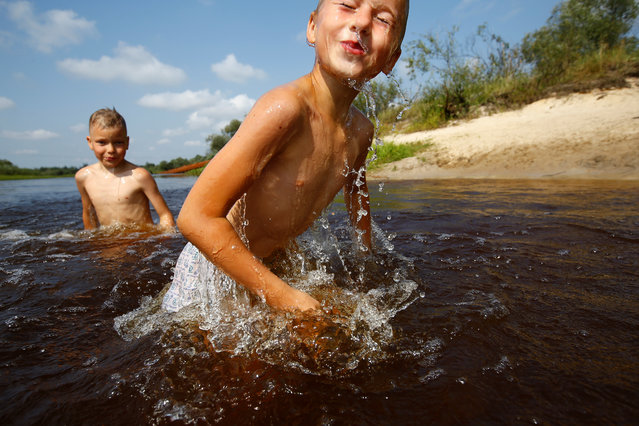
Boys play in the Stviga River on a hot summer day near the village of Pogost, Belarus, August 16, 2017. (Photo by Vasily Fedosenko/Reuters)

Just a few hours’ drive from the Belarus capital of Minsk, many villagers still live off the land. Nearly 80% of the country’s 9.5 million citizens live in urban areas, but for the rest, being close to nature can outweigh the hardships of country life. Here: Boys play in the Stviga River on a hot summer day near the village of Pogost, Belarus, August 16, 2017. (Photo by Vasily Fedosenko/Reuters)
Details
30 Nov 2017 08:28:00
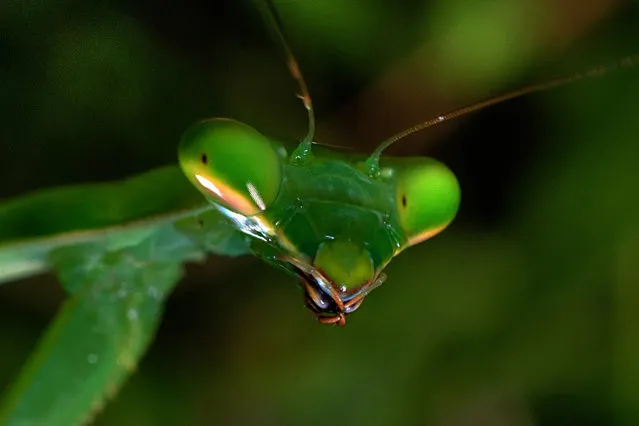
Close Encounter of the Insect Kind: Check out the awesome face on this praying mantis. I can't get over the mouth, it's like something from a science fiction movie. Of all photographic styles macro is definitely my favorite. I am constantly amazed, in every photo that I take, by the intricate level of detail that exists on even the smallest of creatures. It's a stark reminder that a very complex and infinitely beautiful world exists just beyond our human-sized level of perception. Photo taken in Donnybrook, Queensland, Australia. (Photo by Andrew Young/National Geographic Photo Contest

Close Encounter of the Insect Kind: “Check out the awesome face on this praying mantis. I can't get over the mouth, it's like something from a science fiction movie. Of all photographic styles macro is definitely my favorite. I am constantly amazed, in every photo that I take, by the intricate level of detail that exists on even the smallest of creatures. It's a stark reminder that a very complex and infinitely beautiful world exists just beyond our human-sized level of perception. Photo taken in Donnybrook, Queensland, Australia” – Andrew Young. (Photo by Andrew Young/National Geographic Photo Contest via The Atlantic)
Details
24 Sep 2012 09:18:00
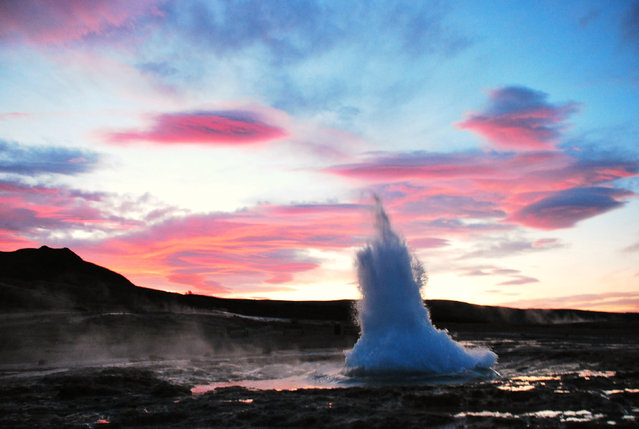
Strokkur geyser against cloudy sky at sunset. Strokkur is a fountain geyser located in a geothermal area beside the Hvítá River in Iceland in the southwest part of the country, east of Reykjavík. It is one of Iceland's most famous geysers, erupting once every 6–10 minutes. Its usual height is 15–20 m, although it can sometimes erupt up to 40 m high. (Photo by Teatsche Dijkhuis/Getty Images/EyeEm)

Strokkur geyser against cloudy sky at sunset. Strokkur is a fountain geyser located in a geothermal area beside the Hvítá River in Iceland in the southwest part of the country, east of Reykjavík. It is one of Iceland's most famous geysers, erupting once every 6–10 minutes. Its usual height is 15–20 m, although it can sometimes erupt up to 40 m high. (Photo by Teatsche Dijkhuis/Getty Images/EyeEm)
Details
18 Oct 2016 12:43:00
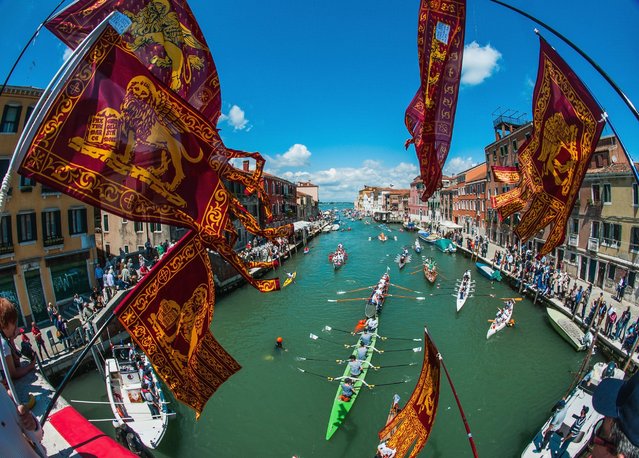
Rowers enter in Canaregio river during the 42nd Venice Vogalonga on May 15, 2016 in Venice, Italy. 42 years ago a group of Venetians, both amateur and professional rowers, came up with an idea of non-competitive race in which any kind of rowing boat can take part. The first Vogalonga began with the message to protest against the growing use of powerboats in Venice and the swell damage they do to the historic city. (Photo by Awakening/Getty Images)

Rowers enter in Canaregio river during the 42nd Venice Vogalonga on May 15, 2016 in Venice, Italy. 42 years ago a group of Venetians, both amateur and professional rowers, came up with an idea of non-competitive race in which any kind of rowing boat can take part. The first Vogalonga began with the message to protest against the growing use of powerboats in Venice and the swell damage they do to the historic city. (Photo by Awakening/Getty Images)
Details
18 May 2016 14:41:00
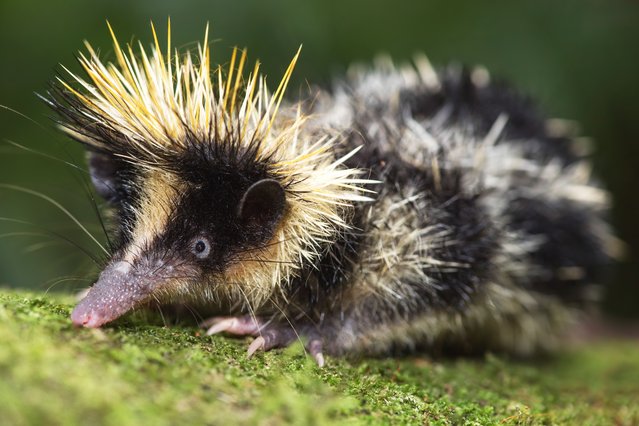
This spiky tenrec was spotted in Madagascar’s Mantadia National Park in the last decade of September 2025. Mostly nocturnal and rarely seen, it puffs out its spines when threatened. Spiky tenrecs are excellent swimmers — unlike most spiny mammals, some species of tenrec can forage in streams and rivers, using their spines for protection while hunting aquatic insects and small prey. (Photo by Dale Morris/Solent News & Photo Agency)

This spiky tenrec was spotted in Madagascar’s Mantadia National Park in the last decade of September 2025. Mostly nocturnal and rarely seen, it puffs out its spines when threatened. Spiky tenrecs are excellent swimmers — unlike most spiny mammals, some species of tenrec can forage in streams and rivers, using their spines for protection while hunting aquatic insects and small prey. (Photo by Dale Morris/Solent News & Photo Agency)
Details
05 Oct 2025 04:02:00