Loading...
Done
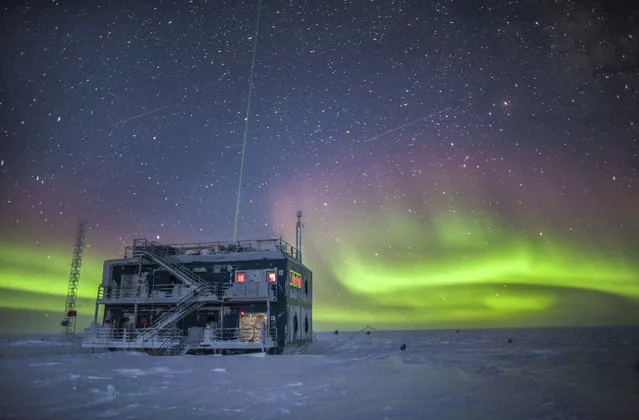
This undated photo provided by NOAA in May 2018 shows aurora australis near the South Pole Atmospheric Research Observatory in Antarctica. When a hole in the ozone formed over Antarctica, countries around the world in 1987 agreed to phase out several types of ozone-depleting chemicals called chlorofluorocarbons (CFCs). Production was banned, emissions fell and the hole shriveled. But according to a study released on Wednesday, May 16, 2018, scientists say since 2013, there’s more of a banned CFC going into the atmosphere. (Photo by Patrick Cullis/NOAA via AP Photo)

This undated photo provided by NOAA in May 2018 shows aurora australis near the South Pole Atmospheric Research Observatory in Antarctica. When a hole in the ozone formed over Antarctica, countries around the world in 1987 agreed to phase out several types of ozone-depleting chemicals called chlorofluorocarbons (CFCs). Production was banned, emissions fell and the hole shriveled. But according to a study released on Wednesday, May 16, 2018, scientists say since 2013, there’s more of a banned CFC going into the atmosphere. (Photo by Patrick Cullis/NOAA via AP Photo)
Details
15 Aug 2018 00:05:00
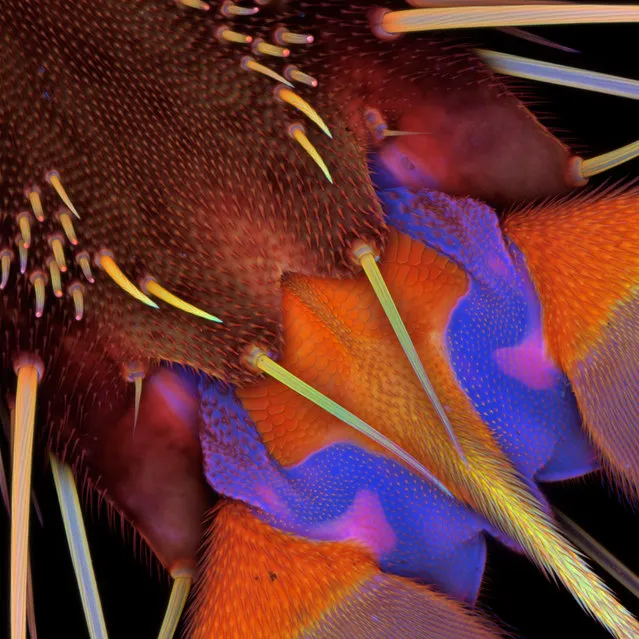
Pretarsus of the third leg of a female drone fly (Eristalis tenax), ventral view, by Dr. Jan Michels, Institute of Zoology, Christian-Albrechts-University of Kiel, Germany. (Photo by Olympus BioScapes)

“Microscope images forge an extraordinary bond between science and art, said Hidenao Tsuchiya, Olympus America's Vice President and General Manager for the Scientific Equipment Group. We founded this competition to focus on the fascinating stories coming out of today's life science research laboratories. The thousands of images that people have shared with the competition over the years reflect some of the most exciting work going on in research today – work that can help shed light on the living universe and ultimately save lives. We look at BioScapes and these beautiful images as sources of education and inspiration to us and the world”. – OlympusBioScapes

Photo: Pretarsus of the third leg of a female drone fly (Eristalis tenax), ventral view, by Dr. Jan Michels, Institute of Zoology, Christian-Albrechts-University of Kiel, Germany. (Photo by Olympus BioScapes)
Details
29 Jul 2012 09:20:00
Sixty-eight year old cross-country runner Rosie Swale-Pope is interviewed while sitting in her cart, “The Icebird”, in Upperville, Virginia March 13, 2015. Swale-Pope, who is from Great Britain and once ran an unsupported 20,000 mile run around the globe,  is currently running across the United States from New York City to San Francisco in support of cancer research. (Photo by Gary Cameron/Reuters)

Sixty-eight year old cross-country runner Rosie Swale-Pope is interviewed while sitting in her cart, “The Icebird”, in Upperville, Virginia March 13, 2015. Swale-Pope, who is from Great Britain and once ran an unsupported 20,000 mile run around the globe, is currently running across the United States from New York City to San Francisco in support of cancer research. (Photo by Gary Cameron/Reuters)
Details
18 Mar 2015 11:05:00
Philippine actor Soliman Cruz wearing a business suit stands inside an 8-foot transparent bubble while other activists wearing masks touch the bubble during an anti-pollution protest near a park in Manila on April 25, 2025. The protest is part of a climate advocates 350 campaign on Manila's air pollution crisis, due to traffic emissions, fossil fuel and unchecked industrial activity. (Photo by Ted Aljibe/AFP Photo)

Philippine actor Soliman Cruz wearing a business suit stands inside an 8-foot transparent bubble while other activists wearing masks touch the bubble during an anti-pollution protest near a park in Manila on April 25, 2025. The protest is part of a climate advocates 350 campaign on Manila's air pollution crisis, due to traffic emissions, fossil fuel and unchecked industrial activity. (Photo by Ted Aljibe/AFP Photo)
Details
17 May 2025 02:29:00
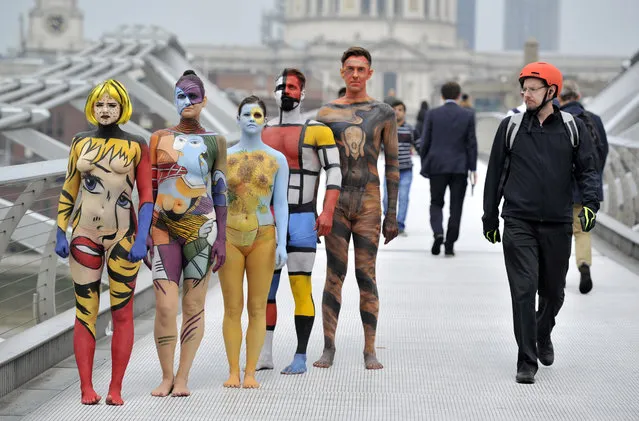
Human canvases modelling world famous artworks including Van Gogh's Sunflowers and Edvard Munch's The Scream take to the streets of London in a bid to mend Britain's disconnect with art on September 25, 2017. Award winning body paint artist Sarah Attwell was commissioned by online art platform Rise Art to show that great art is for everybody, following research that revealed 1 in 6 Brits have never set foot in an art gallery. (Photo by Imagewise Ltd/Rex Features/Shutterstock)

Human canvases modelling world famous artworks including Van Gogh's Sunflowers and Edvard Munch's The Scream take to the streets of London in a bid to mend Britain's disconnect with art on September 25, 2017. Award winning body paint artist Sarah Attwell was commissioned by online art platform Rise Art to show that great art is for everybody, following research that revealed 1 in 6 Brits have never set foot in an art gallery. (Photo by Imagewise Ltd/Rex Features/Shutterstock)
Details
26 Sep 2017 09:21:00
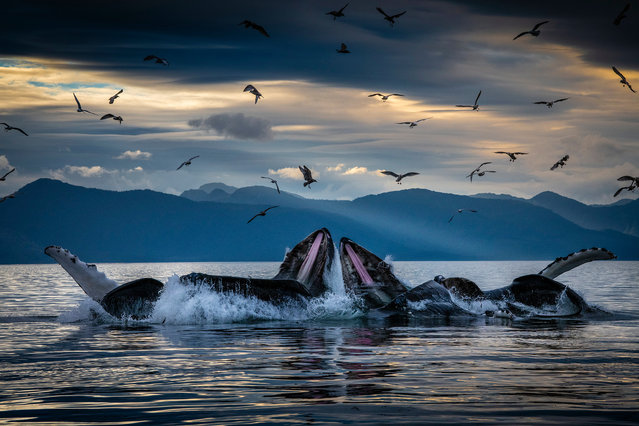
“Secrets of the Whales”. Skerry’s photographs celebrate the lives and culture of whales, illuminating recent research and their diverse behaviours. His latest work focuses on four key species: sperm whales, humpbacks, orca and beluga whales. Humpback whales bubble-net feeding off the coast of Alaska. They work cooperatively to feed on herring by blowing a perfect ring of bubbles underwater to form a net encircling the fish. The whales then swim up through the centre of the bubble net with their mouths open. (Photo by Brian Skerry/National Geographic Photo/Visa pour l'Image)

“Secrets of the Whales”. Skerry’s photographs celebrate the lives and culture of whales, illuminating recent research and their diverse behaviours. His latest work focuses on four key species: sperm whales, humpbacks, orca and beluga whales. Humpback whales bubble-net feeding off the coast of Alaska. They work cooperatively to feed on herring by blowing a perfect ring of bubbles underwater to form a net encircling the fish. The whales then swim up through the centre of the bubble net with their mouths open. (Photo by Brian Skerry/National Geographic Photo/Visa pour l'Image)
Details
04 Sep 2021 09:02:00
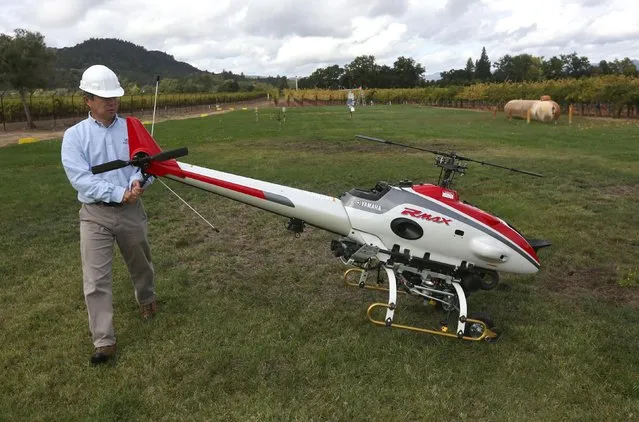
In this October 15, 2014 file photo, Katsu Nakamura, sky division manager for Yamaha USA, moves the RMax unmanned helicopter into position before a demonstration of its aerial application capabilities at the University of California, Davis' Oakville Station test vineyard in Oakville, Calif. Researchers at UC Davis have been studying the effectiveness of the drone's ability for spraying pest control and nutritional materials on the test vineyard in California's Napa Valley. (Photo by Rich Pedroncelli/AP Photo)

In this October 15, 2014 file photo, Katsu Nakamura, sky division manager for Yamaha USA, moves the RMax unmanned helicopter into position before a demonstration of its aerial application capabilities at the University of California, Davis' Oakville Station test vineyard in Oakville, Calif. Researchers at UC Davis have been studying the effectiveness of the drone's ability for spraying pest control and nutritional materials on the test vineyard in California's Napa Valley. (Photo by Rich Pedroncelli/AP Photo)
Details
07 Jan 2015 14:00:00
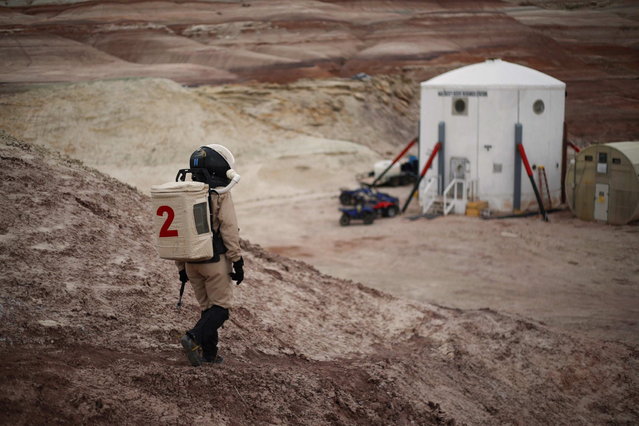
Csilla Orgel, a geologist of Crew 125 EuroMoonMars B mission, makes her way back to the Mars Desert Research Station (MDRS) in the Utah desert March 3, 2013. (Photo by Jim Urquhart/Reuters)

NASA says it could be another 20 years before humans touch down on Mars, but in a sense, the Mars Society has been exploring the red planet for more than a decade – in Utah. Photo: Csilla Orgel, a geologist of Crew 125 EuroMoonMars B mission, makes her way back to the Mars Desert Research Station (MDRS) in the Utah desert March 3, 2013. The MDRS aims to investigate the feasibility of a human exploration of Mars and uses the Utah desert's Mars-like terrain to simulate working conditions on the red planet. Scientists, students and enthusiasts work together developing field tactics and studying the terrain. All outdoor exploration is done wearing simulated spacesuits and carrying air supply packs and crews live together in a small communication base with limited amounts of electricity, food, oxygen and water. Everything needed to survive must be produced, fixed and replaced on site. (Photo by Jim Urquhart/Reuters)
Details
14 Mar 2013 12:11:00