Loading...
Done
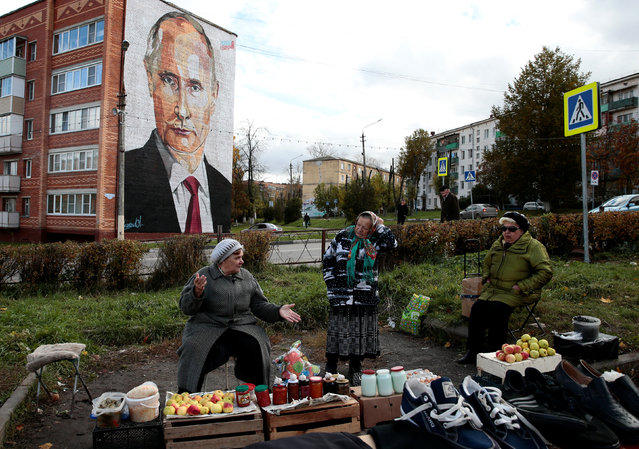
Elderly women wait for customers as they sell their self-made food products at a street market, with a graffiti depicting Russian President Vladimir Putin on the wall of a house seen in the background, in the town of Kashira, outside Moscow, Russia October 10, 2017. (Photo by Andrey Volkov/Reuters)

Elderly women wait for customers as they sell their self-made food products at a street market, with a graffiti depicting Russian President Vladimir Putin on the wall of a house seen in the background, in the town of Kashira, outside Moscow, Russia on October 10, 2017. (Photo by Andrey Volkov/Reuters)
Details
12 Oct 2017 08:56:00
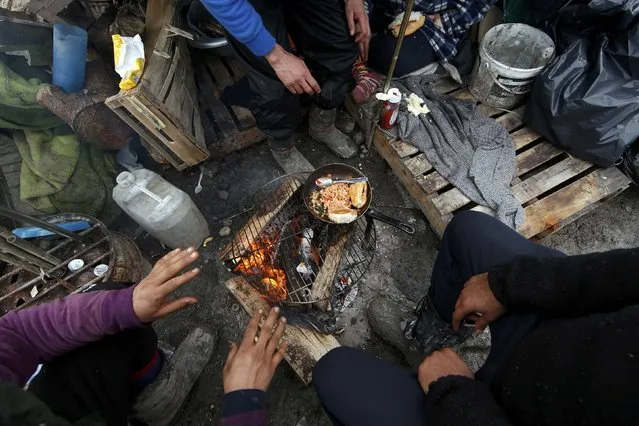
Migrants prepare their food outside shelters in a muddy field called the Grande-Synthe jungle, near Dunkirk, northern France, January 12, 2016. (Photo by Benoit Tessier/Reuters)

Migrants prepare their food outside shelters in a muddy field called the Grande-Synthe jungle, near Dunkirk, northern France, January 12, 2016. The Grande-Synthe jungle is a camp of tents and makeshift shelters where migrants and asylum seekers from Irak, Kurdistan and Syria gather. (Photo by Benoit Tessier/Reuters)
Details
14 Jan 2016 08:03:00
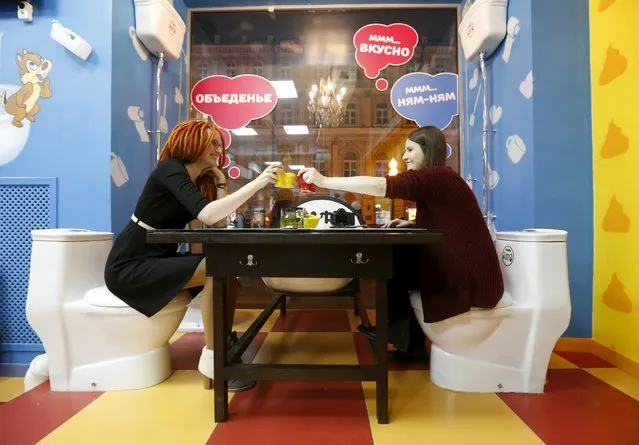
Customers clink their cups as they sit in Crazy Toilet Cafe in central Moscow, Russia October 30, 2015. A new Moscow cafe, opened on Friday, serves food to its guests with crockery designed to look like small baths and urinals, in toilet-themed interior with seats resembling toilets, local media reported. (Photo by Sergei Karpukhin/Reuters)

Customers clink their cups as they sit in Crazy Toilet Cafe in central Moscow, Russia October 30, 2015. A new Moscow cafe, opened on Friday, serves food to its guests with crockery designed to look like small baths and urinals, in toilet-themed interior with seats resembling toilets, local media reported. (Photo by Sergei Karpukhin/Reuters)
Details
05 Nov 2015 08:07:00
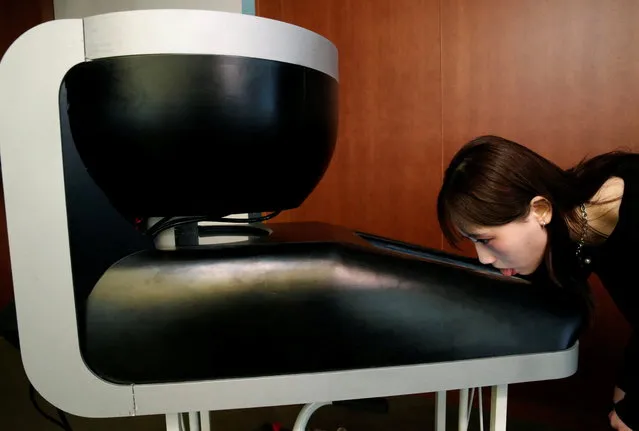
Student of Meiji University Yuki Hou licks a screen of Taste the TV (TTTV), a prototype lickable TV screen that can imitate the flavours of various foods, during its demonstration at the university in Tokyo, Japan, December 22, 2021. (Photo by Kim Kyung-Hoon/Reuters)

Student of Meiji University Yuki Hou licks a screen of Taste the TV (TTTV), a prototype lickable TV screen that can imitate the flavours of various foods, during its demonstration at the university in Tokyo, Japan, December 22, 2021. (Photo by Kim Kyung-Hoon/Reuters)
Details
25 Sep 2022 04:29:00
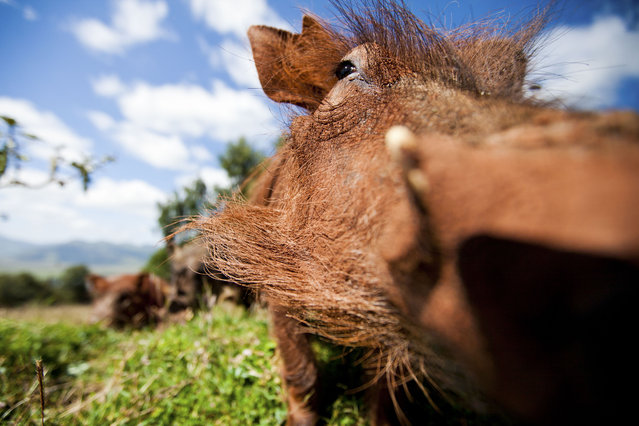
This family of warthogs regularly visited our campsite in the Ethiopian highlands so I set up a remote camera with a wide-angle lens to photograph them as they rummaged around for food. They just had a mud bath. (Photo by Will Burrard-Lucas/Caters News Agency)

This family of warthogs regularly visited our campsite in the Ethiopian highlands so I set up a remote camera with a wide-angle lens to photograph them as they rummaged around for food. They just had a mud bath. (Photo by Will Burrard-Lucas/Caters News Agency)
Details
22 Sep 2019 00:03:00


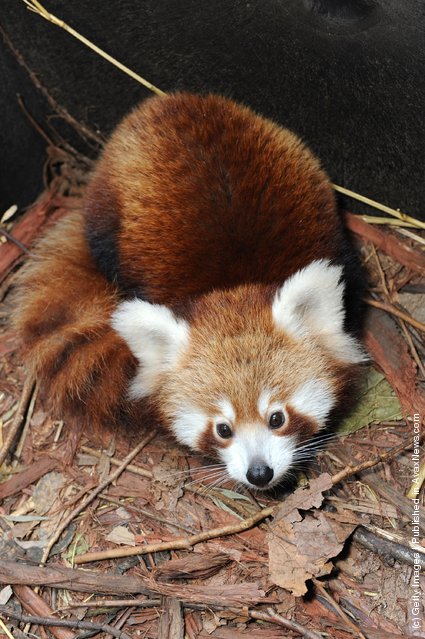
“The red panda (Ailurus fulgens, or shining-cat), is a small arboreal mammal native to the eastern Himalayas and southwestern China. It is the only species of the genus Ailurus. Slightly larger than a domestic cat, it has reddish-brown fur, a long, shaggy tail, and a waddling gait due to its shorter front legs. It feeds mainly on bamboo, but is omnivorous and may also eat eggs, birds, insects, and small mammals. It is a solitary animal, mainly active from dusk to dawn, and is largely sedentary during the day”. – Wikipedia

Photo: In this handout image provided by Taronga Zoo, Seba, a baby Red Panda, explores his new home at Taronga Zoo on April 7, 2011 in Sydney, Australia. The Red Panda cub was born at Christmas and is the 45th to be born at the zoo since 1977. (Photo by Peter Hardin/Taronga Zoo via Getty Images)

Details
07 Apr 2011 08:51:00


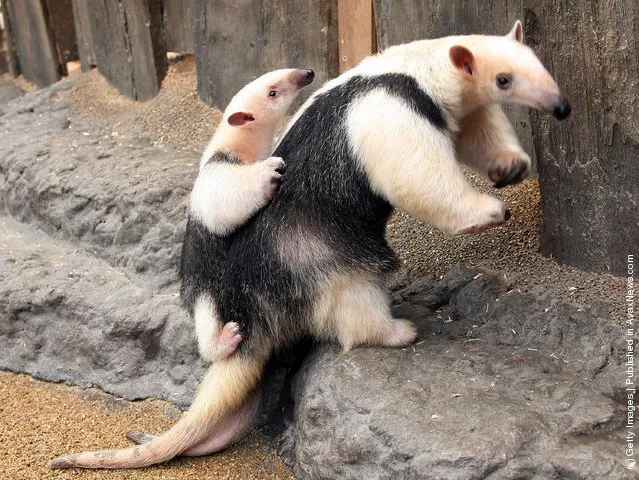
“The Southern Tamandua, Collared Anteater or Lesser Anteater (Tamandua tetradactyla) is a species of anteater from South America. It is a solitary animal, found in many habitats from mature to highly disturbed secondary forests and arid savannas. It feeds on ants, termites and bees. It has very strong foreclaws that can be used to break insect nests or to defend itself”. – Wikipedia

Photo: A three-month-old baby Southern Tamandua “Konbu” lies on its mother Tae's back at Sunshine International Aquarium on July 7, 2009 in Tokyo, Japan. Baby Southern Tamandua feels safe and comfortable holding onto something and normally stays on the mother's back until around 3 months old. (Photo by Junko Kimura/Getty Images)
Details
19 May 2011 10:31:00
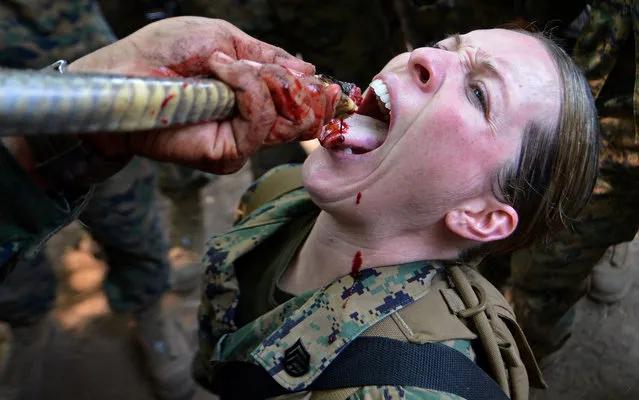
In a military base in the Thai province of Chon Buri February 20 U.S. Marines Navy with Thailand began their studies in jungle survival. The event is held in joint military exercises “Cobra Gold 2013”. During a jungle survival program February 20, 2013 taught by Royal Thai Special Forces in Sannapit, Thailand, U.S. Marines learned to catch cobras and drink their fresh blood, not to mention eat forest insects and pull the heads off of chicken. The training was part of Operation Cobra Gold 13, the 32nd edition of international military exercises hosted by the Thai. According to a U.S. Marines press release, Cobra Gold is the largest exercise of its kind in Asia and incorporates troops from five other nations in addition to the U.S. and Thailand. The Daily Mail reports that the Marines were invited to experience the local custom of drinking cobra blood after being taught to catch and kill cobras in the wild. As CNN notes, Cobra blood is believed to be a panacea and aphrodiasic in parts of Southeast Asia. In Jakarta, vendors can earn over $100 a night selling shots of cobra blood mixed with liquor. (Photo by Pornchai Kittiwongsakul/AFP Photo)

During a jungle survival program February 20, 2013 taught by Royal Thai Special Forces in Sannapit, Thailand, U.S. Marines learned to catch cobras and drink their fresh blood, not to mention eat forest insects and pull the heads off of chicken. The training was part of Operation Cobra Gold 13, the 32nd edition of international military exercises hosted by the Thai. According to a U.S. Marines press release, Cobra Gold is the largest exercise of its kind in Asia and incorporates troops from five other nations in addition to the U.S. and Thailand. The Daily Mail reports that the Marines were invited to experience the local custom of drinking cobra blood after being taught to catch and kill cobras in the wild. As CNN notes, Cobra blood is believed to be a panacea and aphrodiasic in parts of Southeast Asia. In Jakarta, vendors can earn over $100 a night selling shots of cobra blood mixed with liquor. (Photo by Pornchai Kittiwongsakul/AFP Photo)
Details
23 Feb 2013 11:52:00