Loading...
Done
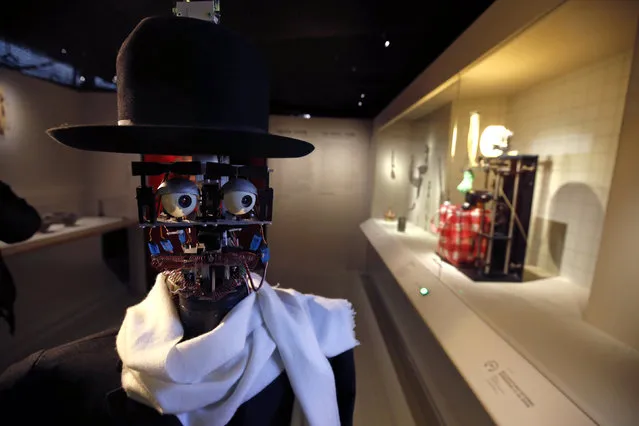
The Berenson robot strolls among visitors during the exhibition “Persona : Oddly Human” at the Quai Branly museum in Paris, France, February 23, 2016. The Berenson robot, developed in France in 2011, is the brainchild of anthropologist Denis Vidal and robotics engineer Philippe Gaussier. Its programming allows it to record reactions of museum visitors to certain pieces of art and then use the data to develop its own unique taste, which allows “Berenson” to judge whether or not it likes a certain work of art within an exhibition. (Photo by Philippe Wojazer/Reuters)

The Berenson robot strolls among visitors during the exhibition “Persona : Oddly Human” at the Quai Branly museum in Paris, France, February 23, 2016. The Berenson robot, developed in France in 2011, is the brainchild of anthropologist Denis Vidal and robotics engineer Philippe Gaussier. Its programming allows it to record reactions of museum visitors to certain pieces of art and then use the data to develop its own unique taste, which allows “Berenson” to judge whether or not it likes a certain work of art within an exhibition. (Photo by Philippe Wojazer/Reuters)
Details
25 Feb 2016 12:26:00
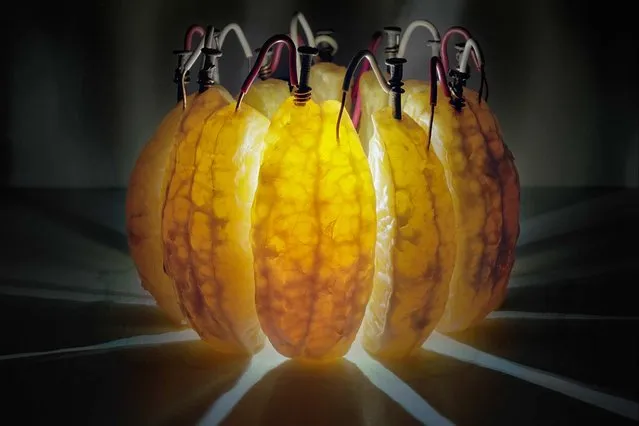
Wedges of an orange generate enough current and electrical juice – 3.5 volts – to power an LED. The fruit’s citric acid helps electrons flow from galvanized nails to copper wire in this 14-hour exposure. This image was published in September’s Visions of Earth, a trio of photos that appear in each issue of National Geographic. (Photo by Caleb Charland/National Geographic)

Wedges of an orange generate enough current and electrical juice – 3.5 volts – to power an LED. The fruit’s citric acid helps electrons flow from galvanized nails to copper wire in this 14-hour exposure. This image was published in September’s Visions of Earth, a trio of photos that appear in each issue of National Geographic. (Photo by Caleb Charland/National Geographic)
Details
06 Jan 2014 12:09:00
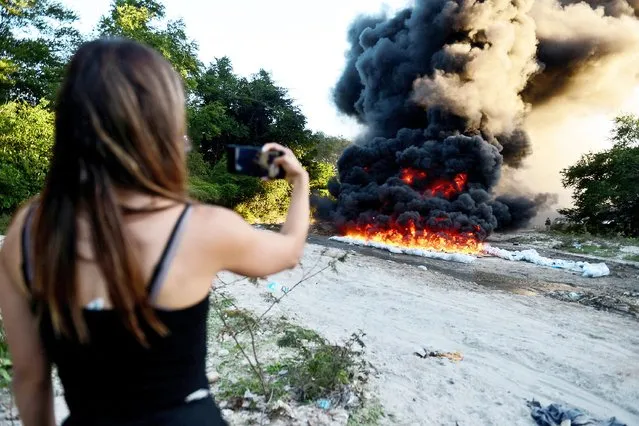
A woman films with her phone the incineration of packages of cocaine, part of a high seas drug seizure of 135 bundles by Salvadoran Naval Force, at a police base in Ilopango, El Salvador, November 29, 2021. (Photo by Jessica Orellana/Reuters)

A woman films with her phone the incineration of packages of cocaine, part of a high seas drug seizure of 135 bundles by Salvadoran Naval Force, at a police base in Ilopango, El Salvador, November 29, 2021. (Photo by Jessica Orellana/Reuters)
Details
01 Dec 2021 09:16:00
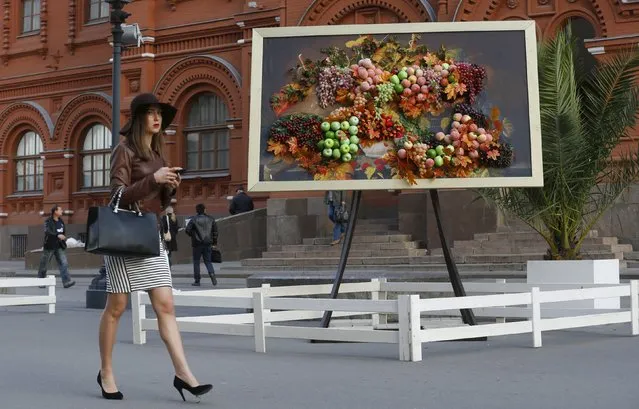
A woman walks in front of an art installation made of artificial fruits and vegetables during the  “Moscow Autumn” festival in central Moscow, September 14, 2015. (Photo by Maxim Zmeyev/Reuters)

A woman walks in front of an art installation made of artificial fruits and vegetables during the “Moscow Autumn” festival in central Moscow, September 14, 2015. (Photo by Maxim Zmeyev/Reuters)
Details
15 Sep 2015 14:58:00
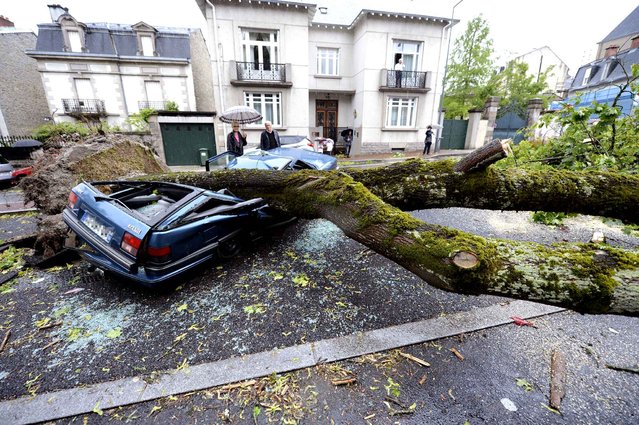
People walk by a car destroyed by a tree which fell during a storm and strong winds, in Limoges, on May 21, 2014. High winds upto 120 km/h and storms have caused at least one death and cut off some 42 000 homes from electricity today in the Midi-Pyrenees region of France. (Photo by Pascal Lachenaud/AFP Photo)

People walk by a car destroyed by a tree which fell during a storm and strong winds, in Limoges, on May 21, 2014. High winds upto 120 km/h and storms have caused at least one death and cut off some 42 000 homes from electricity today in the Midi-Pyrenees region of France. (Photo by Pascal Lachenaud/AFP Photo)
Details
24 May 2014 12:42:00
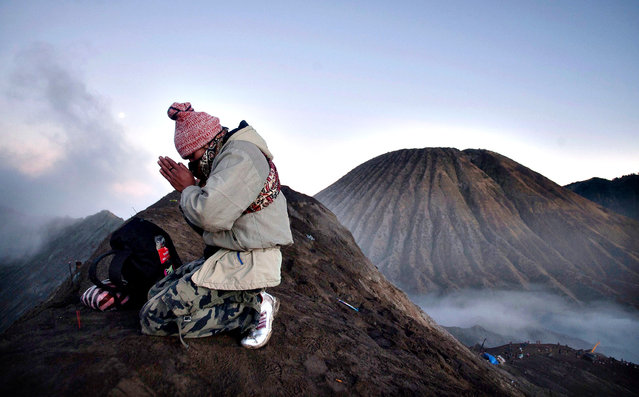
A Tengger tribesman prays at Mount Bromo during the annual Kasada ceremony in East Java on August 12, 2014. The Kasada ceremony is a festival held every 14th day of the Kasada month in the traditional Hindu lunar calender to honour Sang Hyang Widhi (God Almighty) and is based on the legend of Roro Anteng and Joko Seger from the Majapahit Kingdom, from which their Tengger tribe name originates. (Photo by Juni Kriswanto/AFP Photo)

A Tengger tribesman prays at Mount Bromo during the annual Kasada ceremony in East Java on August 12, 2014. The Kasada ceremony is a festival held every 14th day of the Kasada month in the traditional Hindu lunar calender to honour Sang Hyang Widhi (God Almighty) and is based on the legend of Roro Anteng and Joko Seger from the Majapahit Kingdom, from which their Tengger tribe name originates. Hundreds of worshippers from the Tengger tribe offer food and livestock as a symbolic sacrifice which they throw into the crater for the blessings of safety and prosperity to their familyies and community. (Photo by Juni Kriswanto/AFP Photo)
Details
16 Aug 2014 11:19:00
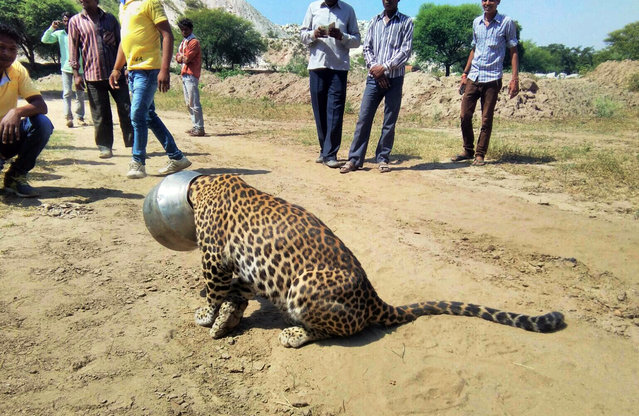
People stand around a leopard with its head stuck in a vessel in Rajsamand district of Rajasthan state, India, Wednesday, September 30, 2015. The leopard's head got stuck when it attempted to drink water from the pot, according to news reports. Forest officials tranquilized the animal and sawed off the vessel later in the day. (Photo by Kabir Jethi/AP Photo)

People stand around a leopard with its head stuck in a vessel in Rajsamand district of Rajasthan state, India, Wednesday, September 30, 2015. The leopard's head got stuck when it attempted to drink water from the pot, according to news reports. Forest officials tranquilized the animal and sawed off the vessel later in the day. (Photo by Kabir Jethi/AP Photo)
Details
31 Dec 2015 08:00:00
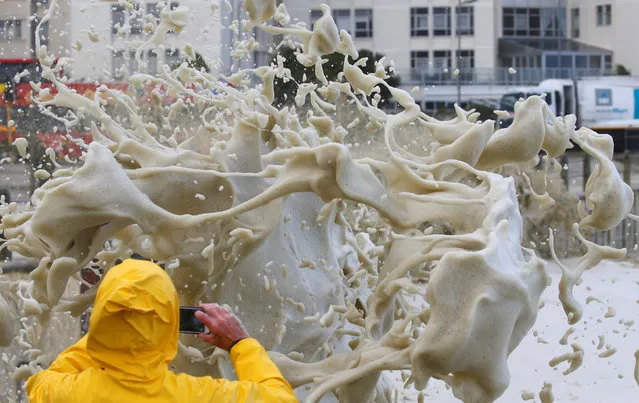
A man takes a picture of sea spray as storms hit Cape Town, South Africa, June 7, 2017. (Photo by Mike Hutchings/Reuters)

A man takes a picture of sea spray as storms hit Cape Town, South Africa, June 7, 2017. (Photo by Mike Hutchings/Reuters)
Details
10 Jun 2017 08:44:00