Loading...
Done
Realistic Hair Art By Roberto Perez Part 2

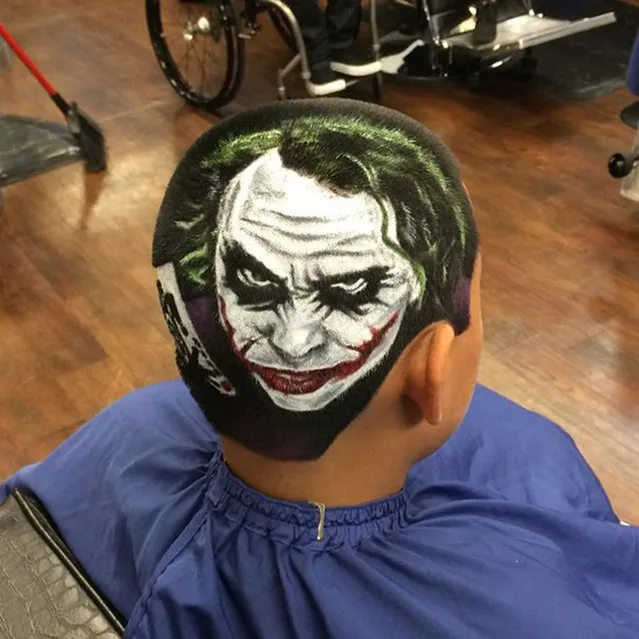
When Roberto Perez (also known as Rob The Original) gives you a haircut, it’s probably not going to be just a haircut. This San-Antonio-based artist and hair stylist creates amazing works of art using nothing but his clients’ scalp and hair as his canvas. Perez can create just about anything he or his clients can think of – from a photo-realistic portrait or illustration to full-head paintings or graphic designs.


See Also: Part 1
Details
27 Sep 2014 09:50:00
Island Of Skye, Scotland

A set of pictures taken by Kellie Netherwood on the northern-most island located in the Inner Hebrides of Scotland perfectly captures the spirit of the Scots: wild, free, and majestic. It is no wonder that Scottish people fought tooth and nail to gain their independence all throughout their history. The green fields, rocky hills, and the beautiful waterfalls all sing to the spirits of the Scots, instilling pride into everyone who considers this place to be their motherland. However, no matter what your origin may be, you cannot help being fascinated by the beauty of these landscapes, drawn to them as if by a powerful force. (Photo by Kellie Netherwood)
Details
17 Oct 2014 13:28:00
Alphabets Photographer By Bela Borsodi

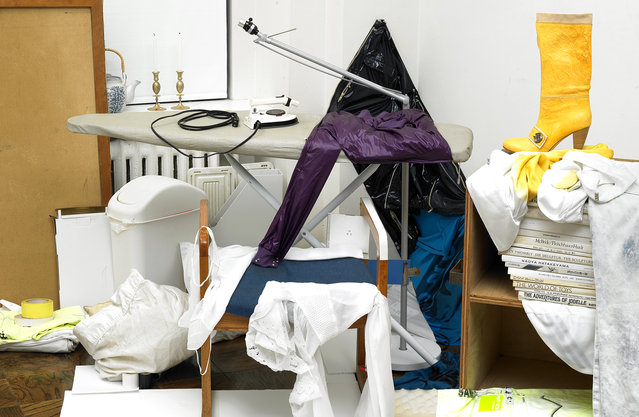
Bela Bordosi is not the first person to arrange various household objects into the shape of the letters and making photos, and he’s definitely not the last. However, the way he does it is definitely very distinct and original. Sure, some photos are most definitely staged. However, some letters just pop out of the picture that doesn’t look staged at all. As if by chance, the items create a vivid “A” in your mind, so vivid that it’s very hard to notice the individual items that were used in the making of this composition. The reason behind it is probably because Bela Bordosi’s other photos are optical illusions created using a similar method. (Photo by Bela Borsodi)
Details
22 Oct 2014 13:41:00
Living Paintings By Alexa Meade

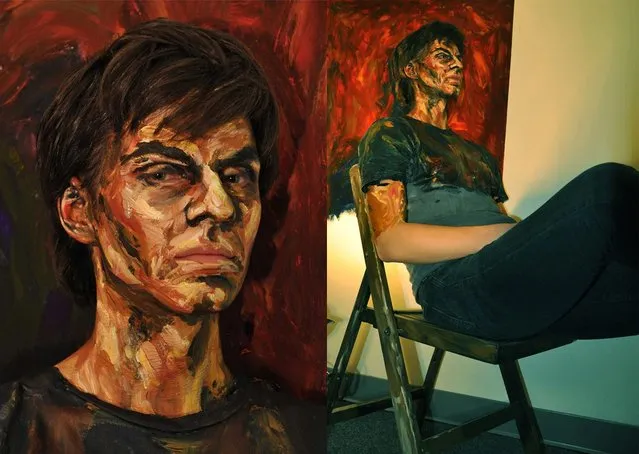
The artworks that Alexa Meade makes are very unique and original. A usual painter creates a 2D or a 3D drawing on flat 2D surface. Alexa, on the other hand, draws over the body of a regular person, making them look like a 2D painting. The pictures of these people are almost uncanny, as you realize that the eyes “paintings” are real, and suddenly it dawns upon you that you are seeing a living and breathing human being. It is weird how we perceive this world, and how easy it is to trick our brain into thinking that it’s seeing a two-dimensional object. (Photo by Alexa Meade)
Details
12 Nov 2014 14:08:00
Cordwood Construction - Natural Building

Cordwood construction is a method of natural building that originated roughly one thousand years ago in Greece and Siberia. This method involves using pieces of wood that slightly protrude from the mortar, giving the walls an attractive appearance. Usually, the walls are made 12 to 24 inches thick. However, in some parts of Canada, the walls can be as thick as 36 inches. This method appeals to many people due to its ease of construction economy of resources. Cordwood Construction can be separated into two main types: mortar-insulation-mortar (M-I-M) and Throughwall. M-I-M is a more preferable and widely used choice as it allows for better insulating properties.
Details
27 Nov 2014 15:10:00
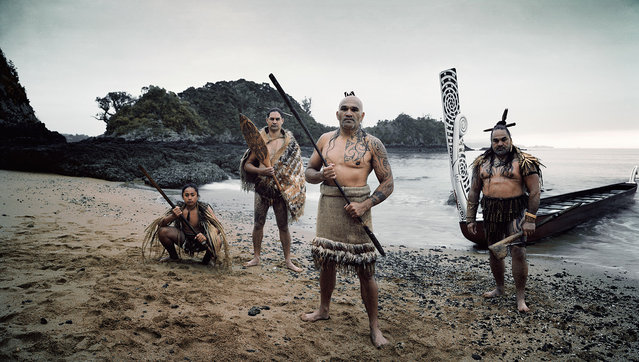
Maori  People New Zealand

The long and intriguing story of the origine of the indigenous Maori people can be traced back to the 13th century, the mythical homeland Hawaiki, Eastern Polynesia. Due to centuries of isolation, the Maori established a distinct society with characteristic art, a separate language and unique mythology. Defining aspects of Maori traditional culture include art, dance, legends, tattoos and community. While the arrival of European colonists in the 18th centure had a profound impact on the Maori way of life, many aspects of traditional society have survived into the 21th century.
Details
11 Mar 2014 14:40:00
Children dressed in festival costume sit on the huge paper doll of historical Japanese figure named Hashi-Benkeii on the carts during the Mikuini annual festival on May 20, 2014 in Sakai, Japan. The annual festival takes place from May 19-21 and is attended by thousands of visitors. During the festival people dressed in traditional Japanese costumes pull carts carrying 6 meter high dolls of Japanese historical figures through the narrow streets. The origins of the festival are unclear but its history can be traced back more than 250 years. (Photo by Buddhika Weerasinghe/Getty Images)

Children dressed in festival costume sit on the huge paper doll of historical Japanese figure named Hashi-Benkeii on the carts during the Mikuini annual festival on May 20, 2014 in Sakai, Japan. The annual festival takes place from May 19-21 and is attended by thousands of visitors. During the festival people dressed in traditional Japanese costumes pull carts carrying 6 meter high dolls of Japanese historical figures through the narrow streets. The origins of the festival are unclear but its history can be traced back more than 250 years. (Photo by Buddhika Weerasinghe/Getty Images)
Details
21 May 2014 08:49:00
World War Two veteran Abla Begaliyev, 91, is seen in an undated handout picture (L), poses for a picture in Arashan (Top R) and at home in Kyrgyzstan April 14, 2015. Begaliyev served in the border guard cavalry from February 1942 until April 1947. Originally from Kyrgyzstan, he fought on the Ukrainian front and relocated to the border with Afghanistan at the end of World War Two. (Photo by Vladimir Pirogov/Reuters/Family handout (L))

World War Two veteran Abla Begaliyev, 91, is seen in an undated handout picture (L), poses for a picture in Arashan (Top R) and at home in Kyrgyzstan April 14, 2015. Begaliyev served in the border guard cavalry from February 1942 until April 1947. Originally from Kyrgyzstan, he fought on the Ukrainian front and relocated to the border with Afghanistan at the end of World War Two. As the world marks the 70th anniversary of the end of World War Two, Reuters photographers the length and breadth of the former Soviet republics (CCCP) captured portraits of Red Army veterans, mostly now in their 80s and 90s, today and through archive pictures at the time. More than 20 million Soviet citizens were killed in the war. (Photo by Vladimir Pirogov/Reuters/Family handout (L))
Details
08 May 2015 14:22:00